
UCR 2026: Enforcement Begins January 1 — Fees, Deadlines, and How to Stay Compliant
UCR 2026 is now under enforcement. Here are the fees, deadlines, enforcement details, and compliance steps carriers need as of February 28, 2026.
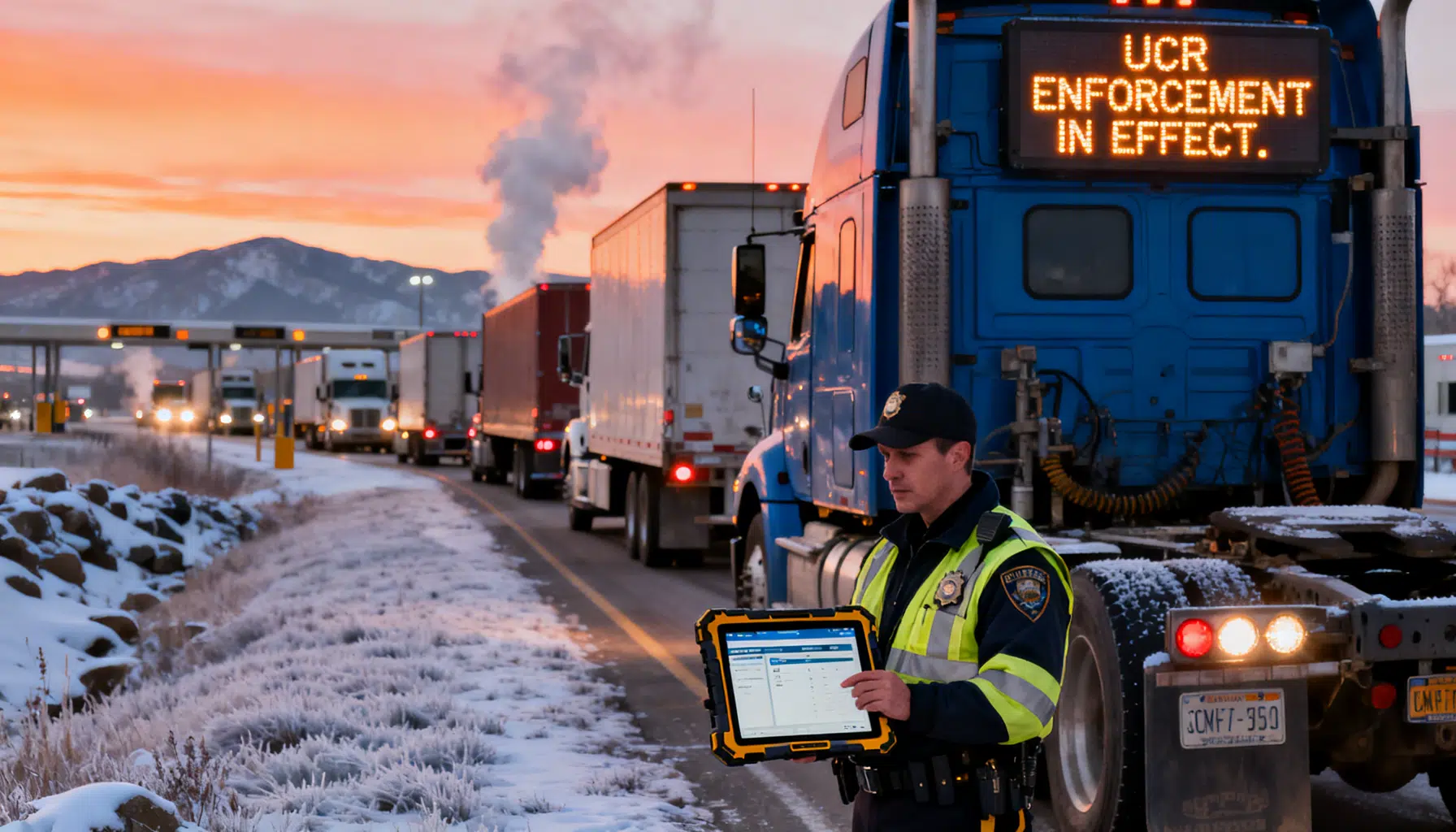
UCR 2026 now under enforcement: what changed, what hasn’t
States began enforcing the 2026 Unified Carrier Registration (UCR) on January 1, 2026, following the UCR Board’s recommendation and a national awareness push that kicked off January 11–17, with a second enforcement awareness week slated for June 7–13. If you operate interstate and missed the year‑end deadline, you’re now subject to roadside verification and potential state‑level action. (plan.ucr.gov)
What the UCR is — and who must register
The UCR is an interstate agreement covering motor carriers (for‑hire, private, and exempt), freight forwarders, brokers, and leasing companies engaged in interstate or international commerce. Canadian and Mexican carriers that operate in the U.S. are also covered. Registration is annual and required before January 1 of the registration year. (plan.ucr.gov)
Key points:
- If you never cross state lines and your operations are not part of an interstate movement, UCR generally does not apply.
- Entities based in non‑participating states must still register via the National Registration System (NRS) and select an eligible base state. (plan.ucr.gov)
2026 fees at a glance (unchanged from 2025)
UCR fees are assessed by fleet size bracket (per entity). For 2026, the schedule mirrors 2025 levels set after FMCSA’s 2024 final rule adjusted fees upward from 2024. (fmcsa.dot.gov)
- 0–2 CMVs: $46 (carriers/forwarders) | $46 (brokers/leasing companies)
- 3–5 CMVs: $138
- 6–20 CMVs: $276
- 21–100 CMVs: $963
- 101–1,000 CMVs: $4,592
- 1,001+ CMVs: $44,836
State DOTs echo the same 2026 schedule and confirm current enforcement. (dot.state.mn.us)
The timeline you need to know
- October 1, 2025 — 2026 registration opened in the NRS portal. (plan.ucr.gov)
- December 31, 2025 — Filing deadline for 2026 (late filers remain liable and are subject to enforcement). (plan.ucr.gov)
- January 1, 2026 — Enforcement began nationwide per UCR Board guidance. (plan.ucr.gov)
- January 11–17 and June 7–13, 2026 — UCR Awareness Initiative weeks for coordinated roadside focus. (plan.ucr.gov)
How enforcement works at the roadside
- No paper “UCR card” is required in the vehicle; officials verify status electronically (e.g., CVIEW/SAFER or the UCR enforcement portal). Violations appear as “392.2 UCR – Failure to pay UCR fees.” (jjkellercompliancenetwork.com)
- Penalties and out‑of‑service practices vary by state; carriers can face citations and delays until compliance is documented. Check your base and travel states’ rules. (dot.state.mn.us)
Participating vs. non‑participating states
Forty‑one states participate in UCR administration. Non‑participating jurisdictions are Arizona, Florida, Hawaii, Maryland, Nevada, New Jersey, Oregon, Vermont, Wyoming, and the District of Columbia. Carriers based in these areas must still register and pay through the national system by selecting a neighboring participating state. (plan.ucr.gov)
Why your 2026 bill looks like last year’s — and why 2025 jumped
FMCSA’s June 2024 final rule increased UCR fees for the 2025 registration year by an average of 25% over 2024 after two years of reductions. The UCR Plan’s 2026 fee table retains those 2025 levels, giving carriers a year of stability. (fmcsa.dot.gov)
Fast compliance checklist for late filers
- Verify your fleet count matches your MCS‑150 before paying (the bracket is based on the number of CMVs “owned or operated”).
- Register and pay via the National Registration System (NRS) at the official UCR site.
- Save the electronic receipt; although no credential must be carried, it’s useful for recordkeeping and audits.
- If you missed prior years, resolve them in the portal to reduce enforcement exposure. (plan.ucr.gov)
Scam alerts: use the official channels
FMCSA warns of fresh phishing campaigns impersonating USDOT/FMCSA officials to extract payments or sensitive data. Legitimate outreach will use .gov addresses, and official UCR transactions should be conducted through the UCR Plan’s site. Be wary of unsolicited emails, texts, or calls steering you to non‑.gov domains. (fmcsa.dot.gov)
What carriers are saying — and what to watch next
Safety and compliance managers tell us they are pairing UCR renewal with biennial updates and driver‑file checks to avoid bracket errors and audit flags. Meanwhile, the UCR Plan Board has opened a process to modernize the UCR Agreement through public comment, a signal that further administrative updates could arrive later this year. (plan.ucr.gov)
Bottom line
- If you operate interstate, you must be registered for 2026 UCR; enforcement is active. (plan.ucr.gov)
- Fees are unchanged from 2025 but higher than 2024 due to FMCSA’s 2024 final rule. (fmcsa.dot.gov)
- Verify electronically, keep records, and register only through official channels to avoid scams. (jjkellercompliancenetwork.com)
Quick reference: 2026 UCR fee brackets
B1: 0–2 CMVs  .......... $46 (carriers/forwarders) | $46 (brokers/leasing)
B2: 3–5 CMVs  .......... $138
B3: 6–20 CMVs  ......... $276
B4: 21–100 CMVs  ....... $963
B5: 101–1,000 CMVs ..... $4,592
B6: 1,001+ CMVs  ....... $44,836
Source: UCR Plan; state DOT notices. (plan.ucr.gov)