
The State of the TV App in 2026: Sports, Ads, FAST, and the Return of Bundles
In 2026, the TV app is the battleground: sports drive redesigns, ads go default, bundles return, and FAST channels hit 100M+ users.
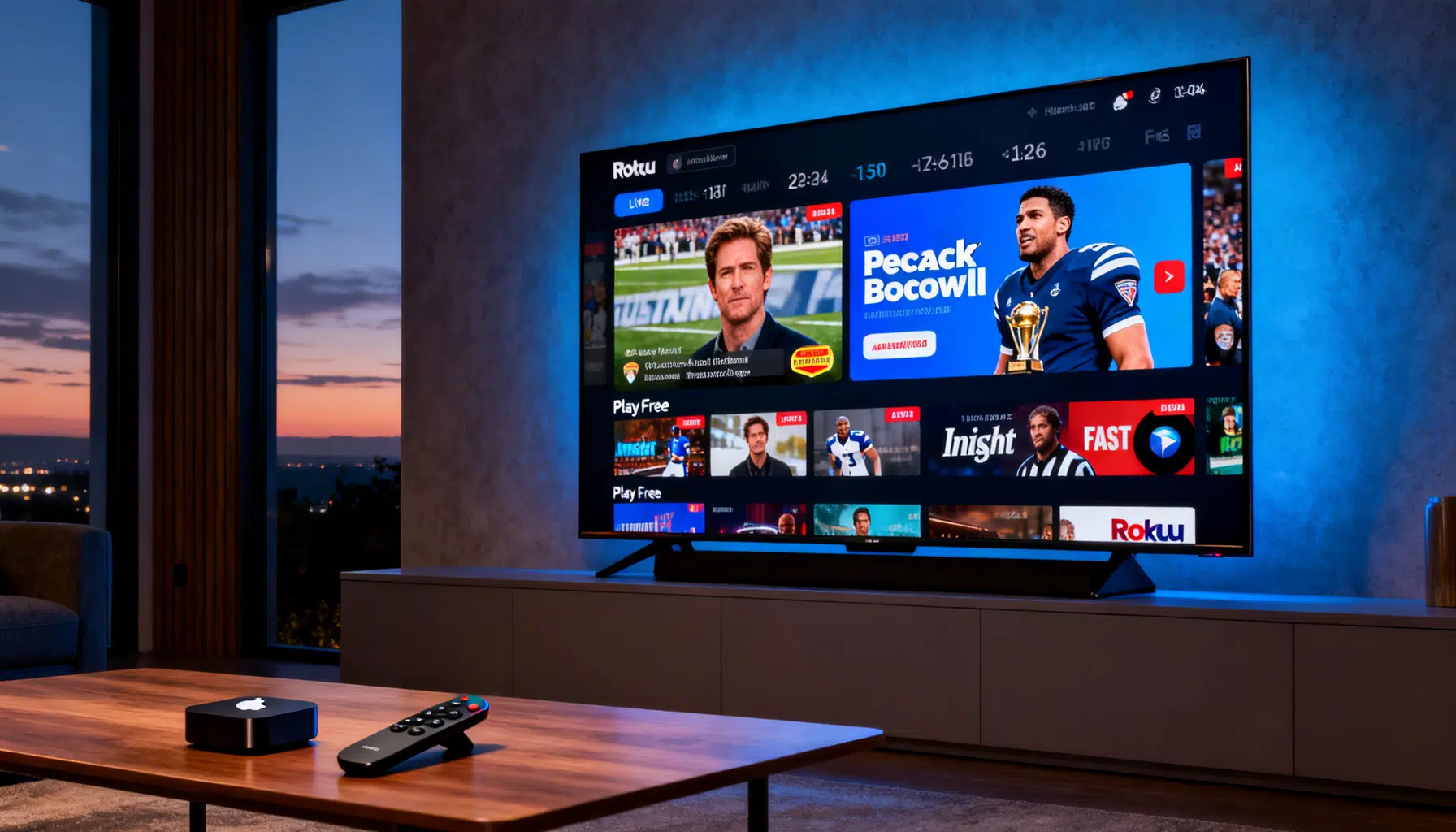
Image used for representation purposes only.
The TV app in 2026: Sports-fueled redesigns, ad shifts, and the FAST boom reshape your home screen
As of March 8, 2026, the humble TV app has become the battleground for the entire streaming economy. From live‑sports mega months to ad‑tier upheavals and a resurgence of bundles, the way content is packaged, discovered, and monetized is changing fast — and your living‑room interface is where it all shows up first. NBCUniversal just packed Super Bowl LX and the 2026 Winter Olympics into one “legendary” February, with Peacock streaming both and promising 4K HDR presentations — a statement about how central the TV app now is to national tentpoles. (axios.com )
Sports is driving the TV app roadmap
- ESPN’s long‑anticipated direct‑to‑consumer service launched on August 21, 2025, bringing all ESPN networks under one app, after months of price and timing guidance. The launch cemented sports as a primary DTC driver and raised expectations for deep personalization and data‑rich overlays in the TV app. (espnpressroom.com )
- The rival “Venu Sports” joint venture (Disney, Fox, Warner Bros. Discovery) was officially scrapped on January 10, 2025, after legal and antitrust headwinds — shelving a single‑app aggregation play that might have simplified sports discovery. (apnews.com )
- YouTube TV, meanwhile, is turning the living‑room UI into a control room: in January 2026 it began rolling out customizable Multiview to let viewers mix and match channels (beyond sports), a long‑requested feature that feeds directly into how modern TV apps are designed for simultaneous streams. (techcrunch.com )
Bottom line: the most valuable programming in America is dictating how your TV app looks and behaves.
Discovery over design — or both? Netflix tests the limits
In May 2025 Netflix began rolling out its biggest TV app redesign in a decade, emphasizing larger artwork, streamlined navigation, and quicker browsing. The company said the update aimed to “cut clutter” and make finding something to watch faster. Users, however, have been loudly split — praise for speed tempered by complaints about density and disorientation. The ongoing feedback loop underscores how hard it is to rewire a muscle‑memory interface on tens of millions of TVs. (netflix.com )
Ads are now the default — and they’re reshaping the experience
- Amazon made ads the default in Prime Video in January 2024, with an opt‑out ad‑free add‑on. Through 2025, reporting indicated the ad load increased versus the initial roll‑out — a sign of the scale and economics now attached to TV apps. Expect more shoppable formats and sports‑adjacent integrations to follow. (apnews.com )
- On the premium side, Warner Bros. Discovery’s Max has repeatedly recalibrated how it charges for live sports, reflecting the challenge of fitting high‑value sports into entertainment pricing without eroding margins. (engadget.com )
For viewers, the practical effect is clear: more prominent ad experiences in the TV app, but also cheaper entry points and better discovery funded by those ad dollars.
FAST is surging — and it’s baked into your TV OS
Free ad‑supported streaming television (FAST) isn’t just an app row anymore; it’s part of the operating system. Samsung TV Plus crossed 100 million monthly active users globally by early 2026, signaling how built‑in, zero‑friction channels have become a default habit. (news.samsung.com )
Fox’s Tubi surpassed 97 million MAUs in 2024 and topped 100 million in 2025, while Google TV’s “Freeplay” now aggregates 250+ linear channels in one guide. If your TV app feels busier, that’s because it is — and the free tier is where much of the growth is happening. (corporate.tubitv.com )
Bundles are back, just delivered through your TV app
The industry’s so‑called “re‑bundle” has arrived on broadband pipes and carrier bills — and it shows up inside your app grid.
- Comcast’s StreamSaver launched at $15/month in May 2024 for Xfinity customers (Netflix with ads, Peacock with ads, Apple TV+), then increased to $18/month in December 2025 — a microcosm of the broader price/packaging seesaw. (arstechnica.com )
- Verizon’s myPlan perk that bundles Netflix and Max (both with ads) for $10/month keeps a discounted “big‑two” combo alive for mobile and home internet subscribers. (macrumors.com )
Expect more “app‑within‑a‑bill” deals that surface as tiles inside TV apps, each with its own entitlements and ad rules.
Platform‑level innovation: smarter assistants, richer context
- Apple’s tvOS added an InSight feature that identifies actors and songs during playback and can hand off to Apple Music — a subtle but powerful bridge between what you’re watching and what you might want to save or explore next. (macrumors.com )
- Roku rolled out an AI‑powered voice search and sports features (live scores on tiles, reminders) in its 2025 software updates — part of a broader trend to make the TV app more conversational and context‑aware. (androidcentral.com )
- MVPD apps are also catching up: Charter’s Spectrum TV app expanded 4K availability across Apple TV and Roku in late 2025, acknowledging that premium formats have to be native in the app, not only via set‑tops. (tvtechnology.com )
The Disney pivot: one super‑app to rule them all
Disney is moving to fully integrate Hulu into Disney+ in 2026, after buying out Comcast’s stake and spending 2024–2025 phasing in “Hulu on Disney+.” Early February 2026 brought the first platform‑level Hulu retirements as Disney consolidates tech and branding into a single app with clearer premium and ad‑supported pathways — and, eventually, tighter sports ties via ESPN’s DTC service. For households, this means fewer separate logins and a single watchlist/history across the company’s biggest libraries. (apnews.com )
What this means for your living room in 2026
- Expect your home screen to be more “live.” Tiles will carry live scores, 4K badges, and context prompts (e.g., “multiview now”) as sports drive feature roadmaps. (androidauthority.com )
- Discovery will push deeper into the show itself. Expect more InSight‑style metadata, AI summaries, and cross‑app pointers as platforms fight paralysis of choice. (macrumors.com )
- Ads will keep climbing — but so will free and cheap options. The trade‑off for low prices is a denser ad load and more sponsored rows, especially around live events. (engadget.com )
- Bundles will blur the line between “apps” and “access.” Your internet or mobile plan may quietly decide which app rows you see first — and at what price. (streamtvinsider.com )
A quick viewer checklist
- If you watch a lot of live sports, try YouTube TV’s customizable Multiview and compare latency/quality across your apps; features vary by platform. (techcrunch.com )
- Planning for the next NFL or NBA marquee date? Confirm which service has rights and 4K delivery on your device (Peacock’s February slate is a good template). (peacocktv.com )
- Audit your bundles twice a year. Comcast’s StreamSaver and Verizon’s Netflix+Max perk can save real money — until pricing resets. (arstechnica.com )
- If you use Apple TV hardware, explore InSight and Apple Music tie‑ins to build a shared household library that actually matches what you watch. (macrumors.com )
The takeaway
The TV app is no longer a passive launcher. In 2026 it’s an evolving, ad‑funded, sports‑optimized operating layer that decides what you see first, how you pay for it, and how quickly you land on something worth watching. With Disney consolidating into a single app, ESPN streaming as a full service, YouTube TV turning viewers into producers with Multiview, and FAST channels swelling inside TV OSes, expect your home screen to keep changing — likely before the next big game does.