
Google Closes $32B Wiz Deal: What It Means for Cloud Security Now
Google closes its $32B Wiz acquisition on March 11, 2026—the biggest in its history—after U.S. and EU approvals. Wiz stays multi-cloud under Google Cloud.
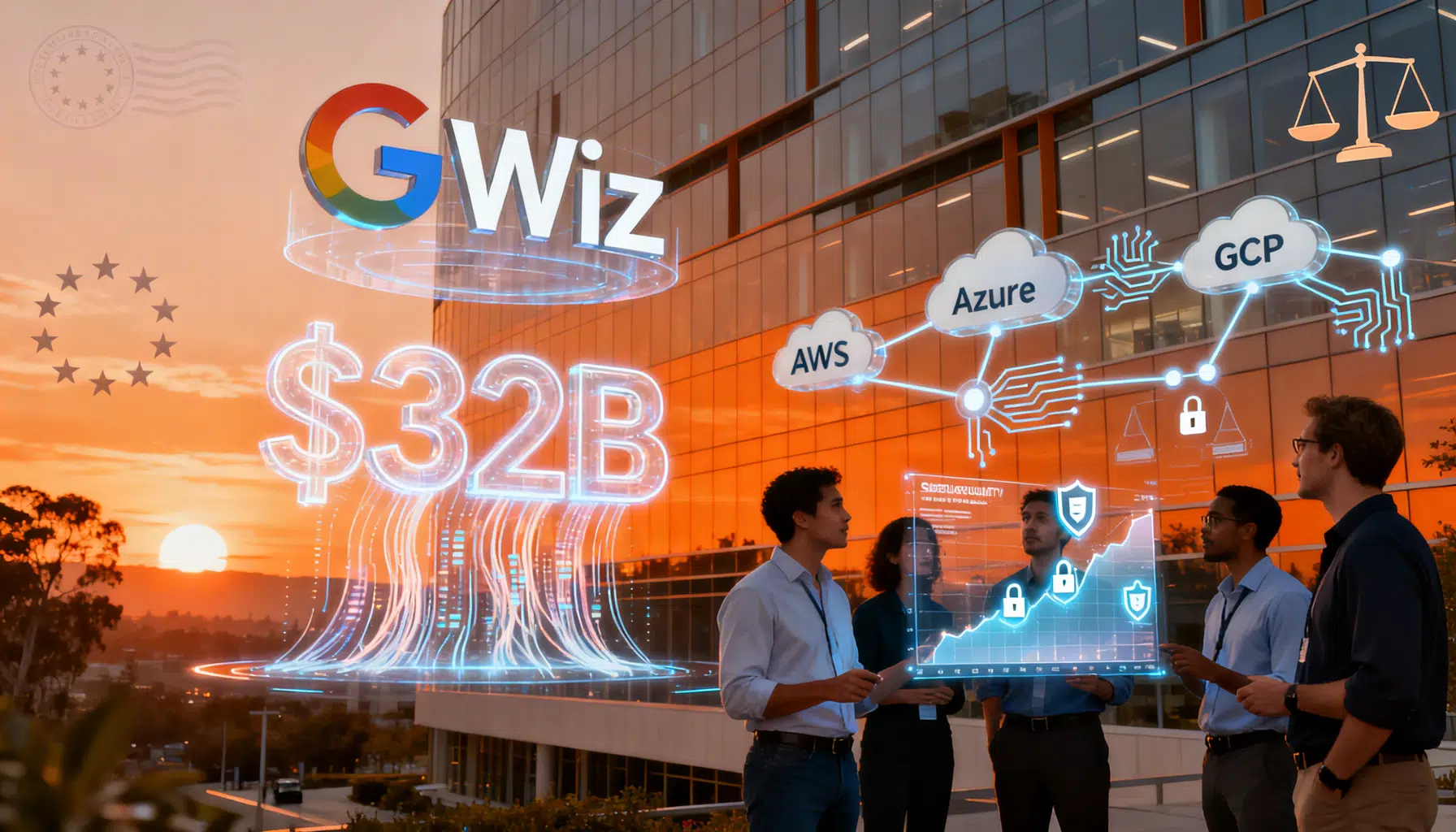
Image used for representation purposes only.
Google Closes $32B Wiz Deal, Capping a Two‑Year Saga and Rewiring the Cloud Security Race
Google has completed its $32 billion acquisition of cloud and AI security leader Wiz, closing on March 11, 2026, after clearing U.S. and European antitrust reviews. The all‑cash transaction is the largest in Google’s history and culminates months of regulatory scrutiny and industry speculation about how deeply the search and cloud giant would push into cybersecurity. (blog.google )
Why it matters
- Scale: It is Google’s biggest-ever acquisition and among the largest cybersecurity deals on record, signaling an aggressive bid to differentiate Google Cloud with native, AI‑driven security. (techcrunch.com )
- Strategy: Wiz joins Mandiant under Google Cloud, positioning Google to offer an end‑to‑end platform spanning threat intel, SecOps, and multi‑cloud risk management—an area where CIOs increasingly seek consolidation. (securityweek.com )
- Market dynamics: Regulators let the deal proceed, concluding credible competition remains—particularly from Amazon and Microsoft—easing concerns that Google could leverage Wiz to squeeze rivals. (itpro.com )
The road to closing: from a rejected bid to regulatory greenlights
- July 2024: Google’s initial $23 billion offer to buy Wiz collapses as the startup moves toward an IPO path. (ynetnews.com )
- March 18, 2025: Talks resume and Google announces a $32 billion agreement—an all‑cash deal that included a reported multibillion‑dollar breakup fee if regulators ultimately blocked the transaction. Google guided investors that closing was expected in 2026. (blog.google )
- November 2025: The U.S. Department of Justice concludes its antitrust review, removing a key hurdle to closing. (bloomberg.com )
- February 10, 2026: The European Commission unconditionally clears the acquisition, citing “several credible competitors” and limited competitive risk from data access. (itpro.com )
- March 11, 2026: Deal closes; Wiz formally joins Google Cloud. (blog.google )
What changes for customers right now
Google says Wiz will maintain its brand and continue to secure workloads across AWS, Microsoft Azure, Google Cloud, and Oracle Cloud—key to assuaging buyers that chose Wiz precisely for its multi‑cloud neutrality. Both companies frame the combination as additive rather than exclusive. (techcrunch.com )
In practical terms, enterprise security teams should expect:
- Continued support across major clouds, with commitments to keep Wiz cloud‑agnostic. (techcrunch.com )
- Tighter integrations between Wiz’s Cloud and AI Security Platform and Google’s security stack (Threat Intelligence, Chronicle/SecOps, and Mandiant IR) aimed at faster detection, prioritization, and response. (securityweek.com )
- Accelerated AI features inside Wiz, with the companies flagging Gemini‑powered enhancements to come. (securityweek.com )
Inside the product logic of the deal
Wiz popularized agentless, graph‑driven cloud risk visibility that correlates misconfigurations, vulnerabilities, identities, secrets, and runtime signals to surface material findings in seconds. In April 2024, Wiz added cloud detection and response depth by acquiring Gem Security—rounding out what many buyers now view as a CNAPP‑class platform. (forrester.com )
Google, meanwhile, has been building a security flywheel around Google Cloud, highlighted by its 2022 Mandiant purchase and ongoing investments in threat intel, SecOps, and AI defenses. Google and Wiz say the combined roadmap targets a unified, AI‑accelerated security platform spanning code to cloud, with a focus on speed-to-signal and automated remediation. (securityweek.com )
What regulators concluded—and why
EU investigators found that even if Google tried to bundle Wiz or restrict third‑party cloud support, customers could switch to other credible vendors. The Commission also concluded Google would not gain access to commercially sensitive data from rival cloud providers through Wiz, given how that data is typically handled across the security industry. Those findings—and the DOJ’s earlier sign‑off—defused fears of platform foreclosure. (itpro.com )
The money: record exit, retention, and who gets paid
For Israel’s tech ecosystem, this ranks as the largest exit on record, with the country projected to collect billions of shekels in taxes tied to founder and employee equity gains. Index Ventures, Sequoia Capital, and Insight Partners are among outside investors reportedly realizing multibillion‑dollar returns. Google has also earmarked substantial retention packages to keep Wiz talent on board post‑close. (ynetnews.com )
Competitive implications: AWS, Microsoft—and the multi‑cloud pledge test
- For AWS and Microsoft, Wiz’s continued multi‑cloud stance is the first—and perhaps most critical—signal customers will watch. Any perceived erosion of cloud neutrality would create openings for competitors in CNAPP, CSPM, and CWPP categories. EU regulators explicitly cited the presence of “credible competitors,” underscoring how crowded and fast‑moving the market remains. (itpro.com )
- For Google Cloud, Wiz is a swing factor in large enterprise pursuits where security is now a primary deal lever alongside data and AI. TechCrunch reported that Wiz’s 2025 financial performance crossed a symbolic ARR milestone, underlining why Google was willing to pay a premium to secure the asset. (TechCrunch attributes this figure to a source familiar with the matter.) (techcrunch.com )
Risks and open questions
- Integration complexity: Folding an independent, multi‑cloud platform into a hyperscaler’s stack is nontrivial. Customers will scrutinize roadmap execution and any changes to partner integrations or data handling. (securityweek.com )
- Pricing and bundling: While EU reviewers judged competition robust, enterprises will watch for pricing moves or bundle incentives that could reshape procurement dynamics across clouds. (itpro.com )
- Talent retention: SecurityWeek reports Google has set aside significant retention incentives. Execution depends on keeping Wiz’s product velocity—and culture—intact inside a much larger organization. (securityweek.com )
What to watch next
- Near‑term roadmap drops: Google and Wiz have teased Gemini‑infused capabilities and a more unified experience across cloud security operations. Expect announcements focused on accelerating detection and automating fixes across multi‑cloud estates. (securityweek.com )
- Enterprise migrations: Case studies showing reduced mean‑time‑to‑remediate (MTTR) or consolidated tool stacks will be early proof points for the investment thesis. (securityweek.com )
- Regulatory aftercare: Continued monitoring is likely in the U.S. and EU given Google’s broader antitrust exposure, even as this specific deal cleared. (itpro.com )
The bottom line
By closing the Wiz acquisition on March 11, 2026, Google has planted a decisive flag in security as a core pillar of its cloud strategy. The companies insist Wiz will remain multi‑cloud and brand‑distinct, while promising faster, AI‑powered defenses that span code to runtime. With U.S. and EU approvals in hand and a record price tag, attention now shifts to execution: whether Google can harness Wiz’s momentum without compromising the cloud‑agnostic traits that made it indispensable to security teams in the first place. (techcrunch.com )
Fast facts and timeline
- July 2024: Wiz rejects Google’s $23B bid. (ynetnews.com )
- March 18, 2025: $32B acquisition announced; close targeted for 2026. (blog.google )
- Nov 5–6, 2025: DOJ review concludes in the U.S. (bloomberg.com )
- Feb 10, 2026: European Commission clears the deal unconditionally. (itpro.com )
- March 11, 2026: Deal closes; Wiz joins Google Cloud, brand intact, multi‑cloud support affirmed. (blog.google )