
Taiwan’s March Crunch: Defense Deadlines, PLA Drills, and an AI-Powered Economy
As March deadlines loom for U.S. arms deals, Taiwan weighs defense budgets and PLA pressure against an AI-driven economic surge and a new U.S. trade pact.
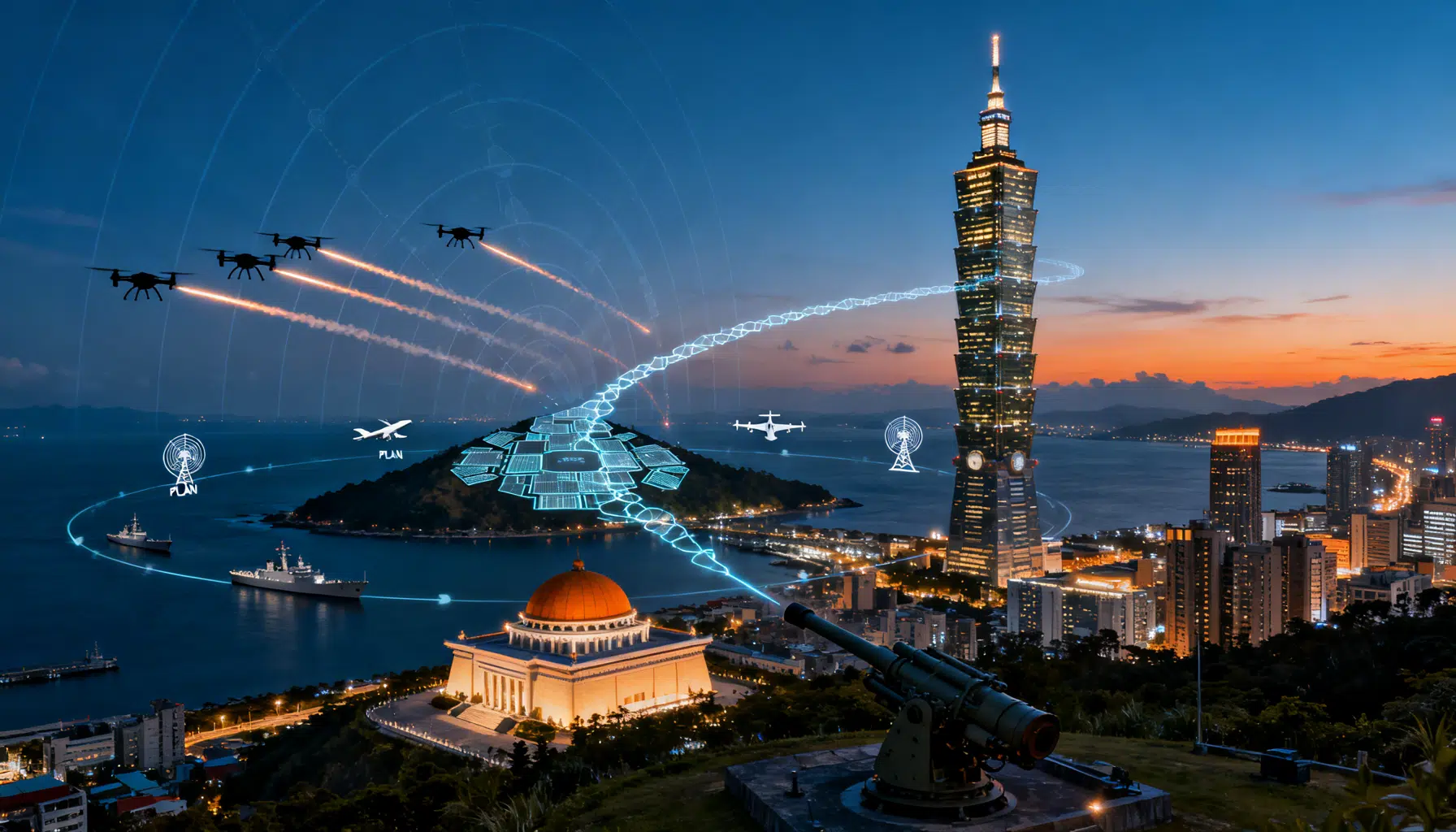
Image used for representation purposes only.
Taiwan’s high-stakes March: defense deadlines, PLA pressure, and an AI-fueled boom
Taiwan enters mid-March 2026 balancing urgent defense decisions against intensifying Chinese military activity—while riding a powerful economic upswing from the global AI buildout. With a series of U.S. arms offers nearing expiration and a special defense budget grinding through an opposition-led legislature, choices made in the coming days could shape deterrence across the Taiwan Strait for years. (taipeitimes.com )
The clock on U.S. arms deals
Taiwan’s Ministry of National Defense (MND) has received multiple U.S. Letters of Offer and Acceptance (LOAs) for systems including TOW and Javelin anti-tank missiles and M109A7 self-propelled howitzers—offers that were initially valid until March 15, 2026. The ministry has sought U.S. extensions to prevent the packages from lapsing amid domestic budget delays. Separately, a new LOA for HIMARS requires legislative authorization and a signature by March 26. (taipeitimes.com )
Those deadlines collide with political realities: after weeks of gridlock, rival versions of a special defense budget finally advanced to committee on March 6–7, but final passage remains uncertain. The main Cabinet plan envisions an eight-year spending program to strengthen resilience and asymmetric capabilities; opposition drafts prioritize select purchases. (taiwannews.com.tw )
Inside the special budget—and the “T‑Dome” plan
President Lai Ching-te has framed a multiyear push to raise defense outlays above 3% of GDP in 2026 and toward 5% by 2030, anchored by an eight-year, roughly US$40 billion supplemental to harden air defenses and expand asymmetric capabilities. A centerpiece is the proposed “Taiwan Dome” or “T‑Dome,” a layered air- and missile-defense architecture intended to counter drones, cruise missiles, and ballistic threats. (apnews.com )
Lai first outlined “T‑Dome” publicly in October 2025, tying it to broader readiness measures. The initiative has since featured prominently in budget debates as supporters argue it would protect critical infrastructure and population centers. (apnews.com )
PLA pressure becomes routine—and larger
Beijing’s large-scale drills have become more frequent and complex since 2022. The latest major exercise window—December 29–30, 2025—saw over 130 PLA aircraft and 22 naval vessels operating around the island in 24 hours, with civilian air traffic disrupted by diversions. Taipei framed the activity as coercive “gray zone” pressure designed to normalize encirclement tactics. (washingtonpost.com )
Taiwan’s response includes stepped-up training for counter-drone operations and accelerated procurement of air-defense and sensing systems, consistent with the asymmetric focus of recent budgets. (apnews.com )
Readiness on display: live-fire in the east
To maintain combat credibility and signal preparedness, the Army’s Huadong Defense Command plans live-fire exercises in Taitung County from March 24–27 (6–8 a.m. daily), covering sectors near the Taimali River. The drills underscore a shift toward dispersed operations and eastern logistics routes—key in any protracted contingency. (taiwannews.com.tw )
Politics: an opposition legislature tests the president
Since May 2024, an opposition-controlled Legislative Yuan has expanded its oversight powers, fueling mass protests and setting the stage for repeated showdowns with the executive. That dynamic now shapes the defense debate: the KMT and TPP advanced their own special-budget versions, with one plan tying funding more tightly to formal U.S. LOAs and another trimming outlays relative to the Cabinet draft. Whether lawmakers can authorize signatures on expiring offers without fully resolving the broader package remains the near-term question. (apnews.com )
Economy: AI supercycle lifts growth, markets, and TSMC
Even as security risks rise, Taiwan’s economy has surged. Preliminary data show 2025 growth at roughly 8.6%, the fastest in 15 years, powered by exports of AI servers, chips, and precision components—momentum that forecasters expect to carry into 2026. (apnews.com )
Taiwan Semiconductor Manufacturing Co. (TSMC)—the linchpin of advanced chip supply—continues to post robust numbers. The foundry’s February revenue rose about 22% year over year, after a record 2025 in which sales and profits jumped on heavy AI demand. TSMC’s board in February also approved roughly $45 billion in new capital outlays to add and upgrade capacity, a signal of sustained confidence in leading-edge nodes and advanced packaging. (economictimes.indiatimes.com )
Trade: deepening ties with Washington
On February 12, 2026, the United States and Taiwan signed an Agreement on Reciprocal Trade (ART), expanding cooperation on market access and economic security. Analysts say the deal complements—rather than replaces—Taiwan’s central role in U.S.-bound tech supply chains. (apnews.com )
What to watch next
- March 24–27: Army live-fire near Taimali River, Taitung—watch for scenario design and lessons for dispersed, austere operations. (taiwannews.com.tw )
- By March 26: Legislative authorization and signature window for HIMARS LOA; slippage would extend uncertainty and potentially raise costs. (taipeitimes.com )
- Spring 2026 legislative calendar: Committee work on competing special-budget drafts and potential floor action; look for whether “T‑Dome” funding is preserved intact. (taiwannews.com.tw )
- PLA operational tempo: Any follow-on drills or ADIZ incursions after the December maneuvers will signal Beijing’s 2026 posture—and test Taiwan’s readiness cycle. (washingtonpost.com )
The bottom line
Taiwan’s strategic position hinges on decisions due in days, not months: securing signatures on expiring U.S. offers, aligning parties around a multi-year defense plan, and translating the “T‑Dome” vision into layered, fielded capability. All this unfolds under the shadow of normalized PLA pressure—and atop a once-in-a-generation economic boom that both finances and depends on the island’s security. If Taipei can thread the legislative needle while sustaining deterrence, 2026 could be remembered as the year it matched its economic “silicon shield” with a credible military one. (taipeitimes.com )
Related Posts

Huawei’s 2026 Playbook: Phones, Chips, Cars—and a New Tech Fault Line
Huawei’s 2026 surge: back on top in China phones, pushing HarmonyOS, mapping bold AI chips, powering hot EVs—while U.S. and Europe tighten the screws.

Samsung’s big week: Galaxy S26 goes live as HBM4 race heats up
Samsung launches Galaxy S26 and doubles down on AI as HBM4 validation nears, capping record chip-driven profits. Key dates, features, and outlook.