INTC in 2026: Price Action, Nvidia Tie‑Up, Altera Sale, and the 18A Foundry Reboot
Intel (INTC) in 2026: price, Nvidia stake, Altera sale, Q1 outlook, and 18A foundry ramp—key catalysts, risks, and what to watch next.
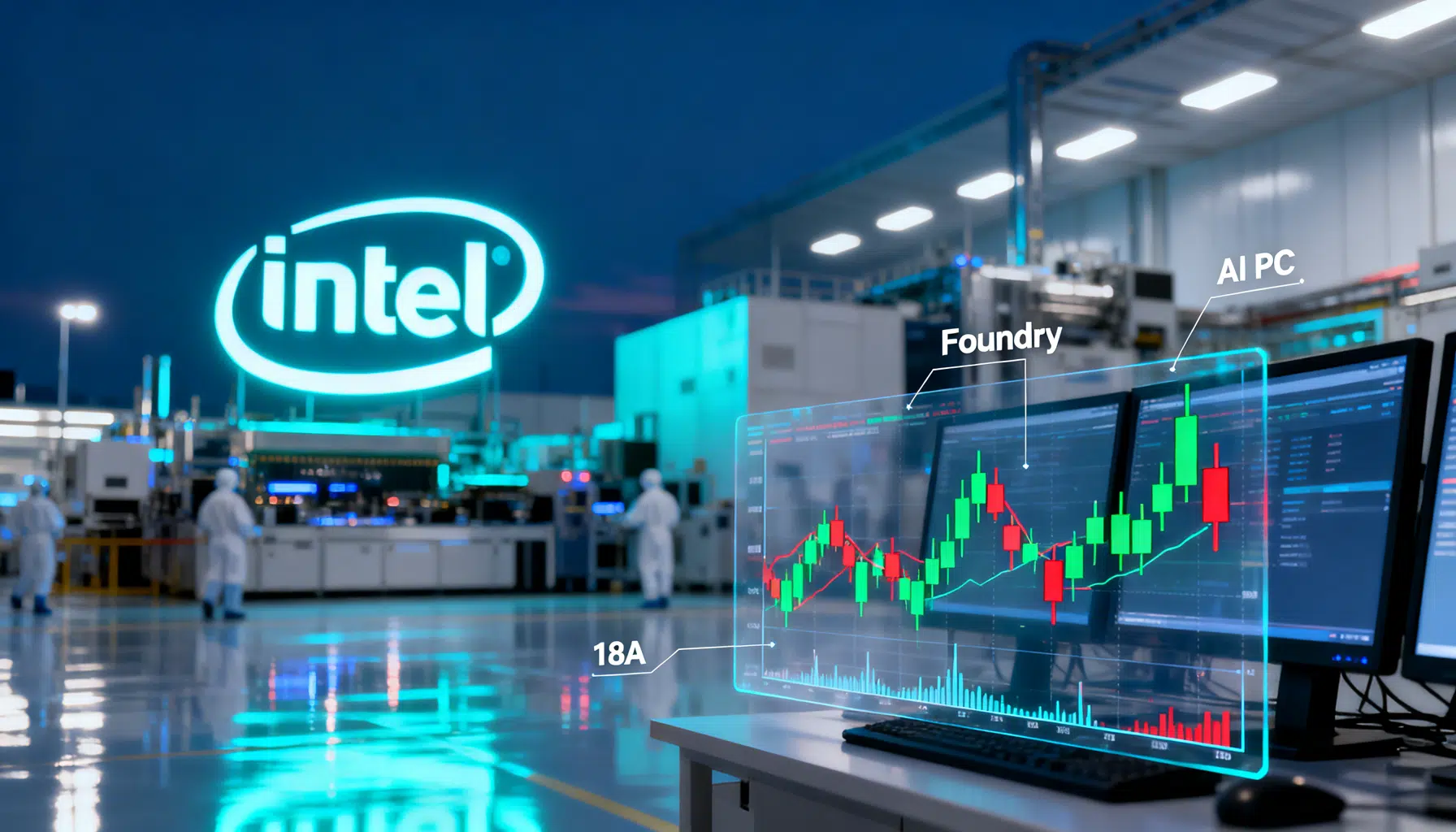
Image used for representation purposes only.
Market snapshot
Intel (NASDAQ: INTC) is trading at $45.76, down 0.06% intraday, with a market cap of about $155.4 billion as of 00:15 UTC on March 17, 2026. The session has ranged between $45.69 and $49.05, with a recent open at $47.92. The company’s headline P/E appears elevated on depressed trailing earnings.
Why INTC is back in the headlines
- New leadership: Intel appointed veteran tech investor and executive Lip‑Bu Tan as CEO, effective March 18, 2025, in a boardroom reset aimed at accelerating a turnaround. Shares jumped on the news as Wall Street embraced the plan. (newsroom.intel.com )
- Strategic capital and partners: In September 2025, Nvidia disclosed a $5 billion equity investment in Intel as part of a broader collaboration on data‑center and PC platforms; the purchase closed later in 2025 at $23.28 per share, according to filings and subsequent coverage. (cnbc.com )
- Portfolio reshaping: Intel sold a 51% controlling stake in its FPGA unit Altera to Silver Lake in 2025, deconsolidating the business and trimming operating expense targets; the transaction closed in the second half of the year. (apnews.com )
- Additional monetization: Intel further raised cash by selling portions of its Mobileye (MBLY) stake via secondary offerings in mid‑2025; Mobileye disclosed Intel still held about 79.5% of outstanding shares and 97%+ voting power as of year‑end 2025. (davispolk.com )
Earnings check: Q4 2025 and the Q1 2026 outlook
Intel’s official Q4 2025 release shows revenue of $13.7 billion (down 4% y/y) with GAAP diluted EPS of −$0.12 and non‑GAAP EPS of $0.15. CFO David Zinsner said supply would be “lowest in Q1 before improving in Q2 and beyond,” flagging near‑term constraints even as demand stabilizes. For Q1 2026, Intel guided revenue to $11.7–$12.7 billion, non‑GAAP gross margin to 34.5%, and non‑GAAP EPS around $0.00 at the midpoint. (intc.com )
Segment notes from the same filing highlighted: Client Computing Group at $8.2 billion (−7% y/y), Data Center & AI at $4.7 billion (+9% y/y), and Intel Foundry revenue of $4.5 billion (+4% y/y) including intersegment activity. (intc.com )
Foundry reboot and product roadmap: 18A goes commercial
A core pillar of the bull/bear debate is Intel’s foundry and process roadmap. Management says the 18A node ramped to high‑volume manufacturing in Arizona and Oregon, with progress on High‑NA EUV readiness. In parallel, Intel launched its first consumer platform built on 18A—Core Ultra Series 3—at CES 2026, positioning it as the company’s broadest AI PC rollout to date. (intc.com )
Investors also have a dated, near‑term milestone: Intel’s Foundry Direct Connect event on March 24, 2026, where customer traction, process updates and packaging roadmaps are expected to take center stage. (intel.com )
Strategy and balance sheet: what’s changed
- Partnerships and optionality: The Nvidia tie‑up and equity stake added both capital and potential co‑development paths in data center and client platforms—key as AI reshapes compute. Regulators cleared the investment, and the transaction was carried out as disclosed. (cnbc.com )
- Portfolio focus: Beyond the Altera deal, Intel has repeatedly signaled a willingness to prune non‑core assets while doubling down on x86 platforms, AI accelerators, and the foundry push. The company explored strategic options for networking/edge in 2025, later opting to keep the unit in‑house to integrate hardware, software, and systems more tightly. (crn.com )
Key risks to the INTC thesis
- Near‑term supply constraints and margin pressure: Management guided to flat non‑GAAP EPS for Q1 2026 at the midpoint and noted supply tightness into Q1 before improving—leaving little room for execution hiccups. (intc.com )
- Competitive intensity in AI and data center: Nvidia’s cadence in accelerators and AMD’s CPU/GPU roadmap continue to pressure pricing and share, even with Intel’s Gaudi and Xeon ramps. (Industry context; see Intel’s own nods to balancing CPU/GPU/accelerator strategies and external coverage.) (techradar.com )
- Capital needs and foundry execution: The foundry turnaround will require sustained wafer demand and customer wins at advanced nodes to drive scale, yield, and margin progress. Intel outlined a new financial framework for its foundry reporting in 2024–2025 to increase transparency into this effort. (download.intel.com )
What to watch next
- March 24, 2026: Intel Foundry Direct Connect—customer announcements, 18A/18A‑P updates, and packaging roadmaps could set expectations for external revenue scale and timelines. (intel.com )
- Q1 2026 results and cadence into 2H: Whether supply improves by Q2 as guided, and how gross margin tracks against foundry utilization and product mix. (intc.com )
- Adoption of 18A products: OEM uptake of Core Ultra Series 3 AI PCs and early indicators from carrier/edge partners following recent network‑side disclosures. (newsroom.intel.com )
Bottom line
INTC enters spring 2026 as a turnaround with new leadership, fresh capital partnerships, and the first commercial 18A products on the market. The bull case hinges on visible foundry traction, AI platform follow‑through, and margin recovery; the bear case points to tight near‑term supply, relentless competition, and the long, capital‑intensive climb to foundry scale. Upcoming disclosures—starting with the March 24 foundry event—should clarify whether Intel’s 2026 is an inflection year or another step in a drawn‑out rebuild. (intel.com )
Related Posts
AMD Stock after Meta’s 6GW AI Deal: Growth, Dilution, and the 2026 Playbook
AMD stock jumps as Meta inks a 6GW AI chip deal featuring performance-based warrants. Here’s what it means for growth, dilution, and 2026 execution.
Steve Wozniak’s 2026: Honors, AI Reality Checks, and a Renewed Fight Against Deepfakes
Steve Wozniak’s 2026: humanitarian honors, sharp AI warnings, and a revived lawsuit shaping platform accountability.
AI Image Generation API Integration: Architecture, Code Examples, and Best Practices
A practical guide to integrating AI image generation APIs with production-ready code, architecture patterns, safety, and cost optimization.