
Xfinity Internet in 2026: Unlimited data, five‑year price locks, and the slow march to symmetrical multi‑gig
Xfinity’s 2026 pivot: unlimited-data plans, five-year price locks, prepaid NOW Internet, and early DOCSIS 4.0 rollouts for symmetrical multi‑gig speeds.
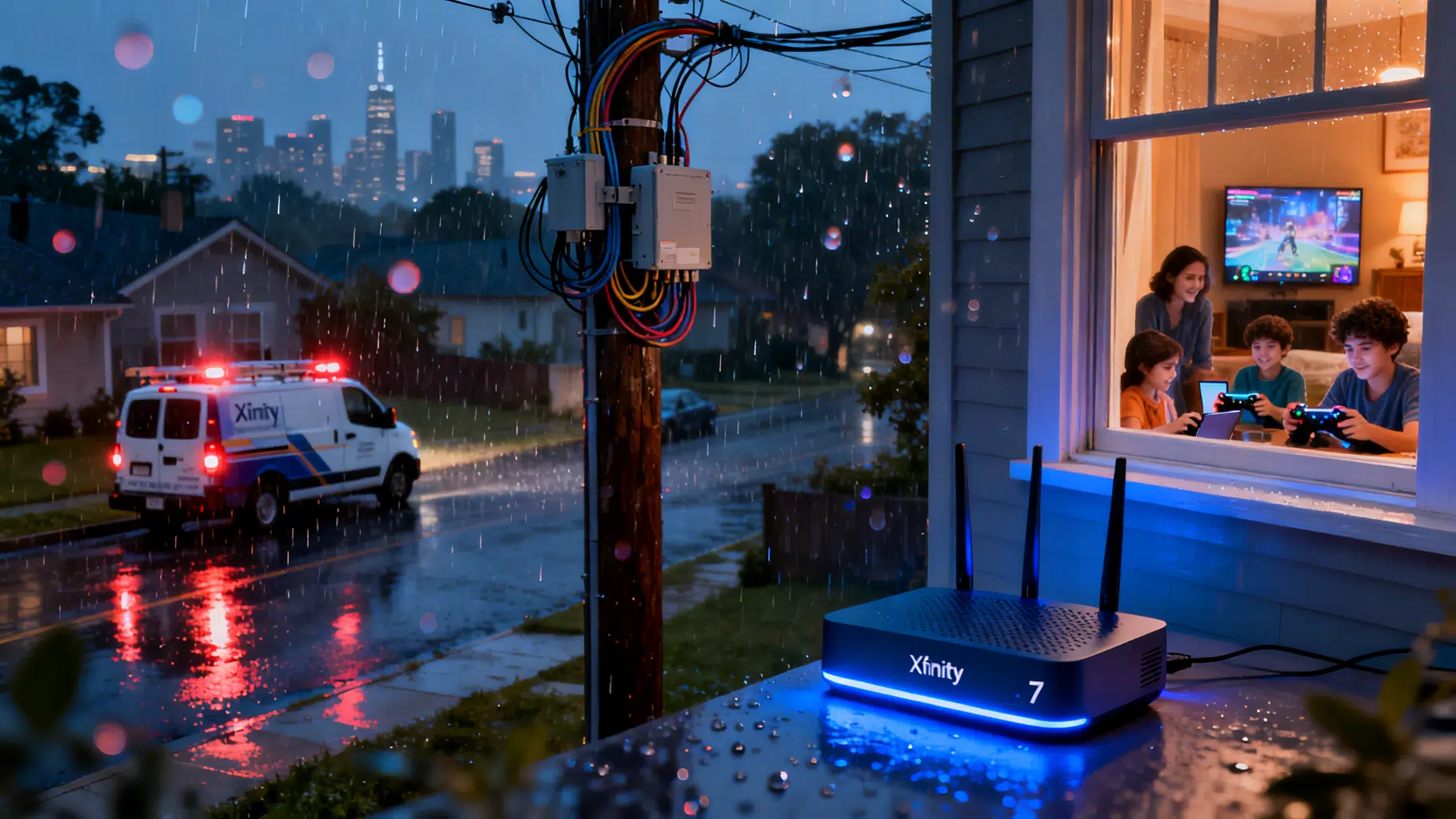
Image used for representation purposes only.
The state of Xfinity Internet in 2026: what’s new, what’s next
Comcast’s Xfinity brand spent the last 18 months overhauling home internet with simpler “all-in” pricing, unlimited-data plans for new customers, and the first large-scale rollouts of DOCSIS 4.0 for symmetrical multi‑gig speeds. It’s a bid to stem broadband losses amid fiercer competition from fiber and fixed‑wireless while laying groundwork for faster, more reliable service. (arstechnica.com )
Pricing and plans: simpler, with long guarantees
- Nationwide plan revamp: In June 2025, Comcast launched new national internet tiers that include unlimited data and the Xfinity Gateway, moving away from add‑on fees that frustrated customers. These “everything included” plans were positioned to win back share after broadband subscriber losses earlier in 2025. (arstechnica.com )
- Five‑year price guarantee: Starting spring–summer 2025, Comcast introduced an option to lock in pricing for five years on new internet packages in multiple markets, part of a push toward transparent, predictable bills. (california.comcast.com )
- TV bundle shift: Early 2026 brought “all‑inclusive” TV packages with simplified pricing; while a video move, it underscores Comcast’s broader bill-simplification strategy that now extends across connectivity. (xfinity.com )
Data policy: unlimited for new plans, legacy caps may linger
New Xfinity Internet plans launched in 2025 include unlimited data nationwide. However, Comcast’s own data-usage page notes that customers on previous plans may still have a monthly cap—so switching plans can matter. Reports from users in early 2026 show some legacy accounts still encountering cap messaging. (arstechnica.com )
DOCSIS 4.0 and the road to symmetrical multi‑gig
Comcast is actively deploying DOCSIS 4.0 (FDX) across parts of its cable footprint, enabling symmetrical multi‑gig speeds over existing coax. The company first demonstrated world‑first live 10G/DOCSIS 4.0 milestones in 2022–2023 and began live market rollouts thereafter (e.g., Atlanta), with broader expansions continuing into 2025–2026. Infrastructure partners like CommScope have been shipping D4.0 amplifiers to accelerate upgrades. (corporate.comcast.com )
“X‑Class” tiers and the XB10 gateway
Comcast’s early D4.0‑based, symmetrical tiers are being marketed in select areas as “X‑Class” and typically require the new XB10 gateway with Wi‑Fi 7. Industry reporting and Comcast materials highlight the Wi‑Fi 7 XB10 and D4.0 path; availability remains limited by market as upgrades proceed. Customers should confirm eligibility at their address and understand that asymmetrical “Gigabit x2” over DOCSIS 3.1 is different from symmetrical X‑Class. (lightreading.com )
Prepaid “NOW Internet”: low‑cost, no‑contract option
Comcast launched the “NOW” brand in 2024 for prepaid, month‑to‑month internet and mobile, later expanding it nationwide. NOW Internet is designed as a budget alternative to 5G home internet, with simple, no‑credit‑check sign‑ups and included equipment. It remains available across the Xfinity footprint in 2026. (corporate.comcast.com )
Regulation and transparency: labels in, federal net neutrality out (for now)
- Broadband labels: Since April 10, 2024, large ISPs must display standardized “nutrition labels” at the point of sale showing total price, data allowances, typical speeds, and fees—rules that continue to apply in 2026. (apnews.com )
- Net neutrality: The FCC voted in April 2024 to restore Title II authority, but on January 2, 2025, the Sixth Circuit vacated the order. As of March 2026 there are no federal net‑neutrality rules governing ISPs like Comcast, absent new legislation. (washingtonpost.com )
Reliability: generally stable, with periodic regional outages
Cable networks remain susceptible to local damage and maintenance events. Xfinity experienced notable city‑scale disruptions in 2025 (e.g., San Francisco) and scattered regional outages tied to storms and network work into early 2026 (e.g., West Alabama). Customers should use the Xfinity app’s outage section and sign up for text alerts, especially during severe weather. (sfchronicle.com )
Security and privacy: breach aftermath, “Wi‑Fi Motion” debate
- Data breach settlement: In January–February 2026, Comcast reached a proposed $117.5 million settlement resolving class actions from the October 2023 CitrixBleed incident that affected tens of millions of Xfinity accounts. Settlement approvals and notifications are proceeding through federal court. (inquirer.com )
- Wi‑Fi Motion feature: Comcast is promoting a Wi‑Fi‑sensing capability that uses signal disruptions between the gateway and devices to detect movement—an opt‑in feature that has drawn privacy scrutiny from tech press. If you’re concerned, review settings in the Xfinity app and privacy policy before enabling. (tomshardware.com )
Competitive context: why Comcast is changing
Fiber builds (AT&T, Google Fiber, municipal networks) and fixed‑wireless home internet (T‑Mobile, Verizon) have intensified competition. Comcast ended 2025 with continued broadband subscriber losses despite growth in wireless lines, prompting leadership to emphasize simpler pricing and product convergence for 2026. (lightreading.com )
Shopping Xfinity in March 2026: quick buyer’s guide
- Check address‑level availability: Confirm whether your location qualifies for X‑Class symmetrical tiers (DOCSIS 4.0) or standard asymmetrical tiers. If X‑Class is available, expect to need the XB10 gateway. (forums.xfinity.com )
- Verify plan generation: If your account is on a pre‑2025 plan, consider switching to the newer unlimited‑data tiers—many legacy plans still reference caps. (xfinity.com )
- Weigh prepaid vs. postpaid: NOW Internet offers month‑to‑month pricing with equipment included; standard Xfinity plans may bundle perks and multi‑year price guarantees. (corporate.comcast.com )
- Use the broadband label: Compare all‑in monthly cost, typical speeds, and data terms across providers (cable, fiber, fixed‑wireless) using each provider’s FCC‑required label. (arstechnica.com )
Outlook: a faster, clearer Comcast—if the upgrades reach you
Comcast’s pivot to unlimited‑data, long price locks, and cleaner billing was overdue—and it’s resonating. The bigger test in 2026 is execution speed: how quickly DOCSIS 4.0 expands, how reliably new Wi‑Fi 7 gateways perform, and whether customer sentiment improves as outages, privacy concerns, and competitive pressure persist. For households in upgraded areas, Xfinity’s symmetrical tiers could finally match fiber on speed; for everyone else, the simplified plans still remove much of the billing guesswork that long defined cable internet. (corporate.comcast.com )
Related Posts

MacBook Air M5: Faster Silicon, Wi‑Fi 7, and 512GB Base Storage Mark Apple’s 2026 Refresh
Apple’s 2026 MacBook Air adds M5 speed, Wi‑Fi 7/Bluetooth 6, and 512GB base storage. Prices start at $1,099 on March 11 availability.
Xfinity Outage Today: What’s Really Down on March 12, 2026—and How to Get Back Online
No nationwide Xfinity outage verified today, March 12, 2026, but localized disruptions persist. Here’s what’s happening and how to check your status.
Laptops in 2026: AI power soars, prices pinch, and dual‑screen designs go mainstream
AI-first laptops are surging in 2026, from dual‑screen OLEDs to 80‑TOPS NPUs—while memory price spikes threaten budget PCs. Here’s what matters now.