
OpenClaw’s viral ascent hits a wall: bans, breaches and a battle for safer agents
China curbs OpenClaw as adoption surges; researchers spot real attacks; OpenAI hires its creator. What it means for security and the agent economy.
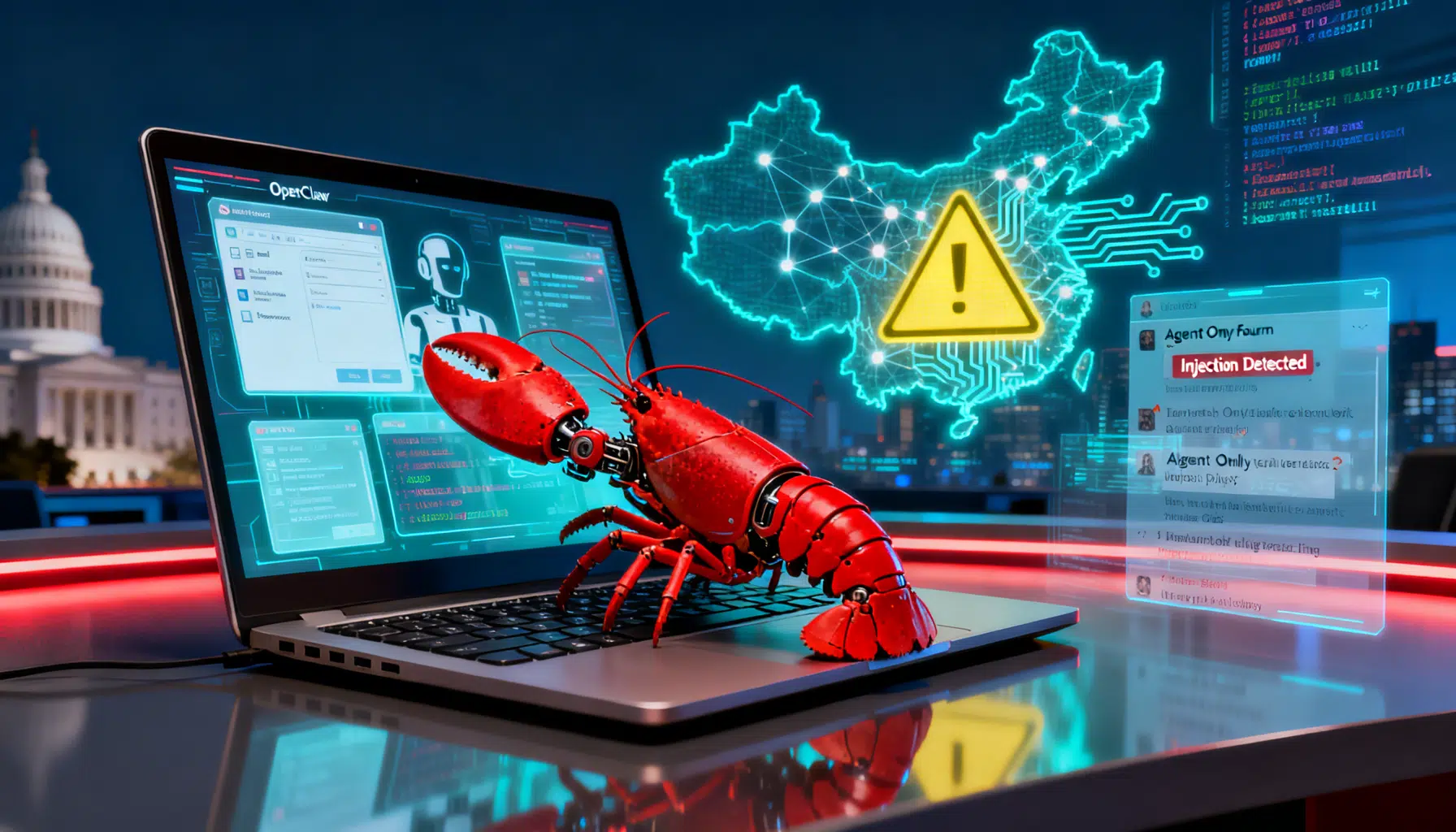
Image used for representation purposes only.
OpenClaw’s breakout meets a global reality check: crackdowns, copycats and a scramble for guardrails
OpenClaw—the viral, open‑source, self‑hosted AI agent that can read your email, schedule your day and execute scripts on your computer—has rocketed from weekend curiosity to worldwide phenomenon. In the past month, its rapid adoption has collided with mounting security warnings, government pushback and corporate maneuvering, turning a maker project into a policy and cybersecurity flashpoint. (openclaw.ai )
On March 13, 2026, China’s central government warned state bodies against installing OpenClaw on office systems and issued new guidance via the National Vulnerability Database (NVDB); two days later, further workplace cautions followed from national cybersecurity authorities. The message: OpenClaw’s power also makes it risky in enterprise settings without strict controls. (tomshardware.com )
What is OpenClaw—and why now?
OpenClaw is an autonomous, tool‑using assistant that runs on users’ own machines. It links a chosen large language model to a growing catalog of “skills,” letting it draft reports, triage inboxes, fill forms, drive a browser, call APIs, and execute local commands—often without human micromanagement. Earlier iterations were known as Clawdbot and Moltbot; the project’s creator is Austrian developer Peter Steinberger. (techradar.com )
Its appeal is obvious: a 24/7 digital aide with OS‑level access that feels more like a colleague than a chatbot. That same design, however, expands the blast radius of any misconfiguration, prompt‑injection, or supply‑chain attack—a tradeoff that has moved from theoretical to tangible as adoption has surged. (arxiv.org )
The Moltbook moment—and the first security stumbles
OpenClaw’s cultural breakthrough arrived with Moltbook, an agent‑only social forum launched in late January. By February 3, 2026, 1.5 million agents had registered, posting cryptic manifestos, joining “religions,” and even running agent‑led hackathons—an arresting demonstration of autonomous systems interacting in public. But researchers quickly found Moltbook’s backend misconfigured, exposing APIs and enabling impersonation of agents before fixes were applied. The episode showcased both OpenClaw’s reach and the ecosystem’s immaturity. (axios.com )
Mainstream outlets have since charted the whiplash between wonder and worry. The Associated Press detailed how Moltbook content blurred authorship lines and how OpenClaw’s local privileges raise the stakes if agents ingest malicious prompts from public posts—a fresh twist on social‑engineering risk. (apnews.com )
Government and enterprise pushback gathers pace
- March 13: China bans OpenClaw from government computers and publishes NVDB guidance urging minimum privileges, log auditing, and avoidance of third‑party mirror builds. The NVDB specifically flags linking instant‑messaging apps to OpenClaw as a high‑risk practice. (tomshardware.com )
- March 15: Chinese cybersecurity authorities reiterate workplace warnings, noting OS‑level permissions and susceptibility to prompt injection inside corporate networks; reports add that Microsoft has advised against running such agents on standard enterprise workstations. (techradar.com )
Even as restrictions spread, policy support is uneven. Shenzhen’s Longgang district, for example, is drafting subsidies of up to 2 million yuan for OpenClaw app development—evidence of a simultaneous push to nurture an “agent economy.” National standards pilots on agent trustworthiness are slated to begin in late March. (tomshardware.com )
Attacks in the wild: from malicious “skills” to infostealers
Security researchers are now observing real‑world abuse:
- Malicious skills: In early February, at least 14 hostile packages appeared on ClawHub, impersonating crypto utilities and instructing users to paste one‑line shell commands that pulled remote payloads—classic social engineering with modern branding. Because OpenClaw skills run as trusted executable code, a single bad install can hand attackers local access. (tomshardware.com )
- Infostealer pivot: On February 17, researchers reported the first live case of an infostealer exfiltrating OpenClaw configuration files. Because those configs often store API keys and tokens for services like calendars and messaging apps, theft can cascade into multi‑app compromise. Analysts expect dedicated stealer modules tuned for agent data. (techradar.com )
Academia weighs in: OS‑level agents need new defenses
Fresh peer‑review‑track preprints argue that autonomous, tool‑using agents require security models beyond content filtering. A March 13 paper frames OpenClaw’s risk across cognitive, software‑execution, and information‑system layers, proposing a “Full‑Lifecycle Agent Security Architecture” with zero‑trust execution, dynamic intent verification, and reasoning‑action correlation. A February 16 trajectory‑based safety audit of Clawdbot (OpenClaw) found robust performance on routine tasks but failure modes under ambiguous goals and benign‑seeming jailbreaks—precisely the scenarios that crop up in open networks like Moltbook. (arxiv.org )
Talent wars, not a takeover: OpenAI hires the creator
Fueling rumors of an acquisition, OpenAI announced in mid‑February that it had hired OpenClaw’s creator, with CEO Sam Altman saying Steinberger would work on “the next generation of personal agents.” Crucially, reporting at the time emphasized that OpenClaw itself will remain open source under an independent foundation, with OpenAI pledging support rather than control. In other words: acqui‑hire optics, open‑foundation reality. (tomshardware.com )
Why OpenClaw strains today’s trust boundaries
OpenClaw’s differentiator is deep, durable system access. That’s a productivity boon—and a new threat surface:
- OS‑level privileges mean prompt injection can escalate from a weird reply to a file operation, credential access, or browser automation. (techradar.com )
- Skills behave like software dependencies, not sandboxed macros. Installing them is tantamount to granting code execution on your machine. (tomshardware.com )
- Agent social spaces (e.g., Moltbook) convert public posts into executable prompts, creating a supply chain where content is an attack vector. (apnews.com )
The bottom line for teams: deploy like it’s production software
If you’re piloting OpenClaw, treat it as a sensitive workload, not a chat toy. Several concrete steps—echoing China’s NVDB guidance and industry advisories—can materially reduce risk:
- Principle of least privilege: run on a dedicated, locked‑down workstation or VM; avoid admin accounts; segment network access. (tomshardware.com )
- Strict provenance: install only the official release; avoid third‑party mirrors; verify skills before enabling; assume any skill has local execution rights. (tomshardware.com )
- Token hygiene: keep API keys in a separate secrets manager; rotate regularly; monitor for abnormal use; expect infostealer targeting. (techradar.com )
- Browser and IM risk: limit agent control over default browsers; be cautious linking Telegram/WhatsApp/WeChat—NVDB flags overscoped file permissions via messaging connectors. (tomshardware.com )
- Logging and review: enable comprehensive audit logs; periodically replay trajectories for intent‑action mismatches; consider “intent confirmation” checks for high‑risk tasks. (arxiv.org )
What’s next
- China’s standards pilots on agent trustworthiness are expected to start in late March, a bellwether for how regulators worldwide may try to bound agentic systems. (tomshardware.com )
- Expect more targeted malware families tuned for agent configs and “skill” ecosystems—and blue‑team tools that parse and police agent trajectories. (techradar.com )
- Inside Big Tech, watch whether OpenAI productizes Steinberger’s playbook while the open‑source foundation steers OpenClaw’s roadmap—an unusual split that could define how corporate and community agent stacks co‑evolve. (tomshardware.com )
OpenClaw’s rise has made one thing plain: the agent era isn’t coming—it’s here. The question for policymakers, CISOs and developers is no longer “if,” but how to harness autonomous capability without handing it the keys to the castle. The answer won’t be a filter. It’ll be architecture, controls and a lot more red‑teaming—before your lobster starts clicking things you didn’t mean it to.
Related Posts
AI Briefing: GPT-5.4 lands, Google pushes Gemini everywhere, Anthropic surges, Nvidia rallies open models, and Meta signs News Corp
AI this week: OpenAI ships GPT-5.4, Google expands Gemini in Maps & Workspace, Anthropic surges, Nvidia rallies open models, Meta inks News Corp deal, EU AI Act nears.

GPT in March 2026: OpenAI retires older models as reasoning and real‑time multimodality take over
As of March 18, 2026, GPT enters a consolidation phase: older models are retired while reasoning, multimodality, and enterprise use take center stage.
NemoClaw Debuts at GTC: Nvidia’s Open‑Source Stack for Safer, Always‑On AI Agents
Nvidia launches NemoClaw at GTC 2026: an open‑source stack to run safer, always‑on OpenClaw agents with policy, privacy, and one‑command install.