
Space in 2026: Artemis II’s countdown, Starship V3’s leap, Ariane 64’s debut and New Glenn’s rise
Artemis II eyes April 1, Starship V3 readies, Ariane 64 debuts with Amazon Leo satellites, and New Glenn advances—spaceflight hits a 2026 stride.
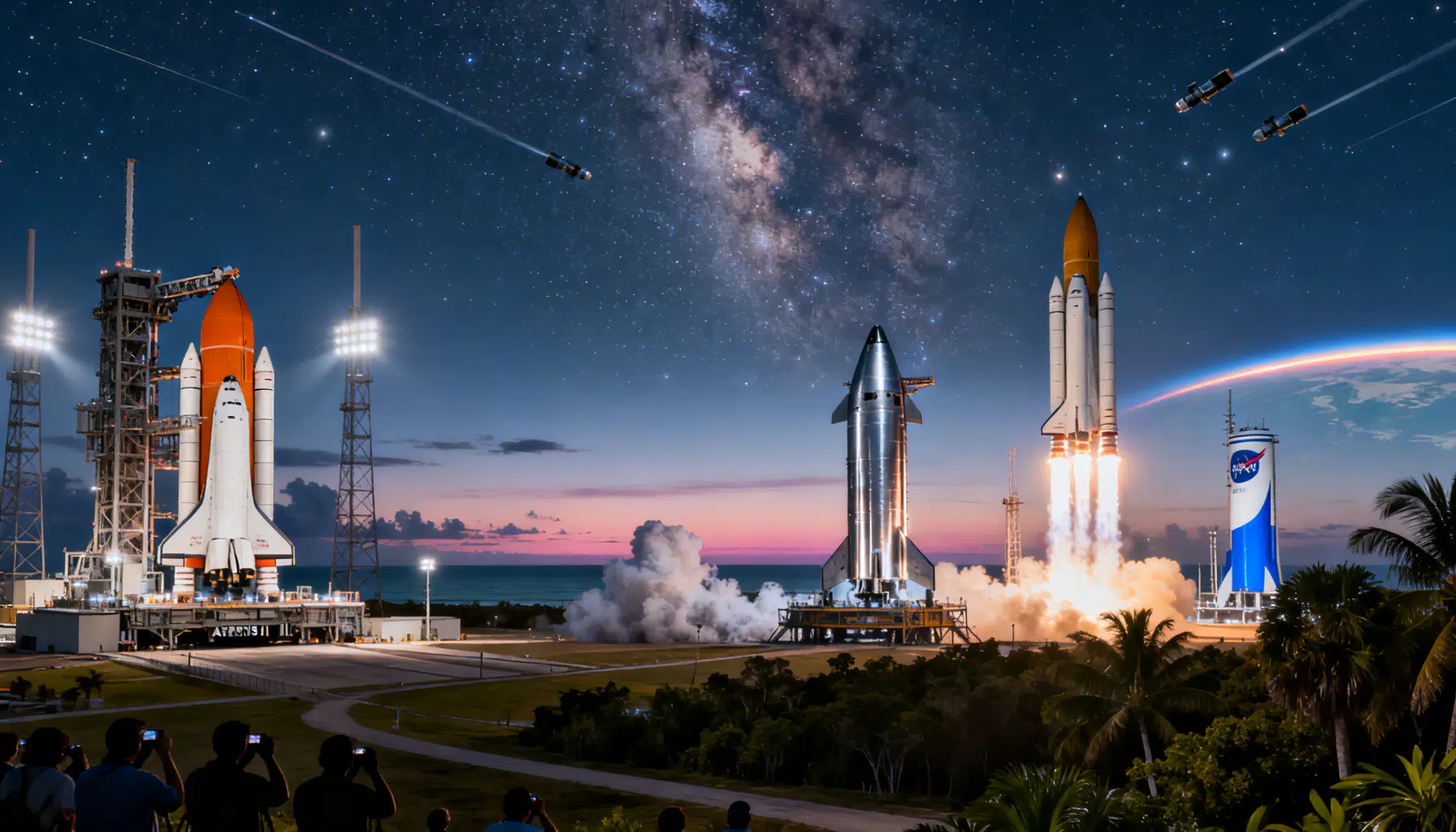
Image used for representation purposes only.
The week space became a relay race
From Florida to French Guiana to the Pacific, spaceflight is hitting a 2026 stride. NASA is preparing to roll the Artemis II moon rocket back to Launch Complex 39B on March 20 after troubleshooting in the Vehicle Assembly Building, targeting an earliest crewed launch opportunity of April 1, 2026, pending final testing and reviews. (space.com )
SpaceX, meanwhile, is finishing upgrades for the first flight of its bigger Starship “Version 3,” a test that company leaders have said could occur in mid‑to‑late March or slip into early April as integration work wraps. Falcon 9 has already logged more than 30 missions this year, underscoring SpaceX’s breakneck cadence while Starship readies. (space.com )
United States: Artemis II and Starship set the tone
- Artemis II status: NASA’s latest mission-availability planning document lists a launch window opening at 6:24 p.m. EDT on April 1, 2026, following a February rollback to address upper‑stage helium flow. Program leaders also added a mission to the Artemis campaign and adjusted the flight sequence to reduce risk on lunar landing flights later in the decade. (nasa.gov )
- Human Landing System reality check: A new NASA Inspector General audit highlights schedule pressure on the Starship lunar lander ahead of a notional 2027 landing, flagging integration and certification risks that managers must burn down in parallel with SLS/Orion progress. (oig.nasa.gov )
- Starship V3: SpaceX briefings and industry tracking point to the next integrated flight test coming as early as late March or early April, following a steady 2026 Falcon cadence that keeps infrastructure and teams hot. (space.com )
Europe: Ariane 64’s commercial debut lifts 32 Amazon internet satellites
Arianespace flew the first four‑booster Ariane 6—“Ariane 64”—on February 12, 2026, marking the launcher’s most powerful configuration and its first commercial customer mission. The rocket deployed 32 Amazon broadband satellites to low Earth orbit about 1 hour 54 minutes after liftoff, a milestone for Europe’s comeback in heavy‑lift launch. (space.com )
The flight—VA267, branded “Leo Europe 01” by Amazon—also reflected Amazon’s late‑2025 rebrand of Project Kuiper as “Amazon Leo,” part of a multi‑year deployment plan booking more than 80 launches across SpaceX, Blue Origin, ULA and Arianespace. (ariane.group )
Blue Origin: New Glenn moves from debut to delivery
Blue Origin’s heavy‑lift New Glenn reached orbit on its first test flight in January 2025, the company confirmed at the time. Over the subsequent year, the vehicle advanced toward operational work—including launching NASA’s twin ESCAPADE spacecraft to Mars and demonstrating booster recovery capability. Those steps position New Glenn as a competitor in the large‑payload market alongside Falcon Heavy, Falcon 9 rideshares, and Ariane 6. (blueorigin.com )
Mega‑constellations: Amazon Leo expands, Starlink sprints
- Amazon Leo: Following the rebrand from Project Kuiper, Amazon’s constellation added 32 spacecraft on Ariane 64’s debut and plans a broad 2026 service rollout as additional launches build coverage and capacity. (aboutamazon.com )
- Starlink: SpaceX executed back‑to‑back Starlink batches on March 13 and 14, pushing the company to its 32nd flight of 2026 by mid‑month. The pace underscores how operational constellations now shape global launch manifests. (space.com )
China: South‑pole science hunt in 2026
China’s Chang’e‑7, scheduled for launch around 2026, will target the lunar south pole with a lander, rover and hopper to scout for water ice and volatile deposits. CNSA has invited international instruments, and recent reports suggest a mid‑to‑late‑2026 landing window near Shackleton’s rim. (cnsa.gov.cn )
Science frontiers: Roman readies; Juno eyes an interstellar visitor
- Nancy Grace Roman Space Telescope: NASA says Roman is fully assembled and tracking toward shipment to Kennedy Space Center in summer 2026, aiming for launch as early as fall 2026 (no later than May 2027) on a Falcon Heavy. Roman will map dark energy signatures and exoplanets with a Hubble‑class sharpness over an immense field of view. (science.nasa.gov )
- Interstellar object 3I/ATLAS: A newly modeled trajectory shows 3I/ATLAS passed near Jupiter on March 16, 2026; mission planners have assessed opportunistic observations with NASA’s Juno spacecraft during the approach. It’s a rare, real‑time brush with an interstellar body inside our solar system. (arxiv.org )
India: Gaganyaan’s uncrewed milestone tracks for 2026
ISRO’s first uncrewed orbital test in the Gaganyaan program—G1—remains targeted for around March 2026, with the crewed demonstration now widely expected in 2027 after additional safety reviews. (indiatoday.in )
What to watch next (dates in Eastern Time)
- March 20, 2026: Artemis II rollout back to Pad 39B for final pad work and pre‑launch milestones. (space.com )
- Late March–early April 2026: Starship V3 integrated test flight window, pending regulatory and technical readiness. (space.com )
- Spring–summer 2026: Additional Ariane 6 missions as Europe ramps operations, with targets of 7–8 flights in 2026 per recent industry statements. (spaceintelreport.com )
- Summer–fall 2026: Roman observatory ships to Florida and targets launch as early as fall. (science.nasa.gov )
The bottom line
As of March 20, 2026, crewed deep‑space flight is back within weeks, Starship’s next leap looms, Europe’s Ariane 64 is open for business, New Glenn has joined the heavy‑lift roster, and mega‑constellations are dictating launch tempo. The second quarter of 2026 will test whether the world’s launch providers can sustain this cadence while flagship science missions like Roman move into the on‑deck circle. (space.com )