
Best TV Brands in 2026: Samsung vs LG vs Sony vs TCL vs Hisense
The definitive 2026 guide to the best TV brands—Samsung, LG, Sony, TCL, Hisense and Vizio—based on the latest tests, formats, features and market trends.
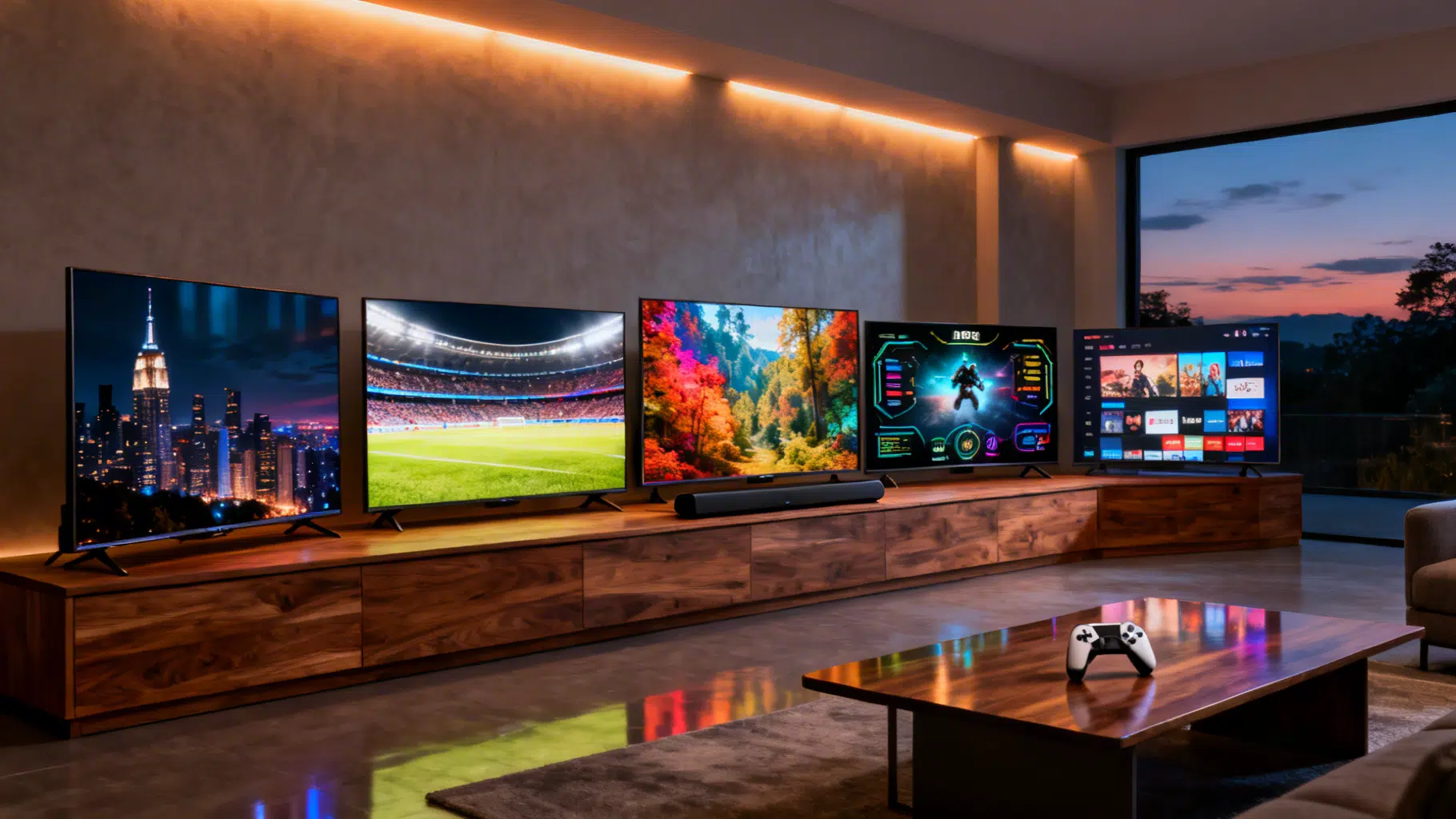
Image used for representation purposes only.
The best TV brands in 2026, ranked for how people actually buy now
If you’re shopping right now (as of March 22, 2026), the TV aisle is being reshaped by brighter OLEDs, cheaper and larger Mini‑LED sets, and a battle over picture and audio formats. Independent testing and market trackers show Samsung, LG, Sony, TCL and Hisense setting the pace, with Walmart-owned Vizio repositioned as a budget private‑label option in North America. This guide blends the latest review data, technology shifts and market context to help you choose with confidence. (rtings.com )
Quick verdict: the short list
- Samsung: Best all‑around performance at the top end (especially QD‑OLED), unmatched ecosystem reach, but still no Dolby Vision. (rtings.com )
- LG: Best OLED depth and breadth, superb gaming features and software support; design standouts like the ultra‑thin Wallpaper OLED. (forbes.com )
- Sony: Reference‑grade accuracy and processing; crowned 2025 “King of TV,” though prices trend higher. (valueelectronics.com )
- TCL: Value leader pushing premium features (huge Mini‑LED, high refresh) into mid‑prices; fast‑rising shipments. (rtings.com )
- Hisense: Bright, aggressively priced Mini‑LED plus category leadership in Laser TV. (twice.com )
- Vizio (Walmart exclusive): Budget‑first private‑label move with SmartCast at the core; expect sharp pricing and retail integration. (corporate.walmart.com )
Brand by brand: strengths, 2026 highlights, who should buy
Samsung
- Why it stands out: Samsung’s QD‑OLED flagship remains a top‑tested pick for overall picture quality and gaming, and the company continues to lead global shipments—while pushing its own HDR and audio standards. The catch: Samsung still doesn’t support Dolby Vision. (rtings.com )
- 2026 highlights: Review test benches still rate Samsung’s S95F QD‑OLED as the best TV “you can buy right now.” Samsung is also rolling out HDR10+ Advanced to counter Dolby Vision 2, with Disney+ among streamers embracing HDR10+—a sign of the format fight ahead. (rtings.com )
- Ecosystem notes: Tizen continues to expand ad and content placements on the home screen—relevant if you want a quieter UI. (uk.news.yahoo.com )
- Best for: Bright‑room viewing, wide‑gamut color pop, top‑tier console/PC gaming, and those who don’t require Dolby Vision.
LG
- Why it stands out: LG’s OLED portfolio (C‑ and G‑series) is the most complete, with excellent gaming chops and broad Dolby Vision support. Reviewers routinely recommend G‑series for enthusiasts, and LG’s 2026 Wallpaper OLED (W6) grabbed major design awards at CES. (rtings.com )
- 2026 highlights: Independent guides still call LG’s newest G‑series one of the best 4K gaming choices, while webOS updates from 2025 onward improved UX and longevity on recent sets. (forbes.com )
- Format outlook: LG stays all‑in on Dolby Vision; industry coverage also notes cross‑platform audio experiments this year, but DV remains the critical movie/HDR differentiator. (techradar.com )
- Best for: Home‑theater purists who want Dolby Vision, gamers needing 4x HDMI 2.1 and proven low‑latency modes, and design‑centric buyers.
Sony
- Why it stands out: Color accuracy, motion handling and upscaling—Sony’s hallmarks—continue to win expert shootouts. The 2025 Value Electronics TV Shootout named Sony’s XR80M2 the overall “King of TV,” beating Samsung and LG entries. (valueelectronics.com )
- 2026 snapshot: Sony’s Google TV models remain fixtures in “best 65‑inch” lists for cinematic sound and picture, but you’ll often pay more for that processing excellence. (techradar.com )
- Best for: Cinephiles prioritizing accuracy and motion over absolute HDR brightness; households already invested in Google TV.
TCL
- Why it stands out: TCL has blurred the line between mid‑range and premium with high‑zone Mini‑LED, 144Hz panels and gamer‑friendly modes up to 288Hz via resolution trade‑offs. It’s also shipping very large sizes at aggressive prices—and closing the global market‑share gap with category leaders. (rtings.com )
- 2026 highlights: New SQD Mini‑LED tech targets wider color coverage; TCL’s 115‑inch QD‑Mini LED model earned major 2024–2025 awards and helped cement the brand as a giant‑screen value leader. (techradar.com )
- Best for: Sports and gaming in bright rooms, buyers chasing the biggest possible screen per dollar, and tinkerers who want high refresh with VRR.
Hisense
- Why it stands out: Hisense continues to undercut rivals on price while delivering very bright Mini‑LED models. It also leads in Laser TV (ultra‑short‑throw projector TV) shipments. (twice.com )
- 2026 highlights: The brand’s U‑series Mini‑LEDs remain go‑to “performance per dollar” picks in larger sizes, while Hisense’s Laser TV portfolio keeps expanding as living‑room screen sizes stretch past 100 inches. (twice.com )
- Best for: Value‑hunters who want high brightness and large sizes, or households exploring Laser TV for very big screens.
Vizio (now Walmart’s private‑label focus in the U.S.)
- Why it stands out: Vizio’s transition under Walmart promises sharp pricing and tight integration with the retailer’s ad‑supported SmartCast platform and free WatchFree+ channels. As of February 2026, Vizio functions as a Walmart‑exclusive private label in North America. (corporate.walmart.com )
- Best for: Shoppers prioritizing price and a simple built‑in streaming UI, especially if buying at Walmart or Sam’s Club.
The state of the market in 2026
- Who’s on top: Samsung has led the global TV market for nearly two decades; industry trackers reported it still held the No. 1 position through 2025, while Chinese brands—especially TCL—continued to close the gap in shipments. (biz.chosun.com )
- What reviewers say: In the most recent “best TVs” update (February 4, 2026), RTINGS lists Samsung’s S95F QD‑OLED as the top overall pick, with LG (G5/C5), TCL (QM series) and Hisense (QD6QF) covering upper‑mid to budget slots. (rtings.com )
- Premium vs value: In late 2024 and through 2025, market analysts recorded rapid growth in premium OLED and XXL Mini‑LED, driven by more aggressive pricing from LG and Samsung and big‑screen pushes by TCL and Hisense. (omdia.tech.informa.com )
Formats and features that really matter in 2026
- Dolby Vision vs HDR10+ Advanced: Samsung still doesn’t support Dolby Vision, favoring its own HDR10+ (and 2026’s HDR10+ Advanced). Meanwhile, Dolby Vision 2 is arriving on new European sets (e.g., Philips), signaling a new HDR arms race. Disney+ also enabled HDR10+ on Samsung—helpful if you pick Team Samsung. (whathifi.com )
- Mini‑LED vs OLED vs Micro‑LED: OLED remains the cinema‑first choice; Mini‑LED keeps improving for brightness, value and very large sizes; true Micro‑LED stays aspirational and expensive. Samsung, TCL and Hisense are all iterating fast; Samsung is also researching next‑gen panel tech beyond QD‑OLED. (techradar.com )
- Gaming features: Look for four HDMI 2.1 ports, 4K/120–144Hz, VRR and low lag. TCL’s 2025–2026 models even offer 288Hz game modes at reduced resolution—great for competitive play. (rtings.com )
- Smart TV ads and UI: Expect more ads on home screens across platforms (Google TV, Tizen). If a quieter interface matters, plan on external streamers or settings tweaks. (tvtechnology.com )
Region watch: notable brands outside the U.S.
- Philips: 2026 OLEDs add Dolby Vision 2/2 Max and 165Hz options—big news for HDR purists in Europe. Availability in the U.S. remains limited. (whathifi.com )
- Panasonic: 2026 European lineup continues its OLED and QD Mini‑LED focus; again, limited U.S. presence. (panasonic.com )
Which brand is “best” for you?
- Home theater purist (Dolby Vision movies, dark room): LG or Sony. (rtings.com )
- Bright living room (sports/news, daylight glare): Samsung or TCL Mini‑LED. (rtings.com )
- Competitive gamer (high frame rates, VRR, PC use): Samsung S95F, LG G‑/C‑series, TCL QM series. (rtings.com )
- Biggest possible screen per dollar (85–115 inches): TCL and Hisense. (s23.q4cdn.com )
- Tightest budget (under $600 most sizes): Hisense and Walmart’s Vizio/onn. options. (rtings.com )
Buying tips for March 2026
- Size first: Measure seating distance and go as big as your space and budget allow—85 inches is now mainstream‑affordable from TCL/Hisense. (displaydaily.com )
- Check ports and features: Aim for 4x HDMI 2.1 with 4K/120, VRR and ALLM if you own a PS5/Series X or gaming PC. TCL and LG broadly check these boxes on 2025–2026 models. (rtings.com )
- Consider the OS and ads: Google TV and Tizen are adding more home‑screen ads; if that’s a deal‑breaker, add a clean external streamer. (tvtechnology.com )
- Format priorities: If you watch a lot of Dolby Vision content (Netflix, Apple TV+), favor LG or Sony; if you choose Samsung, look for HDR10+ support on Disney+ and Prime Video. (digitaltrends.com )
Methodology and sources
This ranking synthesizes: 1) independent testing updated on February 4, 2026 (RTINGS), 2) recent market/shipments context through late 2025 (Omdia/Counterpoint reporting), 3) 2025 expert shootout results (Value Electronics), and 4) 2026 product/format announcements from major outlets. Key sources include RTINGS’ “Best TVs of 2026,” Omdia/press coverage of global share, Value Electronics’ 2025 results, and current reporting on Dolby Vision 2 vs HDR10+ Advanced and platform ad strategies. (rtings.com )
Related Posts
Microsoft Raises Xbox Series Console and Accessory Prices Amid Market Conditions
Microsoft has increased the recommended retail prices of Xbox Series X/S consoles, controllers, and select first-party games globally, citing market conditions and rising development costs.