
Akai’s MPC Sample leaks at $399: portable pads-first sampling for the on‑the‑go producer
Akai’s $399 MPC Sample leaks via retailers with full specs. Here’s what it is, how it fits the 2026 MPC lineup, and why portable samplers are surging.
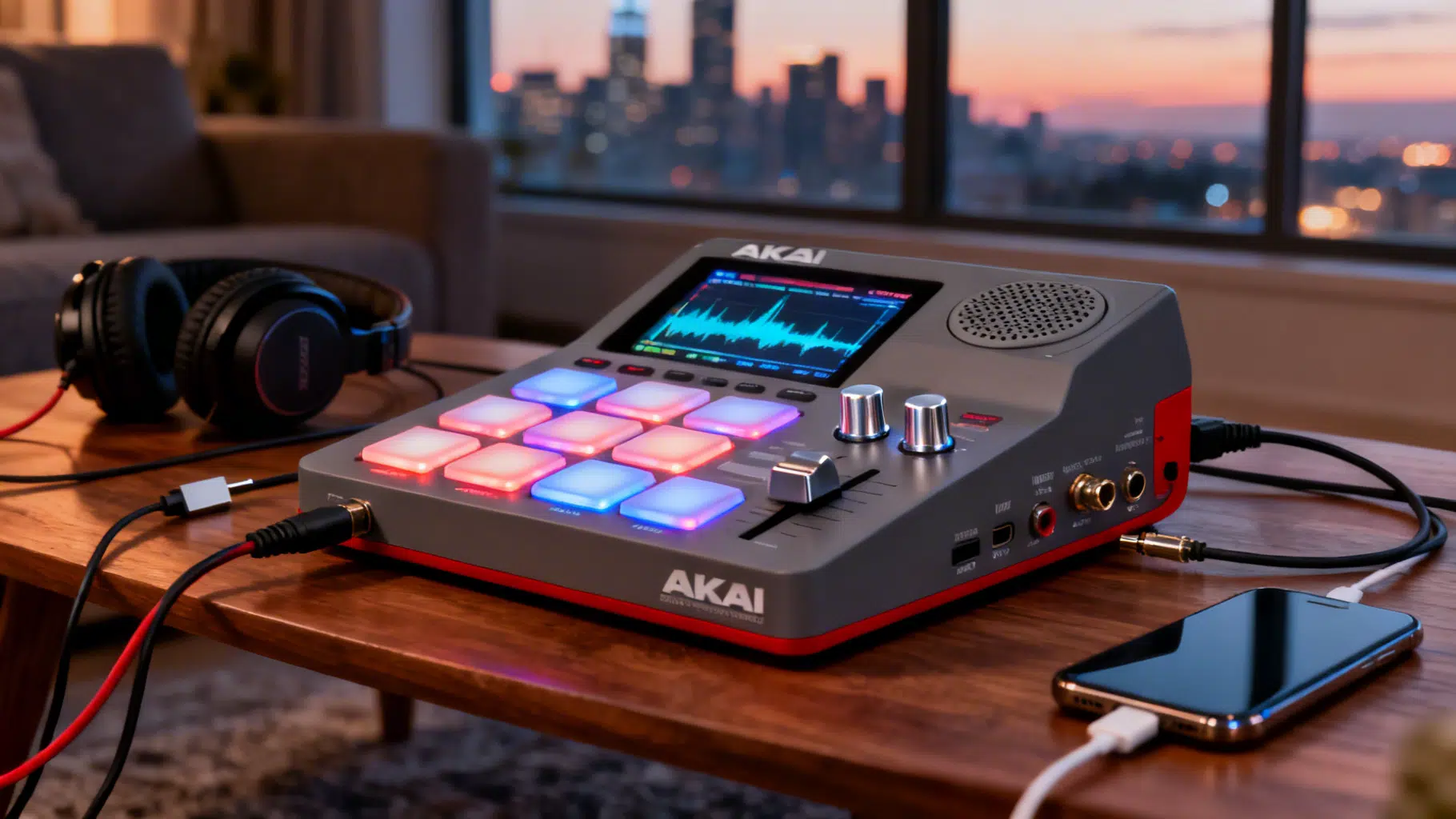
Image used for representation purposes only.
Akai’s MPC Sample: a $399 portable sampler leaks into the spotlight
Akai Professional is set to expand its iconic MPC family with a new entry-level, battery-powered unit called MPC Sample—a compact sampler/sequencer that surfaced via retailer listings and media leaks in early March 2026. The Verge reported the device after a product page briefly appeared through a retailer, positioning it alongside a new wave of portable samplers from Teenage Engineering and Casio. (theverge.com )
While Akai has yet to publish a formal press release, at least one major U.S. retailer now lists the MPC Sample as in stock at $399 with a full spec sheet, suggesting an imminent rollout rather than a distant concept. (altomusic.com )
Why it matters now
Portable, self‑contained samplers are having a moment. Teenage Engineering’s pocketable grooveboxes and Casio’s SX‑C1 prototype at NAMM 2026 have rekindled mass‑market interest in quick, on‑the‑go sampling. The MPC Sample aims to deliver Akai’s pad‑based workflow—long a studio staple—at a price and form factor that invite spontaneous field capture and couch‑friendly beatmaking. (theverge.com )
Headline features at a glance
Based on retailer documentation, here are the key capabilities that define the MPC Sample’s pitch:
- 16 RGB‑backlit pads with poly aftertouch, driving a streamlined MPC sampling and sequencing workflow.
- 2.4-inch full‑color display for waveform editing and navigation.
- Built‑in microphone and 3W speaker, plus a rechargeable battery rated at up to five hours of use.
- Stereo 1/4-inch line inputs and outputs, 1/8-inch headphones, TRS MIDI in/out, sync out, and USB‑C for power, audio/MIDI, and file transfer.
- 2GB RAM and 8GB internal storage (with microSD expansion) and an internal disk‑streaming engine targeting fast sample playback.
- Up to 32 stereo voices, real‑time timestretch/re‑pitch, instant chop mode, internal resampling with FX, and more than 60 onboard effects including a new “retro color” master compressor.
- Ships with over 100 factory kits and a simplified one‑touch control set for fast idea capture.
- Listed at $399 in the U.S., with “ready to ship” status appearing at the time of writing. (altomusic.com )
Design cues and heritage
Images circulating with the listings show a compact body that nods to the MPC60 and MPC3000—boxy, purposeful, and squarely focused on pads‑first performance. Coverage from Synth Anatomy, which tracked the initial leak, also highlights the portable, battery‑powered focus and the generous rear‑panel I/O relative to other small samplers. (synthanatomy.com )
This is a strategic bridge between Akai’s classic ethos—sample, chop, sequence—and its modern MPC3-era devices. At the other end of the range, the MPC XL arrived earlier this year as the new flagship, underscoring how Akai is segmenting its lineup from premium studio centerpieces down to toss‑in‑a‑bag samplers like the MPC Sample. (musicradar.com )
How it compares
- Against Teenage Engineering’s KO II and similar ultra‑portables, Akai appears to be trading minimalist novelty for a more traditional MPC workflow with deeper I/O, aftertouch pads, and a mature sequencer. (theverge.com )
- Versus Casio’s SX‑C1 prototype teased at NAMM 2026, the MPC Sample leans on established MPC muscle memory and an effects toolkit that reads closer to a shrunken workstation than a toy‑like sketchpad. (musicradar.com )
- Within Akai’s own stable, the MPC Sample undercuts larger standalone MPCs on price and screen real estate but preserves hallmark features—swing‑capable sequencing, chopping, disk‑streaming playback—that matter most when capturing ideas quickly. Retail specs even cite 20‑minute maximum per‑sample time and broad import support (WAV/AIFF/MP3/FLAC/OGG and legacy S‑series formats), signaling seriousness about interoperability. (altomusic.com )
Availability and price
- U.S. price: $399. Retailers show live product pages and cartable inventory as of March 25, 2026, though stock may fluctuate as the rollout ramps. (altomusic.com )
- Media timeline: The Verge first flagged the unit on March 5, 2026, citing a retailer leak; additional reporting and imagery followed from specialist outlets tracking the listing. (theverge.com )
Open questions
- Official specs and OS roadmap: Akai hasn’t yet detailed how MPC Sample projects integrate across the broader MPC3 ecosystem, or whether certain MPC plug‑ins/effects will arrive later via add‑ons. Until an official product page lands, expect some details (e.g., expansion options, long‑term firmware cadence) to remain fluid. (theverge.com )
- Position in the 2026 lineup: With the flagship MPC XL and the MPC Live III already catering to power users, MPC Sample could be the dedicated “always‑with‑you” box that feeds into larger projects—an on‑ramp Akai has been building toward with its MPC3 platform and related updates. (musicradar.com )
Bottom line
MPC Sample looks like a timely play: a true MPC you can take anywhere, priced to reach newer producers without alienating veterans who want a grab‑and‑go sketchpad that still speaks fluent MPC. If the retail listings are any indication, this isn’t vaporware—it’s arriving now. Watch for Akai’s formal confirmation and deeper demos in the days ahead. (altomusic.com )