
Ticketmaster at a Crossroads: DOJ Deal, State Showdown, and the End of Junk Fees
Ticketmaster faces a DOJ settlement, state AG resistance, and new “junk fee” rules—shaping prices and competition for U.S. fans in 2026.
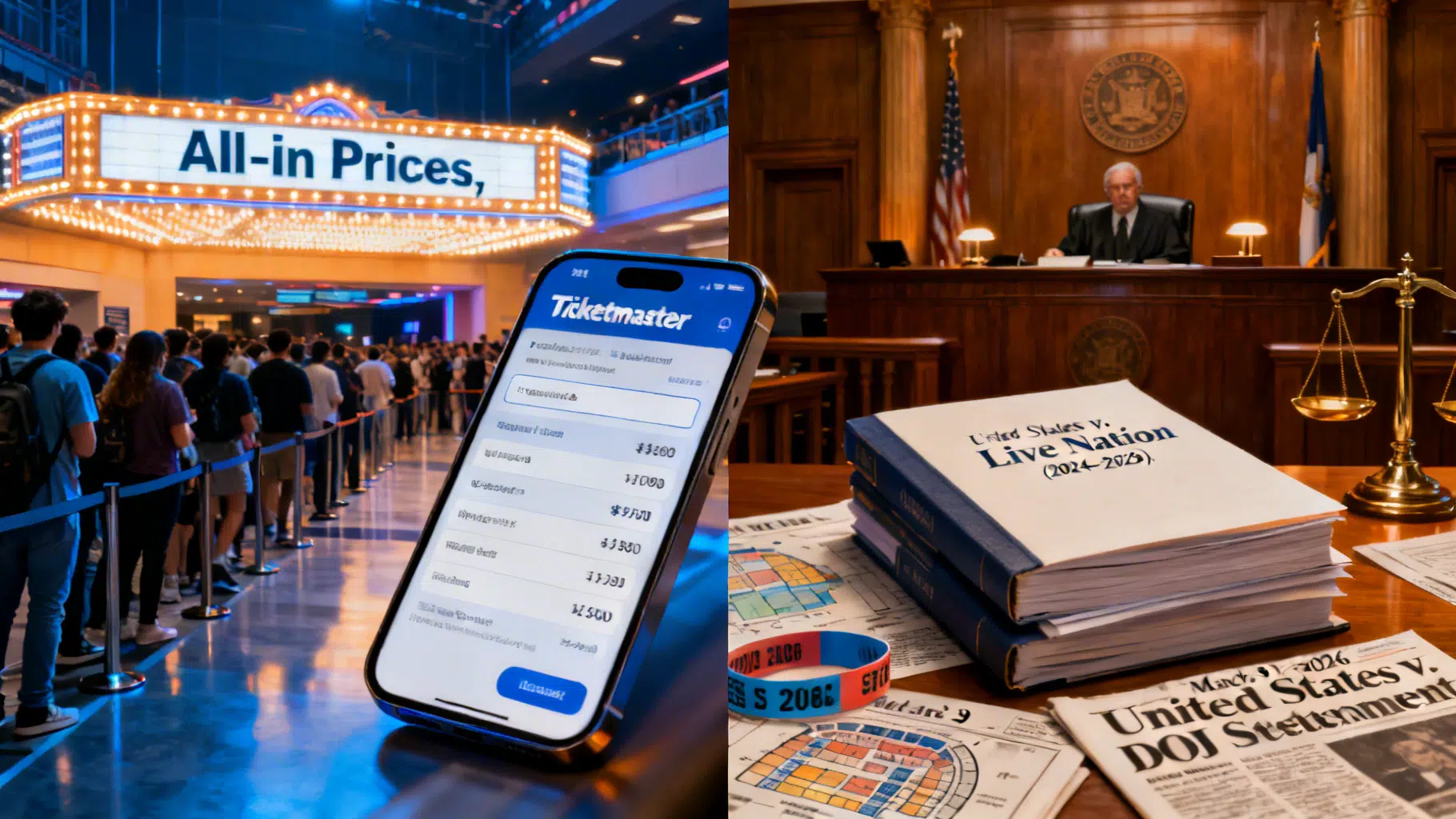
Image used for representation purposes only.
The Ticketmaster Reckoning: DOJ Settlement, State Showdown, and the New Era of “All‑In” Pricing
Ticketmaster and parent company Live Nation are at the center of the live‑events world’s most consequential shake‑up in years. On March 9, 2026, the U.S. Justice Department said it had reached a tentative settlement in its antitrust case against the concert giant—just one week after the long‑anticipated trial began in Manhattan. Several states, however, refused to join the deal and vowed to press forward in court, setting up a rare split that could determine the future of ticketing in America. (apnews.com )
What the DOJ settlement would do
A court‑filed term sheet, signed March 5 and lodged with the Southern District of New York on March 9, outlines key proposed remedies: expanded “open‑access” ticketing that lets venues allocate a portion of inventory to non‑Ticketmaster platforms; divestitures related to certain venue agreements; multi‑year conduct restrictions; and the appointment of a powerful independent monitor. Reporting around the talks also describes a state‑administered restitution fund exceeding $280 million, separate from the federal agreement. The deal notably stops short of breaking up Live Nation and Ticketmaster. Any settlement still requires court approval. (business.cch.com )
Live Nation publicly framed the accord as preserving venue choice while allowing Ticketmaster to submit both exclusive and non‑exclusive bids—a shift meant to loosen the grip of long‑term exclusivity. (newsroom.livenation.com )
Why states are still fighting
Attorneys general from more than 20 jurisdictions say the federal deal doesn’t go far enough to restore competition or deter future abuses. Some are pushing to keep the trial moving on their claims, arguing the court should impose stronger structural or behavioral remedies. Judge Arun Subramanian, who is presiding, briefly paused proceedings and admonished both sides over the surprise mid‑trial announcement, then indicated he could resume testimony in mid‑March while negotiations continue. (washingtonpost.com )
How we got here: from filing to trial
- May 23, 2024: DOJ and a bipartisan coalition of states sued Live Nation and Ticketmaster, alleging monopolization across live promotion, venues, and ticketing, and seeking far‑reaching relief. (apnews.com )
- July 2024–2025: Pre‑trial skirmishes locked in a firm trial start date. Judge Subramanian told parties the March 2, 2026 start was “set in stone.” (mlex.com )
- March 2, 2026: Trial opened in Manhattan federal court. (sportsbusinessjournal.com )
- March 9, 2026: DOJ announces a tentative settlement and files a term sheet; several states signal they will continue litigating. (apnews.com )
What this means for fans right now
Even before the antitrust case, a separate policy track had begun changing what consumers see at checkout. The Federal Trade Commission finalized a nationwide “junk fees” rule in December 2024, requiring live‑event sellers to disclose the full, mandatory price up front. When that rule took effect in May 2025, Ticketmaster said it would show all‑in prices from the very first screen. The company subsequently promoted “All In Prices” as its U.S. standard. (ftc.gov )
Consumer advocates say clarity helps comparison‑shopping, though transparency alone won’t lower face values or service charges. The FTC and several states also filed a separate September 2025 lawsuit targeting alleged deceptive pricing and resale practices—putting additional legal pressure on Live Nation beyond the DOJ case. (cnbc.com )
The core competition questions
The government’s 2024 complaint argued that Live Nation used its integrated power—promotion, venues, and Ticketmaster’s dominant primary ticketing—to lock in exclusivity and box out rivals, ultimately raising costs and limiting choice. Live Nation counters that its net margins are modest, competition has grown, and the best path to lower prices is curbing speculative resale and enabling artists to cap resale markups. The now‑proposed settlement would try to open distribution without dismantling the company, pending the court’s review. (cnbc.com )
Data security still looms large
On June 1, 2024, Live Nation disclosed a Ticketmaster incident after a “criminal threat actor” offered purported customer data for sale online. News outlets and researchers tied the breach to the ShinyHunters group and a broader compromise of environments hosted on Snowflake, with claims that up to 560 million records were affected—figures Live Nation did not confirm in its filing. Multiple class actions followed. Expect plaintiffs and regulators to keep pressing on cybersecurity standards and consumer notification practices. (apnews.com )
What changes you could actually notice in 2026
If the court approves the federal settlement and states reach parallel resolutions, fans could see:
- More events offering portions of primary inventory through non‑Ticketmaster platforms alongside Ticketmaster—especially at major venues. (apnews.com )
- Tighter limits on exclusivity and practices that allegedly tied venue bookings to ticketing, supervised by an independent monitor. (business.cch.com )
- Clear up‑front, all‑in pricing across the industry due to the FTC rule, with enforcement against misleading add‑ons. (ftc.gov )
What you likely won’t notice immediately are lower face values for the hottest shows. Primary prices are set by supply, demand, and artist/venue strategy; service fees reflect the commercial terms between venues, promoters, and ticketers. Regulators’ bet is that more open primary distribution, fewer lock‑ins, and continued scrutiny of resale will create competitive pressure that gradually shows up in the price and experience. (cnbc.com )
The open questions
- Court approval: Judge Subramanian must decide whether the DOJ–Live Nation term sheet is in the public interest and consistent with antitrust law. States can continue to litigate independently, press for stronger remedies, or settle on separate terms. (business.cch.com )
- Scope of “open ticketing”: How much inventory will venues practically shift to competing platforms, and will artists embrace multi‑channel primary distribution without confusing fans? (apnews.com )
- Monitoring and compliance: The strength and independence of any monitor—and the precision of conduct rules—will determine whether old habits resurface under new names. (concurrences.com )
- State and FTC cases: Parallel suits about deceptive fees and resale practices could yield additional remedies or penalties, even if the federal antitrust case settles. (apnews.com )
Bottom line
Ticketmaster isn’t going away, but its playbook is changing. The antitrust settlement announced on March 9, 2026—paired with the FTC’s all‑in pricing rule now in force—marks the clearest attempt yet to pry open a market long defined by exclusivity and opaque fees. Whether those changes translate into meaningfully better prices and access will depend on what the judge signs, how many states keep fighting, and how aggressively the new rules are enforced over the next several years. (apnews.com )
Related Posts

Google Closes $32B Wiz Deal: What It Means for Cloud Security Now
Google closes its $32B Wiz acquisition on March 11, 2026—the biggest in its history—after U.S. and EU approvals. Wiz stays multi-cloud under Google Cloud.