From Prototype to Production: Deploying Autonomous AI Agents Safely and at Scale
A practical blueprint for deploying autonomous AI agents to production—architecture, safety, reliability, evals, cost control, and ops patterns.
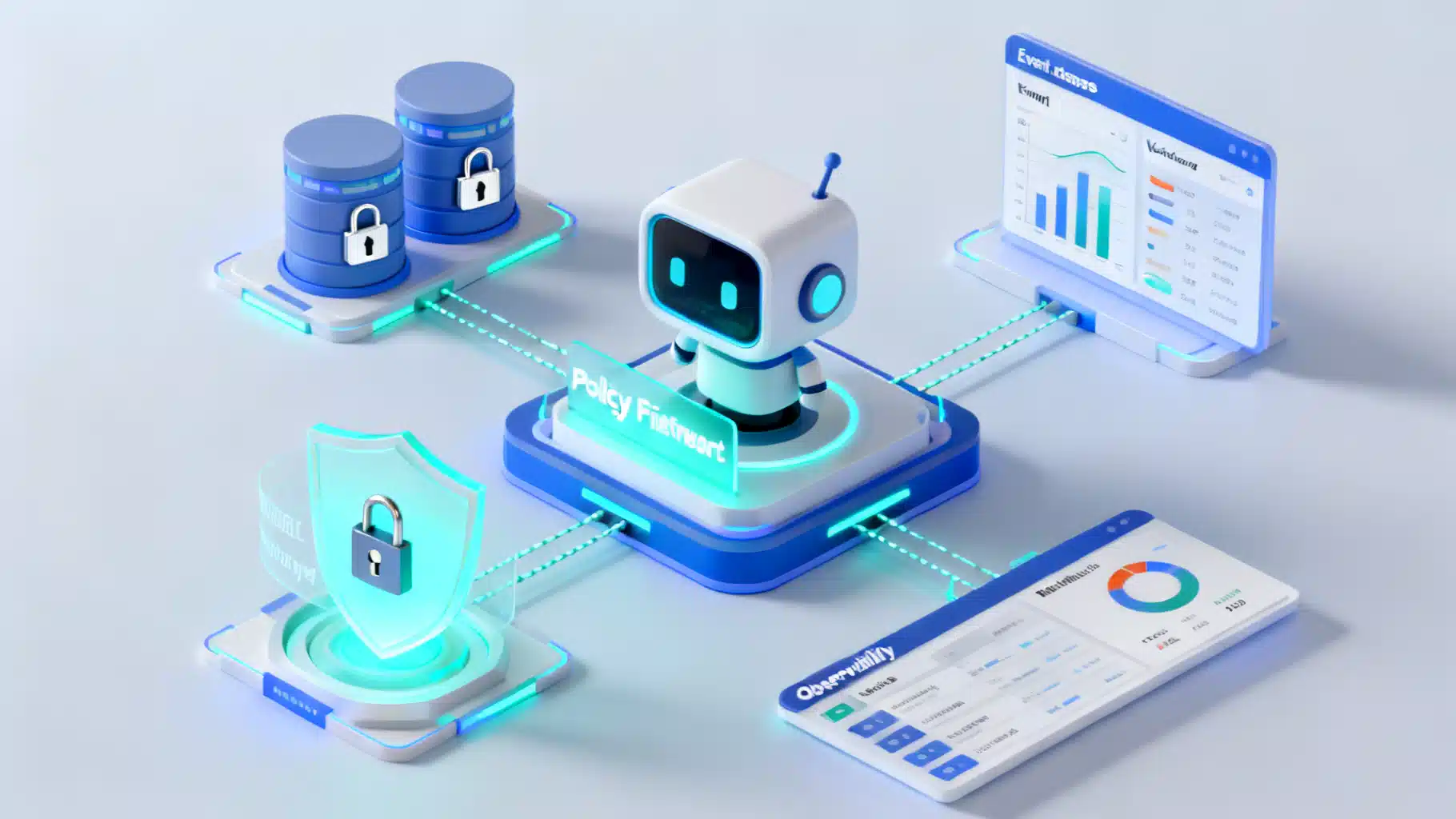
Image used for representation purposes only.
Why Production-Grade Autonomous Agents Are Different
Prototyping an autonomous AI agent is easy; running one safely, reliably, and cost‑effectively in production is not. Agents make decisions, call tools, manipulate data, and sometimes take irreversible actions. This shifts the engineering focus from “does the demo work?” to “can the system uphold SLAs, comply with policy, and fail safely at scale?”
This article is a practical blueprint for taking agents from proof‑of‑concept to production. It covers architecture, safety, evaluation, observability, cost control, and day‑2 operations with concrete patterns and guardrails.
A Quick Definition and Scope
An autonomous agent is a system that:
- Perceives state (inputs, memory, environment)
- Plans actions toward goals
- Executes via tools/APIs
- Monitors outcomes and self‑corrects
We’ll focus on goal‑directed LLM‑powered agents orchestrating tools and workflows in enterprise or consumer applications.
The Production Readiness Checklist
Before a public rollout, you should be able to answer “yes” to the following:
- Safety: Prompt‑injection defenses, toxic content controls, and least‑privilege tool access are in place.
- Reliability: Clear SLOs/SLIs, timeouts, retries, idempotency, and circuit breakers exist for all critical paths.
- Observability: End‑to‑end traces, token/latency/cost metrics, tool success rates, and structured agent state logs.
- Evaluation: Offline benchmarks, scenario tests, red teaming, and online guardrail checks with canaries.
- Governance: Data handling, audit logs, approvals, and policy enforcement mapped to risk tier.
- Cost: Budget caps, preflight token estimates, caching, and autoscaling policies configured.
- UX: Human‑in‑the‑loop (HITL) gates for risky actions, clear affordances, reversibility, and transparency.
Reference Architecture
At a high level, production deployments benefit from an event‑driven, observable, and policy‑enforced design:
- Ingress/API: AuthN/Z, rate limiting, request validation, PII redaction.
- Orchestrator: Planner/executor loop, routing across tools/models, with deterministic schemas.
- Tooling Layer: Strictly typed functions behind a secure proxy, allow‑listed domains, and sandboxed execution.
- Memory: Short‑term scratchpad, episodic memory with TTL, and long‑term knowledge via RAG with access controls.
- Policy and Guardrails: Moderation, prompt‑injection filters, and a policy engine that evaluates each action.
- Observability: Trace every step (spans for planning, tool calls, model calls), structured logs, metrics, and audits.
- Storage: Encrypted stores for artifacts, vector DB for retrieval, and append‑only audit logs.
- Async Backbone: Queues/streams for backpressure, retries, and saga compensation.
flowchart LR
  A[Client/App] -->|Request| B[API Gateway]
  B --> C[Policy Engine / OPA]
  C --> D[Agent Orchestrator]
  D --> E[LLM Router]
  D --> F[Tool Proxy]
  F --> G[Sandboxed Tools]
  D --> H[Memory/RAG]
  D --> I[Async Queue]
  I --> J[Workers/Executors]
  D --> K[Observability: Traces/Logs/Metrics]
  K --> L[Audit Store]
Safety, Security, and Compliance
Treat the agent as a privileged automation layer; constrain it like production code.
- Tool isolation and least privilege:
- Put tools behind a proxy that enforces schemas, rate limits, and allow‑lists.
- Use short‑lived credentials via a vault with per‑tool scopes.
- Prompt‑injection and data exfiltration:
- Pre‑filter inputs for embedded instructions and jailbreak markers.
- Apply content‑policy checks to generated tool arguments before execution.
- Egress control: outbound HTTP only to vetted domains; block file system writes by default.
- Output validation:
- Require JSON output to conform to a JSON Schema; reject/repair otherwise.
- Policy enforcement and audit:
- Evaluate each tool call against a policy engine; log decision context for forensics.
- Privacy and governance:
- Pseudonymize or tokenize PII; enforce data retention and residency.
- Maintain immutable audit trails of user intent, model outputs, and actions.
Example: tool call contract
{
  "$schema": "https://json-schema.org/draft/2020-12/schema",
  "title": "CreateSupportTicket",
  "type": "object",
  "required": ["title", "severity"],
  "properties": {
    "title": {"type": "string", "maxLength": 120},
    "description": {"type": "string", "maxLength": 2000},
    "severity": {"type": "string", "enum": ["low", "medium", "high"]}
  }
}
Reliability Engineering for Agents
- SLIs/SLOs: Define availability, latency, success rate of tasks, and accuracy proxies (e.g., tool goal completion).
- Timeouts and retries: Per model/tool with exponential backoff and jitter.
- Idempotency: Use keys for tool calls that change state (payments, tickets).
- Circuit breakers: Trip on sustained error rates; degrade to read‑only or HITL.
- Compensating actions: Implement saga patterns for multi‑step workflows.
SLO example
slos:
  - name: ticket-creation-success
    objective: ">= 99.0% over 30 days"
    sli:
      numerator: tool_calls{tool="CreateSupportTicket",status="ok"}
      denominator: tool_calls{tool="CreateSupportTicket"}
    alerts:
      - burn_rate_window: 2h
        threshold: 14x
Tooling, Retrieval, and Memory
- Retrieval‑Augmented Generation (RAG): Prefer narrow, curated corpora with freshness signals. Attach citations to agent reasoning where possible.
- Memory tiers:
- Scratchpad: Ephemeral per‑task context.
- Episodic: Per‑user sessions with TTL and size caps.
- Semantic: Long‑term vector memory with strict privacy ACLs and purpose limitations.
- Deterministic interfaces: Tool calls must be schema‑validated and versioned. Add contract tests for every tool.
Evaluation Strategy
Combine offline rigor with online safeguards.
- Offline:
- Golden sets for core tasks; evaluate exact match, structured correctness, and tool outcomes.
- Adversarial/red team prompts: injection, obfuscation, and domain‑specific attacks.
- Cost/latency profiling per scenario.
- Pre‑deployment:
- Shadow traffic and replay harnesses; compare against baselines; enforce regression gates.
- Canaries behind feature flags with automatic rollback on guardrail breaches.
- Online:
- Continuous guardrail checks (toxicity, PII, policy violations) and human spot‑reviews.
Scored evaluation spec
tests:
  - name: create_ticket_high_sev
    inputs:
      user_text: "Customer data loss risk in EU region"
    expected:
      severity: high
    metrics:
      - type: json_path
        path: $.severity
        equals: "high"
      - type: tool_success
        tool: CreateSupportTicket
Observability and Telemetry
Instrument the agent like a distributed system.
- Tracing: One trace per task with spans for planning, each model call, each tool call, and memory operations.
- Metrics: tokens_in/out, cost_usd, latency_ms, tool_success_rate, guardrail_block_rate, retry_count.
- Logs: Structured, redacted, and correlated via trace_id. Store sampled chains of thought as summaries, not raw free‑text, to reduce sensitivity.
- Dashboards: Per‑tenant and per‑feature views; alert on SLO burn, cost anomalies, and tool regressions.
Cost and Performance Management
- Preflight token estimation to fail fast on oversized prompts.
- Prompt compression and retrieval filters to minimize context.
- Caching: response and embedding caches with TTL and cache‑key strategies.
- Adaptive routing: choose models by task difficulty and budget; fallback gracefully.
- Budgets and quotas: enforce per‑user and per‑tenant monthly caps; halt with HITL if caps are exceeded.
Human‑in‑the‑Loop and UX
Great UX reduces risk and builds trust.
- Autonomy levels: read‑only suggestions, approval‑required actions, autonomous with post‑hoc review. Make this explicit in the UI.
- Reversibility: Provide undo/rollbacks where feasible; show diffs for edits.
- Transparency: Summarize the agent’s plan and ask for consent before high‑impact actions.
- Escalation: Offer one‑click escalation to a human operator with full context and trace links.
Multi‑Agent Patterns
- Planner–Executor: One agent drafts the plan; another executes atomic steps via tools.
- Manager–Worker: A manager decomposes tasks to specialized workers with bounded scopes.
- Reflection/Verifier: A verifier agent checks outputs against rules; only approved results ship.
- Debate/Ensemble: Use multiple models/agents for critical decisions; choose via a judge ensemble.
Keep loops bounded—set max iterations and wall‑clock time.
Deployment and Release Management
- CI/CD: Lint prompts, validate schemas, run offline evals, and generate model/agent “lockfiles” with versions and prompts.
- Feature flags: Gate risky tools and new planners; enable progressive rollouts by segment.
- Canary + shadowing: Compare metrics to a stable baseline; auto‑rollback on guardrail breaches or SLO hits.
- Model/version pinning: Pin models and tool versions per environment; record in change logs.
Example agent policy as code
agent:
  name: incident-resolver
  autonomy: approval_required
  allowed_tools:
    - SearchKB
    - CreateSupportTicket
  blocked_domains:
    - "*"  # default deny
  allow_domains:
    - "kb.internal.company"
  max_iterations: 8
  max_cost_usd: 0.50
  guardrails:
    - injection_filter
    - pii_scrubber
    - json_schema_validator
Incident Response and Runbooks
- Triage: Identify whether the failure is a tool outage, model regression, policy misfire, or data drift.
- Containment: Trip circuit breakers; downgrade autonomy; freeze risky tools via feature flags.
- Forensics: Pull traces, inputs/outputs (redacted), policy decisions, and tool logs.
- Remediation: Patch prompts or routing, roll back versions, or hotfix tool contracts.
- Postmortem: Blameless analysis; add tests and playbooks to prevent recurrence.
Common Failure Modes and How to Mitigate
- Hallucinated tool arguments → Strict JSON schema + repair loop + verifier agent.
- Prompt injection/data exfiltration → Input sanitization, allow‑list egress, content policy checks.
- Runaway loops → Iteration/time caps, progress‑based early stopping, and loop‑health metrics.
- Cost blow‑ups → Budgets, preflight estimates, caching, and adaptive routing.
- Tool flakiness → Retries with backoff, idempotency keys, and circuit breakers.
- Silent regressions → Golden set monitoring, canaries, and automated rollback.
Minimal Planner–Executor Pseudocode
def run_agent(task, user, budget_usd=0.25):
    trace = start_trace(task_id=uuid4())
    state = {"plan": [], "history": [], "cost": 0}
    for i in range(MAX_STEPS):
        step = llm_plan(task, state)
        validate(step, schema=PlanStep)
        decision_ok = policy_engine.check(user, step)
        if not decision_ok:
            raise PolicyBlocked(step)
        if step.action == "tool":
            args = validate_and_repair(step.args, schema=ToolSchema[step.tool])
            result = call_tool_safely(step.tool, args)
        else:
            result = llm_reason(step)
        record(trace, step, result)
        state["history"].append({"step": step, "result": summarize(result)})
        state["cost"] += estimate_cost(step)
        if state["cost"] > budget_usd: raise BudgetExceeded()
        if goal_met(result): return finalize(result)
    raise MaxIterationsExceeded()
Measuring Business Impact
Map technical metrics to outcomes:
- Task success rate → Ticket resolution speed, lead conversions, defect closure.
- Latency → User engagement and completion rates.
- Cost per successful task → Unit economics and margins.
- Human override rate → Trust and maturity of autonomy.
Track these over cohorts and time; invest in the bottleneck that most improves ROI.
A Phased Rollout Plan
- Phase 1: Read‑only assistant. No external side‑effects; build RAG, observability, and evaluation harness.
- Phase 2: Approval‑required actions. Introduce tool access behind policy and HITL gates.
- Phase 3: Constrained autonomy. Enable autonomous execution for low‑risk tasks with strict budgets and rollback paths.
- Phase 4: Scale and specialization. Add multi‑agent patterns and adaptive model routing; formalize incident playbooks.
Final Thoughts
Treat autonomous agents like any critical production service: design for failure, verify relentlessly, and ship with progressive trust. With strong guardrails, clear SLOs, deep observability, and rigorous evaluation, agents can deliver meaningful automation while staying safe, compliant, and cost‑effective.
Related Posts

API‑First Development: An End‑to‑End Workflow Guide
A practical, end-to-end API-first workflow: design, mock, test, secure, observe, and release with contracts as the single source of truth.

Designing AI Agent Memory: Episodic vs. Semantic Systems That Scale
Build robust AI agent memory with episodic and semantic layers: schemas, retrieval, consolidation, evaluation, and governance—practical patterns included.

LLM Prompt Engineering Techniques in 2026: A Practical Playbook
A 2026 field guide to modern LLM prompt engineering: patterns, multimodal tips, structured outputs, RAG, agents, security, and evaluation.