Smart, at last: How home AI, Matter 1.5 and smart rings are reshaping 2026
In 2026, ‘smart’ finally coheres: home AI matures, Matter 1.5 adds cameras, smart rings surge, and energy programs pay households—amid tougher rules and security alerts.
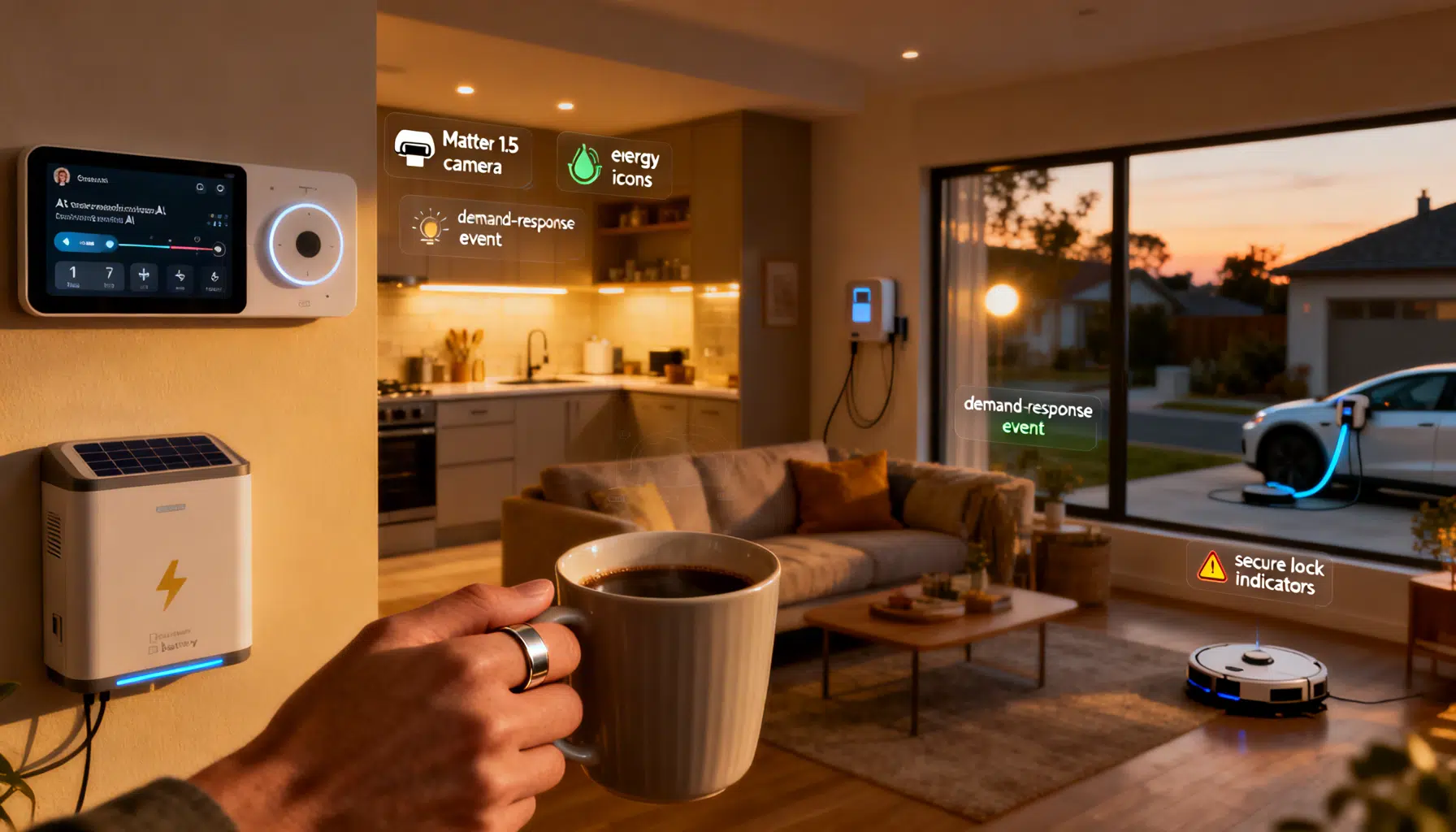
Image used for representation purposes only.
Smart hits an inflection point in 2026: home AI, a unified standard, and a new wave of wearables
The smart-tech story in 2026 is finally cohering around three forces: powerful “home AI” assistants, a maturing interoperability standard in Matter 1.5, and a consumer shift toward low‑profile wearables like smart rings. With new regulation and fresh security warnings sharpening the stakes, the next 12 months will decide whether the smart home becomes truly helpful—or just more complicated.
Home AI arrives: Alexa+, Gemini for Home, and an open SmartThings
- Amazon’s generative AI upgrade, Alexa+, crossed the one‑million‑user mark in Early Access by June 23, 2025, with wider rollout still gated by invites. Pricing is set at $19.99 per month but remains free for Prime members when it publicly launches, according to Amazon’s 2025 unveiling. (techcrunch.com )
- Google began rolling out “Gemini for Home” on October 1, 2025, replacing Google Assistant across Nest speakers/displays and powering a redesigned Home app; Google says this shift moves the smart home from rigid commands to natural collaboration. A broader expansion to additional English‑speaking markets, including Canada, is slated for early 2026. (blog.google )
- Samsung used CES 2026 to argue that “open ecosystems” are the only way home AI earns user trust at scale, pointing to the 500‑million‑user SmartThings community and cross‑industry alliances like HCA. (news.samsung.com )
Together, these moves redefine “smart”: context‑aware assistants coordinating devices locally and across brands, with less app‑hopping and more proactive help.
Matter 1.5: the standard finally embraces cameras—and more
The Connectivity Standards Alliance released Matter 1.5 on November 20, 2025, adding long‑awaited categories such as cameras and video doorbells, plus “closures” (e.g., shades, awnings, gates) and deeper energy‑management features. After a reliability‑focused year of 1.4.x fixes, 1.5 marks the largest functional expansion since launch. (csa-iot.org )
What changed along the way:
- The 1.4.1 and 1.4.2 updates improved the basics: NFC tap‑to‑pair onboarding, multi‑device QR setup for bulb multipacks, beefed‑up security checks and certification tooling, and Wi‑Fi‑only commissioning for simpler device radios. (theverge.com )
- Platforms are starting to implement 1.4 capabilities. SmartThings, for example, now supports 1.4’s broader energy device classes—from water heaters and heat pumps to solar and batteries—and exposes more granular controls like room‑targeted robot‑vacuum cleaning. (theverge.com )
- Hardware is following suit. Yale’s Matter‑over‑Thread lock targeted Google Home users after Google sunset the Nest x Yale model, with multi‑ecosystem compatibility signaling the standard’s promise in practice. (theverge.com )
Bottom line: as 1.5 rolls into controllers and devices through 2026, the camera gap closes and energy becomes a first‑class smart‑home workload—not just lights and switches. (csa-iot.org )
The stealth wearable goes mainstream: smart rings
Smart rings are having a moment. Industry data indicate shipments jumped 49% in 2025—vastly outpacing smartwatch growth—as consumers chase sleep and wellness insights without a screen on the wrist. (pymnts.com )
- Samsung expanded Galaxy Ring sizes and markets in January 2025 and tied new sleep features to SmartThings routines—an example of wearables feeding automations rather than just dashboards. (news.samsung.com )
- The category’s heat brings legal friction. A U.S. judge dismissed Samsung’s preemptive suit against Oura in March 2025, but Oura later moved to file its own actions against multiple ring makers, including Samsung, citing patent claims around form factor and components. (news.bloomberglaw.com )
Expect 2026 to be the year rings graduate from niche trackers to quiet anchors of home context—sleep/wake signals, presence, and energy‑saving routines—especially as platforms ingest their data natively. (theverge.com )
Energy‑smart homes: demand response and virtual power plants scale up
The smartest homes now trade energy, not just data. Utilities are enrolling thermostats, batteries, and EVs into programs that shave peak demand and pay households for flexibility.
- In Colorado, Xcel Energy, Itron and Tesla are integrating home batteries into a virtual power plant (VPP) that dispatches stored solar during peaks through an aggregator DERMS platform. (globenewswire.com )
- Google’s Nest ecosystem continues to operationalize this at scale: in 2024 alone, customers in Rush Hour Rewards programs received over $40 million in incentives across more than 100 utility partnerships; Nest Renew nudges daily shifts toward cleaner or cheaper hours. (renewhome.com )
- Texas is piloting VPP participation in wholesale markets: a cooperative partnered with Tesla under ERCOT’s ADER program, registering aggregated DER capacity to support reliability. (renewableenergyworld.com )
Pair these grid programs with Matter’s 1.4/1.5 energy clusters and SmartThings’ expanded support, and “smart” increasingly means measurable savings and lower emissions—not just convenience. (theverge.com )
Security and trust: progress, pressure—and a fresh red flag
Security incidents and regulatory timelines are reshaping what “good” looks like in connected devices.
- On February 17, 2026, a CISA advisory detailed a critical auth‑bypass flaw (CVE‑2026‑1670, CVSS 9.8) in certain Honeywell CCTV models that could enable account takeover and live‑feed access if left unpatched—an acute reminder that cameras remain high‑value targets. (thehackerwire.com )
- The FTC’s enforcement drumbeat continues: refunds totaling more than $5.6 million began reaching affected Ring customers in April 2024 following a 2023 privacy case over unauthorized video access and lax safeguards. (ftc.gov )
- The U.S. Cyber Trust Mark—meant to label more secure IoT products—hit turbulence in January 2026 after lead administrator UL Solutions withdrew, injecting uncertainty into near‑term consumer labeling even as industry support persists. (theverge.com )
- In the EU, the AI Act entered into force on August 1, 2024; bans on prohibited AI practices and AI‑literacy duties started applying on February 2, 2025, with most provisions becoming applicable on August 2, 2026. The separate Cyber Resilience Act took effect December 10, 2024, with main product‑security obligations applying from December 11, 2027 (with earlier vulnerability‑reporting duties from September 11, 2026). Expect these timelines to drive design and documentation changes for AI‑enabled and connected devices sold in Europe. (commission.europa.eu )
What to watch next (Q1–Q3 2026)
- How quickly major platforms ship Matter 1.5 camera support in controllers—and whether cross‑ecosystem camera viewing finally “just works.” (csa-iot.org )
- Alexa+ general availability timing and monetization: does Amazon bundle higher‑tier automation or third‑party skills, and how does usage differ for Prime vs. non‑Prime households? (cnbc.com )
- Google’s Gemini for Home expansion beyond early access and into non‑US English markets, plus how far on‑device AI pushes latency‑free automations. (blog.google )
- Samsung’s open‑ecosystem push and any SmartThings updates following its February 25, 2026 Unpacked cycle. (news.samsung.com )
For consumers: making “smart” actually smart in 2026
- Prefer platforms and devices already rolling out Matter 1.4/1.5 features; this maximizes cross‑brand longevity and reduces hub/app sprawl. (theverge.com )
- Treat cameras as critical infrastructure: patch promptly, avoid direct internet exposure, enable MFA, and segment your network. The 2026 Honeywell advisory shows why. (thehackerwire.com )
- Join your utility’s demand‑response or VPP program if eligible; thermostats and batteries can meaningfully offset bills—and emissions—while staying automated. (renewhome.com )
- In the EU, confirm vendors’ AI‑Act and CRA roadmaps before big purchases this year; compliance windows tighten through 2026–2027. (digital-strategy.ec.europa.eu )
The takeaway
“Smart” in 2026 is less about flashy gadgets and more about stitched‑together systems: assistants that understand context, standards that make devices interchangeable, wearables that supply quiet signals, and homes that trade flexibility with the grid. The tech is finally here; now the test is execution—securely, interoperably, and with value you can feel every day.