
Kirin in the Headlines: Chips, Bourbon, and Biopharma—Why the Name Is Trending in 2026
Why “Kirin” is trending now: Huawei’s Kirin 9020/9030 chips, Kirin Holdings’ $775M Four Roses sale and new 2035 vision, plus Kyowa Kirin’s AD drug bid.
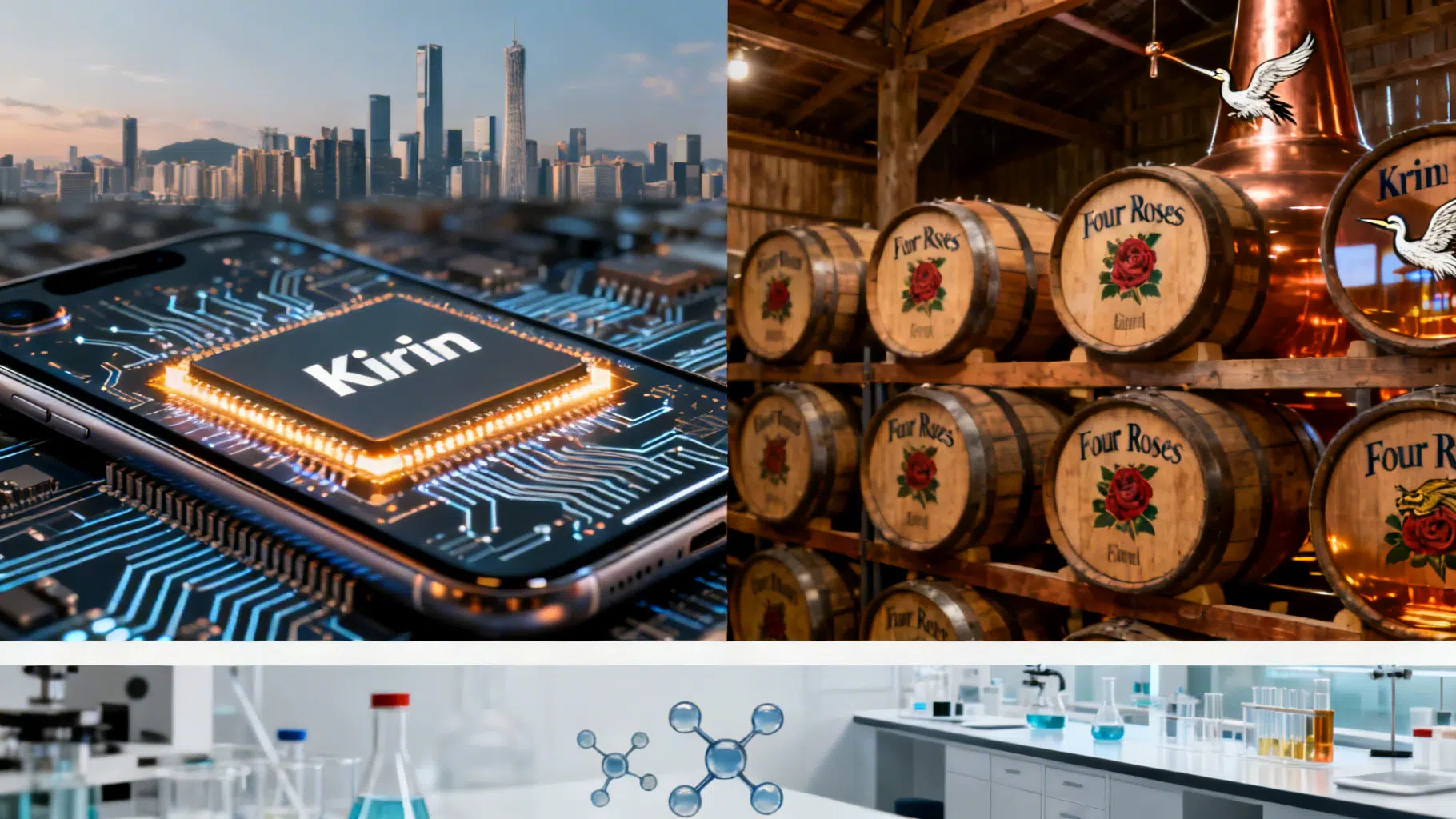
Image used for representation purposes only.
Why “Kirin” is suddenly everywhere
Searches for “kirin” have spiked again, but the headlines aren’t about just one thing. In early 2026, the name touches three very different stories: a major beverage company reshaping its portfolio, Huawei’s homegrown smartphone chips advancing under sanctions, and a biopharma player reclaiming a late‑stage dermatitis drug. Here’s the fast, fact‑checked rundown as of April 1, 2026.
- Kirin Holdings (Japan’s drinks, health science, and pharma group) is selling iconic Four Roses Bourbon to E. & J. Gallo, and just unveiled a new 2035 vision. (kirinholdings.com )
- Huawei’s HiSilicon “Kirin” processors have re‑entered the flagship spotlight: the Kirin 9020 was openly named in 2025 phones, and the newer Kirin 9030 has been analyzed on SMIC’s latest N+3 process. (notebookcheck.net )
- Kyowa Kirin (a separate pharma company within the broader Kirin sphere) regained full control of rocatinlimab, with a U.S. filing planned in the first half of 2026. (seekingalpha.com )
Kirin Holdings exits bourbon, reallocates capital
On February 6, 2026, Kirin Holdings signed a definitive agreement to transfer 100% of Four Roses Distillery, LLC to E. & J. Gallo Winery for up to JPY 120 billion (about $775 million at ¥155 per $1), with closing targeted for the second quarter of 2026 pending U.S. antitrust clearance. Kirin says the sale follows a portfolio review and will allow resources to be redirected to businesses that better leverage its organizational strengths; the specific use of proceeds will be disclosed later. (kirinholdings.com )
The deal was also covered by major U.S. wires the same day, underscoring the industry significance of a bourbon mainstay changing hands. (apnews.com )
“Innovate2035!”: the new long‑term map
A week later, on February 13, 2026, Kirin announced “Innovate2035!”, a long‑term vision aimed at making the group “a global leader in CSV” across Alcoholic Beverages, Non‑alcoholic Beverages & Health Science, and Pharmaceuticals. Financial targets include high single‑digit EPS growth and ROIC of 10%+, while execution leans on AI‑enabled R&D, talent development, and cross‑domain synergies. (kirinholdings.com )
Complementing the strategy, Kirin is opening a Technology Innovation Center in April 2026 and deploying a proprietary AI system—FJWLA (Flavour Judgement for Whole Liking Analysis)—to tune beer flavor profiles, with rollouts starting March 2026. The company also flagged stronger localization and partnerships in Asia, Oceania, and North America to accelerate global growth. (foodnavigator-asia.com )
Huawei’s Kirin chips: from 9020’s comeback to 9030’s new node
After years of silence about flagship silicon, Huawei explicitly named the Kirin 9020 in its 2025 Pura 80 series—an unusual disclosure that marked an official return for the Kirin brand at the top end. Reporting at the time noted the name surfaced after a system update, ending nearly five years without overt flagship chip branding. (notebookcheck.net )
Independent analysis and coverage indicated the Kirin 9020 is a 7 nm‑class SoC built by SMIC (commonly described as N+2) and—crucially—integrates a Huawei 5G modem and China‑made front‑end RF components, underscoring domestic supply‑chain resilience under U.S. export controls. The thrust: not a raw‑performance leap, but a strategic milestone. (tomshardware.com )
By late 2025 and into early 2026, TechInsights’ teardowns confirmed Huawei’s next step: the Kirin 9030 manufactured on SMIC’s N+3 process, described as a scaled evolution of its prior 7 nm line that delivers meaningful density gains but still falls short of leading 5 nm EUV nodes. Multiple outlets summarized the findings following TechInsights’ publications. (tomshardware.com )
These chip advances sit alongside Huawei’s broader compute push: at MWC 2026 in late February, the company showcased Atlas 950 and TaiShan 950 AI SuperPoDs to international audiences, pitching end‑to‑end systems beyond handsets. (techradar.com )
Pharma note: Kyowa Kirin reclaims a late‑stage dermatitis asset
On January 30, 2026, Kyowa Kirin said it would terminate its collaboration with Amgen and regain control over rocatinlimab (an anti‑OX40 monoclonal antibody) across development and commercialization, citing strong confidence in the program after Phase 3 data and targeting a U.S. submission in the first half of 2026. While corporately distinct from Kirin Holdings’ beer/health‑science mix, the shared “Kirin” name helped push this item into the same social search stream. (seekingalpha.com )
Why this all matters now
- Portfolio refocus in beverages: Kirin’s planned Q2 2026 divestiture of Four Roses frees capital for beer innovation, global non‑alcoholic/health offerings, and pharma tie‑ins amid “Innovate2035!”—a strategic pivot that intersects consumer trends (zero sugar, functional) and AI‑assisted product design. (kirinholdings.com )
- Semiconductor geopolitics: Huawei’s Kirin 9020/9030 arc tracks China’s steady progress stretching DUV‑based processes without EUV, an industrial storyline with implications for handset competitiveness, export controls, and domestic supply chains. (tomshardware.com )
- Health pipeline visibility: Kyowa Kirin’s move on rocatinlimab highlights late‑stage dermatology competition and signals where the company is betting near‑term regulatory momentum. (seekingalpha.com )
Key timelines to watch (April–December 2026)
- Q2 2026: Expected closing of Four Roses sale to Gallo, subject to U.S. antitrust clearance. (kirinholdings.com )
- April 2026: Kirin’s new Technology Innovation Center opens; AI flavor‑tuning (FJWLA) begins appearing in beer releases from March onward. (foodnavigator-asia.com )
- H1 2026: Kyowa Kirin plans U.S. regulatory submission for rocatinlimab in moderate‑to‑severe atopic dermatitis. (seekingalpha.com )
- 2026 handset cycles: Watch whether Huawei broadens N+3‑based Kirin 9030 deployments and what that means for performance, yields, and international availability. (tomshardware.com )
Mind the name: three different “Kirins”
- Kirin Holdings: beer, beverages, health science, and pharmaceuticals; seller of Four Roses; author of “Innovate2035!”. (kirinholdings.com )
- HiSilicon Kirin: Huawei’s in‑house mobile SoCs (e.g., Kirin 9020/9030) made by SMIC. (notebookcheck.net )
- Kyowa Kirin: a separate specialty pharma company advancing rocatinlimab and other programs. (seekingalpha.com )
Bottom line: in early 2026, “kirin” is trending for three unrelated—but consequential—reasons: a $775 million bourbon exit and AI‑driven consumer product push at Kirin Holdings, a domestically fabricated 5G chip lineage marching from 7 nm‑class N+2 to N+3 at Huawei, and a late‑stage immunology asset moving toward U.S. filing at Kyowa Kirin. Expect more headlines as the bourbon deal clears regulators, Kirin’s new R&D engine spins up, and Huawei’s next phone cycle puts N+3 yields and performance under the microscope. (kirinholdings.com )
Related Posts

Huawei’s 2026 Playbook: Phones, Chips, Cars—and a New Tech Fault Line
Huawei’s 2026 surge: back on top in China phones, pushing HarmonyOS, mapping bold AI chips, powering hot EVs—while U.S. and Europe tighten the screws.