
Chime in 2026: Profit Path, New Rewards Card, and an April 1 Outage Test
Chime sets sights on 2026 profitability, expands its rewards card, and resolves an April 1 outage—here’s what the neobank’s latest results signal.
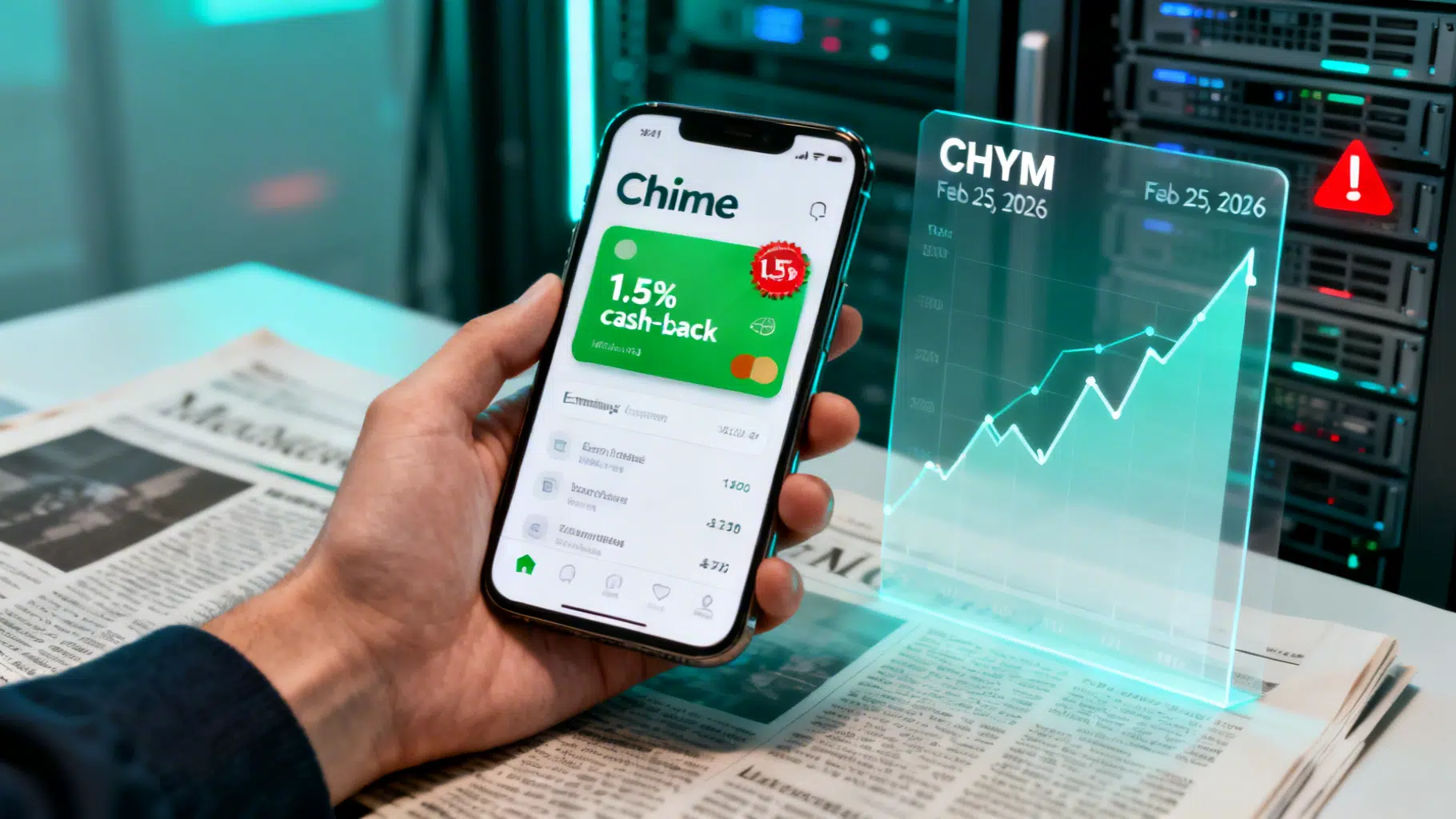
Image used for representation purposes only.
Chime’s big 2026 story: profit push, product upgrades, and a brief outage
Chime is back in the headlines after setting 2026 financial targets that point to its first full year of GAAP profitability, rolling out an upgraded secured credit card with cash‑back rewards, and weathering a short-lived platform disruption on April 1, 2026. The neobank, which trades on Nasdaq under the ticker CHYM, is leaning on a rebuilt tech stack, AI-enabled service, and membership growth to make the case it can scale like a bank without becoming one. (finance.yahoo.com )
Earnings and guidance: momentum into 2026
On February 25, 2026, Chime reported fourth-quarter and full-year 2025 results. Q4 revenue reached $596 million, up 25% year over year, with gross margin at 89% and transaction margin at 72%. The company ended the quarter with 9.5 million active members, about 500,000 higher than the prior quarter. For full-year 2025, management highlighted $2.2 billion in revenue, up 31% year over year. (nasdaq.com )
Crucially for investors, Chime guided 2026 revenue to $2.63–$2.67 billion and said it expects to be profitable this year, sending shares higher after the print. The company also emphasized operating leverage from its proprietary platform and cost discipline. (finance.yahoo.com )
Tech rebuild: ‘ChimeCore’ goes live, AI steps in
Chime says it completed its multi‑year migration to “ChimeCore,” moving the business fully onto its own technology stack. That milestone, disclosed alongside Q4 results, underpins faster product iteration and lower unit costs. Management has also been deploying generative AI into service channels, including a voicebot that it says has improved satisfaction relative to the legacy system. (finance.yahoo.com )
Products: the new Chime Card, Instant Loans, and MyPay
- Chime Card replaces the original Credit Builder secured card and adds rewards: eligible members who set up direct deposit can earn 1.5% cash back on rotating categories. The card maintains Credit Builder’s no‑interest, no annual fee approach and reports on‑time payments to all three major bureaus. (chime.com )
- Instant Loans give pre‑approved members access to up to $500 with a fixed fee structure and no credit check, providing a short‑term bridge while avoiding compounding interest. Independent coverage notes the product targets direct‑deposit members and limits users to one loan at a time. (businesswire.com )
- MyPay, Chime’s early access to earnings feature, lets eligible members tap up to $500 before payday—now positioned as part of a broader platform that includes high‑yield savings, deals, and the new rewards card. (chime.com )
Together, these offerings aim to increase member engagement and average revenue per active member in 2026, complementing core interchange income. (finance.yahoo.com )
Growth engine: member acquisition outpacing incumbents
Chime’s growth narrative continues to hinge on share gains in new checking account openings. A Chime‑commissioned summary of J.D. Power data reported that 13% of new U.S. checking accounts in Q3 2025 were opened with Chime, ahead of Chase, Wells Fargo, and Bank of America. J.D. Power’s own Q4 2025 analysis later showed Chime particularly strong in the mass‑market segment at 11.5% of new customers, while traditional banks led in more affluent tiers. (chime-impact.com )
April 1 incident: brief disruption, resolved the same day
On April 1, 2026, Chime’s official status page reported a service disruption affecting parts of the platform beginning at 10:00 a.m. PDT. Card purchases and ATM transactions continued to function, and the company marked the incident resolved by 3:00 p.m. PDT the same day. The quick restoration, and clear communication on the status site, helped contain the fallout as usage returned to normal. (status.chime.com )
Market context: public since June 2025
Chime went public on June 12, 2025, pricing its IPO at $27 per share and closing the offering on June 13, 2025. The listing set the stage for more transparent reporting and a new cadence of investor updates, including participation in high‑profile conferences like Morgan Stanley’s TMT event on March 4, 2026. (investors.chime.com )
Competitive posture: ‘not a bank’—by design
Chime continues to operate as a financial technology company, not a bank. Member deposits and cards are provided through The Bancorp Bank, N.A. or Stride Bank, N.A., while Chime focuses on front‑end experiences, distribution, and product design. For consumers, the distinction matters mainly in disclosures; day‑to‑day, the company is competing head‑to‑head with traditional banks on acquisition, engagement, and primary‑account behavior. (status.chime.com )
What to watch next
- Execution against 2026 revenue and profitability targets, especially sustaining Q4 2025 transaction margins while investing in growth. (nasdaq.com )
- Adoption of Chime Card rewards and the continued rollout of Instant Loans and MyPay, which management views as key drivers of monetization and retention. (chime.com )
- Operational reliability after the April 1 incident—and whether Chime’s in‑house stack can keep outages brief as scale increases. (status.chime.com )
Bottom line: Chime enters April 2026 with tailwinds—rising revenue, a clearer path to profitability, and a refreshed product lineup—while the brief April 1 outage underscores how critical platform resilience will be as it challenges incumbents for primary‑bank status. (finance.yahoo.com )
Related Posts

MRVL Stock Jumps on Record FY26 and AI Connectivity Push: The Setup for FY27
MRVL surges on record FY26, stronger FY27 guidance, and AI‑focused deals. Here’s what’s driving the stock—and what to watch next.

Arm Stock Soars as Company Enters Silicon With First In‑House ‘AGI CPU’
Arm stock jumps after Arm unveils its first in‑house AGI CPU, entering silicon with Meta as lead partner and targeting agentic AI data centers.

United Rentals leans into software and shareholder returns: Procore tie‑in, bigger buyback, and a higher dividend for 2026
United Rentals starts 2026 with a Procore telematics tie‑in, higher dividend, and a new $5B buyback. Here’s what changed in Q4, the 2026 outlook, and why it matters.