
Google Play’s 2026 Overhaul: Lower Fees, Fortnite’s Return, and Stricter Sideloading Rules
Google Play’s 2026 overhaul: lower fees, Fortnite’s return, verified sideloading, and battery‑drain warnings—what it means for users and developers.
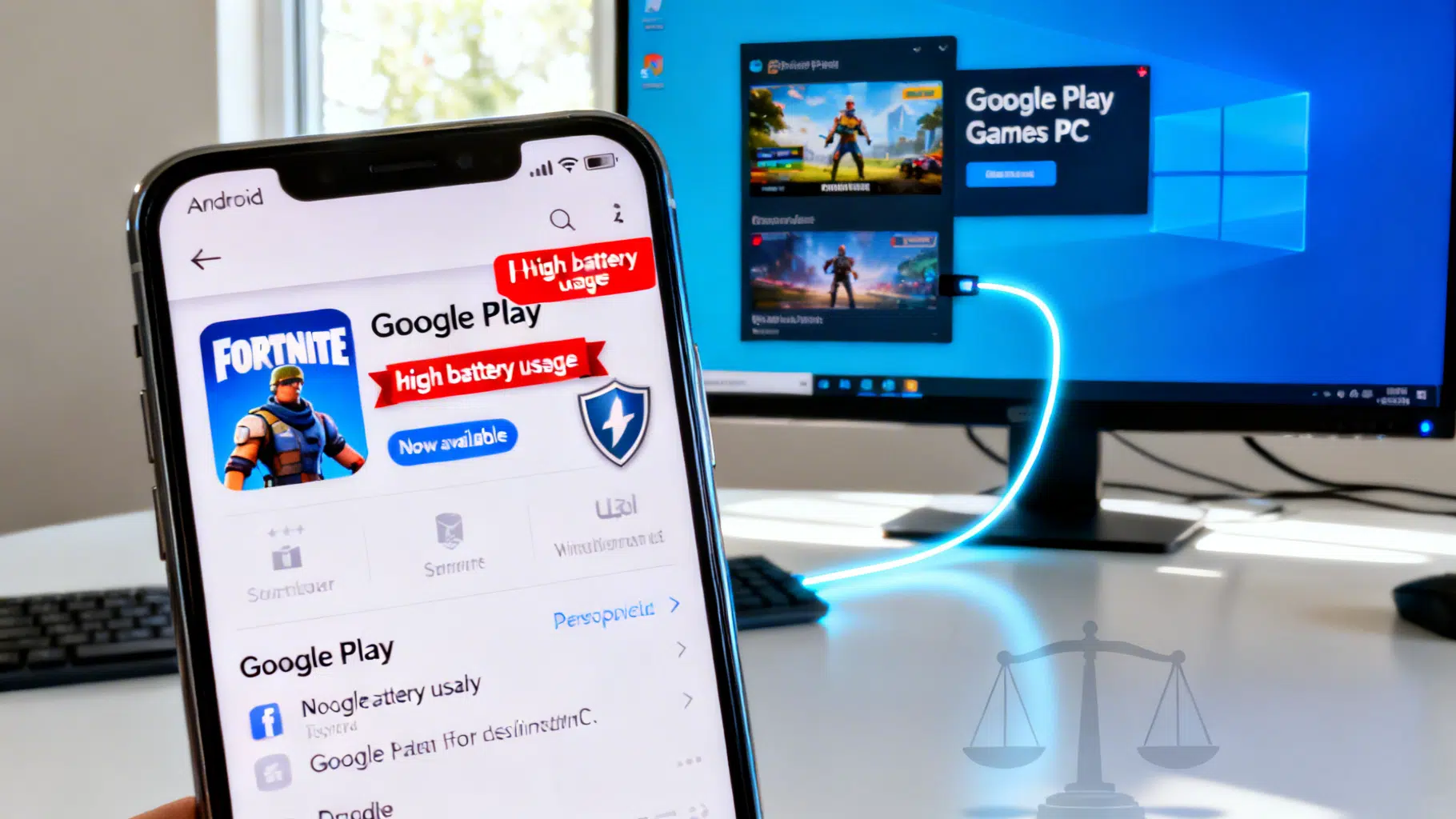
Image used for representation purposes only.
Google Play’s 2026 shake‑up: lower fees, Fortnite’s return, stricter sideloading, and new battery warnings
Google Play is entering a new era. In March 2026, Google moved to cut its standard app‑store take, restore Fortnite to the store, begin rolling out developer verification that reshapes sideloading, and start surfacing prominent battery‑drain warnings on app listings. Together, these changes reflect regulatory pressure, a landmark settlement with Epic Games, and Google’s stepped‑up safety agenda for Android. (techcrunch.com )
What changed this month
-
Fees cut, alternative stores on the way: Google said it will drop Play Store commissions to about 20% for most in‑app purchases (and to around 10% for subscriptions), with an additional 5% if developers use Google Play Billing. These changes are tied to a proposed settlement with Epic and a new “Registered App Stores” program that formalizes easier installation of vetted third‑party stores. Initial rollouts are slated for the US, UK, and EU by late June 2026, pending court approval. (techcrunch.com )
-
Fortnite is back: After years of legal battles, Epic confirmed Fortnite’s full return to Google Play on March 19, 2026, simplifying access versus prior sideloading workarounds. (9to5google.com )
-
Battery‑drain warnings arrive: Beginning March 1, 2026, Google Play began applying treatments to apps that trip a new “excessive partial wake locks” threshold. Offending titles can be de‑ranked in recommendations and display a red warning on their Play listing stating the app may use more battery than expected due to high background activity. (android-developers.googleblog.com )
-
Sideloading will require verified developers: Google started rolling out Android developer verification across the ecosystem, with a new Android Developer Verifier system service appearing on devices from April 2026. The company previously signaled that, starting in September 2026 in initial markets, apps installed outside Play on certified devices will also need to come from verified developer identities. (android-developers.googleblog.com )
-
Cross‑buy for paid games: Google introduced “buy once, play on mobile and PC” for select titles via Google Play Games on PC, expanding trials and community features aimed at premium and indie games. (blog.google )
Why it matters for developers
-
Economics and billing
- The headline shift away from a 30% default means most in‑app purchases from new installs move toward a 20% service fee (10% for subscriptions), with an optional 5% billing fee for those who stick with Google’s processor. Exact take‑rates still depend on program enrollment and purchase type, and court sign‑off remains a gating factor. Plan pricing, UA, and LTV models accordingly. (engadget.com )
-
Distribution and competition
- The Registered App Stores program could lower friction for reputable third‑party stores, while Google’s developer verification raises baseline identity assurance across Play and non‑Play distribution. Expect more competition in storefront UX, merchandising, and revenue shares—particularly once fee cuts hit the US/UK/EU by late June. (techcrunch.com )
-
Quality and performance
- Battery policy enforcement is now tangible. If your app holds non‑exempt wake locks too long across enough sessions, expect de‑ranking and a visible battery warning on the store listing until usage improves. Prioritize wake‑lock audits via Android vitals and implement the mitigation patterns Google published for background syncs, location tracking, sensors, and networking. (android-developers.googleblog.com )
-
Security posture and review velocity
- Google’s latest safety report highlights continued tightening of Play’s defenses, with 1.75 million policy‑violating apps prevented from publication and 80,000 “bad” developer accounts banned in 2025. Verification and post‑publication checks are part of why the bar is rising. Budget time for compliance and monitoring. (security.googleblog.com )
-
Cross‑platform strategy
- With cross‑buy and an expanded PC catalog, Google Play Games on PC is a more credible channel for premium releases. Developers participating in the program can offer a single purchase covering Android and Windows, though this won’t retroactively apply to past buys. Evaluate pricing, entitlement management, and support to meet PC players’ expectations. (arstechnica.com )
Why it matters for users
-
Lower prices and more choice
- If developers pass savings through, subscriptions and in‑app items may get cheaper, and vetted third‑party stores could offer alternative deals. The settlement terms also make it easier for developers to steer you to alternative payment options. (techcrunch.com )
-
Clearer battery expectations
- You’ll now see a red “may use more battery than expected” warning on Play listings for apps that overuse background wake locks. That transparency—and the threat of de‑ranking—should push developers to improve efficiency. (androidcentral.com )
-
Safer sideloading—still possible, but more gated
- Android isn’t killing sideloading, but apps on Play‑certified devices will increasingly need to come from verified developer identities. Expect fewer sketchy APKs to install outright and clearer accountability for legitimate developers distributing outside Play. (tomsguide.com )
-
Fortnite, minus the hoops
- As of March 19, 2026, you can install Fortnite directly from Google Play instead of relying on alternative stores or cloud streaming workarounds. (9to5google.com )
-
Cash from an older state AG case
- Separately from Epic, a $700 million multistate settlement over Google Play’s past practices is nearing its endgame. If the judge approves the deal at the April 30, 2026 fairness hearing, automatic payouts to eligible US users would begin shortly thereafter—no claim filing required. (androidcentral.com )
The regulatory backdrop
European regulators have kept pressure on app‑store “steering” and access rules under the EU Digital Markets Act. While Google has proposed reforms, EU enforcers previously signaled concerns that Play still limited developer steering—a thread to watch as Google’s new fee model and registered‑store framework roll out in Europe. (digital-markets-act.ec.europa.eu )
Key dates to watch
- March 1, 2026: Play battery‑drain warning and de‑ranking policies begin enforcement. (android-developers.googleblog.com )
- March 19, 2026: Fortnite returns to Google Play worldwide. (9to5google.com )
- April 2026: Android Developer Verifier appears in system services as ecosystem‑wide developer verification rolls out. (android-developers.googleblog.com )
- April 30, 2026: Fairness hearing for the $700 million consumer settlement; payouts start soon after if approved. (androidcentral.com )
- By late June 2026: Google’s lower Play fees and related programs begin rolling out in the US, UK, and EU (subject to court approval). (arstechnica.com )
- From September 2026 (initial markets): Apps installed outside Play on certified devices must be tied to verified developer identities; broader rollout follows. (techcrunch.com )
Bottom line
Google Play is being reshaped on three fronts at once: the economics of distribution (lower fees and more billing choice), the mechanics of distribution (registered third‑party stores and identity‑verified sideloading), and the quality bar for apps (battery‑use enforcement). For users, that should mean more choice and clearer information. For developers, it’s time to re‑run the model, harden technical quality, and prepare for a multi‑store future on Android. (techcrunch.com )
Related Posts
Flutter Plugin Development with Native Code: Channels, Pigeon, and FFI
A practical, end-to-end guide to building robust Flutter plugins with native code, Pigeon, FFI, testing, and multi-platform best practices.
Flutter barcode scanning with the camera plugin: a production-ready guide
Build a fast, on‑device Flutter barcode scanner using the camera plugin and ML Kit, with code, overlays, performance tips, and platform setup.
iPhone in 2026: iPhone 17 momentum, messaging shifts, and the foldable wildcard
As of March 23, 2026, iPhone 17 sales stay strong while RCS, DMA rules, and a possible foldable iPhone redefine Apple’s smartphone story.