
Europe Travel 2026: New Border Tech, City Fees—and a Bigger Bet on Trains
Europe travel in 2026: EES goes fully live April 10, UK ETA is enforced, ETIAS due late 2026, Venice day-trip fees return, and rail capacity surges.
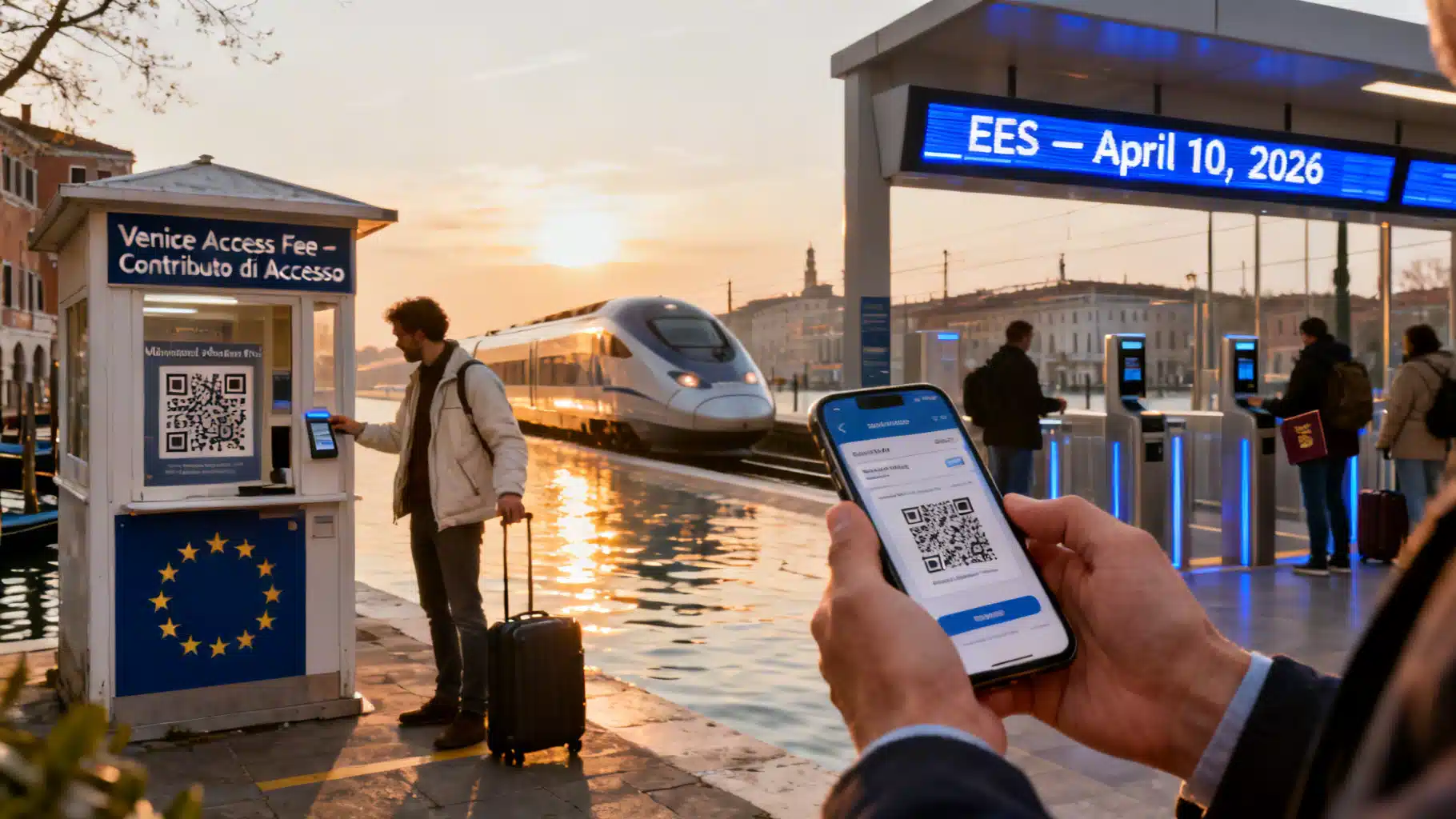
Image used for representation purposes only.
Europe travel in 2026: what’s changed and how to plan now
As of April 5, 2026, trips to Europe look a little different—especially at the border and in the biggest city hotspots. New EU border tech is going live, the UK has tightened pre‑travel checks, Venice has re‑activated its day‑tripper fee for spring weekends, and rail capacity is surging on key international routes. Here’s the latest, with dates, costs, and practical takeaways for travelers. (home-affairs.ec.europa.eu )
Key dates at a glance (spring–summer 2026)
- February 25, 2026: the UK begins strict enforcement of its Electronic Travel Authorisation (ETA) requirement for visa‑exempt visitors, including U.S. citizens; carriers must verify approval before boarding. Fee: £16. (gov.uk )
- April 3–July dates, 2026: Venice re‑activates its day‑tripper “Contributo di Accesso” on selected peak days, 8:30 a.m.–4:00 p.m. Paying four or more days in advance costs €5; closer to arrival the price is €10. Overnight guests are exempt but should carry proof/QR. (cda.ve.it )
- April 10, 2026: the EU’s Entry/Exit System (EES) becomes fully operational across external Schengen borders, replacing passport stamping with biometric checks for non‑EU travelers. Expect a one‑time registration the first time you enter after this date. (home-affairs.ec.europa.eu )
- All year: Oulu (Finland) and Trenčín (Slovakia) serve as 2026 European Capitals of Culture, with year‑long programs drawing visitors north and east. (culture.ec.europa.eu )
Border rules you’ll actually feel in 2026
EU Entry/Exit System (EES)
The EU’s EES began a phased roll‑out on October 12, 2025 and is due to be used in full from April 10, 2026. For most non‑EU nationals (including U.S. and UK passport holders), your first entry after that date will include biometric capture (face/fingerprints) and creation of a digital record that replaces manual passport stamps. Allow extra time the first time you cross; subsequent crossings should be faster. (home-affairs.ec.europa.eu )
Travelers via the Channel Tunnel and busy ferry/airport gateways should expect operational variability as systems bed in. UK media and operators have advised building in buffer time during the transition. (euronews.com )
ETIAS: not live yet, but coming late 2026
The separate ETIAS pre‑travel authorization (not a visa) is now scheduled to start in the last quarter of 2026, after EES stabilizes. The European Commission has set the fee at €20; a grace/transition period is expected. Until ETIAS launches, visa‑exempt nationals (e.g., U.S.) continue to follow the 90/180‑day Schengen rule without ETIAS. (home-affairs.ec.europa.eu )
UK ETA: fully enforced from February 25, 2026
If you’re heading to the UK, “no permission, no travel” now applies to most visa‑exempt visitors. Apply via the official app/website before you fly, ferry, or take the train to Britain. The government recommends allowing up to three working days for approval. (gov.uk )
Schengen keeps expanding
Romania and Bulgaria are now part of passport‑free Schengen for all borders (air, sea, and land), easing multi‑country itineraries in Southeast Europe. (consilium.europa.eu )
City rules and costs: overtourism measures tighten
- Venice’s day‑tripper fee is back on selected spring and early‑summer days in 2026. Day visitors to the historic center must obtain a QR voucher in advance and carry it during the 8:30–16:00 window; overnight guests remain exempt but should be ready to show proof. Paying at least four days in advance costs €5; late purchases cost €10. Check the official calendar before you go. (cda.ve.it )
- Amsterdam keeps Europe’s highest big‑city tourist tax (12.5% of the room rate) in 2026, with local debate about future increases. Budget accordingly. (nltimes.nl )
- Spain is tightening short‑term rental enforcement nationwide; Barcelona continues toward a phase‑out of tourist apartments by 2028, with national and local penalties increasing for unlicensed listings. Expect fewer legal listings and higher prices in peak periods. (apnews.com )
Rail is the 2026 wildcard: more seats, more sleepers
- Eurostar’s London–Amsterdam capacity has ramped up following Amsterdam Centraal’s terminal works. Five direct trains each way are planned in the 2025–26 timetable, with some short windows of engineering‑related disruption—always check live updates. (nsinternational.com )
- Night trains are back in the headlines. European Sleeper has revived the Paris–Berlin sleeper via Brussels in March 2026, complementing its Brussels–Berlin/Prague services and reflecting a wider sleeper renaissance across the continent. (lemonde.fr )
- Fresh rolling stock continues to arrive: ÖBB’s new‑generation Nightjets are being deployed through mid‑2026, freeing up upgraded coaches on secondary routes and generally improving comfort. (nightride-ezv51sgvl-nightride.vercel.app )
Events and cultural magnets
Oulu and Trenčín are Europe’s 2026 Capitals of Culture, anchoring year‑long programs designed to spread visitors beyond the usual capitals. Expect spikes in demand around signature weekends and festivals; book rail and rooms early. (culture.ec.europa.eu )
Northern Italy has just hosted the Milan–Cortina Winter Olympics (February 6–22, 2026). While the Games are over, residual demand and newly established transport patterns (apps, dedicated shuttles, strengthened rail links) continue to influence travel in the alpine clusters and Lombardy/Veneto hubs this spring. (milanocortina2026.olympics.com )
Prices and demand: what the data says
Air travel demand into and within Europe remains firm in early 2026, with IATA reporting a 3.8% global traffic rise in January and noting fares should fall in real terms over the year—even as operational pinch points (strikes, ATC bottlenecks) persist. Translation: buy early for peak summer, but don’t be surprised by targeted promos outside school holidays. (iata.org )
On the ground, business‑travel forecasters project only modest hotel rate increases for 2026 as capacity gradually catches up with demand. Shoulder‑season city breaks should remain good value compared with peak summer weekends. (travelweekly.com )
Practical planning: four moves to make now
- Check your route against the new border regimes.
- Schengen entry after April 10, 2026: allow time for first‑time EES capture. (home-affairs.ec.europa.eu )
- UK bound: obtain an ETA before travel; carriers are required to check. (gov.uk )
- Verify city‑specific rules before you lock plans.
- If Venice day‑tripping on a chargeable date, pre‑book the access voucher and keep the QR handy; overnight guests should still carry proof of exemption. (cda.ve.it )
- Consider rail for intra‑Europe hops.
- On London–Amsterdam, five daily direct Eurostars and fewer station constraints improve reliability; for overnights, look at new sleeper options like Paris–Berlin. (nsinternational.com )
- Use shoulder seasons and mid‑week travel to dodge crowds and taxes.
- Amsterdam’s tourist tax and stricter short‑term rental enforcement in Spain can significantly lift weekend costs; aim for mid‑week stays and book early. (nltimes.nl )
Bottom line
Spring 2026 is a pivot point: EU border tech is finally switching fully on, the UK now demands electronic permission in advance, and Europe’s cities are leaning harder on crowd‑management fees and enforcement. Yet the same year brings cheaper real‑term airfares, more international train seats, and fresh cultural reasons to roam. With a little paperwork prep and date‑specific planning, Europe in 2026 is as rewarding—and navigable—as ever. (home-affairs.ec.europa.eu )