The App World’s Great Reset: Lower Fees, More Ads, and AI Rule 2026
Apps are in flux: Google trims Play fees, Fortnite returns, Apple expands ads (even in Maps), and AI-led formats surge as new rules hit in 2026.
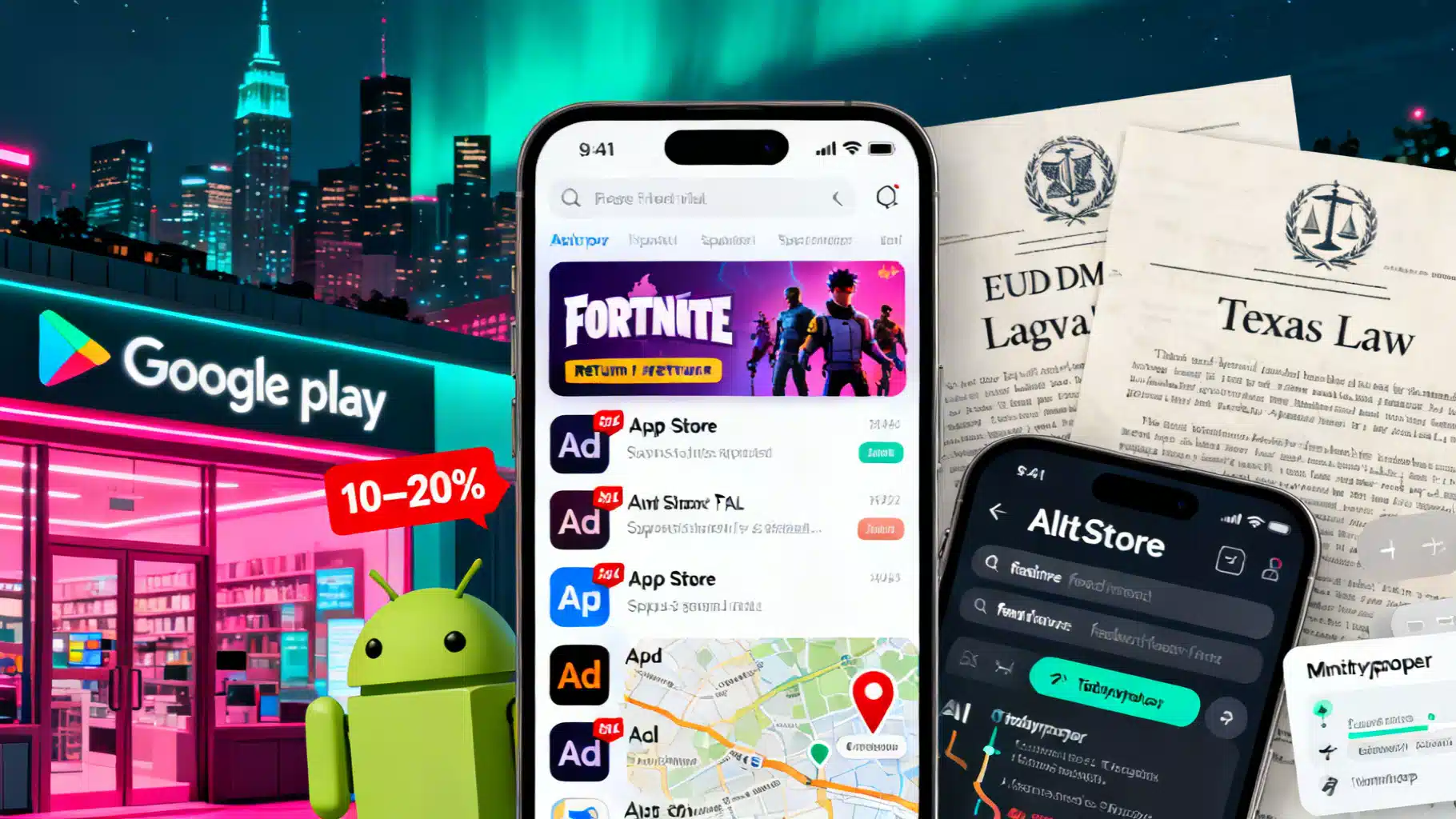
Image used for representation purposes only.
The app world’s great reset: fees fall, ads expand, and AI surges in 2026
April 6, 2026 — A flurry of policy shifts, court-driven concessions, and product updates is rapidly reshaping how apps are built, discovered, and monetized across iOS and Android. From Google cutting Play Store fees and welcoming Fortnite back, to Apple rolling out more ads (including in Maps) and tightening developer requirements, the mobile ecosystem is entering a new phase defined by lower store tolls, higher ad density, and AI-first experiences.
Key developments at a glance
- Google proposes lower Play Store commissions and a registration path for rival stores; Fortnite returns to Google Play globally. (apnews.com )
- Apple expands App Store search ads and confirms ads are coming to Apple Maps in the U.S. and Canada this summer. (gadgets360.com )
- State and regional rules keep biting: Texas’s age‑verification law forced App Store changes on January 1, 2026; the EU’s DMA continues to pry open iOS distribution. (tomsguide.com )
- Android will require verified developer identities for sideloaded apps on certified devices, with a phased rollout beginning in 2026. (android-developers.googleblog.com )
- Apple sets April 28, 2026 as the deadline for new App Store submissions to use the latest SDKs via Xcode 26. (developer.apple.com )
- AI-fueled apps and formats keep climbing, with Sensor Tower forecasting >$10B in 2026 GenAI app revenue and short‑form “short drama” video surging. (sensortower.com )
Google’s settlement changes the Play Store playbook — and the Fortnite effect
On March 4, Google filed proposed Play Store changes that would reduce baseline commissions for subscriptions and e‑commerce to the 10%–20% range and introduce an optional 5% processing fee for developers who keep transactions inside Play. The plan also outlines a registration program for alternative app stores, aiming to certify their safety without requiring developers to use Google’s billing. A federal judge will review the proposal, but Google says it will begin rolling out fee cuts in the U.S., U.K., and EU. (apnews.com )
The practical impact was immediate: Fortnite returned to Google Play worldwide on March 19, ending a years‑long standoff and giving Android users the simplest pathway back to Epic’s flagship. Epic announced the relaunch and timing publicly; major outlets corroborated the date. (epicgames.com )
Apple’s pivot to ads: more placements in the App Store, and Maps joins the mix
Apple is expanding App Store search ads beyond a single top placement, beginning March 2026 in the U.K. and Japan and extending to more markets thereafter. Developer‑facing reports and coverage indicate multiple sponsored slots in results pages as part of the rollout. (gadgets360.com )
Then came a bigger move: Apple confirmed that local ads are coming to Apple Maps in the U.S. and Canada “this summer,” bundled into the new Apple Business platform that unifies Apple Business Connect, Essentials, and Manager. Apple says Maps ads will surface during key search and discovery moments; businesses can prepare by claiming listings ahead of launch. (apple.com )
Rules and regulators: U.S. states and the EU keep pressure on app stores
Texas’s App Store Accountability Act took effect January 1, 2026, forcing Apple to verify users’ ages at account creation and to enforce family consent flows for minors. Apple warned the rules could raise privacy risks, but nonetheless implemented App Store changes for Texans to comply with the statute. Similar measures are on the horizon in other jurisdictions. (tomsguide.com )
In Europe, the EU’s Digital Markets Act (DMA) continues to reshape iOS distribution. After a €500 million fine over “anti‑steering” and a 60‑day deadline last year, Apple announced revised EU App Store terms that make it easier for developers to point users to outside payment options, including websites and alternative marketplaces. The Commission is still assessing DMA compliance. (apnews.com )
The DMA’s opening for alternative stores is spawning new experiments. AltStore PAL, an EU‑enabled third‑party marketplace, rolled out social‑web (fediverse) integrations in March to help users discover and follow app updates across Mastodon and compatible platforms — a sign that “store” discovery may itself become decentralized. (techcrunch.com )
Android tightens sideloading with developer verification
Google will require that apps installed on certified Android devices — whether from Play, third‑party marketplaces, or direct APKs — be tied to verified developer identities. Google frames the program as an “ID check” to fight fraud while preserving distribution choice, with early access opening broadly this spring and a phased country rollout starting later this year. Coverage and Google’s own developer blog detail timelines and the rationale. (android-developers.googleblog.com )
Deadlines developers can’t miss
- April 28, 2026 (Apple): New uploads to App Store Connect must be built with Xcode 26 or later using current‑generation SDKs (iOS/iPadOS/tvOS/visionOS/watchOS 26). Teams still on older toolchains risk rejection after this date. (developer.apple.com )
- Summer 2026 (Apple): Local ads go live in Apple Maps in the U.S. and Canada; businesses can set up presence and assets now via Apple Business. (apple.com )
- 2026 phased rollout (Android): Developer identity verification becomes a prerequisite for installing apps on certified devices, impacting third‑party stores and direct APK installs. (android-developers.googleblog.com )
Monetization: lower platform tolls meet higher ad density
If approved as filed, Google’s lower commission schedule and optional payment processing fee could meaningfully improve unit economics for subscription‑driven apps on Android — especially those with price sensitivity or thin margins. But on iOS, Apple appears to be leaning deeper into advertising: more sponsored slots in App Store search and a new Maps inventory will shift UA budgets further into Apple’s ad stack, blending discovery and paid placement just as competition for organic visibility intensifies. (gadgets360.com )
Discovery is fragmenting — and getting social
Alternative marketplaces are now experimenting with social graphs to surface trustworthy apps and updates. AltStore PAL’s fediverse integration turns developer posts into store‑level signals, hinting at a future where app discovery rides open social protocols rather than just store leaderboards and paid search results. Expect more marketplaces to borrow social‑proof mechanics as they chase user trust and time. (techcrunch.com )
AI is now table stakes — and a revenue line
Generative AI continues to drive downloads, revenue, and retention strategies across categories. Sensor Tower predicts AI apps will surpass $10 billion in IAP revenue this year, with short‑form “short drama” video emerging as a breakout format rivaling OTT for attention. Even utility and mobility apps are turning to AI as a product differentiator: on March 4, Citymapper launched AI‑assisted, personalized journey planning that weighs speed, cost, walking distance, and live disruptions in one glance. (sensortower.com )
What it means for app makers and marketers
- Revisit Android P&L: If/when Google’s new fee structure clears judicial review, model subscription and marketplace revenue under 10%–20% service tiers and decide whether to absorb or pass along the optional 5% processing fee for on‑Play billing. (apnews.com )
- Prepare for paid discovery on iOS: With more App Store search ad slots and an impending Maps channel, reallocate UA budgets and build Apple‑native creative that matches new placements and intent surfaces. Claim your business in Apple Business now to be ready for Maps ads. (gadgets360.com )
- Ship on current toolchains: Migrate builds to Xcode 26 and the 26‑series SDKs ahead of the April 28 deadline to avoid submission crunches. (developer.apple.com )
- Plan for Android verification: Ensure your organization can pass Google’s developer identity checks; audit any third‑party distribution partners to confirm their compliance before country‑level enforcement begins. (android-developers.googleblog.com )
- Lean into AI utility, not novelty: Prioritize AI features that remove friction (summaries, decision support, routing) and demonstrate measurable lift in session depth or conversion, mirroring early successes in mobility and content apps. (s206.q4cdn.com )
The bottom line
App distribution and monetization are simultaneously getting more open and more mediated. Lower fees on Android, DMA‑driven competition on iOS, and a rising tide of on‑platform ads point to a 2026 defined by experimentation: alternative stores vying for credibility, Apple turning Maps into a marketing surface, and developers racing to ship AI that users will actually keep. Amid the upheaval, the winners will be teams who adapt quickly to new rules, build with the latest SDKs, and diversify growth beyond a single store or channel. (apnews.com )
Related Posts
Google Play’s 2026 Overhaul: Lower Fees, Fortnite’s Return, and Stricter Sideloading Rules
Google Play’s 2026 overhaul: lower fees, Fortnite’s return, verified sideloading, and battery‑drain warnings—what it means for users and developers.

iPhone in 2026: iPhone 17 momentum, messaging shifts, and the foldable wildcard
As of March 23, 2026, iPhone 17 sales stay strong while RCS, DMA rules, and a possible foldable iPhone redefine Apple’s smartphone story.