
RPCS3 lands a Cell CPU breakthrough that lifts performance across the board
RPCS3 reports a new Cell CPU emulation breakthrough, with 5–7% gains in SPU‑heavy games and benefits for low‑ to high‑end CPUs. Here’s what changed.
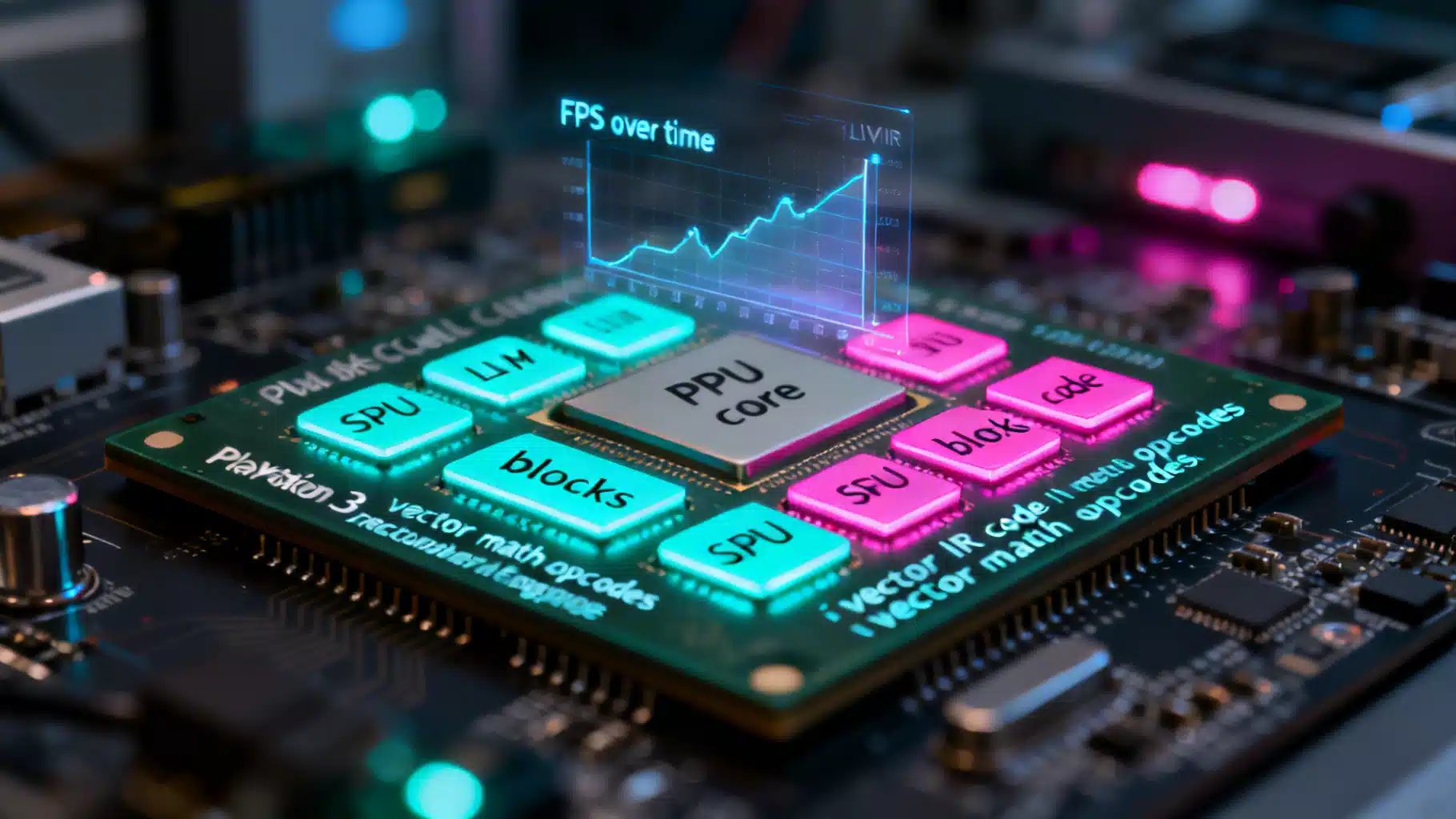
Image used for representation purposes only.
RPCS3’s new Cell CPU breakthrough: what happened and why it matters
The team behind the open‑source PlayStation 3 emulator RPCS3 says it has achieved a “breakthrough” in emulating Sony’s notoriously complex Cell Broadband Engine. Lead developer Elad (elad335) identified previously unrecognized SPU (Synergistic Processing Unit) usage patterns and implemented new code paths that generate more efficient native PC code. In side‑by‑side tests, Twisted Metal — a title that hammers the SPUs — shows a 5–7% average FPS uplift between builds v0.0.40‑19096 and v0.0.40‑19151. The team adds that “all CPUs can benefit from this, from low‑end to high‑end.” The announcement was shared on April 3, 2026, with detailed coverage published on April 5, 2026. (tomshardware.com )
Why the Cell’s SPUs are the emulator’s biggest bottleneck
The PS3’s Cell pairs a PowerPC‑based PPU with up to seven active SPUs, each a 128‑bit SIMD co‑processor with its own 256KB local store. RPCS3 translates these SPU workloads into host machine code via LLVM/ASMJIT backends. Because SPU jobs run in parallel and are highly timing‑sensitive, the translation quality and scheduling overhead dominate CPU time on PCs — especially in SPU‑heavy games. By recognizing real‑world SPU instruction patterns and emitting tighter host code, the latest change shaves per‑frame CPU cost across the board. (tomshardware.com )
Under the hood: new patterns, leaner loops
While the team hasn’t open‑sourced a formal whitepaper, recent public build notes point to fresh optimization work in the SPU LLVM path, including reduced‑loop handling and math op tuning that align with the breakthrough’s theme: less work per SPU cycle, more done per clock. Commit logs around March 27 mention “SPU LLVM: Optimize FM, FMA and FCGT in Reduced Loop,” suggesting concrete improvements in how tight SPU loops are recognized and recompiled. It’s consistent with the claim that better pattern detection is generating faster native output. (emucr.com )
Early impact: real games, real gains
RPCS3 showcased Twisted Metal to illustrate the uplift, noting dynamic elements in the comparison scene (lighting/NPC variance) that explain minor visual differences while the average frame rate rises. The team also cites anecdotal reports of smoother audio and even slight gains in Gran Turismo 5 on very modest hardware like AMD’s Athlon 3000G — a reminder that micro‑optimizations can disproportionately help CPUs that sit near the emulation threshold. (tomshardware.com )
The bigger picture: momentum from handheld UX to Arm
The breakthrough slots into a wider run of progress:
- Handheld UX upgrade: a redesigned in‑game overlay now lets you tweak frame‑rate caps, resolution scaling, and other options without restarting — a big quality‑of‑life win for Steam Deck‑class devices. (gamesradar.com )
- 1,500+ FPS milestone: in March, RPCS3 highlighted an extreme synthetic signpost — Minecraft PS3 Edition’s title screen exceeding 1,500 FPS — underscoring how efficient parts of the pipeline have become when workloads are simple. (tech.yahoo.com )
- Arm64 and new Arm optimizations: after shipping native Arm64 builds in late 2024, the team recently added Armv8 SDOT/UDOT‑based tweaks accelerating a key SPU instruction (SUMB), improving performance on Apple Silicon Macs and upcoming Arm laptops. (rpcs3.net )
Compatibility continues to climb
Beyond raw speed, RPCS3’s compatibility tracker recently passed a marquee milestone: over 70% of the PS3 library is now rated “Playable,” meaning games can be completed without game‑breaking issues on recommended hardware. That figure was highlighted in January 2026 roundups and provides crucial context for performance gains — the faster the emulator gets, the more titles move from “In‑game” to a truly console‑like experience. (hothardware.com )
How much faster is 5–7% — and for whom?
A single‑digit uplift might sound modest, but in emulation, where CPU headroom is often the gating factor, 5–7% can be the difference between frequent dips and sustained console‑equivalent frame times. On high‑end rigs, that margin compounds with other improvements to reduce stutter and shader hitching. On budget CPUs, it can push borderline titles into consistently playable territory. RPCS3’s assertion that “all CPUs can benefit” tracks with the nature of the change: more efficient host code generation aids any architecture, not just the newest flagships. (tomshardware.com )
What to watch next
- More SPU micro‑patterns: Expect iterative wins as additional real‑world code shapes are codified into the recompiler’s heuristics.
- Cross‑arch parity: With Armv8 vector paths closing gaps, Apple Silicon and Windows‑on‑Arm laptops stand to gain more in 2026.
- Game‑specific patches vs. core accuracy: RPCS3 has historically balanced permissive performance tweaks with faithful hardware modeling. The latest Cell/SPU work sits on the “core accuracy leads to speed” side — a promising long‑term strategy for stability.
If you’re curious to try the gains, grab the latest nightly or continuous build and confirm your version is at or newer than v0.0.40‑19151. As always, per‑title results vary with CPU, memory bandwidth, and RSX (GPU) settings.
Bottom line
Emulating the PS3 remains a moonshot thanks to the Cell’s asymmetric, SPU‑centric design. But RPCS3’s newest Cell CPU breakthrough shows that careful pattern discovery and smarter recompilation still move the needle — not just for showcase rigs, but for the wide middle of PC hardware as well. Combined with ongoing UX work for handhelds, Arm‑targeted optimizations, and a fast‑climbing compatibility rate, 2026 is shaping up as one of RPCS3’s most consequential years yet. (tomshardware.com )
Related Posts

Building Performant Infinite Scroll in React: Patterns, Pitfalls, and Production Tips
Build performant React infinite scroll using IntersectionObserver, React Query, and virtualization, with production tips and code examples.
React Jotai: A Practical Guide to Atomic State Management
A practical guide to React Jotai atomic state: concepts, patterns, async atoms, performance, TypeScript, SSR, testing, and pitfalls.
Flutter Impeller Rendering Engine: A Performance Deep Dive and Tuning Guide
A practical performance deep dive into Flutter’s Impeller renderer: how it works, how to measure it, and tuning patterns for smooth, jank‑free UIs.