Sundar Pichai’s AI Bet: Apple’s Siri Tie‑Up, Record 2026 CapEx, and Gemini Everywhere
Sundar Pichai’s AI era: Apple’s Siri deal, record 2026 CapEx, and Gemini’s rapid expansion—plus the regulatory tests that could shape Google’s future.
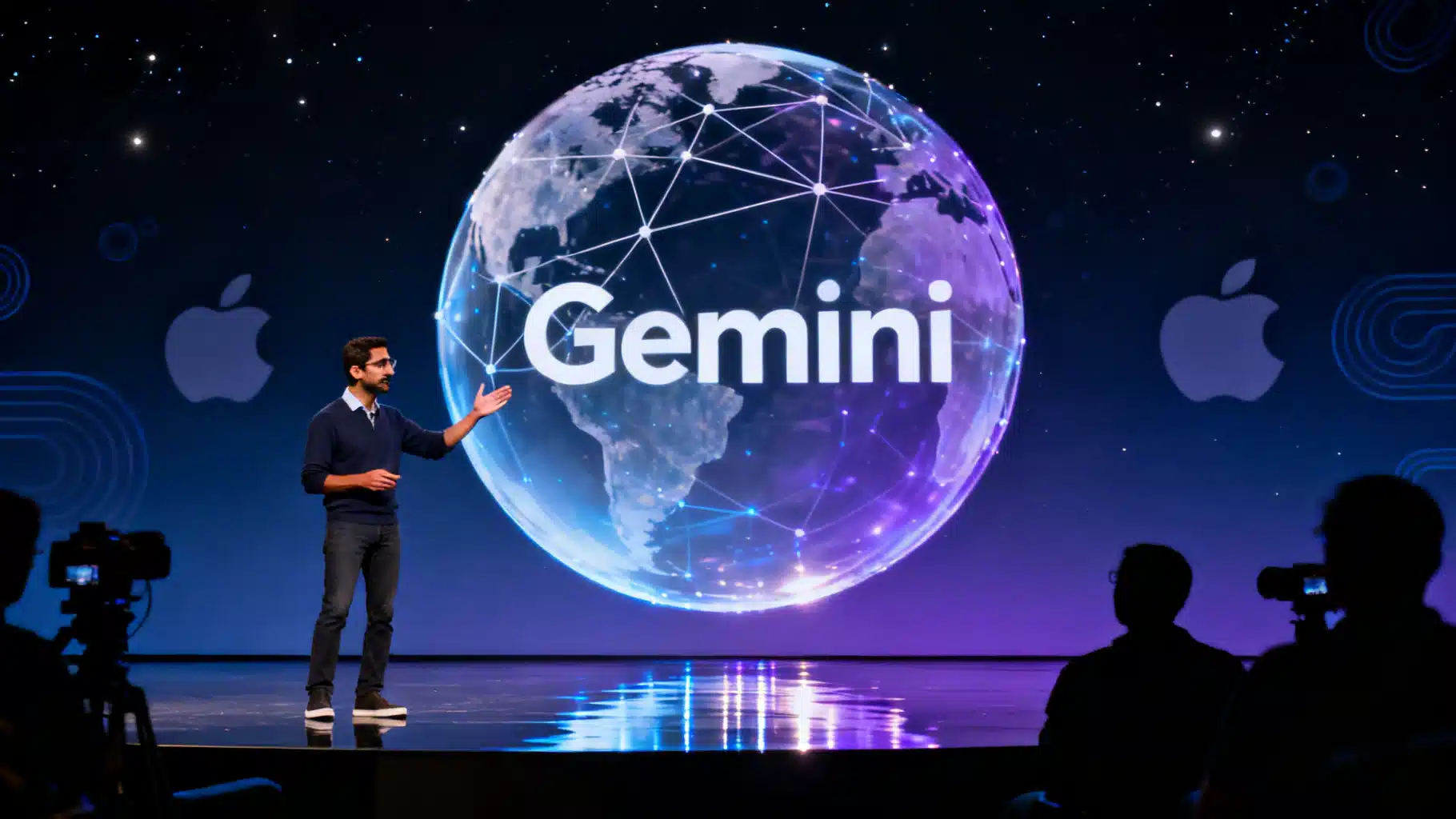
Image used for representation purposes only.
Sundar Pichai’s high‑wire act in the AI race
Alphabet CEO Sundar Pichai is steering Google through its most aggressive transformation since the advent of Universal Search—this time centered on Gemini, soaring AI infrastructure bets, and a surprise alliance with Apple. As of April 11, 2026, the company is rolling out new Gemini features across consumer and enterprise products while committing an unprecedented wave of capital to meet global compute demand. Meanwhile, regulators in the U.S. and Europe are tightening scrutiny, testing Pichai’s ability to expand fast and comply faster. (fortune.com )
A quietly historic pact with Apple
On January 12, 2026, Apple confirmed it will use Google’s Gemini models to power a next‑generation Siri and other “Apple Intelligence” features slated to arrive this year—a milestone that reshapes the AI platform map and gives Google a vast new distribution channel. Apple and Google framed it as a multi‑year partnership, with inference expected to leverage Apple’s Private Cloud Compute. Alphabet, for its part, has been circumspect on investor calls, noting only that Google is Apple’s “preferred cloud provider” as the companies collaborate on foundation models. (macrumors.com )
Spending like the future depends on it
In February, Pichai and CFO Anat Ashkenazi told investors Alphabet plans $175–$185 billion in capital expenditures during 2026—roughly doubling 2025’s spend—to expand AI data centers, servers and networking capacity. Pichai cautioned that power, land and supply chain constraints will keep the company “supply constrained” this year even as demand surges. Alphabet also reported a record 2025: annual revenue above $400 billion, net income growth, and YouTube passing $60 billion for the year. Independent analyses have emphasized that the CapEx ramp resets industry expectations for AI infrastructure. (fortune.com )
Gemini everywhere: from personal intelligence to Pixel and Workspace
Google’s March product roundup underscored Pichai’s “AI first” push. Search Live expanded globally in markets where AI Mode is available; “Personal Intelligence” gained reach across the Gemini app, Chrome and Search; and Google Maps introduced a conversational “Ask Maps” experience and Immersive Navigation upgrades. Developers saw new models like Gemini 3.1 Flash‑Lite and Flash Live for low‑latency and real‑time audio use cases. (blog.google )
Inside Workspace, Gemini gained deeper, cross‑app assistance. New capabilities in Docs, Sheets, Slides and Drive can synthesize information across files and emails, auto‑generate presentations aligned to a deck’s theme, and summarize Drive search results with citations—initially for Google AI Ultra and Pro subscribers. (blog.google )
This week, Google also introduced “Notebooks in Gemini,” a project space that syncs bidirectionally with NotebookLM so teams and students can consolidate sources, maintain memory, and keep research or planning threads intact across apps. Early hands‑on reports highlight how the integration reduces friction between personal knowledge bases and conversational workflows. (blog.google )
Enterprise traction—and a TPU showcase
On Alphabet’s Q4 2025 call, Pichai pointed to broadening enterprise momentum: a growing backlog in Google Cloud, rising subscription counts across consumer services, and accelerating adoption of Gemini in Search and Workspace. Management reiterated that this year’s CapEx is intended to support frontier model development, advertiser ROI, and cloud demand. (fortune.com )
Pichai’s full‑stack strategy also leverages partnerships to showcase Google’s custom silicon. In late 2025 and into 2026, Anthropic detailed multi‑billion‑dollar access to Google’s Tensor Processing Units—scaling toward gigawatt‑class compute this year—reinforcing Google Cloud’s role in training and serving state‑of‑the‑art models. (apnews.com )
The regulatory vise tightens
Legal exposure remains a central backdrop to Pichai’s AI expansion. In September 2025, a federal judge issued remedies in the U.S. search monopolization case—ordering changes to curb Google’s market power while stopping short of a breakup. Earlier, a separate ruling targeted Google’s digital ad tech business as an illegal monopoly. Appeals and remedy negotiations continue, with outcomes that could reshape defaults, data access, and product design. (apnews.com )
Across the Atlantic, Digital Markets Act enforcement has pressed Google to modify how it surfaces services like travel and shopping. Google argues that some DMA obligations degrade usefulness and has urged “user‑driven, fact‑based” enforcement—a signal of continued friction with Brussels as its AI features become more deeply woven into Search and Android. (blog.google )
Leadership lens: the platform shift according to Pichai
Pichai has cast the current moment as a generational platform shift. In February, he told leaders at India’s AI Impact Summit that “no technology has me dreaming bigger than AI,” linking breakthroughs like AlphaFold to the practical benefits of scaling compute and responsible deployment. He also previewed new infrastructure commitments in India, including a full‑stack AI hub and subsea connectivity, reflecting Google’s push to meet demand outside North America. (blog.google )
He is also taking the AI message to the retail sector. In January, Pichai keynoted NRF 2026 in New York, outlining how agentic AI could reshape merchandising, logistics and customer service—another sign that Google wants Gemini embedded not just in documents and chats but in industry workflows. (nrf.com )
The person behind the pivot
Born June 10, 1972, and educated at IIT Kharagpur, Stanford and Wharton, Pichai joined Google in 2004, led Chrome and ChromeOS, became Google’s CEO in 2015 and took the helm of Alphabet in 2019. His tenure has paired product focus with large‑scale organizational shifts—now culminating in an AI build‑out that dwarfs prior investment cycles. (britannica.com )
What to watch next
- Siri rollout milestones: Apple’s Gemini‑powered Siri features are slated to arrive during 2026; watch for staged launches and how Apple balances on‑device vs. cloud inference. (apnews.com )
- CapEx ramp cadence: Alphabet signaled spending will “ramp through the year” as new capacity comes online—investors will track utilization, depreciation and margin impact. (fortune.com )
- Gemini feature velocity: Expect continued monthly updates across Search, Workspace, Pixel and the Gemini app, including new multimodal and real‑time capabilities. (blog.google )
- Regulatory outcomes: U.S. remedies and EU DMA enforcement could force product changes—particularly around defaults, rankings and data access—testing Google’s ability to innovate under constraint. (apnews.com )
The upshot: Pichai’s bet is that saturation‑level investment in compute, paired with distribution via Android, Chrome, Workspace—and now Apple—will make Gemini the default interface for how people search, work and create. Whether that bet pays off at Alphabet’s scale will depend on how quickly the company can convert massive infrastructure into products that users love and enterprises pay for, while keeping regulators at bay.
Related Posts
AAPL Briefing: Record Quarter, Gemini‑Powered Siri, and the WWDC 2026 Countdown
AAPL’s 2026 story: record Q1, a Google Gemini–backed Siri, WWDC 2026 AI previews, and an active DOJ case keep Apple’s stock in the headlines.
Tim Cook at 50: Record highs, a 2026 AI reboot, and the succession watch
As Apple turns 50 on April 1, 2026, Tim Cook juggles record earnings, a 2026 Siri reboot with Google, EU/DOJ pressure, and rising succession signals.

Steve Wozniak’s 2026: Honors, AI Reality Checks, and a Renewed Fight Against Deepfakes
Steve Wozniak’s 2026: humanitarian honors, sharp AI warnings, and a revived lawsuit shaping platform accountability.