
Artemis III launch date: NASA targets 2027 after mission overhaul
NASA now targets Artemis III for 2027 as a low-Earth-orbit test, shifting the first crewed lunar landing to Artemis IV in 2028.
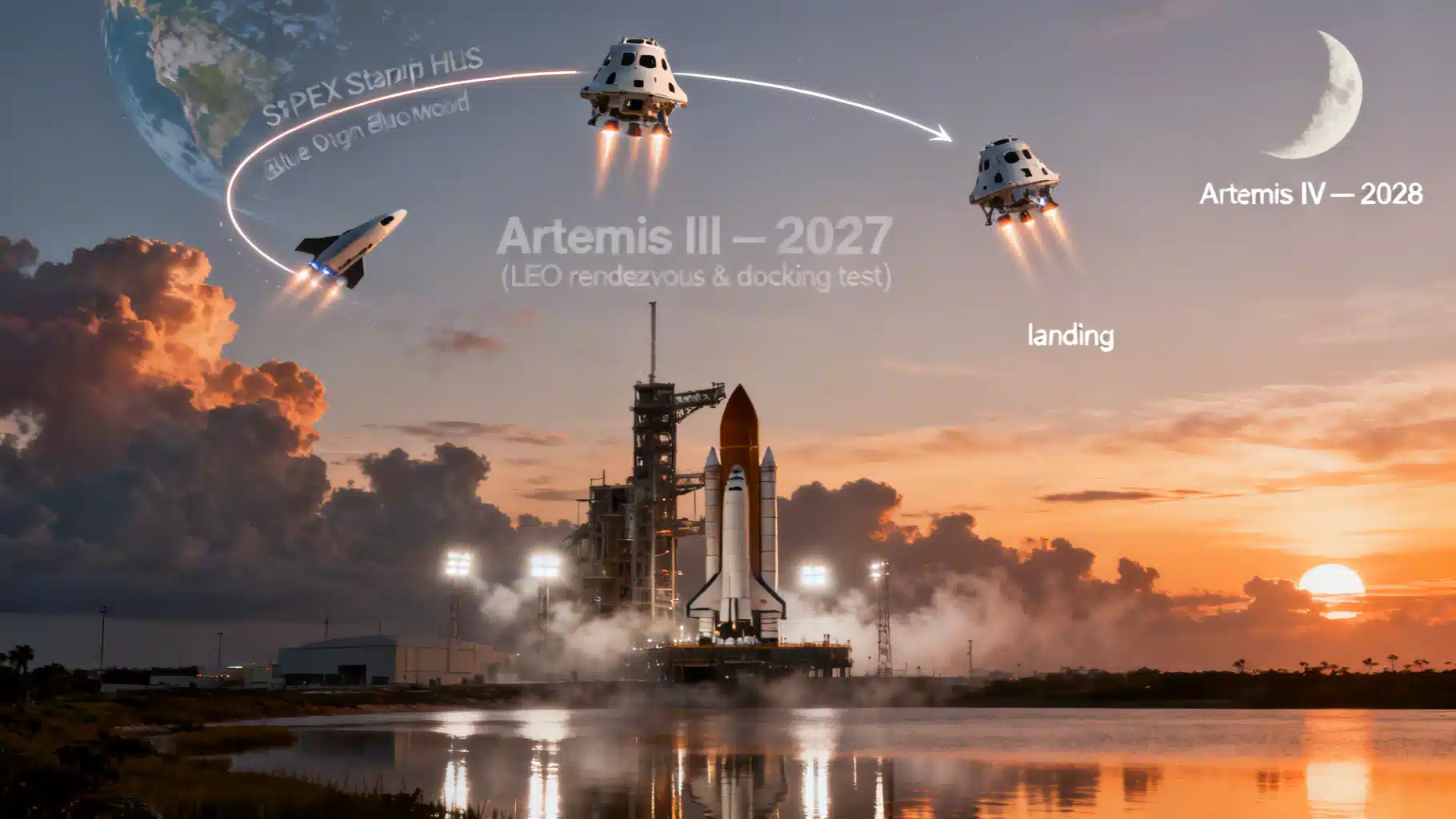
Image used for representation purposes only.
NASA’s new plan: Artemis III shifts to 2027, mission refocused
NASA has formally moved Artemis III to 2027 and redesigned it as a low‑Earth‑orbit test mission, clearing the way for the first crewed lunar landing to occur on Artemis IV in 2028. The agency announced the architecture change on Feb. 27, 2026, noting that Artemis III will emphasize in‑space rendezvous, docking and integrated systems checks rather than a surface landing. (nasa.gov )
What exactly will fly in 2027?
Under the revised plan, Artemis III will aim to rendezvous and dock in Earth orbit—potentially with one or both commercial Human Landing System (HLS) vehicles—while validating life‑support, communications and propulsion in flight. NASA said it will share detailed objectives after additional reviews with industry partners. (nasa.gov )
Independent coverage the same day summarized the pivot succinctly: Artemis III “will be launched by mid‑2027” as an Earth‑orbiting technology demonstration, with the lunar landing shifted to 2028. (theguardian.com )
Timeline at a glance
- Dec. 5, 2024: NASA delays Artemis II to April 2026 and Artemis III to at least 2027, citing heat‑shield work and other readiness items. (apnews.com )
- Apr. 1–10, 2026: Artemis II launches and completes a record‑setting lunar flyby on April 6, setting the stage for Artemis III preparations. (space.com )
- Feb. 27, 2026: NASA overhauls the campaign: Artemis III becomes a 2027 orbital test; Artemis IV now targets a late‑2028 lunar landing. (nasa.gov )
Why the date moved
NASA’s Inspector General reported in March 2026 that HLS development—particularly SpaceX’s Starship lander—has incurred at least two years of schedule delay, with key milestones like large‑scale cryogenic propellant transfer sliding into 2026. The report warned that even a June 2027 launch left “roughly six months” between an uncrewed demo and a crewed mission, offering little margin for typical development hiccups. (oig.nasa.gov )
Spacesuit and cross‑program integration challenges (lander–suit interfaces, Orion changes, Gateway alignment) also continue to ripple through provider timelines, reinforcing NASA’s decision to sequence risk‑reduction steps before attempting another first landing. (oig.nasa.gov )
What must happen before Artemis III
- Closeout and certification from Artemis II’s flight (April 2026) to retire human‑rating risks and finalize any Orion/SLS updates informed by flight data. (space.com )
- HLS progress across cryogenic fluid management, on‑orbit propellant aggregation, and pad‑turnaround cadence needed for tanker flights—critical groundwork whether docking trials involve SpaceX, Blue Origin, or both. (oig.nasa.gov )
- NASA and industry reviews to lock Artemis III’s exact in‑orbit test points, docking configuration, and xEVA suit demonstrations. NASA says those specifics will follow joint assessments. (nasa.gov )
What this means for the first lunar landing
The first post‑Apollo crewed lunar landing is now planned for Artemis IV in 2028, after Artemis III proves rendezvous/docking and integrated operations in orbit. NASA’s goal is to establish a steadier cadence—at least one surface mission per year thereafter—once core systems and workflows are verified. (nasa.gov )
The bottom line on the launch date
As of Sunday, April 12, 2026, NASA’s official target for Artemis III is 2027, with the mission re‑scoped to an Earth‑orbit test flight. A specific launch month or window has not yet been announced; expect a firmer timeline after Artemis II post‑flight reviews and additional industry milestones later this year. (nasa.gov )
Why this remains fluid
Even with the refocus, Artemis III’s schedule depends on maturing new capabilities—especially cryogenic propellant transfer and high‑tempo launch operations—that have no direct human‑spaceflight precedent. NASA’s watchdog has cautioned that small slips in 2026 milestones could cascade into 2027, underscoring why the agency opted to prove complex docked operations in orbit before attempting a landing. (oig.nasa.gov )
What to watch next
- NASA’s detailed Artemis III objectives and docking configuration (SpaceX, Blue Origin, or both) following joint reviews. (nasa.gov )
- HLS propellant‑transfer and uncrewed demo results as leading indicators for the 2027–2028 cadence. (oig.nasa.gov )
- Post‑mission briefings from Artemis II to validate Orion/SLS performance and any required tweaks ahead of Artemis III. (space.com )
In short: Artemis III’s “launch date” is 2027, but it’s now a systems‑proving flight in Earth orbit—by design—to de‑risk an Artemis IV lunar landing in 2028. (nasa.gov )
Related Posts

Artemis III launch date: NASA sets 2027 Earth‑orbit test as lunar landing shifts to 2028
As of April 12, 2026, NASA lists Artemis III for 2027 as an Earth‑orbit test; the first lunar landing shifts to Artemis IV in 2028.