
Amazon sued over ‘bricked’ Fire TV Sticks: What the April 2026 class action means for consumers
New class action alleges Amazon ‘bricked’ older Fire TV Sticks by ending software support. What the April 2026 case claims and what owners should know.
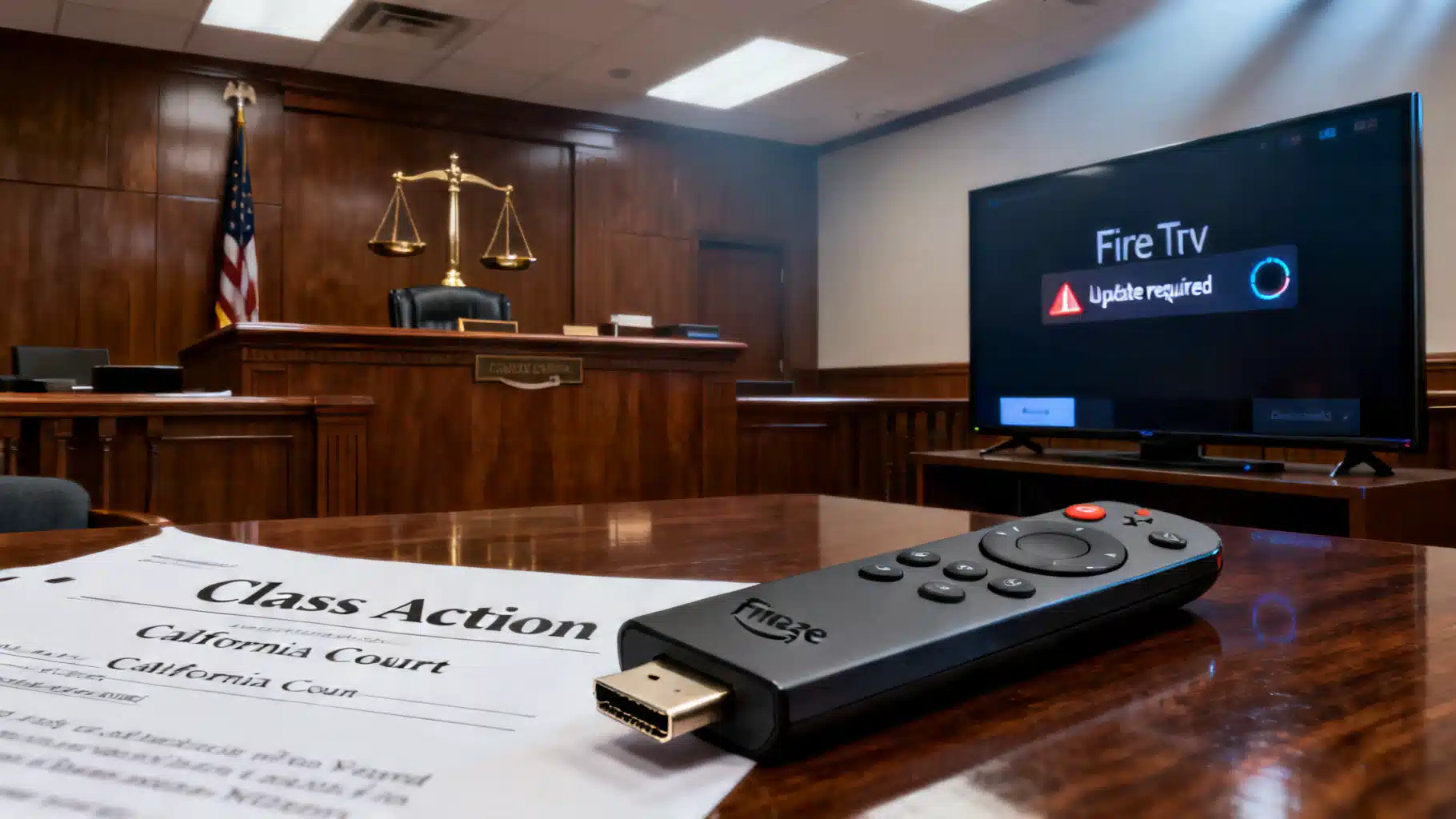
Image used for representation purposes only.
Amazon faces new class action over ‘bricked’ Fire TV Sticks
Updated: April 16, 2026 — Amazon has been hit with a proposed class action in Los Angeles Superior Court alleging the company effectively “bricked” older Fire TV Stick streaming devices by cutting off critical software support after advertising them as providing instant access to major streaming services. The complaint, filed April 2, 2026 by plaintiff Bill Merewhuader, names Amazon.com, Inc. and Amazon.com Services LLC and seeks damages and injunctive relief. (law360.com )
What the lawsuit alleges
- The suit claims first‑generation Fire TV Stick devices lost software support in December 2022 and that support for second‑generation models ended soon after, leaving many units slow, unstable, or no longer usable for their core streaming purpose. (topclassactions.com )
- Plaintiff lawyers argue Amazon failed to disclose that it could reduce or discontinue essential features before the end of a product’s useful life, a practice the complaint describes as “software tethering.” (topclassactions.com )
- The filing asserts violations of California consumer protection statutes, breach of contract, and related claims, and seeks to represent nationwide purchasers of first‑ and second‑generation Fire TV Sticks, with California subclasses. (topclassactions.com )
Why this is surfacing now
Beyond the end‑of‑support timeline alleged in the complaint, Amazon has tightened control over apps on the Fire TV platform in recent months. In late 2025, the company began blocking piracy‑related apps on Fire TV devices — including ones users sideloaded — and signaled a global rollout after initial enforcement in Europe. In parallel, the newer Fire TV Stick 4K Select runs Amazon’s Vega OS, which restricts app installs to the official Appstore, curbing traditional Android sideloading. These moves, framed by Amazon as security measures, have fueled broader debates about buyer expectations and device longevity. (androidcentral.com )
The bigger legal backdrop for Fire TV hardware
- Price‑advertising claims: In 2024, a separate putative class action alleged Amazon used misleading “list prices” and limited‑time deal labels to promote Fire TV hardware. While distinct from the new “bricking” case, it highlights ongoing scrutiny of Amazon’s Fire TV marketing. (arstechnica.com )
- Patent pressure in Europe: Also in 2024, a Munich court ruling enforcing Nokia video‑codec patents led Amazon to halt sales of some Fire TV 4K models in Germany, though Amazon said existing customers were unaffected. The dispute illustrates additional legal headwinds around Fire TV devices abroad. (heise.de )
Third‑party support is changing, too
Some app makers have moved on from the oldest Fire TV hardware. Netflix, for example, ended support for first‑generation Fire TV devices in June 2025, underscoring how aging chipsets and security baselines can bump into modern streaming requirements — even if the hardware still powers on. (androidpolice.com )
What Fire TV owners should do now
- Identify your model: Check which Fire TV Stick generation you own via Settings > My Fire TV > About (or consult Amazon’s device ID guides). The lawsuit centers on first‑ and second‑generation sticks. (topclassactions.com )
- Document issues: Note dates when core apps stopped working or performance degraded, and keep order receipts or invoices if available.
- Watch the docket: The case is Merewhuader v. Amazon.com Inc., et al., in the Superior Court of California, County of Los Angeles. Early proceedings typically include Amazon’s response and, if the case proceeds, class‑certification briefing. (topclassactions.com )
- Security and functionality trade‑offs: If you rely on sideloaded apps, be aware of Amazon’s anti‑piracy enforcement and Vega OS limits on newer hardware. Evaluate alternatives or official Appstore equivalents where possible. (androidcentral.com )
What’s next
As of today, the case is in its opening phase. Whether the court allows nationwide classes, how it views claims tied to software‑driven obsolescence, and whether Amazon faces injunctive relief that could reshape support disclosures for streaming devices will be central issues to watch in the months ahead. We’ll update this story as Amazon files its response or the court sets early hearings.
The takeaway
The Fire TV Stick lawsuit taps a fast‑emerging consumer question: when software lifecycles and platform policies change, what level of performance and access do buyers reasonably expect over a device’s usable life? Between end‑of‑support timelines, app‑store enforcement, and parallel legal pressures on pricing and patents, the answer could set expectations far beyond one streaming stick. (arstechnica.com )
Related Posts
T‑Mobile $200 Gift Card Lawsuit: March 2026 Update and What It Means for Customers
As of March 6, 2026: Where the T‑Mobile $200 gift card class action stands, who could be affected, and how it fits into broader marketing scrutiny.
Google’s $135 million Android settlement: eligibility, payouts, and key dates
Google will pay $135M to settle claims Android misused cellular data. See eligibility, payout details, and key dates before the June 23, 2026 hearing.
Kindle’s Crossroads: Old Devices Lose Store Access May 20 as Color Scribe and AI Push the Platform Forward
Amazon will cut Kindle Store access for 2012-or-earlier devices on May 20, 2026, as color e‑ink, AI features, and fresh firmware define Kindle’s next era.