
Tomodachi Life: Living the Dream hits Switch—with Switch 2 support and a free demo
Tomodachi Life: Living the Dream lands on Switch with day-one Switch 2 support, a free demo, and social-ready chaos—here’s what’s new and what to watch.
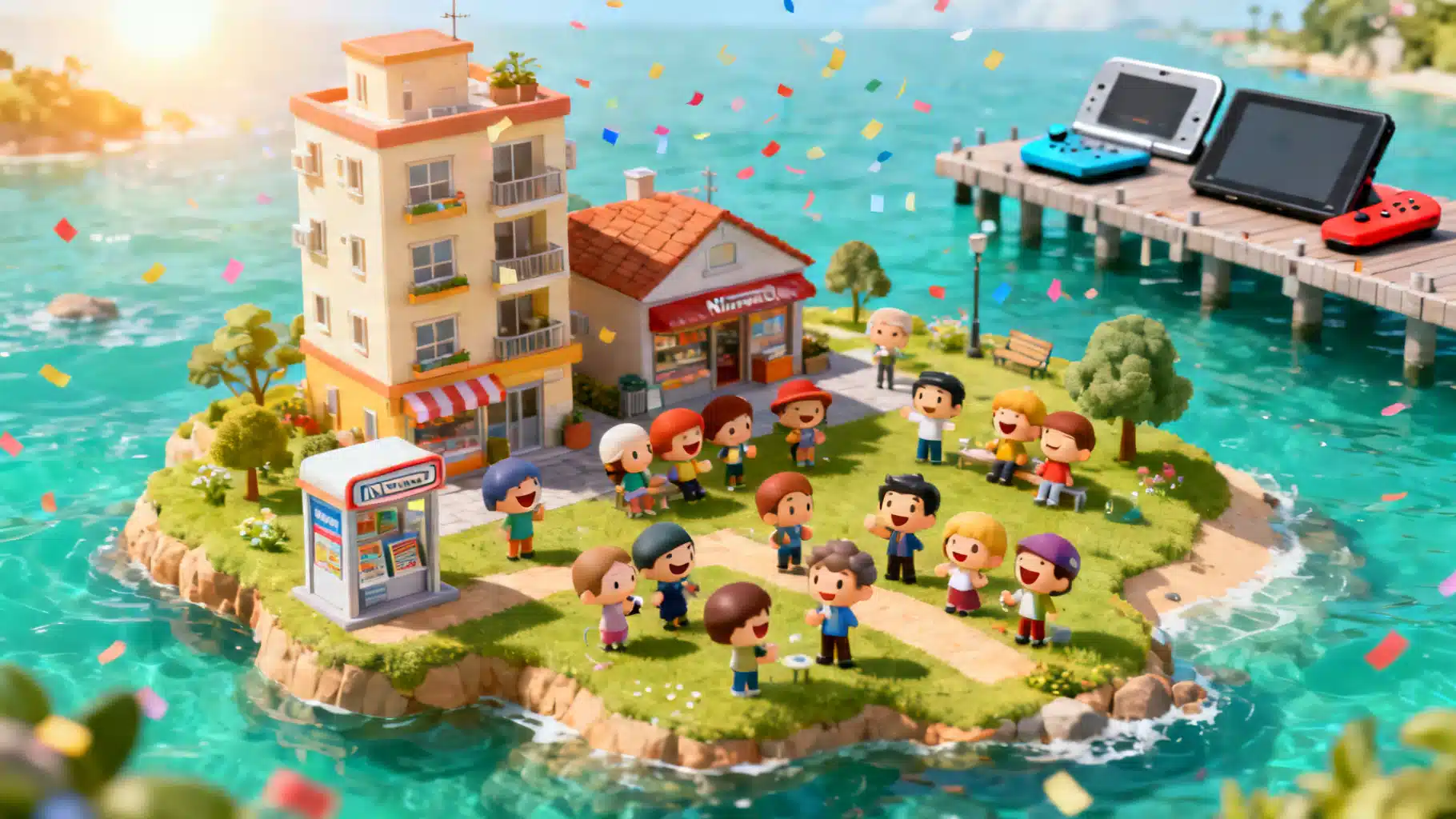
Image used for representation purposes only.
Nintendo’s surreal life sim returns: Tomodachi Life: Living the Dream launches on Switch
Nintendo has brought its delightfully oddball social sim back to the spotlight. Tomodachi Life: Living the Dream released for Nintendo Switch on April 16, 2026, marking the series’ first new mainline entry in more than a decade and confirming day‑one playability on the newer Nintendo Switch 2 via backward compatibility. The US eShop product page lists the launch and compatibility details, while regional Nintendo news posts highlighted the dedicated Tomodachi Life Direct and the final launch date. (nintendo.com )
Release at a glance
- Launch date: April 16, 2026 (Nintendo eShop product page). (nintendo.com )
- Platforms: Native Nintendo Switch release; supported on Nintendo Switch 2 with consistent behavior, per Nintendo’s store compatibility notice and regional Direct recap. (nintendo.com )
- Price: Standard MSRP listed at $59.99 on the store’s New/Best Sellers rail. (nintendo.com )
- ESRB: Comic Mischief, Mild Fantasy Violence. (nintendo.com )
- Free demo: “Welcome Version” went live ahead of launch in early April. (nintendo.com )
What’s in the box: How Living the Dream plays
Living the Dream once again drops your custom Mii characters onto a whimsical island and lets their personalities collide. The eShop listing outlines familiar series pillars—creating Miis from scratch or with helper prompts, customizing apartments, nudging relationships, and even “picking up” a sulking Mii to spark conversations—alongside tools to design the island’s layout with shops, restaurants, and more. Daily “MiiNews” reports return to chronicle the island’s drama. (nintendo.com )
Early impressions from enthusiast outlets frame the sequel as tailor‑made for sharable moments. TechRadar calls it a near‑perfect generator of short, chaotic clips in the social media era, praising its emergent comedy while noting the absence of a dedicated accessibility menu and limited settings at launch. GamesRadar’s review leans into the “reality TV simulator” vibe as Miis befriend, bicker, and wed in frequently absurd pairings. (techradar.com )
Switch 2 specifics: Resolution, boost mode, and what to expect
Nintendo’s support guidance indicates that when played handheld on Switch 2, Living the Dream renders at a higher handheld resolution (1080p) than on the original Switch, and that certain system‑level screenshot/video functions are restricted for this title. Reporting around launch adds that the game does not tap the Switch 2’s Handheld Mode Boost feature—because it already targets that higher resolution by default on the newer hardware. In short, it’s a native Switch game that runs cleanly on Switch 2 with sharper handheld output but no bespoke boost toggles to manage. (en-americas-support.nintendo.com )
The demo—and a bug Nintendo has acknowledged
In the run‑up to release, Nintendo rolled out a free “Welcome Version” demo on April 1, letting players sample island life ahead of the full game. Shortly after, Nintendo acknowledged an issue that could cause the demo to close if launched or resumed between 9:00 p.m. and 10:00 a.m. after reaching the demo’s end state; save data was unaffected. Coverage from Nintendo Life mirrored the support notice while eShop regional news confirmed the demo’s availability. (nintendo.com )
What’s new—and what’s not—according to early coverage
- Social‑share sensibility: Reviews emphasize how easily the sequel produces bite‑sized, meme‑ready chaos—perfect for short‑form video culture. (techradar.com )
- Settings depth: Critics note the lack of an extensive accessibility/options suite at launch, a common thread for Nintendo‑developed titles. (techradar.com )
- The cozy‑sim moment: Commentary situates Tomodachi’s comeback within a broader 2026 boom for cozy life sims alongside genre touchstones like Animal Crossing’s 25th anniversary. (gamesradar.com )
Open questions fans are still watching
- Mii population cap: Datamining chatter suggests the new game might ship with a lower maximum Mii limit than the 3DS original, disappointing some veteran island caretakers. Nintendo has not formally published a final cap in English‑language materials as of publication, so treat this as unconfirmed until official documentation lands. (gamesradar.com )
- Importing Miis from legacy titles: Community guides currently indicate there’s no direct, in‑game import pipeline from 3DS Tomodachi Life or Miitopia; instead, you rely on Miis registered on your Switch/Switch 2 system. Await an official English FAQ for definitive instructions. (game8.co )
Why this matters: A decade‑late sequel meets 2026’s audience
For context, the original Tomodachi Life debuted on Nintendo 3DS in 2013/2014 and became a word‑of‑mouth hit thanks to its anarchic, often surreal Mii interactions. With Living the Dream, Nintendo is reviving a cult‑favorite sandbox just as the cozy sim genre enjoys a generational high—making the timing apt for both returning fans and newcomers. (en.wikipedia.org )
Development perspective and Nintendo’s pitch
Ahead of launch, TechRadar reported developers described Living the Dream as an “ultimate inside joke” machine focused on user‑generated chaos, and noted the project’s long gestation—roughly nine years—between ideation and ship. That framing aligns with Nintendo’s own Direct positioning, which spotlighted hands‑off, emergent humor over checklists and grind. (techradar.com )
How to get it now
Tomodachi Life: Living the Dream is available physically and digitally on Nintendo Switch, with store pages confirming April 16 availability and Switch 2 support via backward compatibility. If you’re on the fence, the free “Welcome Version” demo remains a no‑risk way to meet your first residents and see if the island’s vibe clicks. (nintendo.com )
Bottom line
Living the Dream modernizes Tomodachi’s formula just enough to fit 2026’s social‑first habits while preserving its signature, sandboxy weirdness. Reviews celebrate the instant‑clip hilarity; critics want deeper settings and accessibility options. For players, the takeaway is simple: if you’ve ever wanted to star in your own endlessly unpredictable Mii sitcom—on either Switch or Switch 2—your island just opened for business. (techradar.com )
Related Posts
Super Mario Galaxy on Switch: upgrades, pricing, and the Galaxy movie tie‑in (April 2026 update)
Super Mario Galaxy 1 & 2 arrive on Switch with upgrades. Prices, features, amiibo, and how it ties into The Super Mario Galaxy Movie. Updated April 2026.

AI Summarization APIs for News: Architecture, Quality, and Compliance
Design a reliable AI summarization API for news: architecture, schema, grounding, evaluation, safety, compliance, and cost strategies.
PS5 price shock: Sony confirms new U.S. MSRPs effective April 2, 2026
Sony lifts PS5 prices on Apr 2, 2026: $649.99 (PS5), $599.99 (Digital), $899.99 (Pro). What changed, why it matters, and what to do now.