
Maps are having a moment: Apple turns on ads as Google rolls out Gemini‑powered navigation
Apple adds ads to Maps this summer as Google rolls out Gemini-powered Ask Maps and Immersive Navigation. Here’s what changes and why it matters.
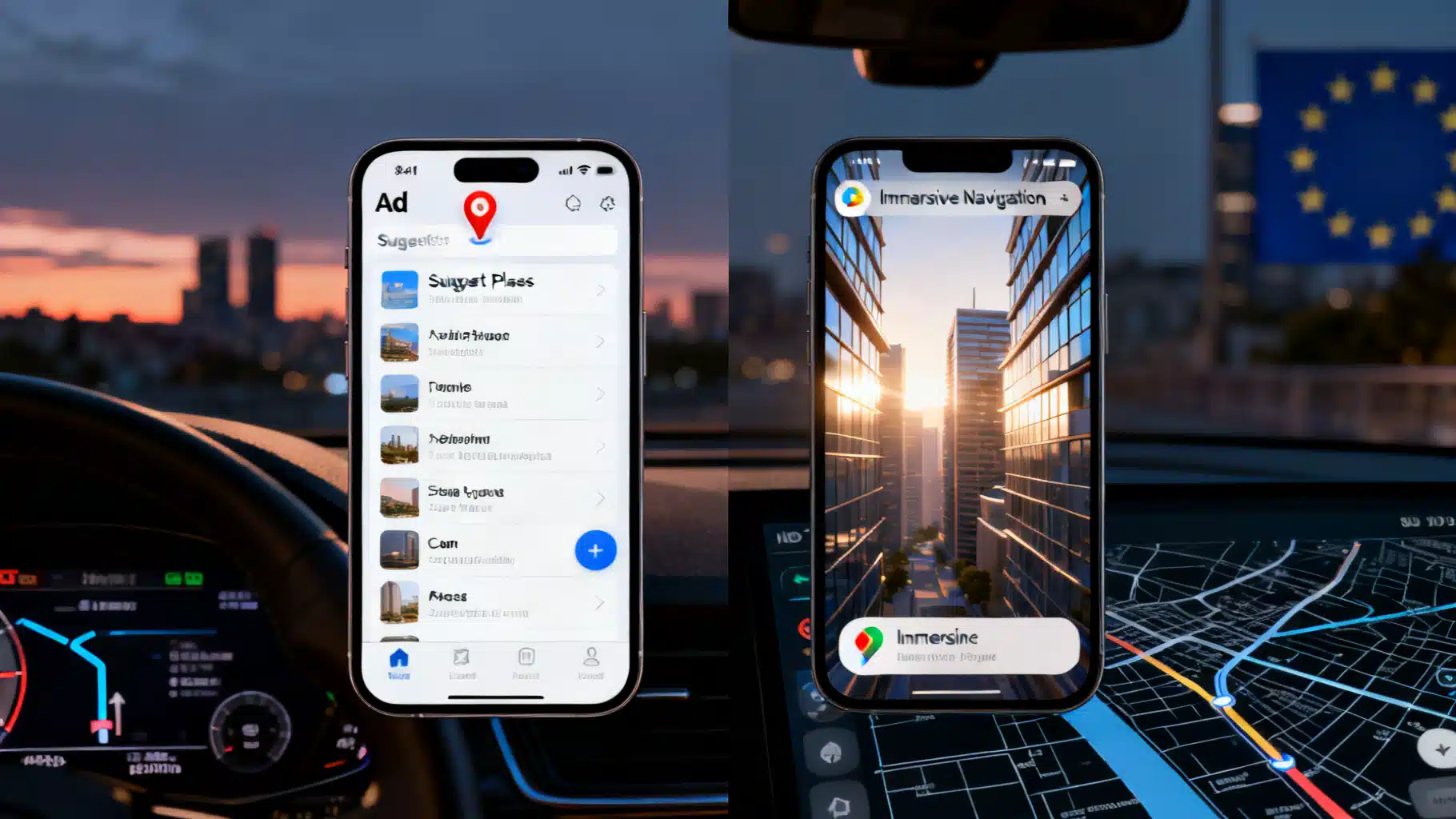
Image used for representation purposes only.
The big picture
A once-staid corner of tech is suddenly moving fast. In the span of a few weeks, Apple confirmed that ads are coming to Apple Maps in the U.S. and Canada this summer, tied to its new Apple Business platform launched March 24, 2026. Meanwhile, Google rolled out its largest Maps refresh in years, powered by Gemini, adding a conversational “Ask Maps” experience and a more visual, real‑world “Immersive Navigation.” Together, these shifts signal a new phase in the competition over how we search, discover, and get around in the physical world. (apple.com )
Google Maps goes all‑in on AI
Google’s April 1, 2026 roundup of March product updates formalized what users began seeing mid‑March: “Ask Maps,” a Gemini‑backed mode that answers complex, context‑rich questions, and “Immersive Navigation,” a redesigned driving interface that layers real‑world imagery and natural‑language directions over the route. It’s a rethinking of Maps as a proactive guide, not just a static GPS. (blog.google )
Independent coverage underscores the scope of the change, framing Immersive Navigation as Google’s biggest navigation upgrade “in over a decade,” with examples like finding a late‑night lit tennis court or a café with quick charging and short lines—queries that historically required multiple apps or local knowledge. (techradar.com )
Apple turns the monetization corner
On March 24, 2026, Apple announced Apple Business—an all‑in‑one platform that folds together device management, business communications, brand presence, and discovery tools—and, crucially, a new option to “place local ads in Maps” beginning this summer. Ads can surface at the top of search results and in a new Suggested Places experience, Apple says, positioning Maps as a local commerce marketplace as much as a navigator. Availability of Apple Business begins April 14, 2026, with Maps ads scheduled for a summer rollout in the U.S. and Canada. (apple.com )
Apple has already launched a public landing page for “Ads on Apple Maps,” signaling operational readiness and giving businesses a preview of formats and placement. Early reporting from tech outlets has echoed Apple’s timeline and described how the ads will be labeled, but Apple’s newsroom copy remains the definitive source for scope and timing. (ads.apple.com )
Regulators are watching—but not designating Maps (for now)
In Europe, the regulatory backdrop is clarifying. On February 5, 2026, the European Commission concluded that Apple Ads and Apple Maps do not meet the criteria for “gatekeeper” designation under the Digital Markets Act (DMA), citing relatively low usage at EU scale for Maps. That decision reduces the likelihood of DMA‑specific remedies aimed directly at Apple Maps in the short term, even as the DMA continues to reshape defaults and app choice across iOS. (digital-markets-act.ec.europa.eu )
Open data is quietly redefining the base map
Outside the headline rivalry, open map data is accelerating. The Overture Maps Foundation—backed by companies including Amazon, Meta, Microsoft and others—says it has largely reached general availability across key data themes and continues to grow contributors and confidence metrics. A February 25, 2026 announcement highlighted new data partnerships to enrich global place and entity coverage, while the organization’s “three years in” reflection points to a shift from merely “building the best open map” to “enabling the best map” for developers and platforms. (overturemaps.org )
OpenStreetMap’s global community, long a backbone of independent mapping, keeps momentum too. The State of the Map 2026 conference is slated for August 28–30, 2026 in Paris—an indicator of ongoing investment in community‑sourced cartography at a time when commercial players increasingly mix open and proprietary layers. (2026.stateofthemap.org )
The next battleground: your car’s dashboard
As phones grow more “AI‑assisted,” in‑car systems are racing to feel equally intelligent. HERE Technologies used CES 2026 to showcase an AI‑powered live map for software‑defined vehicles and expanded partnerships with Hyundai AutoEver, with a focus on always‑fresh maps, compliance features like ISA, and Navigation on Autopilot (NOA) use cases. The company is doubling down again this month in Beijing with new NOA capabilities at Auto China 2026. (here.com )
Mapbox, for its part, is extending its automotive footprint. At CES 2026, the company and Toyota announced Mapbox‑built navigation coming first to the 2026 RAV4, while developer docs show a steady cadence of SDK updates—including modules that expose conversational agents and 3D landmarks to keep drivers oriented in dense cities. It’s a reminder that the “phone vs. car” navigation debate is giving way to a blended, AI‑native experience. (mapbox.com )
Design, discovery—and the culture war over icons
Even logos are in flux. Google’s latest Maps icon refresh drew polarized reactions from designers and users, a minor note that nevertheless hints at the product’s evolving identity as it shifts from tool to companion. Aesthetic debates aside, the strategic through‑line is clear: search, discovery and navigation are converging, whether you’re walking to dinner, planning a trip, or commuting in a software‑defined vehicle. (creativebloq.com )
What it means now
- For users: Expect more conversational discovery in Google Maps and a more editorialized Apple Maps, with ads appearing at key “decision moments” in the U.S. and Canada this summer. Privacy labeling and ad disclosures will matter—watch how clearly each platform separates paid and organic results. (blog.google )
- For small businesses: Apple’s Apple Business unlocks a new paid placement channel inside Maps tied to updated place cards, insights, and brand tools. For multi‑platform reach, keep investing in Google Business Profiles while piloting Apple’s ad formats as they roll out. (apple.com )
- For developers and OEMs: Open datasets from Overture and ongoing APIs/SDKs from HERE and Mapbox are widening your options for base layers and in‑car experiences—an opportunity to de‑risk reliance on a single provider. (overturemaps.org )
The near‑term timeline
- March 24, 2026: Apple announces Apple Business; Maps ads confirmed “this summer” in the U.S. and Canada. (apple.com )
- April 14, 2026: Apple Business availability begins globally; migration from Apple Business Connect/Essentials/Manager. (apple.com )
- March–April 2026: Google rolls out Ask Maps and Immersive Navigation; official recap published April 1, 2026. (blog.google )
- August 28–30, 2026: OpenStreetMap’s State of the Map 2026 in Paris. (2026.stateofthemap.org )
Bottom line
Maps are no longer just maps. They’re becoming AI‑powered marketplaces and mobility platforms with real revenue stakes, regulatory implications, and automotive tie‑ins. Summer 2026 will test how comfortable users are with ad‑funded navigation—and how convincingly AI can turn wayfinding into a conversation rather than a chore. The platforms that make those shifts feel helpful, transparent, and privacy‑respecting will win the next phase of the mapping wars.
Related Posts

iOS 27 at WWDC 2026: Siri 2.0, AI Extensions, Wallet upgrades, and foldable iPhone prep
iOS 27 is set for a June 8 WWDC reveal with a major Siri overhaul, new AI extensions, Wallet upgrades, and foldable iPhone prep.

Flutter + Google Maps: A Complete Integration Guide
Integrate Google Maps in Flutter: setup keys, Android/iOS config, markers, directions, clustering, styling, and best practices.

Sundar Pichai’s AI Bet: Apple’s Siri Tie‑Up, Record 2026 CapEx, and Gemini Everywhere
Sundar Pichai’s AI era: Apple’s Siri deal, record 2026 CapEx, and Gemini’s rapid expansion—plus the regulatory tests that could shape Google’s future.