
MacBook in 2026: M5 Air and Pro arrive, $599 MacBook Neo shakes up the market, OLED Pro on deck
Apple’s 2026 MacBook lineup arrives: M5 Air and Pro ship, $599 MacBook Neo targets budget buyers, and an OLED, touch-enabled Pro looms for late 2026.
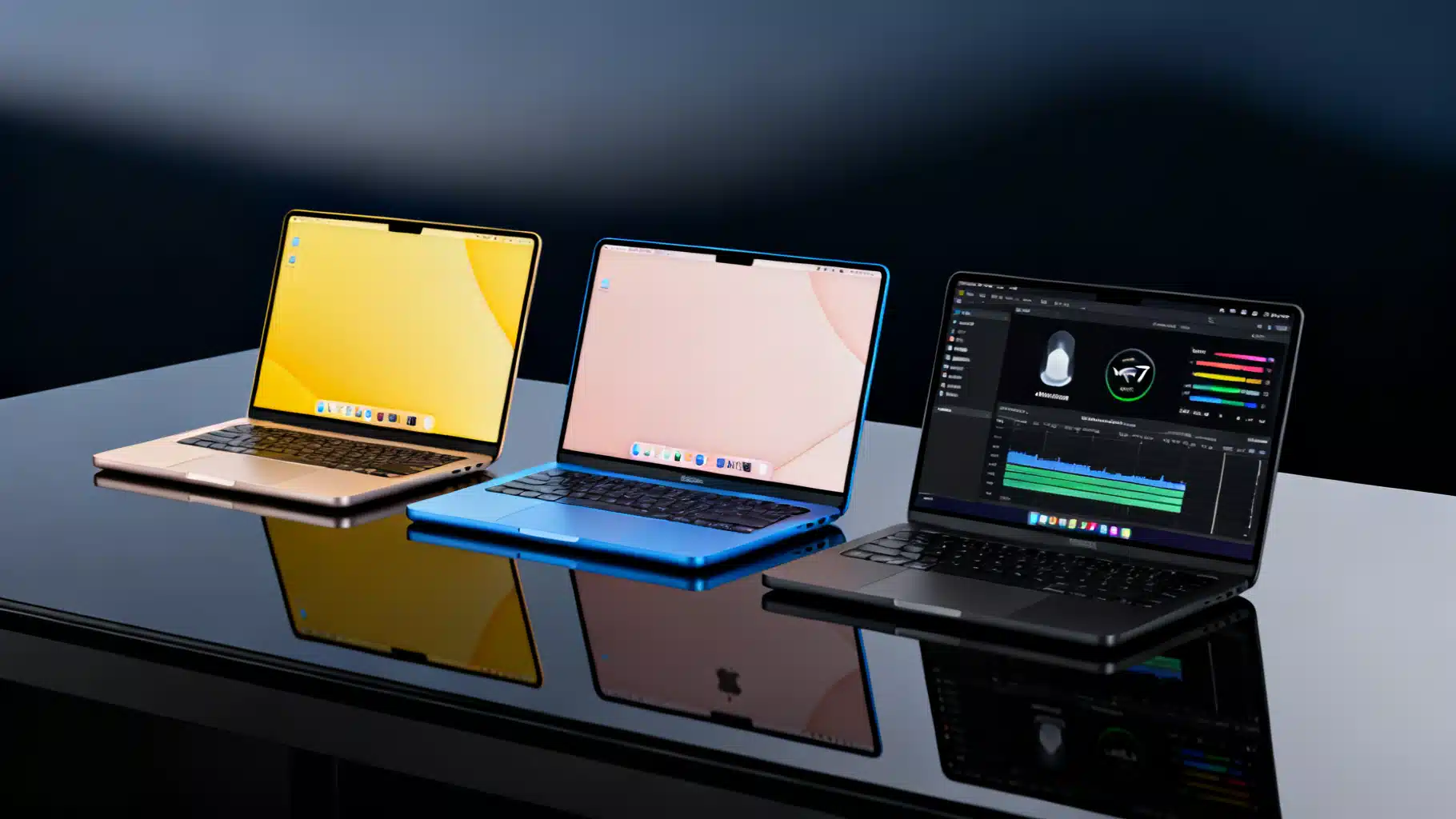
Image used for representation purposes only.
The week MacBook took over: Apple’s 2026 lineup lands, and the roadmap gets clearer
Apple just completed one of its most consequential Mac notebook rollouts in years. On March 3, 2026, Apple introduced a refreshed MacBook Air powered by the M5 chip and new 14- and 16-inch MacBook Pro models running M5 Pro and M5 Max. A day later, Apple unveiled MacBook Neo, a $599 entry laptop aimed squarely at Chromebook and budget Windows buyers. Together, the announcements reset the good–better–best ladder for Mac notebooks — and kicked off a new round of speculation about a touch-enabled, OLED MacBook Pro slated for late 2026 or early 2027. (apple.com )
What’s new in MacBook Air (M5, 2026)
The latest MacBook Air keeps its thin, fanless design but moves to Apple’s M5, bringing higher single‑thread and AI performance over prior generations. Apple also added its in‑house N1 wireless chip for Wi‑Fi 7 and Bluetooth 6 on the new Air, and Apple highlights substantial gains in creator and AI workflows. Select regional press materials confirm the N1 upgrade on the Air. (apple.com )
Availability began the week of March 3 with 13- and 15‑inch configurations. Third‑party coverage notes Apple doubled the Air’s base storage to 512GB this cycle and raised the starting price to $1,099 in the U.S., positioning the Air cleanly between the $599 Neo and the Pro line. (tomshardware.com )
MacBook Pro (M5 Pro/Max): performance leap and a steadier platform for AI
Apple’s new MacBook Pro models center on M5 Pro and M5 Max — chips built on a “Fusion Architecture” that links two dies in a single SoC for bigger CPU/GPU throughput and higher unified memory bandwidth. Apple claims major generational speed‑ups and emphasizes on‑device AI acceleration. The Pro lineup also steps up baseline storage (1TB) and introduces Apple’s N1 networking for Wi‑Fi 7/Bluetooth 6 in the new models. Early reviews of the 14‑inch M5 Max variant corroborate significant CPU gains. (apple.com )
Key dates: Apple announced M5 Pro/Max and the updated Pros on March 3, 2026. The 14‑inch MacBook Pro with the standard M5 debuted earlier on October 15, 2025, giving developers and creators an on‑ramp to the M5 family ahead of the Pro/Max wave. (apple.com )
Meet MacBook Neo: Apple’s $599 crowd‑pleaser
MacBook Neo is Apple’s first MacBook to run an A‑series chip (A18 Pro), which helps the company hit a $599 starting price without abandoning aluminum build quality or battery life claims. Apple is explicitly pitching Neo at first‑time Mac buyers and Windows/Chromebook switchers, with multiple color finishes and a 13‑inch display. Apple and follow‑up reports note Neo’s configurations include 256GB or 512GB storage and a fixed 8GB of unified memory. Initial availability began the week of March 4, 2026, with strong early demand signals. (apple.com )
What it means: Neo dramatically lowers the price of entry into macOS. Analysts and industry coverage suggest the device could expand Apple’s laptop share through 2026. (pcgamer.com )
Where the lineup lands now
- Entry: MacBook Neo ($599), A18 Pro, 13‑inch, fixed 8GB RAM, 256/512GB storage, multiple colors. (macrumors.com )
- Mainstream: MacBook Air (M5), 13/15‑inch, Wi‑Fi 7/Bluetooth 6 via Apple’s N1, upgraded AI/graphics performance; base storage doubled this cycle per third‑party reporting. (apple.com )
- Pro: MacBook Pro 14/16‑inch (M5 Pro/Max), new dual‑die Fusion Architecture, higher memory bandwidth, 1TB starting storage, N1 wireless; strong early CPU results. (apple.com )
Early performance and reception
In reviews and benchmarks, the 14‑inch MacBook Pro with M5 Max shows outsized single‑thread gains and competitive multi‑threaded results against high‑core‑count PC workstations in some popular tests. While synthetic benchmarks aren’t the whole story, they align with Apple’s focus on super‑strong CPU cores and on‑device AI. (tomshardware.com )
On Neo, coverage has praised the price and portability, while calling out the fixed 8GB memory as a notable trade‑off for heavy multitaskers. For many everyday users, Apple positions Neo as more than adequate for web, productivity, and light creative apps. (macrumors.com )
What’s next: Touchscreen OLED MacBook Pro (M6) rumor mill
Multiple reliable outlets report Apple is developing a MacBook Pro with an OLED touch screen — a marked shift from the company’s historic stance on Mac touch input. Bloomberg pegs the window to late 2026 or early 2027, while supply‑chain watchers and analysts flag RAM constraints and component ramp as potential timeline risks. Some reports suggest the first touch‑enabled models will be “touch‑friendly” rather than “touch‑first,” and may debut alongside M6‑class silicon. These details remain unannounced by Apple. (bloomberg.com )
There’s also chatter that Apple could extend its “Ultra” branding to laptops at the very high end, though this is speculative and not confirmed. (techradar.com )
Buying advice as of May 2, 2026
- Need a budget Mac now: Neo is the easiest on‑ramp to macOS. If you anticipate heavy multitasking or large creative projects, consider stepping up to the Air for more headroom. (macrumors.com )
- Most people: The M5 MacBook Air is the balanced choice, with strong CPU/GPU and the latest wireless stack. Creators who routinely edit high‑res video or work in 3D should evaluate the Pro. (apple.com )
- Power users: The M5 Pro/Max MacBook Pro is the safe buy for multi‑year workflows. If you specifically want a touch‑enabled OLED display, waiting until late 2026 (or beyond) could pay off — but that’s based on rumors, not Apple commitments. (apple.com )
The bottom line
Apple has redrawn the MacBook map for 2026: a genuinely accessible entry model (Neo), a meaningfully faster mainstream Air, and a Pro tier that doubles down on silicon and storage for AI‑heavy work. The biggest open question is timing for an OLED, touch‑capable MacBook Pro. Until Apple confirms it, the new M5‑based lineup is the current reality — and a strong one for nearly every type of Mac buyer. (apple.com )