Corning (GLW) soars after Nvidia deal: Inside the AI fiber supercycle and what comes next
Corning (GLW) jumps on a new Nvidia partnership and strong Q1. Here’s what drove the move, the numbers, risks, and what to watch next.
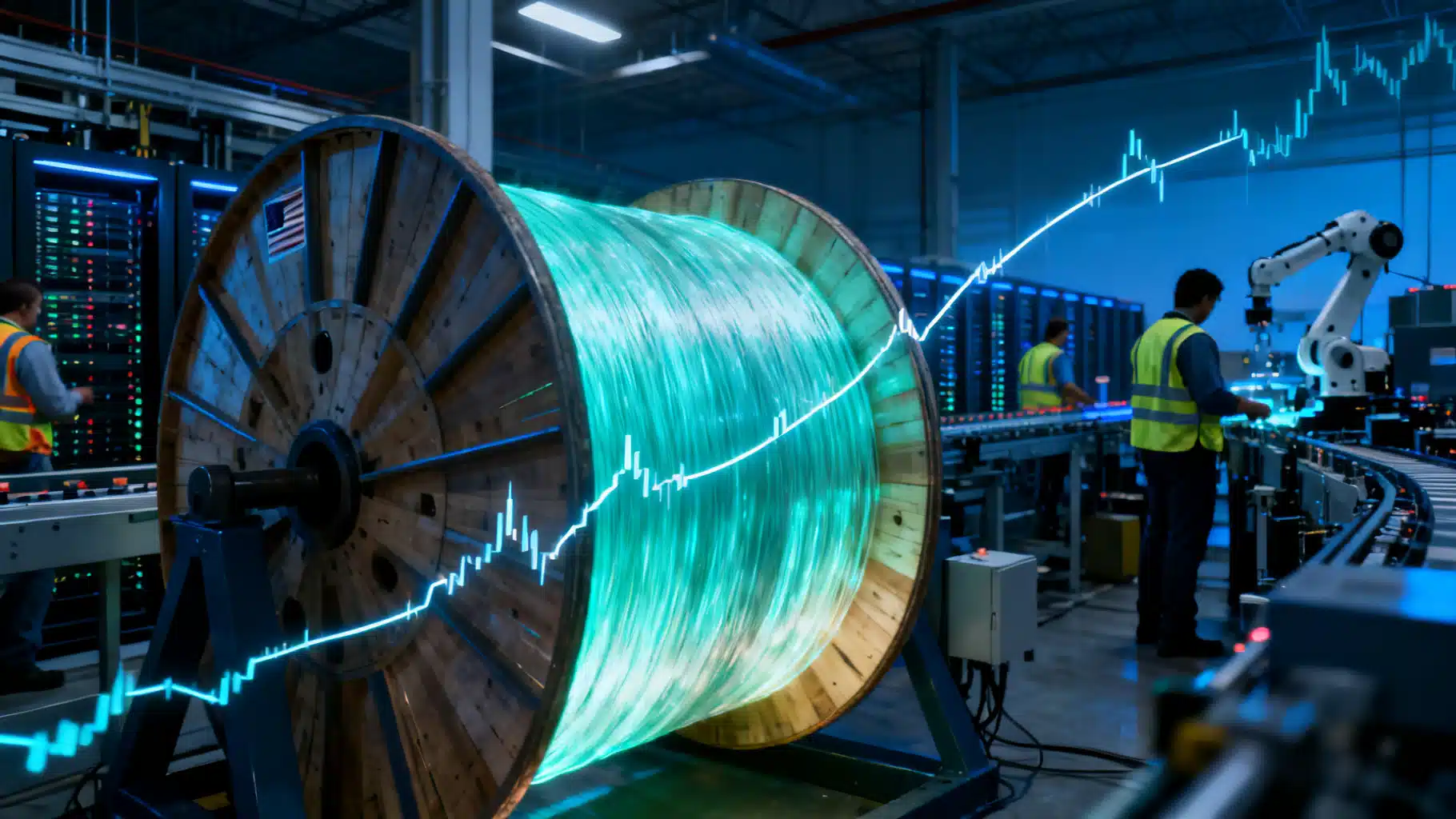
Image used for representation purposes only.
Corning (GLW) rockets on Nvidia alliance as AI buildout reshapes its growth story
Corning shares surged after the company unveiled a long‑term commercial and technology partnership with Nvidia on May 6, 2026, the same day it briefed investors on an upgraded multi‑year growth plan. The deal positions Corning at the center of the U.S. optical backbone needed for AI data centers, following a strong first quarter and rising demand from hyperscalers. (corning.com )
What the Nvidia partnership includes
Corning and Nvidia announced a multiyear pact to “strengthen U.S. manufacturing for AI infrastructure.” Corning will expand U.S. optical connectivity manufacturing capacity tenfold, increase domestic fiber output by more than 50%, and build three new advanced plants in North Carolina and Texas, creating 3,000+ jobs. Nvidia is aligning its accelerated computing platforms with Corning’s optical portfolio to move data at “the speed of light” across ever‑larger AI factories. (corning.com )
Bloomberg reported that Nvidia bought $500 million of rights for Corning shares as part of the broader partnership: up to 3 million shares at a nominal price and options for as many as 15 million shares at a $180 strike. In return, Corning committed to expand U.S. fiber capacity by more than 50%, reinforcing the scale of the build‑out. (bloomberg.com )
Q1 2026 by the numbers
Corning’s April 28 results underscored the AI‑and‑energy tailwinds already in motion: GAAP sales rose 20% year over year to $4.14 billion; core sales climbed 18% to $4.35 billion; and core EPS increased 30% to $0.70. Optical Communications revenue jumped 36%, while the new Solar segment rose 80%. Management guided Q2 core sales to roughly $4.6 billion (about +14% y/y) and core EPS to $0.73–$0.77 (about +25% y/y), including a temporary $30 million cost from a scheduled maintenance shutdown at a solar wafer facility. (s203.q4cdn.com )
Notably, Corning said two additional hyperscaler customers signed large, long‑term agreements in Q1, “similar in size and duration” to the up‑to‑$6 billion Meta contract announced earlier this year. (s203.q4cdn.com )
The January catalyst: Meta’s multiyear, up‑to‑$6B order book
On January 27, 2026, Corning and Meta disclosed a multiyear agreement worth up to $6 billion to supply optical fiber, cable, and connectivity for Meta’s expanding U.S. AI data center footprint. The deal, which management has referenced as a template for other hyperscale wins, signaled a step‑change in visibility for Corning’s optical backlog. (corning.com )
Investor day: ‘Springboard’ extended, growth targets raised
At its May 6 investor event, Corning upgraded and extended its Springboard plan through 2030 and introduced a Photonics Market‑Access Platform aimed at serving Gen‑AI OEMs. The company now expects a significantly higher sales CAGR of 19% from Q4 2026 to Q4 2030, reflecting hyperscaler agreements and the Nvidia partnership. (investor.corning.com )
Why the stock moved
The Nvidia announcement and upbeat long‑term framework triggered a sharp rally. Intraday on May 6, GLW rose by roughly 20% at one point as investors repriced Corning’s role in the AI infrastructure cycle. (fool.com )
Strategic context: AI demands optical at scale
As AI clusters grow to thousands of accelerators, bottlenecks shift from compute to interconnect. Nvidia’s public roadmaps point to increasing reliance on high‑bandwidth optical links—including silicon photonics, co‑packaged optics, and optical NVLink—arriving across the 2026–2027 product cycles. Corning’s plan to 10x U.S. optical connectivity capacity lines up with this transition, placing it upstream of a secular upgrade in data‑center networking. (tomshardware.com )
Risks and what could go wrong
- Execution and timing: Corning must stand up three new U.S. plants and ramp output while managing costs and yields—any delay could dent margins or push back revenue. (corning.com )
- Near‑term headwinds: Q2 includes a planned solar‑facility maintenance shutdown with a $30 million cost impact; further solar or supply‑chain surprises would affect results. (s203.q4cdn.com )
- Valuation and sensitivity: After a rapid re‑rating, shares may be more sensitive to order timing, mix, and margin delivery than before. (Market dynamics; see rally coverage.) (fool.com )
What to watch next
- Plant milestones: Site announcements, construction starts, and ramp schedules for the new North Carolina and Texas facilities. (corning.com )
- Hyperscaler order flow: Follow‑on disclosures around the two additional long‑term agreements referenced in Q1. (s203.q4cdn.com )
- Q2 2026 print and FY cadence: Whether revenue (≈$4.6B) and core EPS ($0.73–$0.77) guidance are met despite the solar maintenance, and how Optical Communications margins trend. (s203.q4cdn.com )
- Capital returns: Corning maintained its $0.28 quarterly dividend earlier this year; any update to dividend or buybacks would frame the balance between growth capex and returns. (investor.corning.com )
Timeline
- January 27, 2026: Meta and Corning announce an up‑to‑$6B multiyear agreement for U.S. AI data‑center fiber and connectivity. (corning.com )
- April 28, 2026: Corning posts strong Q1 results; highlights two additional large hyperscaler deals and guides Q2 higher year over year. (s203.q4cdn.com )
- May 6, 2026: Nvidia–Corning partnership unveiled; Corning extends its Springboard plan and outlines a Photonics platform for Gen‑AI OEMs. (corning.com )
Bottom line
Corning has moved from cyclical optics exposure to a central supplier in the AI networking buildout. With long‑dated hyperscaler contracts, an Nvidia partnership, and raised multi‑year growth targets, the company’s optical flywheel is spinning faster—though execution on plant ramps and delivery against elevated expectations will be the near‑term test. (corning.com )
Related Posts
Arm Stock Soars as Company Enters Silicon With First In‑House ‘AGI CPU’
Arm stock jumps after Arm unveils its first in‑house AGI CPU, entering silicon with Meta as lead partner and targeting agentic AI data centers.
INTC in 2026: Price Action, Nvidia Tie‑Up, Altera Sale, and the 18A Foundry Reboot
Intel (INTC) in 2026: price, Nvidia stake, Altera sale, Q1 outlook, and 18A foundry ramp—key catalysts, risks, and what to watch next.
MSFT Stock: Earnings Eve, OpenAI Deal Reset, and Maia 200 Put AI Margins in Focus
MSFT heads into Q3 FY26 earnings with a new OpenAI deal, fresh Maia 200 silicon, and Azure growth in focus. What to watch on April 29, 2026.