
FCC approves Verizon’s $1 billion spectrum acquisition from Array (formerly UScellular)
On May 14, 2026, the FCC approved Verizon’s $1B purchase of spectrum from Array (ex‑UScellular), boosting 4G/5G capacity across 19 states.
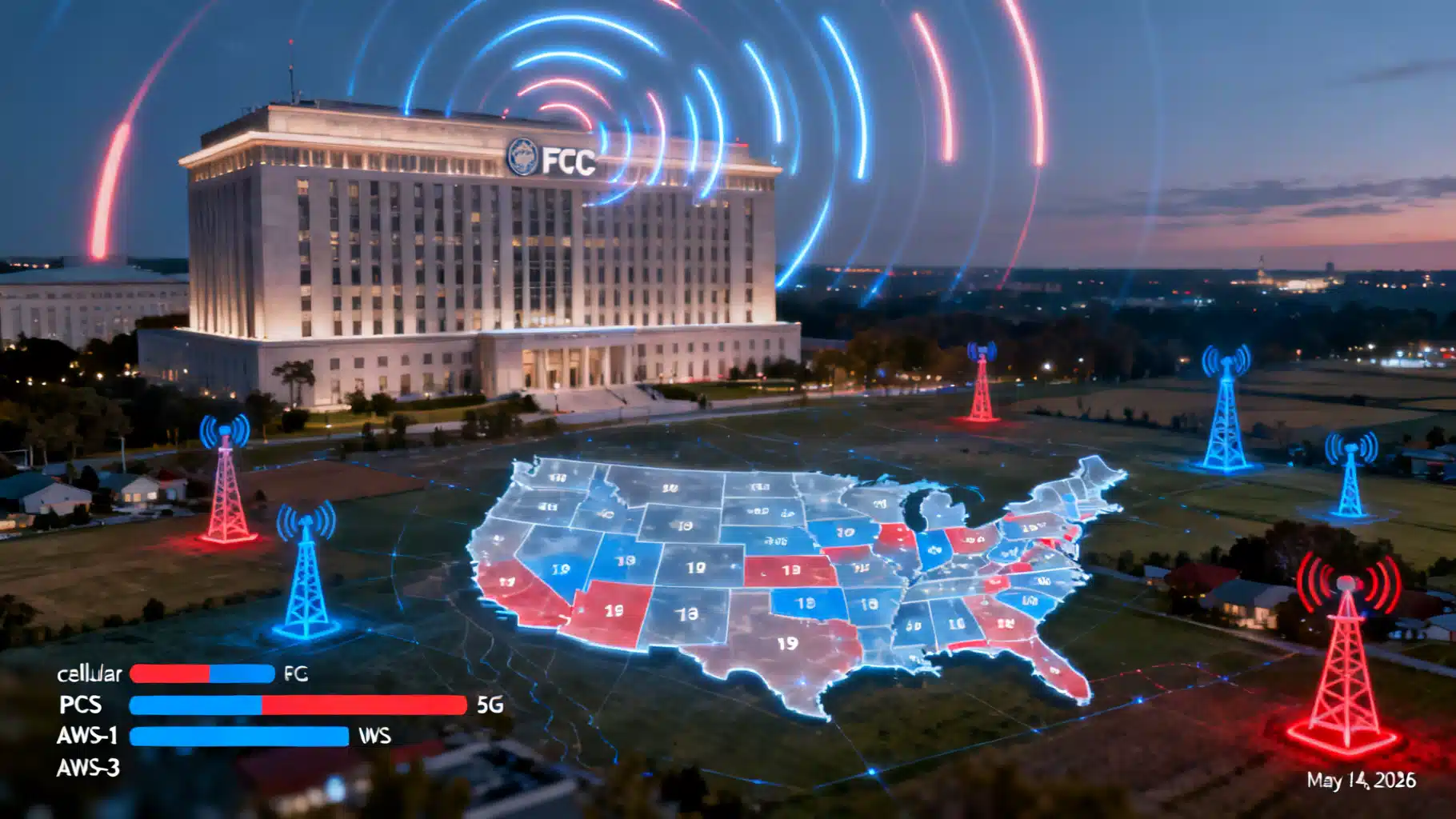
Image used for representation purposes only.
FCC gives Verizon the green light on $1 billion spectrum buy
The Federal Communications Commission on May 14, 2026 approved Verizon’s $1 billion purchase of wireless spectrum licenses from Array Digital Infrastructure, the company formed from UScellular’s remaining assets after it sold its retail business to T-Mobile. The agency said the transfer would bolster Verizon’s coverage, capacity and overall performance as data demand keeps climbing. (docs.fcc.gov )
What the FCC actually approved
- Transaction: Assignment of cellular, AWS-1, AWS-3 and PCS licenses from Array (formerly UScellular) to Verizon Wireless. (docs.fcc.gov )
- Geographic scope: 618 counties across 19 states, covering roughly 8% of the U.S. population. (docs.fcc.gov )
- Spectrum totals (post-transaction, attributed to Verizon): up to 372 MHz overall, including as much as 72 MHz of sub-1 GHz spectrum. (docs.fcc.gov )
- Competitive review: The deal does not hit the FCC’s overall spectrum screen. It triggered “enhanced factor review” in 98 local markets, but staff concluded the risk of competitive harm is low. (docs.fcc.gov )
In its Memorandum Opinion and Order (DA 26-486), the Wireless Telecommunications Bureau found that expanding Verizon’s access to these frequencies “is likely [to] result[] in broader network deployment and improved indoor use,” and thus serves the public interest. (docs.fcc.gov )
Why it matters
- Network headroom: Verizon gains additional spectrum in key low- and mid-band ranges used to carry voice and 4G/5G data, helping it add capacity and improve indoor coverage in hundreds of local markets. (docs.fcc.gov )
- Consumer impact: The FCC anticipates “enhancing Verizon Wireless’s network coverage, capacity, and performance,” positioning the carrier to better meet rising traffic from 5G smartphones, fixed wireless access, and IoT. (docs.fcc.gov )
Verizon welcomed the decision, saying the extra airwaves will help it “better serve our customers” as it continues strengthening an “already robust” network, according to a statement from Kathy Grillo, the company’s senior vice president for public policy and government affairs. (broadbandbreakfast.com )
How we got here: The UScellular break-up
This approval is the latest chapter in the post-UScellular reshuffle. T-Mobile closed its $4.4 billion acquisition of UScellular’s wireless operations—including customers, stores, and a portion of spectrum—on August 1, 2025. The remainder of UScellular rebranded as Array Digital Infrastructure, retaining most spectrum holdings and about 4,400 towers. (t-mobile.com )
Verizon and then‑UScellular filed their spectrum assignment applications with the FCC on April 1, 2025. The Commission accepted them for filing on June 6, 2025, starting a public comment cycle that included petitions to deny and a petition to hold the proceeding in abeyance. (docs.fcc.gov )
Competitive concerns and the FCC’s response
Rural carriers and consumer advocates argued the transfer would further concentrate key spectrum inputs with the three national carriers, potentially eroding competition—particularly roaming options that smaller providers historically relied upon with UScellular. They pressed the FCC to require targeted divestitures and to impose reciprocal roaming conditions on Verizon. (broadbandbreakfast.com )
The Commission declined to add those conditions. In its order, staff said it weighed the record and found the likelihood of anticompetitive effects to be low, pointing to current rival holdings and the expectation of upcoming auctions that will make additional mid‑band spectrum available. (docs.fcc.gov )
By the numbers
- Price tag: ~$1 billion. (finance.yahoo.com )
- License types: Cellular (850 MHz), PCS, AWS‑1, AWS‑3. (docs.fcc.gov )
- Markets triggering deeper review: 98 CMAs. (docs.fcc.gov )
- Population coverage affected: ~8% of U.S. population. (docs.fcc.gov )
The broader spectrum moment
Verizon’s green light lands in a busy week for spectrum policy. On May 12, 2026, the FCC also approved major spectrum transfers tied to EchoStar—one set to AT&T and another linked to SpaceX—which together drew sharp reactions from smaller carriers worried about accelerated consolidation. (arstechnica.com )
The Verizon order explicitly situates this deal alongside “upcoming mid-band auctions” and other recent approvals as part of a broader effort to free capacity for facilities-based providers, signaling the agency’s current posture toward getting spectrum put to use quickly while monitoring market concentration via case-by-case reviews. (docs.fcc.gov )
What changes for consumers
Consumers in affected counties are unlikely to see a named “switch-on” moment, but the added bandwidth gives Verizon more room to:
- Add capacity carriers and improve speeds as traffic peaks.
- Strengthen indoor coverage and rural reach where low-band holdings expand.
- Support 5G standalone features and fixed wireless access growth.
The FCC’s analysis suggests these benefits outweigh potential downsides in the reviewed markets. Implementation timelines will vary by market as Verizon integrates the licenses into its radio access network. (docs.fcc.gov )
What to watch next
- Integration milestones: Watch for network engineering updates as Verizon refarms and deploys the newly acquired channels market by market. (docs.fcc.gov )
- Additional Array divestitures: Array previously sold a set of licenses to AT&T; other transactions and leases involving remaining spectrum could follow, subject to FCC review. (docs.fcc.gov )
- Auction pipeline: The Commission flagged pending mid‑band proceedings, a reminder that more flexible‑use spectrum may be in play soon—an important counterweight to consolidation concerns raised by rural carriers. (docs.fcc.gov )
The bottom line
By approving the Verizon–Array spectrum transfer on May 14, 2026, the FCC continued to prioritize rapid, facilities‑based deployment of scarce airwaves while concluding that this specific deal does not materially diminish competition in the affected local markets. For Verizon, the decision provides fresh 4G/5G headroom across 19 states; for competitors and rural providers, it underscores the urgency of forthcoming auctions and policy steps to keep spectrum access broad and competitive. (docs.fcc.gov )
Related Posts
5G in 2026: 5G‑Advanced arrives as fixed wireless booms and satellites go direct-to-cell
5G in 2026: 5G‑Advanced lands, fixed‑wireless surges, direct‑to‑cell matures, and U.S. spectrum auctions reboot—here’s what changed and what’s next.
T‑Mobile in 2026: AI‑Powered Calls, Satellite Messaging, and Rural Expansion Drive the Next Leg of Growth
T‑Mobile enters 2026 with live call translation, UScellular integration, Starlink messaging, and a five‑year plan guarantee—plus strong guidance.

QCOM Stock: All Eyes on April 29 Earnings as Qualcomm Leans Into AI PCs, Auto, and a New $20B Buyback
Ahead of Qualcomm’s April 29 earnings, here’s what could move QCOM: AI PCs, automotive, Apple modem timing, new $20B buyback, and guidance.