
Google’s Gemini Spark turns Gemini into a 24/7 AI agent: pricing, rollout, and how it works
Google debuts Gemini Spark, a 24/7 cloud AI agent for Gmail and Workspace, rolling out to U.S. AI Ultra subscribers with guardrails and Chrome support.
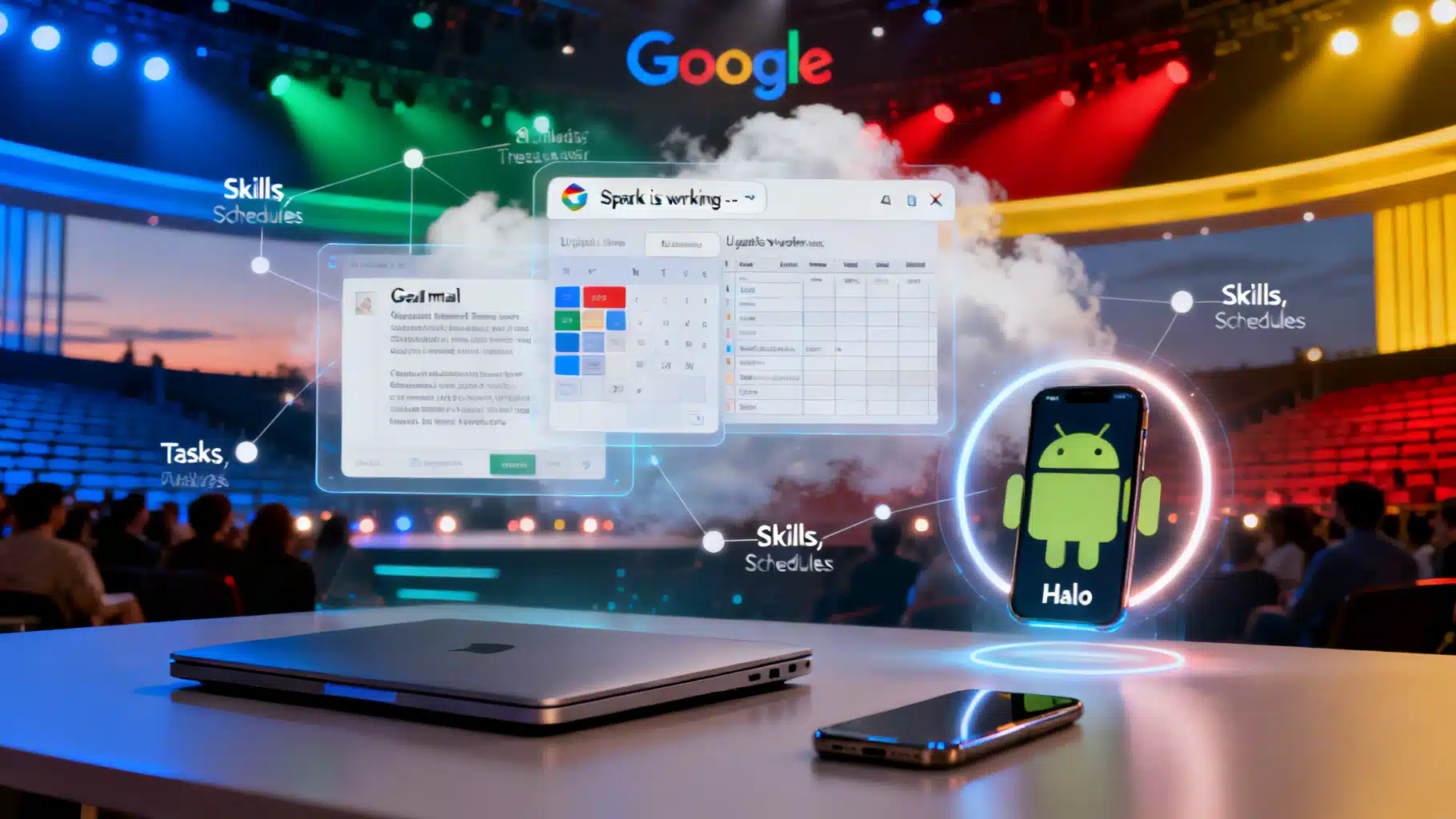
Image used for representation purposes only.
Google’s new 24/7 AI agent arrives
Google used its I/O stage on May 19, 2026 to unveil Gemini Spark, a cloud‑based personal AI agent that keeps working even when your devices are off. Unlike a traditional chatbot, Spark is designed to proactively complete multi‑step tasks across your Google apps under your direction and seek approval for “high‑stakes” actions. Select testers began receiving access this week, with a broader beta slated for U.S. AI Ultra subscribers next week, and Chrome integration promised later this summer. (apnews.com )
What is Gemini Spark, exactly?
Spark is Google’s first always‑on agent inside the Gemini ecosystem. It’s positioned to organize inboxes, summarize threads, schedule calendar blocks, and stitch together work across Gmail, Drive, Docs, Sheets, Slides, Maps, and YouTube—connections you enable explicitly in settings. Spark can be instructed with “Tasks,” customized with reusable “Skills,” and automated via time or condition‑based “Schedules.” Google emphasizes that while the agent runs autonomously, you choose when it’s on and it’s designed to check before major actions like sending emails or spending money. (gemini.google )
Under the hood, Spark currently runs on Gemini 3.5 Flash alongside Google’s agent platform Antigravity. (gemini.google )
Where Spark lives: cloud VMs, Gmail, Chrome—and a new UI on Android
Google says Spark runs on dedicated virtual machines in Google Cloud, allowing it to continue long‑horizon tasks without keeping your laptop awake. Out of the box, it plugs into Gmail and other Workspace apps; you can even email the agent directly. On the web, Spark will interact through Chrome; on Android, a new “Halo” interface shows what the agent is doing in the background. (techcrunch.com )
Pricing and availability
Access to Gemini Spark is bundled with the Google AI Ultra subscription, which starts at $99.99 per month in the U.S. Google’s plan markets “first access” to advanced features like Deep Think and Gemini Spark (US‑only, English‑only at launch), with higher usage limits than the Pro tier. (gemini.google )
What Spark can do today
- Inbox triage and briefings: keep an eye on subscribed sources, synthesize themes, and surface a weekly to‑do list.
- Group planning: extract dates and details from email threads, track receipts in Sheets, organize Drive folders, and notify participants.
- Workspace organization: scan Drive, tag key files in a spreadsheet, and leave notes for follow‑up.
- Ongoing research and bookings: live web browsing to compare options and help you complete purchases—under your supervision. (gemini.google )
In parallel, Google is lighting up third‑party “MCP” connectors—Canva, OpenTable, and Instacart launched during I/O—with Spark gaining the ability in the coming weeks to use them for end‑to‑end tasks. (blog.google )
Safety, privacy, and control
Google frames Spark as “always on, under your direction.” The company says the agent does not indiscriminately read all of your email; instead, it works on what you ask it to, and is designed to request permission before actions that could have higher impact, like purchases or sending messages. Those app connections are off by default and must be enabled by the user. (gemini.google )
The shopping play: from search results to completed checkouts
Beyond productivity, Google previewed a commerce stack that clarifies where agentic assistants are headed. New capabilities like Universal Cart, a Universal Commerce Protocol, and an Agent Payments Protocol (AP2) sketch a future where Gemini can track prices and restocks across retailers, flag compatibility issues before checkout, and—subject to user controls—complete purchases. AP2 layers spending controls, merchant approvals, and transparent transaction records to address trust and safety. (techradar.com )
Context: the “agentic Gemini” era, by the numbers
Google’s leadership cast this as the start of an “agentic Gemini era,” highlighting that Gemini’s monthly users have surged over the past year and that the new Gemini 3.5 family is tuned for agentic and coding workloads—Spark is the consumer‑facing expression of that shift. (apnews.com )
What’s next
- Rollout timeline: trusted testers as of this week; U.S. AI Ultra beta begins next week; Spark support in the Gemini macOS app and new voice experiences arrive later this summer; Chrome operation is also slated for the summer. (blog.google )
- Regional/language scope: initial access is U.S.‑only and English‑only for AI Ultra, with broader expansion “over the coming weeks.” (gemini.google )
Why it matters
Gemini Spark pushes Google past “answering questions” toward “doing the work,” anchored in the places people already live digitally—Gmail, Calendar, Drive, Chrome, and Android. If the guardrails and permissions model hold up in real‑world use, Spark could normalize consumer‑grade autonomous agents long before rivals can match the same depth of integration. Conversely, if Spark oversteps, the very ubiquity that makes it powerful could also amplify trust concerns. For now, all eyes are on the rollout to U.S. subscribers in the days following I/O and how quickly Google can extend safe, supervised autonomy beyond its own walled garden. (techcrunch.com )
Related Posts
Google I/O 2026: Google’s pivot from chatbot to agent
Google I/O 2026: Gemini 3.5 Flash, Gemini Omni, a proactive ‘Spark’ agent, a major Search overhaul, and first “intelligent eyewear.”
Google class action lawsuits: Where the big cases stand now and who could get paid
As of April 9, 2026: The latest on Google class actions—Play Store $700M nearing court approval, Android data $135M, Assistant $68M, and a $425.7M verdict.
Flutter Animated Splash Screen: The Complete, Fast, and Accessible Guide
Build a fast, polished animated splash in Flutter: native launch, in-app animation, Rive/Lottie options, async init orchestration, and best practices.