
3D Printing in 2026: Speed, Scale, and Smart Materials Drive the Next Wave
June 2026: New flagships, bigger beds, faster resin, and metal AM ‘alloys‑on‑demand’ mark a pivotal week for 3D printing as market growth steadies.
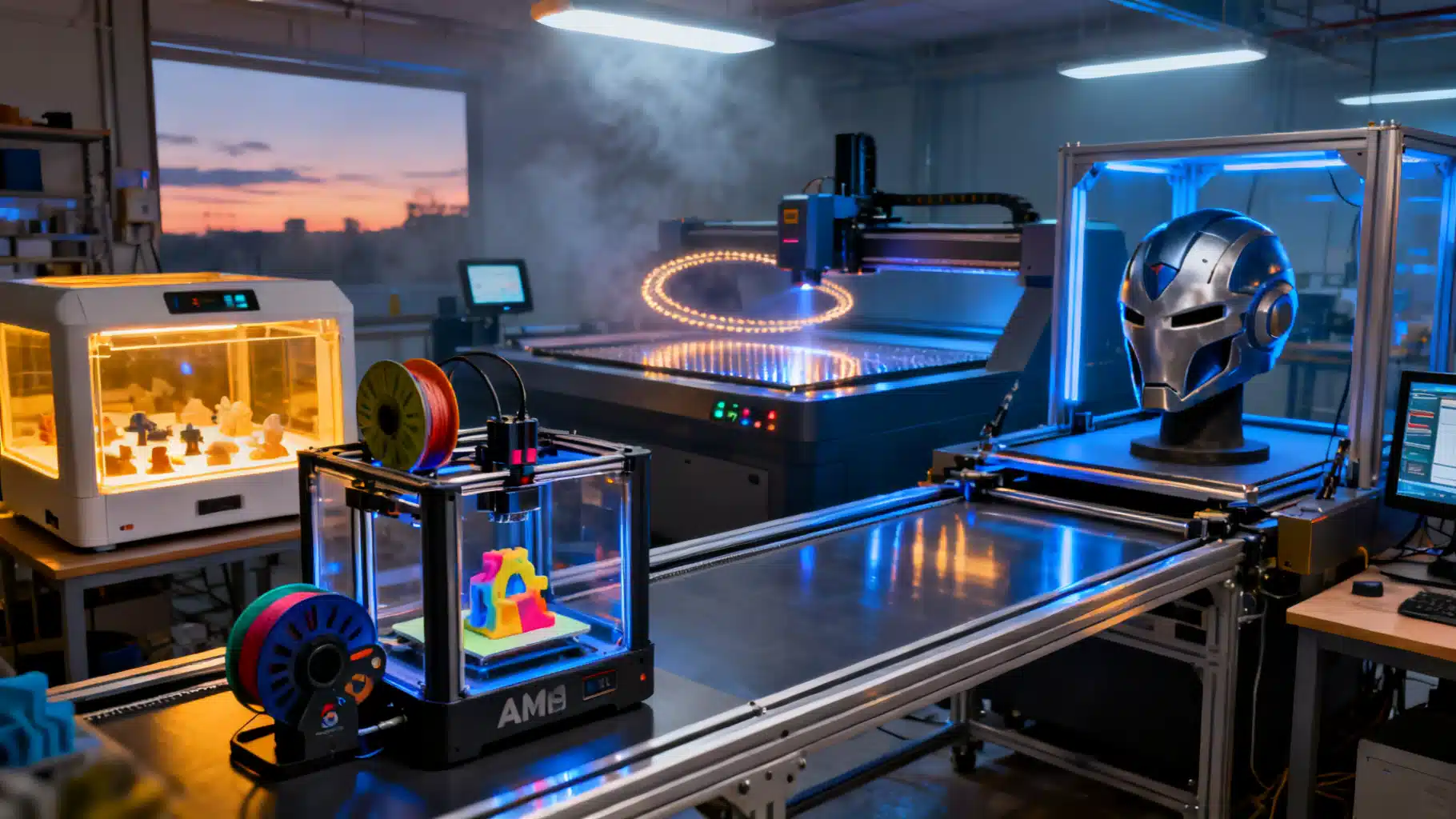
Image used for representation purposes only.
The week 3D printing crossed new thresholds in speed, scale, and smart materials
June 15, 2026 — Consumer, professional, and industrial 3D printing all moved noticeably forward this month. A major desktop brand sunset a landmark model while shipping fresh hardware, resin systems grew larger and faster, and researchers unveiled techniques that could reshape metal printing and microdevices. Meanwhile, new market data confirmed additive manufacturing’s steady expansion into production. (tctmagazine.com )
Consumer shake‑up: new flagships, bigger beds
Bambu Lab formally ended production of its pioneering X1 line on March 31, 2026, committing to parts and service through 2031—a symbolic closure for the machine that pushed high‑speed, sensor‑rich CoreXY into the mainstream. (blog.bambulab.com )
Just weeks later, Bambu launched the X2D, a dual‑nozzle successor with an actively heated chamber, positioning it as the brand’s next high‑end workhorse. Early reviews and retail listings put launch on April 14 with prices starting around $649 standalone and $899 in combo bundles. (blog.bambulab.com )
For makers who measure projects in helmets and cosplay armor, the company also introduced the A2L “big bed‑slinger,” bringing a 330 × 320 × 325 mm class build volume to a lower price tier. The A2L and A2L Combo began shipping June 1, with coverage highlighting an approachable entry price and compatibility with multi‑material add‑ons—up to 19 filaments when paired with AMS units. (tomshardware.com )
Resin race: larger, faster, and more automated
In photopolymer printing, Elegoo announced the Jupiter 2—its largest LCD resin machine to date—targeting prosumers who want production‑scale plates without a production‑scale footprint. The launch set early‑bird pricing and emphasized a more compact chassis versus prior “Jupiter” models. (tomshardware.com )
On the professional end, Formlabs’ Form 4 platform continues to set the pace for office‑friendly, high‑throughput resin printing with its Low Force Display engine and expanded materials library—positioned for rapid prototyping through production workflows. (businesswire.com )
Anycubic, meanwhile, stoked interest with a dual‑vat resin concept (Photon P1), signaling multi‑material and color workflows moving into consumer price bands in 2026. (tomshardware.com )
Industrial FDM doubles down on throughput
UltiMaker broadened its production‑grade line with the Factor 4 Plus, claiming up to 2× the speed of the Factor 4 and pitching continuous, lights‑out printing for defense and industrial users. It reflects a wider pivot toward higher reliability, controlled environments, and validated materials stacks on the factory floor. (ultimaker.com )
Aerospace and defense demand continues to be a bright spot more broadly, with majors signaling growth programs and on‑shore manufacturing footprints for large‑frame metal systems in the United States. (3dsystems.com )
Breakthroughs in materials and micro‑devices
A National Institute of Standards and Technology team demonstrated “laser stirring” for metal additive manufacturing: by driving the beam along looping elliptical paths rather than straight scan lines, printers can mix alloys mid‑build—potentially enabling “alloys‑on‑demand” via software updates to existing machines. The method was validated with advanced X‑ray instrumentation and could reduce powder inventory complexity for manufacturers. (nist.gov )
In a separate advance, MIT researchers used 3D‑printed triaxial electrospray nozzles to fabricate structures relevant to drug delivery and self‑healing materials—work that underscores how low‑cost printing accelerates device iteration that would be impractical in a cleanroom. (tomshardware.com )
Academic groups also reported progress on hybrid printers that bridge micro‑ and macro‑scales, and on AI‑assisted, multimodal monitoring for fault detection—both pointing to smarter, more autonomous additive cells. (arxiv.org )
Market picture: growth, with services in the spotlight
Fresh figures from Wohlers Report 2026 put global additive revenues at $24.2 billion for 2025—up 10.9% year over year—cementing a steady, post‑pandemic growth track and a market that’s widening beyond hardware sales into services and applications. (tctmagazine.com )
The software debate returns to center stage
Ecosystem control versus openness remains a flash point. In April, a high‑profile clash saw a third‑party developer shutter a fork that re‑enabled disabled features—illustrating how closed firmware policies, safety controls, and third‑party slicers are colliding as vendors scale. Expect more clarity as manufacturers balance speed, reliability, and user autonomy. (tomshardware.com )
What this means if you’re buying a printer in mid‑2026
- Need multicolor or multi‑material FDM without compromises? Dual‑nozzle systems like Bambu’s X2D are now mainstream, while large‑format options like the A2L expand what you can print at home. (tomshardware.com )
- Scaling resin output? Flagship prosumer machines such as Elegoo’s Jupiter 2 push volume up; pro platforms like Form 4 push cycle times down with mature material libraries. (tomshardware.com )
- Building for production? Industrial FDM and validated workflows (for example, UltiMaker’s Factor line) keep closing the gap between prototyping and manufacturing. (ultimaker.com )
What to watch next
- Firmware and slicer policy: After recent disputes, expect clearer lines around third‑party tooling, safety locks, and offline control. (tomshardware.com )
- Metals by software: If “elliptical scan” alloying moves from lab to line, it could reshape powder procurement and open rapid alloy development on existing laser‑powder bed systems. (nist.gov )
- Desktop diffusion: With bigger beds and more reliable multi‑material, expect sub‑$1,000 printers to keep absorbing jobs once reserved for print services—while services themselves grow on higher‑value work, per market data. (tctmagazine.com )
Bottom line: As of June 2026, the 3D printer is less a tinkerer’s toy and more a tiered ecosystem—from $500 large‑format hobby machines to office‑friendly resin workhorses and industrial FDM cells—now accelerated by smarter software and material science breakthroughs. The next leg of growth will reward platforms that combine speed, dependable autonomy, and transparent ecosystems with validated materials. (ultimaker.com )
Related Posts
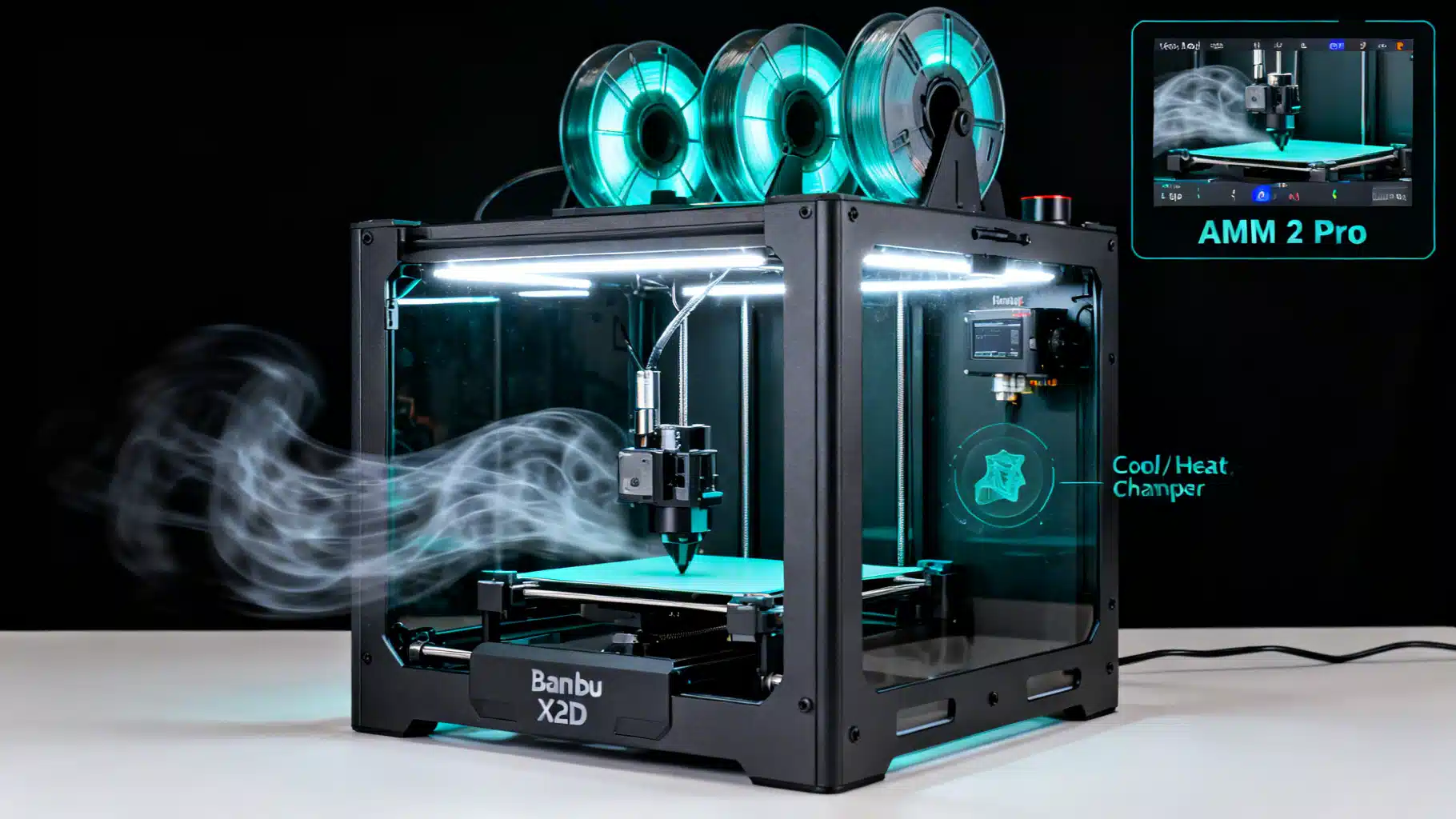
Bambu Lab X2D debuts with mechanical dual‑nozzle switching and AMS 2 Pro combo at $899
Bambu Lab launches the X2D dual‑nozzle 3D printer at $649 ($899 with AMS 2 Pro), succeeding the X1 with mechanical nozzle switching and smarter thermals.