
Naira at a Crossroads: Tight Policy, Bigger Reserves and New FX Rules Steady July Trading
As of July 26, 2026, Nigeria’s naira holds a tight range as CBN keeps rates at 26.5%, reserves top $52bn, and a new FX manual and BDC rules reshape trading.
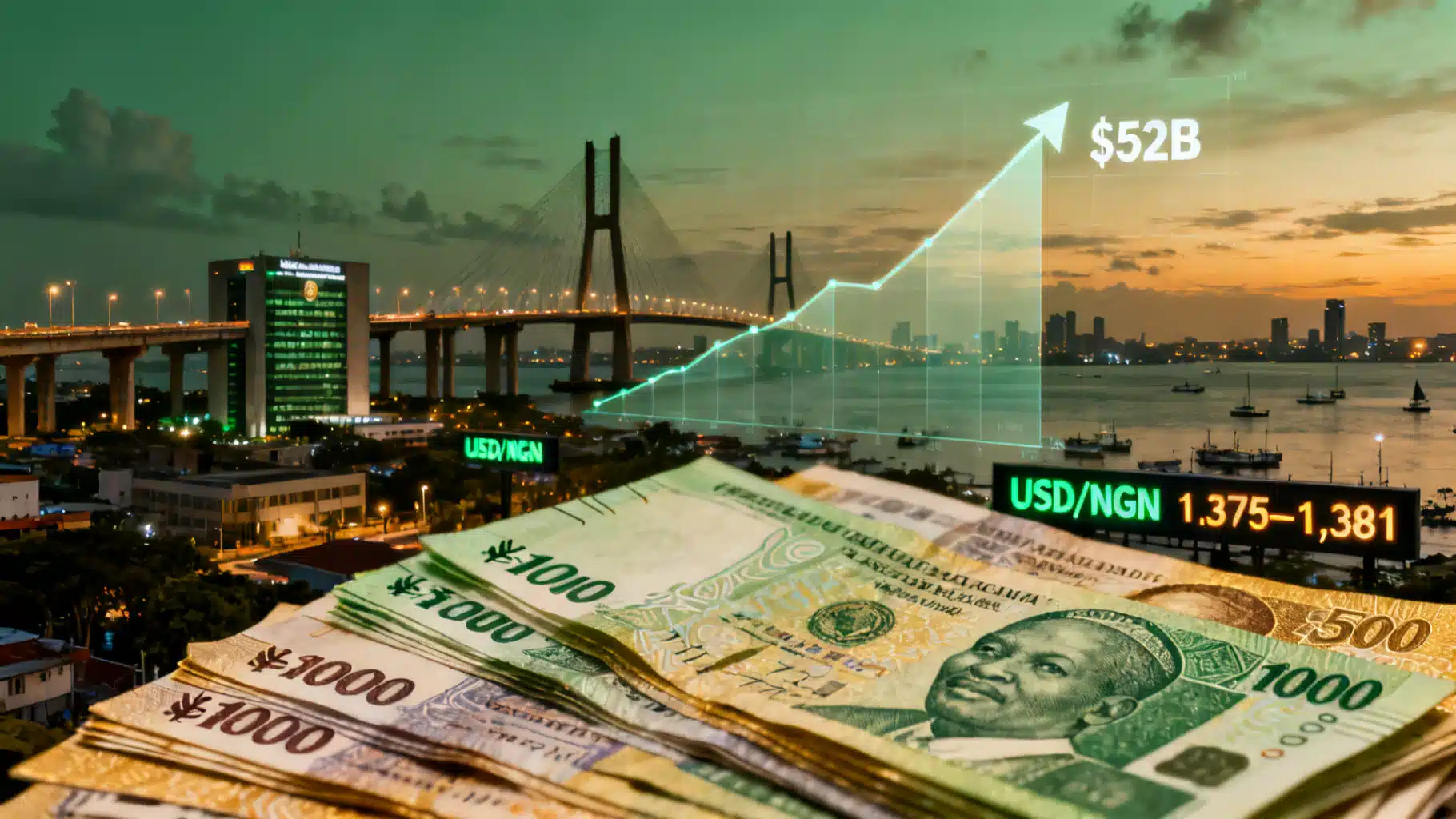
Image used for representation purposes only.
Naira Watch: Policy Holds, Reserves Swell, and a New FX Rulebook Shape July’s Trading
Nigeria’s naira spent most of July trading in a narrow band on the official market, even as authorities doubled down on tight monetary policy and rolled out fresh foreign‑exchange rules to improve liquidity and transparency. Traders quoted the currency around ₦1,375–₦1,381 per US dollar on the Nigerian Foreign Exchange Market (NFEM) during the first three weeks of the month, while street (parallel) quotes hovered near ₦1,395/$ on July 2. The Central Bank of Nigeria (CBN) says the day’s official rate is the market’s volume‑weighted average, reinforcing its post‑reform “willing buyer, willing seller” approach. (ca.marketscreener.com )
What changed this week: Rates on hold as inflation cools
At its 306th Monetary Policy Committee (MPC) meeting held July 20–21, 2026, the CBN kept the benchmark rate at 26.5%, citing elevated global uncertainty and the need to consolidate disinflation gains. The decision—widely expected by analysts—maintains one of the tightest policy stances in Africa. Governor Olayemi Cardoso flagged Middle East tensions as a fresh external risk channeling through oil and global financial conditions. (channelstv.com )
The hold came days after new data showed headline inflation eased marginally to 15.91% year‑on‑year in June (from 15.93% in May), marking a steady moderation from early‑year highs and a dramatic improvement versus mid‑2025. Nigeria’s statistics office released the June Consumer Price Index (CPI) on July 15, noting modest month‑to‑month pressure but a firmer disinflation trend overall. (channelstv.com )
Where the naira is trading—and why it matters
- Official market: Traders saw the naira at roughly ₦1,375/$ on July 2, slightly firmer than the prior week, with expectations for a tight ₦1,375–₦1,380 range as half‑year profit‑taking waned. (ca.marketscreener.com )
- Street market: Same day quotes clustered around ₦1,395/$—a modest premium to the official rate that narrowed from peaks seen during 2024’s turmoil. (ca.marketscreener.com )
The CBN stresses that the NFEM’s daily reference rate comes from transacted volumes, not administrative fixing. That principle has underpinned Nigeria’s FX reforms since mid‑2023, when authorities collapsed multiple windows and restored market pricing. (cbn.gov.ng )
Big buffers: External reserves top $52 billion
A powerful tailwind this month has been Nigeria’s fast‑rising foreign‑exchange reserves. Gross reserves climbed past the $51–$52 billion mark by mid‑July—reaching their highest level in more than 17 years—on stronger oil‑related tax inflows and third‑party receipts, the CBN said. The build‑up has supported confidence in the naira and given policymakers more room to smooth liquidity if needed. (arise.tv )
A new FX playbook takes effect
On May 15 the CBN unveiled the 4th Edition of its Foreign Exchange Manual, with implementation from June 1, 2026. The revamped rulebook aims to clarify procedures for banks, importers/exporters and government agencies, standardize documentation, and reduce ambiguity that historically fragmented the market. Regulators and analysts say the update should deepen liquidity and bolster price discovery as participation broadens under clear, uniform rules. (punchng.com )
Complementing the manual, the CBN in mid‑July issued operational guidelines that allow licensed Bureau de Change (BDC) operators to purchase FX directly from authorized dealer banks via a tracked electronic portal—an attempt to channel retail demand into the formal market and narrow arbitrage. The circular formalizes how BDCs source dollars at market‑reflective rates and imposes tighter compliance controls. (premiumtimesng.com )
The reforms in context
Nigeria’s FX liberalization began in earnest on June 14, 2023, when authorities unified exchange‑rate windows and re‑introduced the “willing buyer, willing seller” model at the then‑I&E window. That shift—alongside fuel‑subsidy reforms—triggered a painful reset through 2024 but restored market pricing and gradually re‑opened formal channels for foreign portfolio and trade flows. By end‑2025, the official naira closed stronger year‑end versus 2024, even as the annual average rate was slightly weaker—a pattern consistent with a volatile but improving market. (finance.yahoo.com )
A new headwind: Dollarised fuel pricing
One surprise this month came from the downstream oil sector. Dangote Petroleum Refinery—now a key domestic supplier—began pricing local fuel sales in US dollars, citing difficulties getting adequate crude through the government’s naira‑for‑crude program and the currency mismatch of selling in naira while buying feedstock in dollars. The move could lift near‑term dollar demand among marketers and increase the pass‑through of FX swings to domestic pump prices, though authorities have not signaled a policy response. (marketscreener.com )
Signals to watch into August
- Policy stance: With the MPR held at 26.5% in July, the next decision will hinge on whether disinflation persists and FX stability holds. For now, officials are prioritizing real positive yields to anchor naira assets. (channelstv.com )
- Liquidity and turnover: Elevated official‑market turnover and reserve accumulation have coincided with a steadier naira. Sustaining those flows—through oil receipts, portfolio inflows and export proceeds—will be pivotal. (nairametrics.com )
- Parallel‑market premium: The spread between NFEM and street quotes, which narrowed in early July, remains a barometer of reform traction and retail confidence. Authorities are steering retail demand into formal channels via the BDC framework. (ca.marketscreener.com )
Bottom line
As of Sunday, July 26, 2026, the naira is trading in a tight official range after months of reform and aggressive monetary tightening. Softer inflation, rising reserves and a clearer rulebook have improved near‑term stability. The test ahead is whether those gains can withstand external shocks and sector‑specific pressures—like fuel dollarisation—without reigniting the gap between official and street rates. For now, the market is watching data and turnover as much as it is watching the rate itself. (channelstv.com )
Related Posts
Wall Street’s Balancing Act: Record Highs, Hotter CPI, and an Oil Shock as the Fed Meets This Week
Stocks hover near records as CPI reaccelerates, oil shocks linger, mortgage rates ease, and the Fed meets Apr 28–29. Here’s what matters for markets now.
Ghana in 2026: Inflation Plunges, Lithium Nears a Vote, and Mahama’s Second Act Resets the Agenda
Ghana’s 2026 snapshot: inflation at new lows, Eurobond reform holds, lithium nears ratification, energy fixes continue, rights debate intensifies.