
T‑Mobile Outage Disrupts Service Nationwide; Carrier Says Network Restored After Hours
A widespread T‑Mobile outage on July 27, 2026 disrupted service nationwide; the carrier says it’s restored. Here’s what happened, what to know, and what’s next.
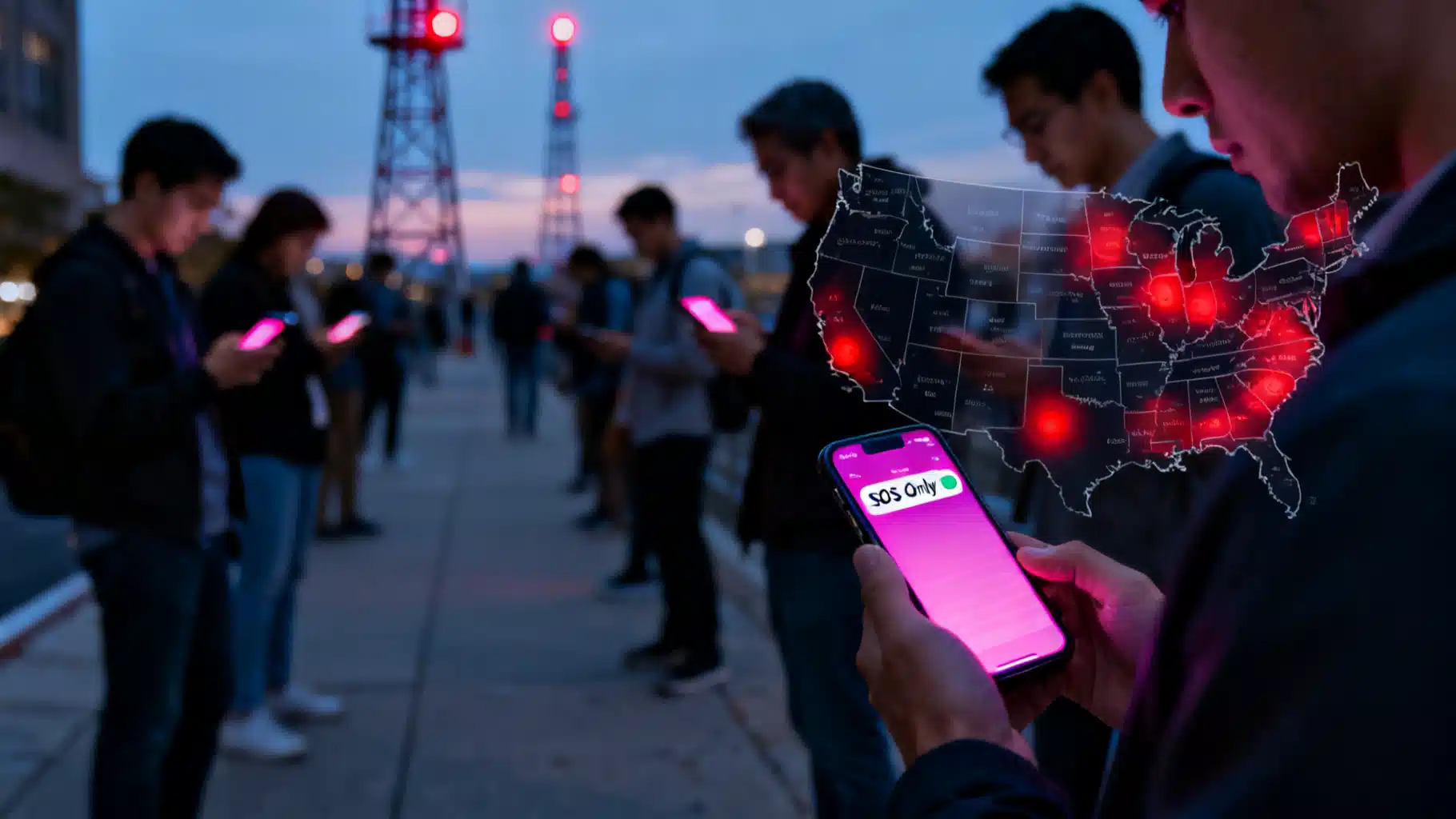
Image used for representation purposes only.
T‑Mobile outage knocks customers offline across the U.S.; service largely restored
T‑Mobile experienced a widespread network outage across the United States on Monday, July 27, 2026, disrupting voice, text, and data services for tens of thousands of customers. By Monday evening, the company said service had been restored for all customers, though some users continued to report lingering issues into Tuesday morning. (streetinsider.com )
Timeline and scope
Reports of trouble surged in the late afternoon on July 27, with outage trackers showing a sharp spike in complaints. Multiple outlets noted that user submissions to Downdetector exceeded 60,000 at the peak as customers from coast to coast reported “no service,” dropped calls, and stalled data. (tomsguide.com )
Local newsrooms and national tech sites chronicled problems spanning major metropolitan areas and smaller communities alike. Coverage highlighted simultaneous issues in regions including the Northeast, West Coast, and parts of the South and Midwest, underscoring the nationwide character of the disruption. (tech.yahoo.com )
What customers saw on their phones
A hallmark symptom on Monday was iPhones switching to “SOS” or “SOS Only” in the status bar, indicating the handset could place emergency calls but lacked normal carrier connectivity. Apple’s documentation notes that when this appears, the device is not attached to its carrier’s network but can still attempt emergency calls, including through other available networks where supported. (support.apple.com )
Tech outlets also observed that some affected users reported issues with T‑Mobile’s 5G Home Internet service, while others said home gateways remained online even as mobile lines went dark—an inconsistency typical of large, multi‑region incidents as network conditions vary by location and backhaul. (wave3.com )
Did other carriers go down, too?
Outage trackers and local stations showed elevated reports for several carriers on Monday, but the most significant spike centered on T‑Mobile. Some coverage emphasized that competitors such as Verizon and AT&T were not experiencing comparable, system‑wide failures at the same time, suggesting any cross‑carrier blips were either localized or secondary. (azfamily.com )
What T‑Mobile said—and the status now
T‑Mobile acknowledged the disruption via its customer support channels on Monday and advised customers that engineers were working to restore service. By early Monday evening (ET), the company said the outage had been resolved for all customers, a message subsequently echoed in wire‑service reports. Users in some areas, however, continued to report residual problems overnight and into Tuesday, a common pattern as networks stabilize after large incidents. (nbcwashington.com )
What caused the outage?
As of Tuesday, July 28, T‑Mobile had not publicly detailed the root cause. Wire reporting on Monday noted the company did not immediately respond to questions about the origin of the disruption. Large‑scale mobile outages can stem from software changes, routing faults, transport/backhaul failures, or power and facility issues; definitive attribution typically follows internal reviews. (wsau.com )
If you’re still experiencing issues
Even after a broad restoration, pockets of degraded service can persist. Customers can try the following steps recommended by carrier and device support resources:
- Toggle Airplane Mode off/on, or restart the device to re‑register on the network.
- For iPhone users seeing “SOS” or “SOS Only,” follow Apple’s guidance: ensure cellular is enabled, check for carrier settings updates, and try another area if possible; emergency calls should still route where supported.
- For 5G Home Internet, power‑cycle the gateway and verify signal strength indicators before contacting support.
Refer to T‑Mobile’s outage troubleshooting page and Apple’s guidance on “SOS” indicators for detailed steps. (t-mobile.com )
Why this matters: a stressed connectivity fabric
The T‑Mobile incident arrives in a year already marked by notable telecom disruptions. In January, Verizon experienced a widespread outage that interfered with calling and mobile data across the U.S., drawing attention to the public‑safety and economic stakes when major networks falter. Monday’s T‑Mobile outage adds to that narrative, underscoring how quickly a single provider’s problems can ripple through consumers, businesses, and MVNO partners that depend on its infrastructure. (en.wikipedia.org )
Regulatory and historical context
Significant outages have previously drawn scrutiny from U.S. regulators. After T‑Mobile’s nationwide disruption on June 15, 2020, the FCC’s Public Safety and Homeland Security Bureau conducted an inquiry into the event’s causes and communications with 911 authorities. While Monday’s incident has not, as of publication, been linked to any formal review, the 2020 case illustrates the framework regulators use to assess carrier reliability and emergency‑service impacts. (docs.fcc.gov )
The bottom line
- What happened: A nationwide T‑Mobile outage on Monday, July 27, 2026, briefly knocked out cellular service for tens of thousands of users. (tomsguide.com )
- Current status: T‑Mobile says service has been restored, though some customers reported residual issues into Tuesday. (streetinsider.com )
- Cause: Not yet disclosed; the company had not immediately commented on the root cause as of late Monday. (wsau.com )
- What to do: If problems persist, follow carrier/device troubleshooting steps and, where necessary, contact support. (t-mobile.com )
We will update this story as T‑Mobile provides additional technical details on the origin of the outage and any preventive steps it plans to implement to guard against recurrence.
Related Posts
DoorDash down today: checkout errors hit users (June 29, 2026) — what we know
DoorDash suffered a fresh outage on June 29, 2026. Here’s what broke, how long it lasted, and how to check status and claim help if you were affected.
Is Slack Down? Status Update for May 15, 2026—What Happened and How to Check
As of May 15, 2026, Slack is operational. Here’s what happened during yesterday’s brief disruption and how to verify status fast.
Is Spotify Down? What We Know After the May 12 Outage (Updated May 14, 2026)
Spotify’s May 12 outage is over. Here’s what happened, when it was fixed, and how to check status if you think Spotify is down now.