
Jurors’ Last-Minute Evidence Find Roils D.C. Trial of Shamell Naquan Joyner
Jurors found surprise items in evidence during deliberations in the D.C. trial of Shamell Naquan Joyner, leading to a split verdict and fresh scrutiny of evidence handling.
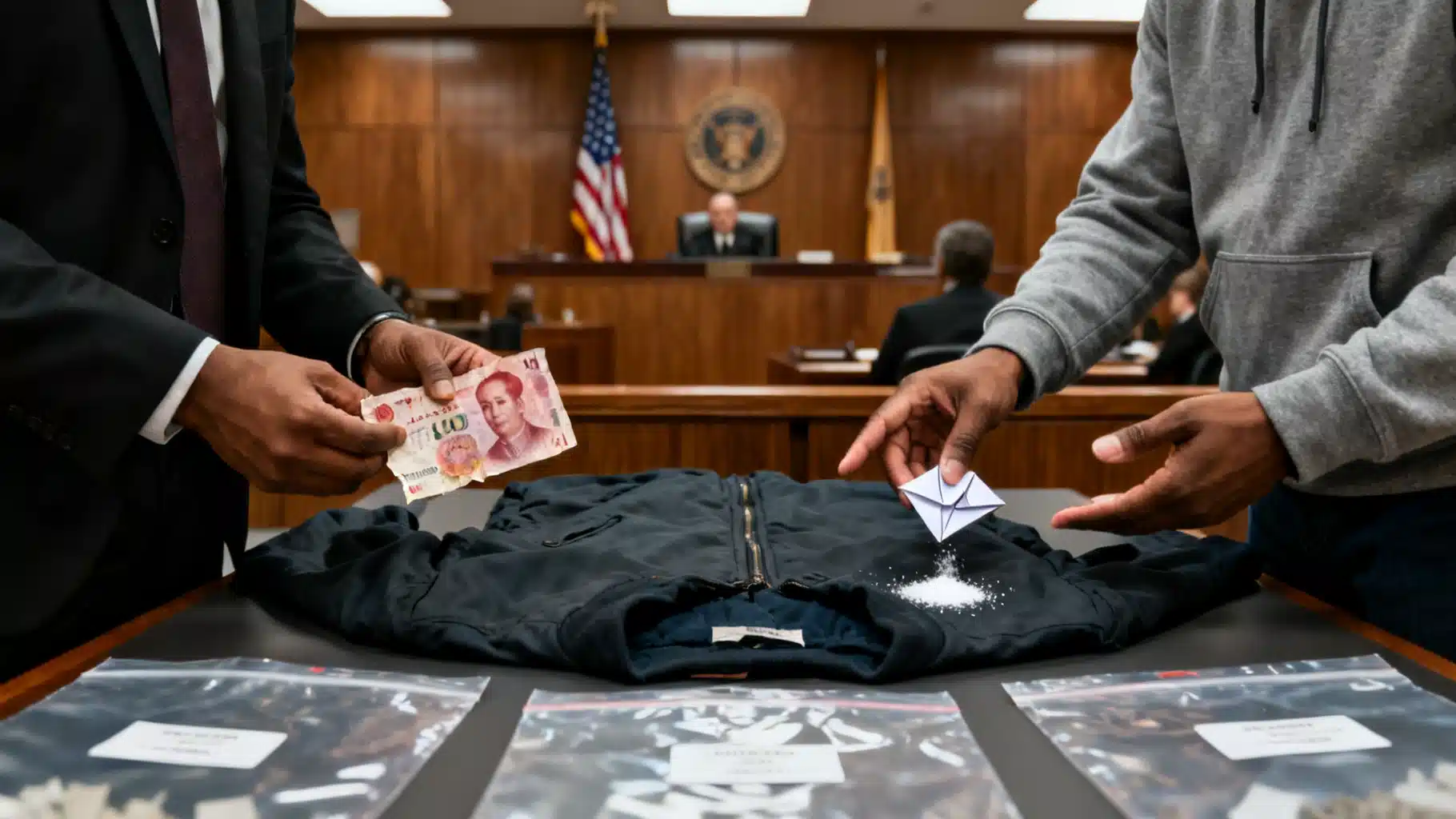
Image used for representation purposes only.
Jury discovery upends end of D.C. robbery trial
Jurors deliberating in the federal trial of Shamell Naquan Joyner shocked a Washington, D.C., courtroom when they reached into clothing exhibits and found items investigators had missed: a Chinese yuan banknote in a sweatshirt and a folded paper containing a white powder tucked inside a jacket pocket. U.S. District Judge Rudolph Contreras questioned jurors individually, instructed them the items were not admitted evidence, and allowed deliberations to continue. The panel later returned guilty verdicts on 13 of 28 counts and deadlocked on the rest. A spokesperson for the U.S. Attorney’s Office said the convictions carry a mandatory minimum of 31 years. Joyner’s counsel had not filed an appeal as of publication. (thedailybeast.com )
What the jury found—and how the court responded
According to contemporaneous reporting, the discovery occurred during deliberations when a juror checked the jacket’s breast pocket and another examined a sweatshirt. Neither side nor law enforcement had identified the items during evidence processing. Judge Contreras noted—both from the bench and in a written opinion—that the court “shared” Joyner’s amazement that such items went unnoticed by investigators, then individually voir dired jurors to ensure they could disregard the discovery. All said they could, and deliberations resumed. (thedailybeast.com )
The split verdict
The jury convicted Joyner on 13 counts tied to a series of armed robberies and a carjacking, but reported a deadlock on 15 counts, prompting the court to accept a partial verdict. Prosecutors said after the verdict that the counts of conviction ensure a 31‑year mandatory minimum under federal firearms statutes, reflecting the severity of gun enhancements linked to several of the robberies. (thedailybeast.com )
How this case began: a multi-jurisdiction spree
Federal authorities first charged Joyner in September 2023, alleging an April–May 2023 robbery spree targeting convenience stores and gas stations, plus an armed carjacking the day after the first robbery. Investigators said Joyner discharged a firearm in two of the robberies, wounding a clerk in Alexandria, Virginia. He was arrested on May 2, 2023, after police found him in a carjacked Toyota RAV4 and recovered a firearm and clothing they said tied him to multiple scenes. (justice.gov )
The government broadened the case in an August 8, 2024 superseding indictment to 28 counts spanning 10 commercial robberies and two carjackings across D.C., Maryland, and Virginia, with 12 associated 18 U.S.C. § 924(c) firearms counts. The filing underscored the case’s potential exposure, noting a mandatory minimum of 90 years if convicted on all § 924(c) counts in the superseding indictment. (justice.gov )
A trial shaped by evidence fights
The monthlong trial—formally underway on June 29, 2026—was preceded and punctuated by contested evidentiary rulings. On June 19, 2026, Judge Contreras denied Joyner’s motion to suppress tangible evidence and ruled in part on the government’s bid to admit other-acts evidence under Rule 404(b), setting the parameters for what jurors would hear about prior or related conduct. (leagle.com )
On July 13, 2026, amid testimony about the April 12, 2023 Falcon Fuel robbery, the defense sought a mistrial, alleging a Brady violation after a police report about a nearby assault—and a man arrested in that incident—surfaced mid-trial. Contreras rejected the mistrial motion, finding the late-disclosed material neither exculpatory nor material impeachment evidence given the lack of a plausible nexus to the charged robbery. That order also notes the June 29 start of trial and recaps investigators’ early focus, including a stopped individual later ruled out via discrepancies with surveillance footage. (casemine.com )
Chain-of-custody questions, without a do-over
The late-stage discovery by jurors has already raised uncomfortable questions about evidence handling. In this instance, the court’s remedy was targeted: juror-by-juror assurances that the non-admitted items would not influence deliberations, rather than a mistrial. That calibrated response tracks how federal judges often address inadvertent exposure to extraneous material: probe potential prejudice, issue curative instructions, and proceed if the panel can remain impartial. In Joyner’s case, the court documented its concerns while concluding the panel could still render verdicts on the properly admitted record. (thedailybeast.com )
What’s next
Post-verdict, prosecutors indicated the counts of conviction trigger a 31-year mandatory minimum. Formal sentencing will follow standard federal procedures after presentence investigations and briefing; the timeline was not immediately available. Given the partial deadlock, the government could decide whether to retry hung counts. Defense counsel can pursue post-trial motions or appeal, including challenges to the evidentiary rulings and the handling of the deliberations discovery. (thedailybeast.com )
The broader record the jury weighed
Even with the deliberations twist, the core of the government’s case rested on a throughline investigators laid out from the first press releases: surveillance linking clothing across scenes; ballistics connecting discharges at multiple robberies; and possession of a firearm and distinctive attire at the time of Joyner’s May 2, 2023 arrest. Those themes, previewed in the initial indictment and detailed in the broader 2024 superseding filing, framed what jurors were asked to decide. (justice.gov )
Why this matters
- Evidence integrity: The incident spotlights how overlooked items can emerge at the worst possible time—during deliberations—forcing courts to balance fairness and finality under pressure. (thedailybeast.com )
- Pretrial transparency: The court’s July 13, 2026 Brady ruling illustrates how judges parse late government disclosures, alternative-suspect theories, and whether omissions meaningfully undermine the defense. (casemine.com )
- Sentencing stakes: Even partial convictions in robbery sprees with gun enhancements can yield decades behind bars—highlighted here by the 31‑year minimum cited by prosecutors after verdict. (thedailybeast.com )
Timeline at a glance
- April 12–May 2, 2023: Series of armed robberies and two carjackings alleged; arrest on May 2, 2023. (justice.gov )
- Sept. 7, 2023: Initial 18‑count federal indictment announced. (justice.gov )
- Aug. 8, 2024: Superseding 28‑count indictment unsealed. (justice.gov )
- June 19, 2026: Court denies suppression motion; sets 404(b) boundaries. (leagle.com )
- June 29, 2026: Jury trial begins. (casemine.com )
- July 13, 2026: Court denies defense mistrial motion alleging Brady violation. (casemine.com )
- Aug. 10, 2026: During deliberations, jurors find yuan note and white powder in clothing exhibits; later return a split verdict. (thedailybeast.com )
The bottom line
A monthlong federal robbery trial in the nation’s capital ended not just with a split verdict but with a cautionary tale: when jurors unearth what investigators miss, courts must move swiftly to inoculate the process from prejudice. In United States v. Joyner, Judge Contreras opted for surgical fixes over a do‑over—and a D.C. jury still delivered convictions that, according to prosecutors, carry decades of mandatory time. The evidentiary fights that shaped what jurors could see—and the startling discovery of what they could not—will likely anchor any appeal. (thedailybeast.com )