
Humanoids Hit the Floor: Inside the Robot Breakout at IROS 2026
At IROS 2026, humanoids shift from demos to deployments as Figure secures massive compute, Agility debuts Digit 5, and new safety rules take hold.
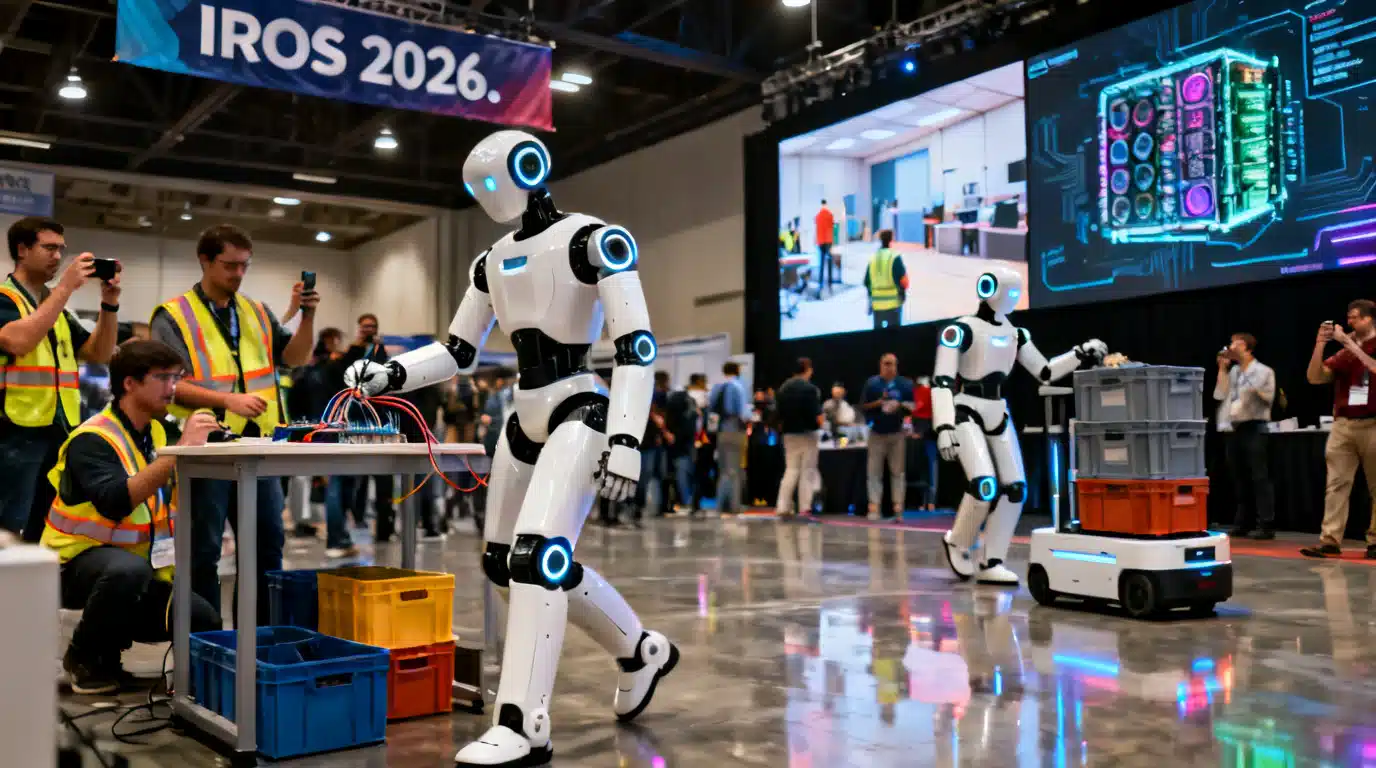
Image used for representation purposes only.
Dateline: Pittsburgh — Robots take center stage at IROS 2026
Humanoids and “physical AI” moved from splashy demos toward real deployments this week as the IEEE/RSJ International Conference on Intelligent Robots and Systems (IROS 2026) convened in Pittsburgh from September 27 to October 2. The gathering comes amid a surge of investment in humanoid compute, new industrial pilots, and fresh safety and governance milestones now in force on both sides of the Atlantic. (iros.exhibitprospectus.com )
Why this matters now
- Compute, data, and better simulators are compressing the R&D loop for embodied agents, enabling faster transfer from lab to line.
- Energy, logistics, and manufacturing employers are trialing robots in repetitive, ergonomically challenging tasks where labor is tight.
- Policymakers are catching up: safety and transparency rules are landing just as pilots scale, raising the bar for governance and deployment discipline. (assemblymag.com )
Big industry moves
Figure AI locks in massive GPU supply
Figure AI announced a multi‑year strategic partnership with AI cloud provider Nscale: an initial $3.5 billion compute commitment, with plans to scale beyond $6 billion and potential deployment of up to 100,000 Nvidia GPUs beginning in the second half of 2027 (Barstow, Texas). The companies say the stack spans training on Nvidia’s Vera Rubin platform, validation in Isaac Sim, and deployment on Nvidia GPUs inside the robots. (figure.ai )
Agility Robotics pushes toward scaled, safe work
Agility unveiled Digit 5, the latest version of its bipedal robot, citing more than 65,000 operational hours for Digit 4 across North American customer sites including Amazon, GXO, Schaeffler, and Toyota Motor Manufacturing Canada. Separately, Agility announced a strategic partnership with FORT Robotics to advance functional safety for humanoids. (agilityrobotics.com )
Tesla’s Optimus shifts from demo to line install
Tesla’s Q2 2026 investor update and filings state that first‑generation production lines for the Optimus humanoid are being installed in anticipation of production in 2026, with line work underway at Fremont. The company has not disclosed volumes or external customers. (fintel.io )
Sanctuary AI targets factory tasks
Sanctuary AI reported a 99.5%+ success rate at 2.54‑second cycle times on a complex wire‑plugging task validated against a Tier‑1 auto supplier’s live benchmarks, part of its strategy to deploy “Physical AI” on existing and next‑gen industrial arms. (sanctuary.ai )
China’s Unitree iterates fast
Unitree announced H2 Plus as an Isaac GR00T reference humanoid platform for academia, extending a rapid cadence that has seen multiple H1/H2 updates and research‑oriented releases this year. (unitree.com )
Amazon keeps broadening the baseline
Amazon highlighted next‑gen versions of its Proteus AMR and reiterated that many warehouse tasks are now robot‑assisted, while also noting that its experimental Blue Jay system is no longer in operation—illustrating the field’s rapid trial‑and‑error cycle. (aboutamazon.com )
On the ground at IROS 2026
- Technical tracks and workshops focused on agile loco‑manipulation, real‑world policy evaluation for VLM/VLA controllers, and sim‑to‑real pipelines for bipedal platforms—reflecting an inflection from navigation toward dexterous, contact‑rich work. (robotics.gatech.edu )
- The host city spotlighted Carnegie Mellon’s robotics bench strength across manipulation, perception, and autonomy. (cmu.edu )
Safety, standards, and governance catch up
- In the U.S., the Association for Advancing Automation finalized Part 3 of the R15.08 standard, covering safety requirements for industrial mobile robots after deployment. Part 1 was reaffirmed in 2026. OSHA reiterates there’s no single robot‑specific federal standard, so employers lean on consensus standards like R15.06/15.08 and ISO/TS 15066. (assemblymag.com )
- In the EU, core transparency obligations under Article 50 of the AI Act began applying on August 2, 2026, with enforcement now underway by the AI Office and national authorities—material for anyone deploying AI‑driven robots or agents that interact with EU users. (digital-strategy.ec.europa.eu )
- Nvidia, meanwhile, is promoting a new “Open Agent Safety Platform” aimed at detecting and containing misbehaving autonomous AI agents in milliseconds—an early industry step toward runtime assurance for agentic systems that will increasingly operate physical machines. (axios.com )
The state of humanoids, succinctly
What’s real:
- Revenue‑generating field work exists today, mostly in tote handling, materials movement, and structured tasks—with safety envelopes and human oversight. (techcrunch.com )
- Major compute deals signal that large‑scale data and training (including synthetic data and high‑fidelity sim) are now seen as gating factors for capability. (figure.ai )
- Industrial safety infrastructure is maturing, from pre‑deployment risk assessments to post‑deployment procedures codified in R15.08‑3. (assemblymag.com )
What remains to prove:
- Generalization and reliability across unstructured tasks without heavy task‑specific scripting.
- End‑to‑end economics beyond pilots: capex per unit, MTBF/uptime, payback periods, and service models.
- Third‑party certification regimes specific to humanoids (beyond general robot/cobot standards) that scale internationally.
What to watch next
- Deployment metrics: hours worked, cycle times, safety incidents, and interventions per hour across customer sites.
- Supply chain: motor/gearbox reliability, hands and end‑effectors, onboard compute TDP vs. runtime, and availability of high‑density charging/SLAM‑friendly facilities.
- Governance: how U.S. employers operationalize R15.08‑3 “after‑deployment” obligations; how EU AI Act transparency and high‑risk provisions affect real‑world robots with perception and decision‑making autonomy. (assemblymag.com )
Bottom line
Humanoids are stepping into the real world, but in tightly scoped jobs and under closer safety and governance scrutiny. The Pittsburgh IROS week underscored a new equilibrium: ambitious compute commitments and rapid platform iterations on one side, paired with an evolving standards and regulatory playbook on the other. The winners will be builders who master both—and can prove it with audited field data, not just viral demo reels. (iros.exhibitprospectus.com )
Related Posts

AI Briefing: GPT-5.4 lands, Google pushes Gemini everywhere, Anthropic surges, Nvidia rallies open models, and Meta signs News Corp
AI this week: OpenAI ships GPT-5.4, Google expands Gemini in Maps & Workspace, Anthropic surges, Nvidia rallies open models, Meta inks News Corp deal, EU AI Act nears.

NVIDIA DLSS 5: What’s Real, What’s Rumor, and What Ships Now
DLSS 5 is trending, but NVIDIA hasn’t announced it. Here’s what DLSS 4.5 adds now—and what a future DLSS 5 might deliver.
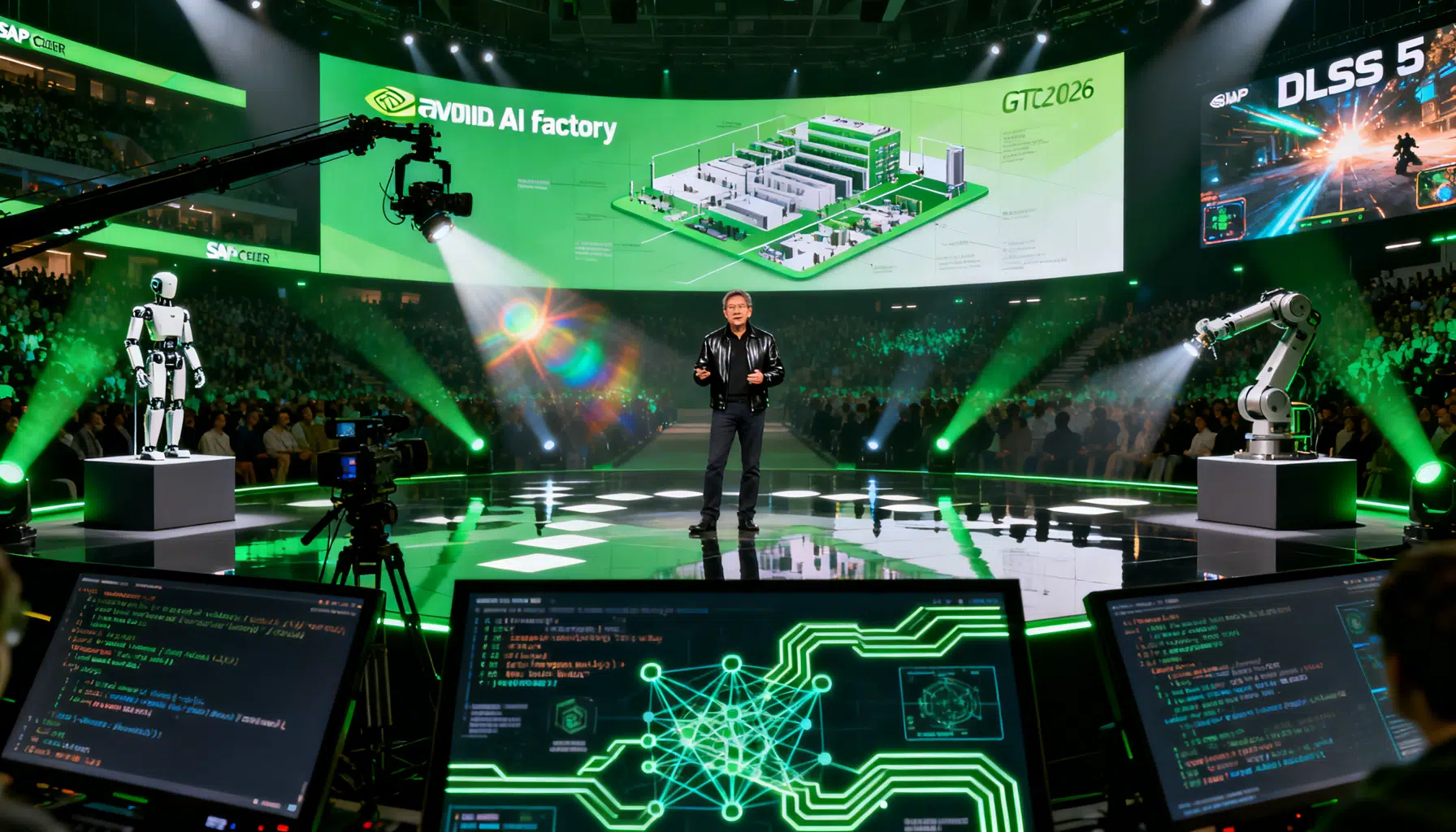
NVIDIA GTC 2026: DLSS 5, an Inference OS, and the Blueprint for AI Factories as $1T Chip Era Dawns
At GTC 2026, NVIDIA unveils DLSS 5, Dynamo inference OS, and a Physical AI Data Factory as Jensen Huang touts $1T in AI chip sales through 2027.