
Cybersecurity Tips That Work in October 2026: Patch KEVs, Go Passwordless, Prepare for Mobile and AI Attacks
Cybersecurity tips for October 2026, grounded in the newest FBI and Verizon DBIR data with CISA’s latest guidance on KEV patching, passkeys, and quishing.
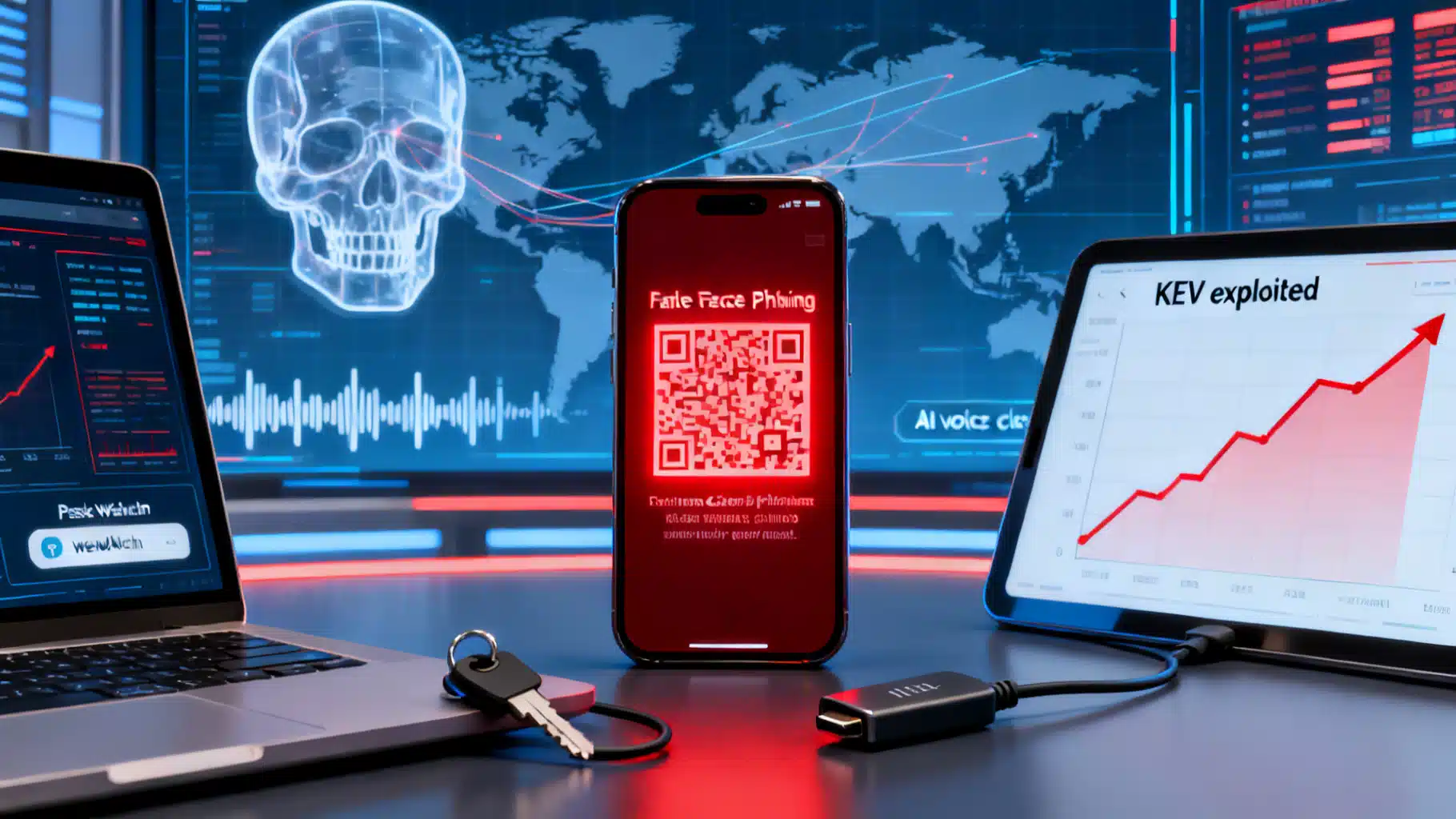
Image used for representation purposes only.
Cybersecurity Tips for Right Now: What the Latest Data Says (October 3, 2026)
The cybercrime economy just logged another record year. The FBI’s 2025 Internet Crime Report, released April 6, 2026, tallied nearly $21 billion in reported losses, with a first‑ever section on AI-enabled scams accounting for 22,364 complaints and about $893 million in losses. Total complaints hit 1,008,597—up sharply from 2024—underscoring a broad shift toward faster, more automated social engineering and investment fraud. (fbi.gov )
Fresh breach data shows how attackers are getting in. Verizon’s 2026 Data Breach Investigations Report (DBIR) finds 31% of breaches now start with software vulnerabilities—overtaking stolen passwords for the first time in the report’s history. The same page highlights that 48% of breaches involve ransomware and that mobile users face 40% higher click rates, reflecting a migration of phishing from email to phones. (verizon.com )
Meanwhile, phishing‑resistant authentication is finally going mainstream. On “World Passkey Day” in May, the FIDO Alliance estimated roughly 5 billion passkeys are in use worldwide—evidence that passwordless logins are no longer niche. (fidoalliance.org )
Below is a concise, field-tested set of steps—tuned to what’s happening right now.
10 high‑impact defenses to prioritize this week
- Patch like your breach depends on it—because it does
- Prioritize CISA’s Known Exploited Vulnerabilities (KEV) first and follow the new federal playbook for risk-based patching (BOD 26‑04). The directive formalizes how to weigh KEV status, internet exposure, and deadlines as exploitation windows compress—especially with AI accelerating exploitation. (dejavu.org )
- DBIR data shows vulnerability exploitation is now the top initial access vector (31% of breaches), so aim for days—not weeks—on KEV items. (verizon.com )
- Turn on phishing‑resistant MFA—starting with admins and remote access
- CISA and OMB policy point to FIDO2/WebAuthn (security keys and platform passkeys) and PIV/CAC as the phishing‑resistant options; push, SMS, and TOTP are not. Roll these out first for privileged users and exposed apps. (cisa.gov )
- Agencies and large enterprises are already moving: updated federal ICAM guidance and program reports document rapid progress toward phishing‑resistant MFA at scale. (idmanagement.gov )
- Adopt passkeys where practical—and choose the right flavor
- Use device‑bound passkeys or hardware security keys for high‑risk roles; enable synced passkeys for broad workforce adoption to kill password reuse and phishing at scale. Industry data indicates passkey usage has crossed into the billions in 2026. (fidoalliance.org )
- NIST’s latest 800‑63-4 draft materials explain why WebAuthn provides phishing resistance through origin binding; prefer hardware‑protected keys. (pages.nist.gov )
- Get ahead of AI‑boosted social engineering
- Train and rehearse “pause and verify” playbooks for wire transfers, vendor changes, and executive requests. FBI data shows AI voice clones, faces, and fake IDs are now common in scams targeting older Americans and investors. (fbi.gov )
- Counter the QR‑code phishing (quishing) wave
- Block or detonate QR links in email and chat, warn users against scanning from screens or posters, and verify destination domains on mobile. Microsoft’s mid‑2026 telemetry and independent analyses report a steep surge in quishing campaigns this year. (microsoft.com )
- Defend tokens and sessions, not just passwords
- Modern intrusions increasingly pivot on session hijacking. Follow CISA’s September 2026 guidance: enforce short‑lived tokens, robust validation, strong secrets management, and rapid revocation after SSO or policy changes. Monitor for anomalous token use. (dejavu.org )
- Ransomware resilience: assume data will be encrypted
- With ransomware implicated in nearly half of breaches, keep offline, immutable backups; rehearse restores quarterly; segment networks; and restrict script execution. Payouts are trending lower, but frequency remains high—prepare to recover without paying. (verizon.com )
- Treat mobile as your primary phishing surface
- DBIR’s mobile click‑rate delta signals a shift to SMS, messaging apps, and QR‑initiated lures. Expand MDM/MAM, harden mobile browsers, and apply link‑rewriting/inspection for mobile channels. (verizon.com )
- Start a memory‑safe roadmap
- Move new development to memory‑safe languages and publish timelines for critical components; this is now a cross‑agency, international push led by CISA and NSA to cut entire bug classes. (nsa.gov )
- Practice the breach
- Tabletops should include deepfake voice scams, token theft, quishing entry points, and rapid KEV exploitation. Time to contain should be measured in hours. Use ISAC/ISAO sharing to tune detections to active campaigns. (dejavu.org )
Quick wins for individuals
- Use passkeys where offered; otherwise, a password manager plus MFA is the floor.
- Never approve an MFA prompt you didn’t initiate; switch off SMS codes in favor of security keys or platform passkeys where possible. (cisa.gov )
- Slow down on money moves: call back on a known number before transferring funds—AI scams thrive on urgency. (fbi.gov )
- Don’t scan QR codes from unsolicited messages or public posters; type the URL or use a trusted app. (microsoft.com )
The week‑ahead checklist for CISOs (U.S., week of October 5, 2026)
- Monday: Pull your KEV exposure and apply BOD 26‑04 timelines; track executive exceptions. (dejavu.org )
- Tuesday: Flip on phishing‑resistant MFA for at least one critical SaaS and all admin accounts. (cisa.gov )
- Wednesday: Enforce conditional access requiring compliant devices and hardware‑backed keys for remote access. (pages.nist.gov )
- Thursday: Block QR URIs in email gateways; add mobile link inspection. (microsoft.com )
- Friday: Run a 90‑minute tabletop: AI‑voiced CFO calls + session token theft + KEV exploitation chain. Update IR runbooks accordingly. (dejavu.org )
Bottom line
Today’s best cybersecurity tips aren’t generic—they’re a response to measurable changes: vulnerability exploitation has jumped ahead of credential theft; ransomware remains pervasive even as payouts soften; attackers are shifting to mobile and QR lures; and AI is scaling social engineering. Meeting the moment means patching KEV first, going passwordless with phishing‑resistant MFA, treating tokens as crown jewels, and planning for fast‑moving intrusions—the playbook the latest reports recommend. (verizon.com )
Related Posts

Watchdog: Secret Service mobile-phone lapses raised risk to protectees—what the new OIG report says and what comes next
A DHS watchdog says Secret Service mobile device lapses put protectees at risk. Here’s what the new OIG report found and what reforms are next.
CISA GitHub Leak: Contractor’s Public Repo Exposed GovCloud Keys and Passwords
A contractor’s public GitHub repo exposed CISA GovCloud keys and plaintext passwords for months; Congress wants a classified briefing.

PlayStation Network in 2026: Record Users, Fresh Outage Reports, and a Quiet Storefront Experiment
PSN hits record users, faces fresh outage reports, and quietly trials dynamic Store discounts—here’s what’s new in 2026, and what it means for players.