
Google Play’s 2026 Reboot: Fees, Billing Choice, Third‑Party Stores, and AI Discovery
Google Play’s 2026 reboot: new fees, billing choice, third‑party app stores, AI discovery, and security updates—what changed and what’s next.
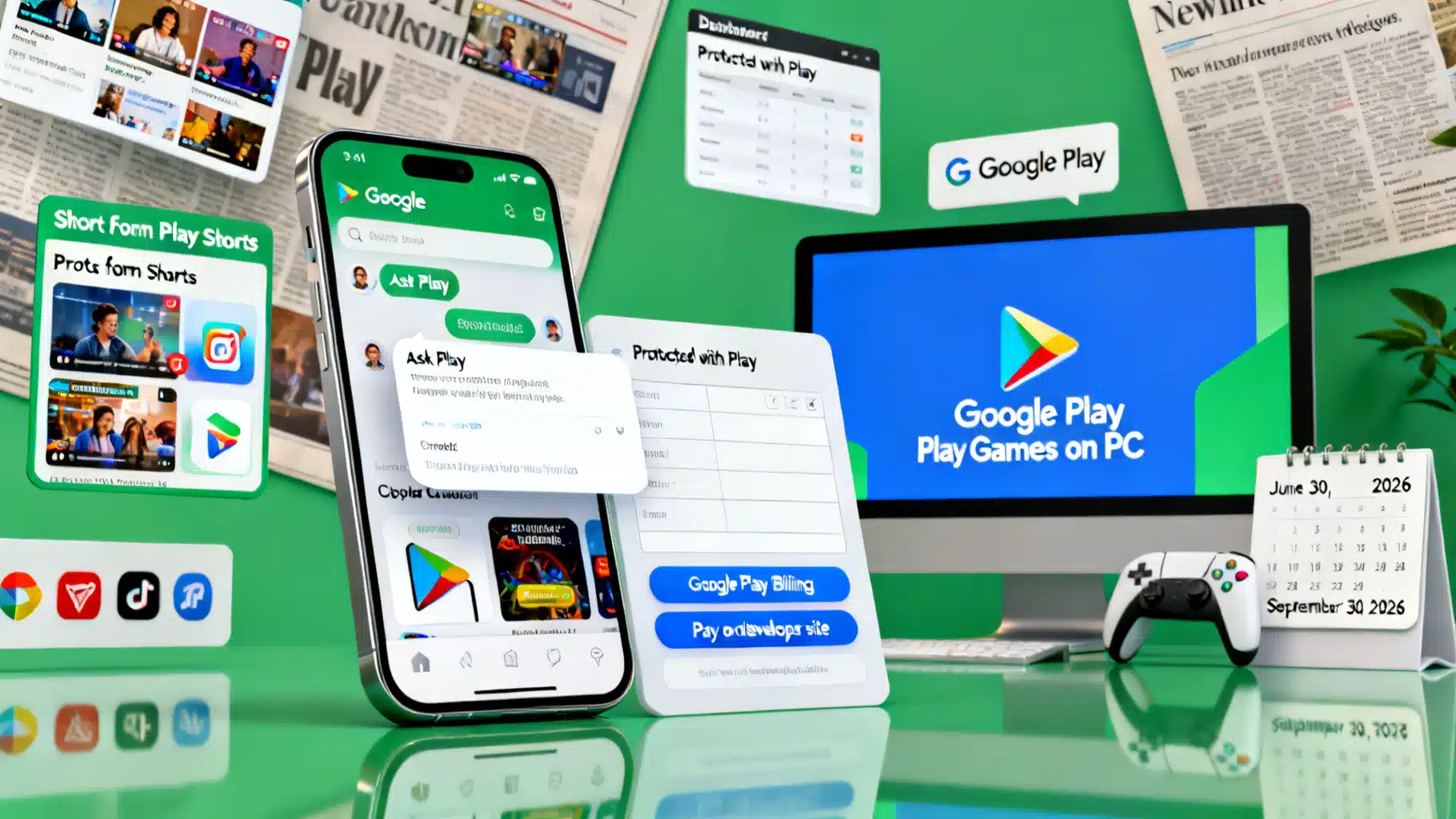
Image used for representation purposes only.
Google Play’s pivotal 2026: lower fees, more billing choice, third‑party app stores, and AI‑powered discovery
Google Play is in the midst of its biggest overhaul in a decade. Since June 30, 2026, Google has begun decoupling service fees from billing, rolling out alternative billing and link‑out options more broadly, and preparing to host third‑party Android app stores in the U.S. Meanwhile, Play is pushing AI‑driven discovery features and new tools for games on PC, all under a sharpened security umbrella. Here’s what changed, why it matters, and what to do before the next deadlines hit. (developer.android.com )
The new Play business model: fees separated from billing
- What changed on June 30, 2026 (U.S., EEA, UK): Google now separates a “service fee” from an optional “billing fee.” The service fee starts at 10% on the first $1M in annual earnings and applies to all auto‑renewing subscriptions; most other transactions use a tiered rate card tied to whether a user’s install is “new” or “existing.” If a purchase uses Google Play Billing, an additional 5% billing fee applies; alternative billing or compliant external web links incur no billing fee. (developer.android.com )
- Help Center details: Google’s fee table explains new vs. existing installs (anchored to each region’s rollout date), and shows reduced rates for apps and games that qualify for the new Apps Experience or Games Level Up programs. (support.google.com )
- Rollout beyond the U.S./EEA/UK: Australia and Japan adopt the new structure on September 30, 2026, with a broader global rollout to follow. (support.google.com )
Epic v. Google: where the remedies now stand
A California jury in December 2023 found that Google unlawfully maintained a monopoly in Android app distribution and tied the Play Store to Google Play Billing. The district court issued a permanent injunction on October 7, 2024, including provisions for catalog access and distribution of third‑party app stores via Google Play. The Ninth Circuit’s July 31, 2025 opinion recounts those remedies and the three‑year injunction term. (cdn.ca9.uscourts.gov )
On July 15, 2026, Google and Epic withdrew a joint motion that sought to modify the injunction. Google said it would instead proceed with supporting third‑party app stores in the U.S. under the court‑ordered framework, with availability beginning July 22, 2026. An official Play Console Help page outlines enrollment for “Third‑party App Store on Play” in the U.S. (macrumors.com )
Regulators have weighed in along the way. In January 2026, the FTC filed an amicus brief expressing concern that proposed modifications could weaken competition by removing catalog access and app‑store distribution remedies; with the modification bid withdrawn, attention returns to implementing the original injunction. (ftc.gov )
Discovery and merchandising: Ask Play, Play Shorts, and Engage
At I/O 2026, Google detailed how Play discovery is moving beyond static store grids. “Ask Play,” a Gemini‑backed conversational overlay, and “Play Shorts,” short‑form video previews on listings and feeds, are rolling out—first in the U.S. and select markets—with the Engage SDK syndicating content across more Play surfaces. System‑level release notes show the Ask Play entry point landing in the Play Store’s search UI this summer. (android-developers.googleblog.com )
Coverage from independent outlets echoed the shift, noting Gemini‑driven recommendations and Play Shorts as the headline user‑facing changes. (9to5google.com )
Games strategy: cross‑buy, paid titles, trials, and PC
Google is expanding premium gaming on Play and on Windows PCs:
- Cross‑buy: Developers who opt in can sell a single price that covers both mobile and Google Play Games on PC. (android-developers.googleblog.com )
- Game Trials: Try‑before‑you‑buy sessions are rolling out to select paid mobile games, with PC support planned. (blog.google )
- Roadmap and release notes: Google is steadily updating Play Games on PC, controller support, and console‑style behaviors; a developer roadmap indicates expanded self‑serve tooling in Play Console. (support.google.com )
Security and integrity: Play Protect, Advanced Protection, and “Protected with Play”
Google is broadening real‑time defenses. Live Threat Detection now analyzes risky behaviors on‑device, while new “scam protection” measures block disabling Play Protect or side‑loading during live calls—tactics scammers often exploit. The “Protected with Play” dashboard centralizes integrity controls, and Google says its behind‑the‑scenes efforts blocked billions in attempted billing fraud last year. Recent updates to Android’s Advanced Protection make key safeguards harder to disable across apps. (blog.google )
Developer verification and policy updates: key dates
- Developer verification: Google says 99% of apps were auto‑registered, but any remaining apps must be registered in Play Console by September 30, 2026 to avoid removal, with a broader rollout continuing in 2027. A dedicated FAQ and developer blog outline requirements and timelines. (developer.android.com )
- July 2026 policy batch: Google’s PolicyBytes and documentation flagged changes touching user data, AI‑generated content disclosures, and minors’ protections, with standard 30+ day grace windows. The Play policies hub lists September 30, 2026 as an effective date for several provisions. (youtube.com )
What developers should do now (Q4 2026)
- Model your fees: Use Google’s fee tables to forecast the impact of the separated service vs. billing fees. Pay attention to “new installs” vs. “existing installs,” and consider qualifying for Apps Experience or Games Level Up to reduce rates. (support.google.com )
- Pick a billing path: If you adopt billing choice or compliant link‑outs, follow Google’s UX guidelines and disclosures; test purchase flows ahead of peak season. (developer.android.com )
- Verify your catalog: Complete developer verification for any unregistered apps before September 30, 2026. (developer.android.com )
- Prepare for discovery shifts: Add Play Shorts‑style vertical videos, polish store listings for conversational queries, and integrate Engage SDK to surface content across Play. (android-developers.googleblog.com )
- Target PC users: Evaluate cross‑buy and PC distribution, and track Play Games on PC roadmap items that simplify packaging and updates. (android-developers.googleblog.com )
- Harden security: Wire up the Play Integrity API, review the Protected with Play dashboard, and communicate any sensitive capabilities as Android’s scam and threat‑detection features tighten. (support.google.com )
What users should expect
- More choice at checkout: Some apps will present multiple payment options or offer a link to complete purchases on the developer’s website. Pricing and fees may differ depending on the option. (developer.android.com )
- Third‑party app stores in the Play Store: Starting July 22, 2026 in the U.S., vetted third‑party stores can appear in Google Play. Expect phased availability as stores enroll. (support.google.com )
- Smarter, more visual discovery: Ask Play and Play Shorts aim to make searching and previewing apps more conversational and engaging. (android-developers.googleblog.com )
- Stronger default protections: Android’s Live Threat Detection and anti‑scam measures will increasingly intervene in risky flows, such as sideload prompts during calls. (blog.google )
The bigger picture
Google’s 2026 reboot of Play blends regulatory compliance with platform strategy: lowering and restructuring fees, formalizing billing choice, and operationalizing court‑ordered support for third‑party stores, while using AI to keep Play central to discovery across devices. Developers now face new levers—program qualifications, cross‑buy, and PC distribution—to trade margin for reach. Users should see more checkout options, more ways to find content, and stronger on‑device safety. The next milestones arrive September 30, 2026 (program rates and developer‑verification deadlines), with further regional rollouts into 2027. (developer.android.com )
Related Posts

Flutter SSL Certificate Pinning: A Practical, Battle‑Tested Guide
A practical, code-focused guide to implementing SSL certificate pinning in Flutter, with platform and Dart options, rotation strategy, and testing tips.
Google Play’s 2026 Overhaul: Lower Fees, Fortnite’s Return, and Stricter Sideloading Rules
Google Play’s 2026 overhaul: lower fees, Fortnite’s return, verified sideloading, and battery‑drain warnings—what it means for users and developers.
Flutter Speech Recognition (STT) Tutorial: Real‑Time Transcription on Android & iOS
Build a Flutter speech-to-text app with speech_to_text: setup, permissions, real-time UI, locales, and pro tips for accuracy, UX, and scalability.