
F‑22 in 2026: Congress extends its runway as deployments and upgrades ramp up
House moves to block F‑22 retirements to 2032 as Raptors surge to Kadena and major upgrades enter test. Here’s what changed—and what to watch next.
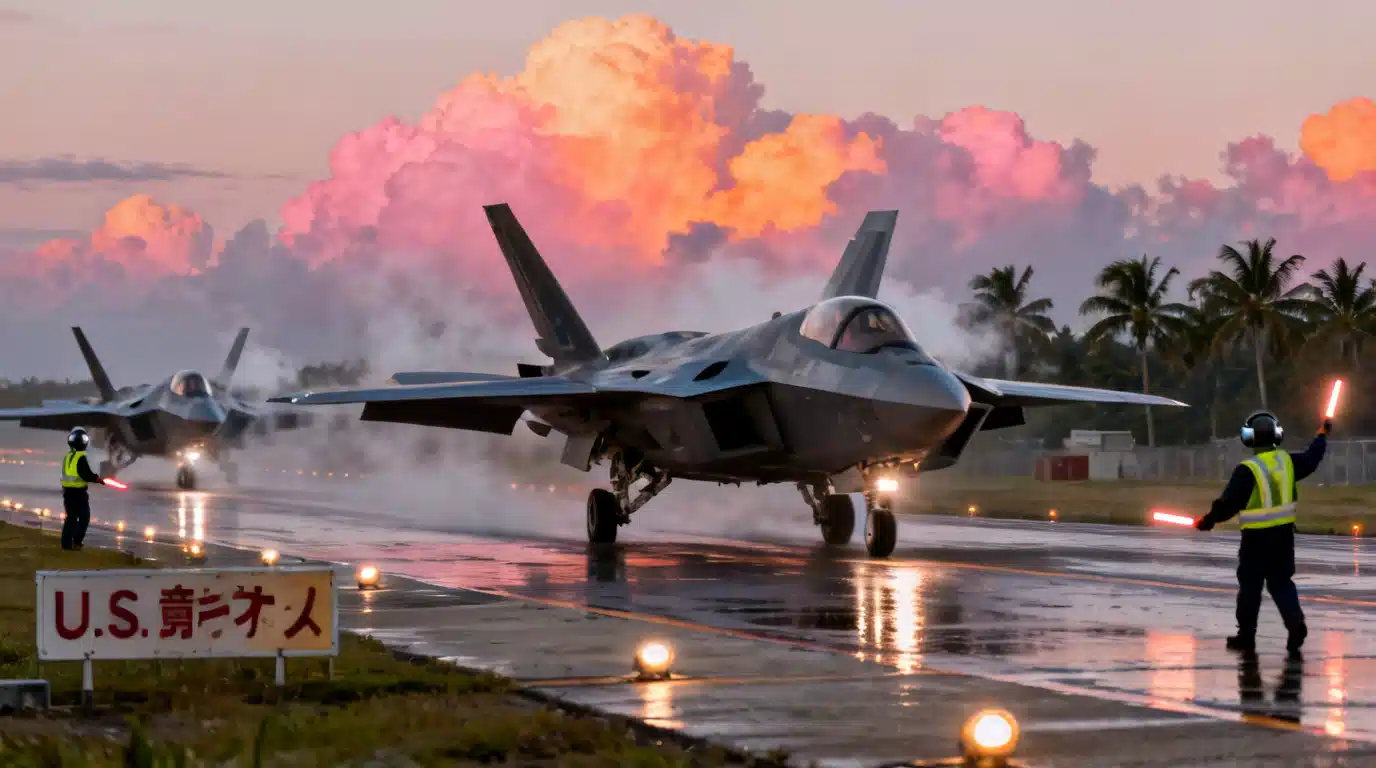
Image used for representation purposes only.
F‑22 Raptor in 2026: Congress moves to keep it flying as deployments and upgrades accelerate
America’s premier air‑dominance fighter is back in the headlines. On July 22, 2026, the House passed its FY27 National Defense Authorization Act (NDAA) with language extending the prohibition on retiring F‑22s from September 30, 2027 to September 30, 2032—one of several signals that Washington intends to sustain the Raptor while next‑gen capabilities mature. The bill now awaits Senate action and reconciliation. (clerk.house.gov )
What changed on Capitol Hill
- House‑passed NDAA text explicitly amends Title 10 to extend the ban on F‑22 retirements through September 30, 2032. This is a shift from the current statutory protection through FY27. The measure passed the House on July 22, 2026; final outcome now depends on House–Senate negotiations. (govinfo.gov )
- Earlier, the House Armed Services Committee advanced the same extension during June markups, framing the F‑22 as a bridge to the next air‑dominance platform. (airandspaceforces.com )
Indo‑Pacific: Raptors surge to Kadena
To maintain a persistent fifth‑generation presence near Taiwan and the East China Sea, the Air Force rotated F‑22s to Kadena Air Base, Okinawa, on May 5, 2026. Raptors from the 90th Expeditionary Fighter Squadron (Joint Base Elmendorf‑Richardson, Alaska) and the 27th Expeditionary Fighter Squadron (Joint Base Langley‑Eustis, Va.) arrived as part of the ongoing “fighter rotation” construct at Kadena. (af.mil )
The deployment underpinned large‑force readiness events through the summer. During readiness exercise Beverly Beach 26‑1 on August 3, 2026, F‑22s from the 27th and 90th EFS taxied for an “elephant walk,” underscoring rapid‑generation capability on the island. Local coverage also noted the rotations as the base awaits delayed F‑15EX deliveries. (dvidshub.net )
Modernization sprint: stealth tanks, new sensors, and connectivity
While lawmakers debate timelines, the fleet itself is changing fast. Budget documents and test plans show multiple upgrades converging mid‑decade:
- Low‑drag external tanks and pylons (LDT/P) to extend range with minimal signature trade‑offs, aiming for “required assets available” around mid‑FY26. (airandspaceforces.com )
- An infrared detection suite (often referenced as IRDS/IRST) entering full‑up flight test in 1Q FY26, with production beginning in 2028 and deliveries the following year, to preserve first‑look/first‑shot advantages. (airandspaceforces.com )
- Communications and identification upgrades, including Link 16 transmit/receive and Mode 5 IFF integration, plus navigation resilience via EGI‑M and controlled‑reception pattern antennas—workstreams visible across FY25–FY26 budget justifications. (saffm.hq.af.mil )
- Reliability and Maintainability Program (RAMP) modifications targeting reduced maintenance burden and higher availability. (airandspaceforces.com )
Independent test oversight has tracked elements of the sensor‑enhancement path and operational flight program updates feeding these capabilities. (dote.osd.mil )
Fleet size—and the Block 20 debate
A central policy fight remains what to do with 32 older Block 20 F‑22s used for training and test. The Air Force sought to divest them, arguing the cost to modernize would be prohibitive, but Congress restricted F‑22 retirements and demanded more analysis. A June 18, 2024 GAO review found the Air Force did not fully document training risk and alternatives and relied on a contractor estimate of at least $3.3 billion and ~15 years to upgrade the Block 20s to a combat‑coded standard—figures GAO said lacked supporting data. As of February 2026, GAO reported the Air Force had not yet submitted a broader fighter force‑structure plan mandated by Congress. (gao.gov )
The House’s July 2026 move to extend the no‑retirement rule to FY32 would, if enacted, keep all Raptors—about 184 aircraft—available while modernization continues and the next‑generation fighter progresses. (airandspaceforces.com )
Daily ops: NORAD and large‑force intercepts
Beyond the Pacific, the Raptor continues its homeland defense role. On March 4, 2026, NORAD launched a sizable mixed force—including F‑22s and F‑35s alongside Canadian CF‑18s—to intercept Russian aircraft entering the Alaska/Canada ADIZ, one of the largest such scrambles in years. An earlier NORAD release also detailed a multi‑type response on February 19, 2026. (airandspaceforces.com )
Safety notes: lessons from recent mishaps
An Accident Investigation Board report released June 12, 2026, detailed a July 8, 2025 refueling mishap involving a KC‑46A and an F‑22A, citing both human factors and the KC‑46’s “stiff boom” characteristics; the finding led to renewed emphasis on tanker–receiver procedures. Separately, an Air Force investigation into a March 25, 2024 maintenance accident in Alaska that killed an F‑22 maintainer highlighted procedural lapses. (safety.af.mil )
Misinformation watch: “F‑22 shot down” rumor was false
In July 2026, a viral claim that Iran had shot down a U.S. F‑22 circulated online; fact‑checkers traced the video to an unrelated Greek incident. No evidence supports a combat loss of a Raptor in that period. (indiatoday.in )
What to watch next
- Senate action and final NDAA negotiations: As of October 11, 2026, the House has passed its FY27 NDAA with the F‑22 retirement prohibition extended to FY32; the Senate has filed its version, and advocacy groups say a final deal is in the “closing” phase. Whether the F‑22 provision survives reconciliation remains the key policy marker. (clerk.house.gov )
- Flight‑test milestones: Watch for reporting on IRDS/IRST flight test results and initial fielding decisions, plus continued integration of Link 16/Mode 5 and EGI‑M across the combat‑coded Block 30/35 fleet. (airandspaceforces.com )
- Indo‑Pacific rotations: Expect sustained fifth‑generation rotations at Kadena while F‑15EX deliveries normalize; readiness events like Beverly Beach offer glimpses into dispersal, rapid‑turn, and forward‑refueling tactics tailored to the theater. (airandspaceforces.com )
Bottom line: In 2026, the Raptor is both a workhorse and a testbed—flying real‑world deterrence missions from Alaska to Okinawa while absorbing new tanks, sensors, and comms that keep it relevant into the 2030s. Whether Congress locks in a no‑retirement guarantee through FY32 will shape how aggressively the Air Force leverages those upgrades—and how quickly it transitions to the next generation of air dominance. (govinfo.gov )