Cyberattack wave escalates: France blames Iran as OT systems and AI supply chains come under fire
A surge of cyberattacks is disrupting physical systems and AI supply chains. France blames Iran; U.S. water utilities get fresh alerts. Here’s what to know.
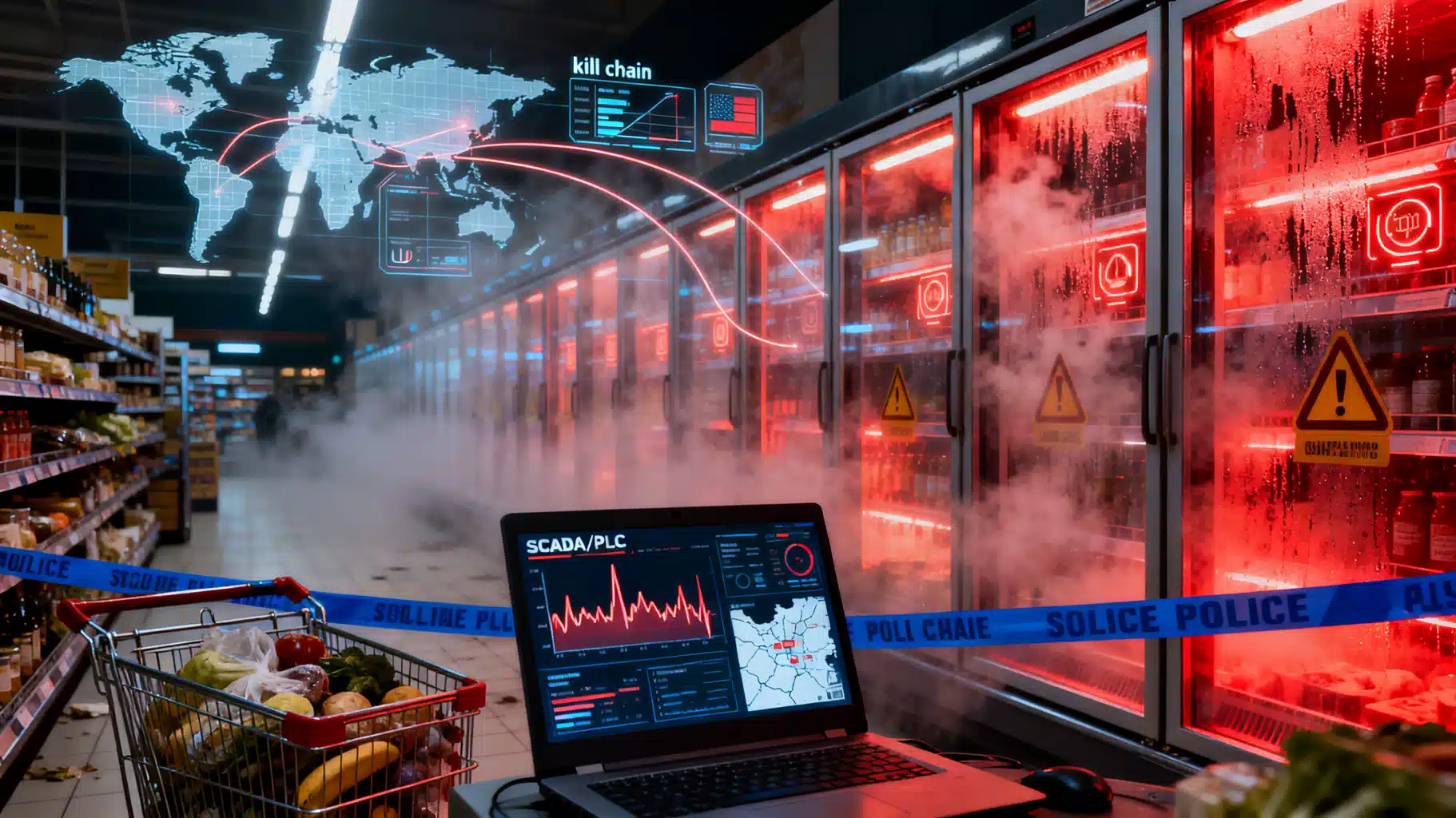
Image used for representation purposes only.
A coordinated cyberattack wave puts physical systems in the crosshairs
As of November 10, 2026, a surge of cyber incidents has moved decisively from data theft to physical disruption, hitting Europe’s supermarket refrigeration, U.S. water utilities, university networks, national statistics offices, and the fast-growing AI software supply chain. France formally attributed mid-October sabotage of store refrigerators to an Iranian Revolutionary Guard–linked unit and signaled EU sanctions, while the FBI and EPA warned U.S. operators that internet‑exposed industrial controllers in the water sector were being tampered with, causing operational disruptions. Meanwhile, high‑profile compromises at Chainalysis and the LiteLLM open‑source gateway underscored how attackers are also targeting the systems that underpin digital finance and AI development. (axios.com )
What’s new this week
- France, on Monday, November 9, said an Iranian military‑affiliated group called Shahid Kaveh carried out cyberattacks on October 11–12 that remotely raised temperatures at roughly 700 French retail locations, causing food spoilage and at least 15 fires; Paris summoned Iran’s ambassador and will push for EU sanctions. (axios.com )
- On Wednesday, November 4, French authorities said an attack against several blood‑bank sites attempted to push plasma storage well beyond safe thresholds but was detected and halted before products were compromised. (apnews.com )
- European retailers in half a dozen countries then reported a repeat wave of fridge/freezer malfunctions the week of November 2, with investigators pointing to internet‑exposed, outdated controllers and poor passwords rather than novel zero‑days. (apnews.com )
- In the U.S., Vanderbilt University on Monday, November 9, urged students and staff to shut down campus devices while probing an ongoing intrusion; a ransomware outfit has claimed responsibility, though the university has not confirmed attribution. (axios.com )
- Chainalysis, the blockchain analytics firm used by banks and law enforcement, disclosed on November 5 that names, usernames, password hashes and live tokens for all users had been exposed during an October 30 breach, forcing service shutdowns and resets. (therecord.media )
- In Russia, the Rosstat statistics service said its systems were hit over the October 29–November 1 weekend, amid claims by hacktivist groups that 23 TB of data was taken; officials disputed exfiltration while acknowledging the attack. (techradar.com )
Attribution and intent: moving from nuisance to sabotage
France’s cybersecurity agency ANSSI tied the supermarket sabotage to Shahid Kaveh, a unit affiliated with Iran’s Islamic Revolutionary Guard Corps, and described the incident as France’s first large‑scale, purely sabotage cyber campaign on its soil. The operation reportedly also probed small hydroelectric facilities with limited impact. (axios.com )
U.S. authorities, for their part, have warned since April that Iranian‑affiliated actors are exploiting internet‑exposed programmable logic controllers (PLCs) across critical infrastructure, manipulating human‑machine interface displays and project files to degrade operations. That guidance was reinforced by a July 30 FBI/EPA alert after water utilities in at least seven states reported tampering that caused loss of pressure and flooding. (media.defense.gov )
Minnesota’s late‑July incident—where over 30 municipal water systems were targeted—fit the same pattern, though federal agencies stopped short of final public attribution at the time. (investing.com )
How attackers are getting in
Investigators in Europe point to exposed remote refrigeration controllers—some end‑of‑life and left with default credentials—as the immediate weak link. U.K. officials emphasized that the French supermarket attacks exploited known vulnerabilities in legacy tech rather than cutting‑edge AI. (apnews.com )
The FBI/EPA PSA to U.S. water providers details similar tactics in OT environments: adversaries identify internet‑reachable PLCs, change IP addresses and passwords, and in some cases alter ladder logic or HMI displays, resulting in “loss of view” and degraded function. Recommended mitigations include removing direct internet exposure, enforcing strong authentication, using jump hosts, and planning for manual fallback operations. (fbi.gov )
The multi‑agency April advisory goes further, mapping observed activity to MITRE ATT&CK for ICS and flagging communications on common OT ports (for example, 44818, 2222, 102 and 502) as well as use of Dropbear SSH for persistence. (media.defense.gov )
The AI/software supply‑chain front: LiteLLM and “Black October”
Beyond OT, attackers also targeted the fast‑maturing AI software ecosystem. On October 21, 2026, the release pipeline for LiteLLM—a widely used open‑source gateway that proxies multiple AI models—was hijacked, and a malicious 1.107.0 release was signed and distributed via PyPI and official containers. Microsoft and independent researchers describe credential theft through Python startup hooks and a chained compromise of CI secrets, marking the project’s second supply‑chain hit this year. (microsoft.com )
LiteLLM’s own post‑mortem traces the attack path to an inadvertently exposed admin key months earlier, later leveraged to exfiltrate GitHub tokens and push the poisoned release—evidence that patient, multi‑stage adversaries are now explicitly targeting AI tooling infrastructure. (docs.litellm.ai )
Security researchers and industry groups have begun referring to October’s cluster of incidents against AI developer and hosting platforms as “Black October,” highlighting concentration risks and the value of API keys for model access. While not all events were AI‑driven, the month underscored how supply‑chain compromises in AI build‑and‑host layers can quickly ripple across downstream applications. (labs.cloudsecurityalliance.org )
Consequences: from spoiled food to safety hazards
French officials and retailers cited tens of millions of euros in losses from mid‑October refrigeration sabotage, with authorities linking at least 15 fires to the incidents. The subsequent blood‑bank attack in France was stopped before any plasma was lost, but it attempted to push temperatures far above safe storage levels—an unmistakable escalation toward health‑care infrastructure. (axios.com )
In the United States, reported impacts on water systems included loss of monitoring/control, pressure drops, and localized flooding—conditions that, if undetected, can permit unsafe states. Federal guidance warns that adversaries have manipulated logic and displays so operators may see “normal” values even as processes drift into danger. (fbi.gov )
Separately, the breach at Chainalysis forced disruption of key products used to monitor illicit crypto transactions and compelled a mass reset for customers across finance and government—an uncomfortable reminder that even security‑adjacent vendors are high‑value targets whose compromise can have systemic effects. (therecord.media )
What experts and agencies recommend now
NIST’s October 1 guidance for the Water and Wastewater Systems sector stresses secure remote access architectures, asset inventories, and segmentation, and points smaller utilities to practical, cloud‑based approaches when resources are limited. Its recommendations align closely with FBI/CISA guidance to remove direct internet exposure and adopt zero‑trust‑style access brokering for OT. (nist.gov )
For operators of commercial refrigeration and building controls, European investigators’ early lessons apply immediately: identify and replace or isolate end‑of‑life controllers; disable default accounts; enforce MFA; and remove unauthenticated remote access pathways. Officials also highlight the importance of 24/7 monitoring for anomalies such as unexpected temperature setpoint changes. (apnews.com )
For software teams building with AI components, October’s LiteLLM compromise is a fresh mandate to harden CI/CD—rotate and scope secrets, enable protected branches, require hardware‑backed signing, continuously scan release artifacts and containers, and inventory where AI gateways and model keys live across the estate. (csoonline.com )
What to watch next
- Diplomatic fallout: France has pledged to seek EU sanctions tied to the Shahid Kaveh operation; allied signals and further public attributions could follow. (axios.com )
- Critical‑infrastructure hardening: Expect additional joint advisories and potential sector‑specific directives for water and small power operators, as agencies push to remove direct internet exposure and retire legacy PLCs. (fbi.gov )
- Vendor transparency: Chainalysis has begun staged restorations with added allow‑listing and forced rotations; the scope of exposed data and any downstream misuse will bear close watching across financial compliance workflows. (therecord.media )
- Eastern Europe: Claims around the Rosstat breach—and any confirmed exfiltration—could spur new counter‑operations and information‑warfare moves amid ongoing regional tensions. (techradar.com )
Immediate steps organizations can take
- Remove direct internet exposure for OT and building‑control devices; require brokered, logged access via jump hosts or ZTNA, with MFA. (fbi.gov )
- Inventory and isolate end‑of‑life controllers; change default credentials, disable unused services, and pin firmware to supported versions. (apnews.com )
- Monitor for anomalous setpoint/logic changes and traffic on common ICS ports (44818/2222/102/502); alert on unexpected overseas IPs. (media.defense.gov )
- Harden CI/CD: rotate secrets, enforce signed releases, restrict runner privileges, and continuously scan packages/containers before promotion. (csoonline.com )
- Prepare for manual fallback: test business continuity plans for water/energy/building systems, including manual mode operation and safe shutdown. (fbi.gov )
The through‑line this month is clear: capable adversaries are pivoting into the physical world while also probing the software veins of AI itself. The organizations that fare best will be those that de‑expose fragile controls, close easy doors, and treat their supply chains—industrial and digital—with the same rigor they apply to their crown‑jewel IT systems.
Related Posts

Nintendo says third‑party survey breach exposed limited, older employee data—no customer info impacted
Nintendo confirms a third-party survey tool exposed older, limited employee data—no customer or financial information affected. June 16, 2026.

Cybercrime in 2026: AI, ransomware, and new rules collide
Cybercrime surges into 2026: AI-fueled fraud, ransomware’s reset, CIRCIA’s approach, and fresh FBI warnings collide with new compliance clocks.

What Is a Data Breach? Definitions, Real-World Examples, and the 2026 Rules You Need to Know
A clear, timely explainer on data breaches—definitions, 2024–2026 case studies, and what new U.S./EU rules require when the worst happens.