
Cloud Gaming’s 2026 Reset: Xbox Caps Hours, PlayStation Ends PC App, NVIDIA Ups the Tech
Cloud gaming’s 2026 reset: Xbox caps hours, Sony retires its PC app, NVIDIA boosts tech, and Netflix and Amazon pivot. What it means for players.
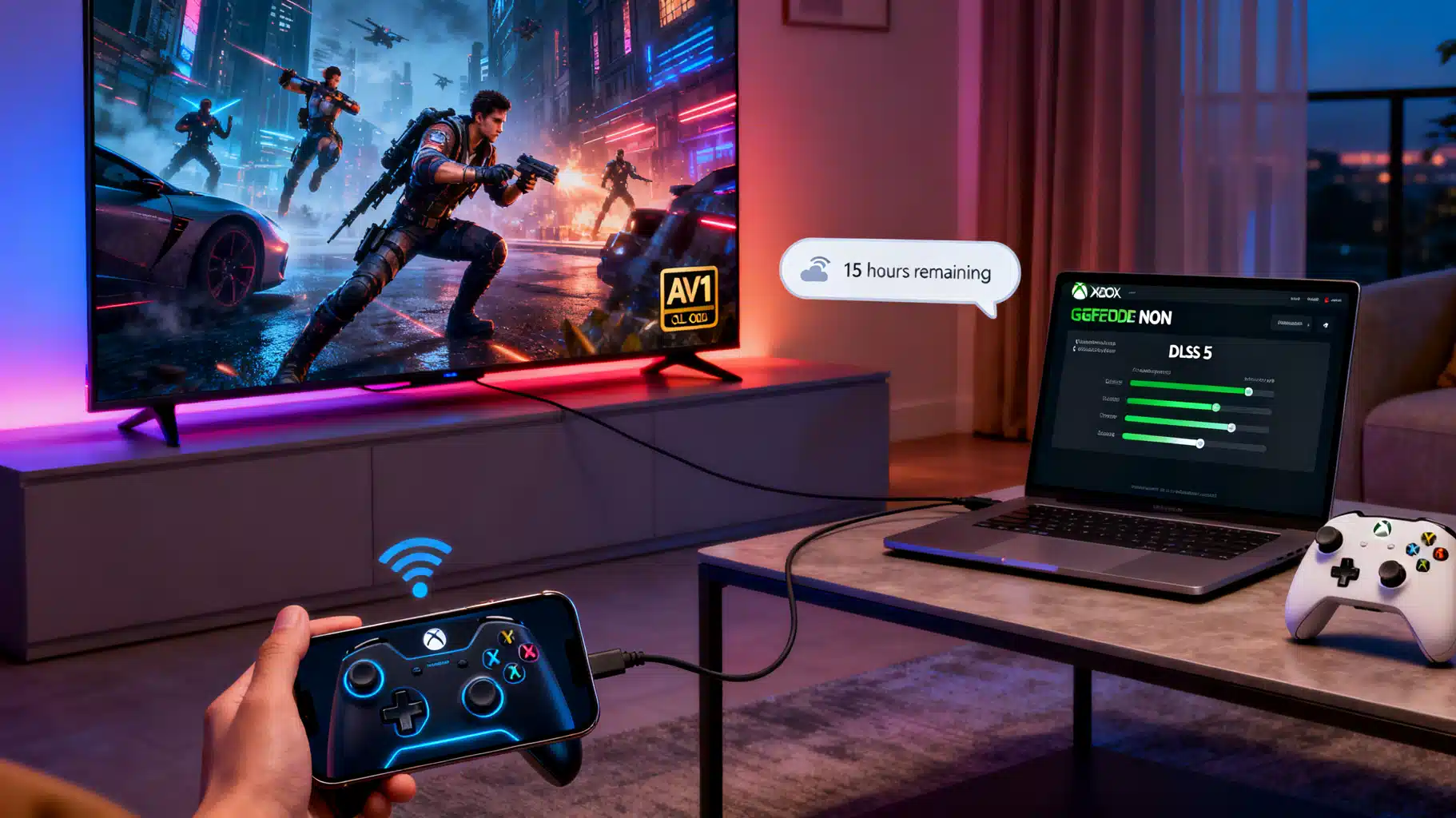
Image used for representation purposes only.
The state of cloud gaming, November 10, 2026
Cloud gaming just hit an inflection point. In the span of a few weeks, Microsoft set monthly hour caps for Xbox Cloud Gaming, Sony announced it will retire the PlayStation Plus PC streaming app, and NVIDIA rolled out new streaming and AI upgrades on GeForce NOW. Meanwhile, Netflix continues expanding TV-and-browser play, and Amazon has repositioned Luna inside the Prime Video app. Together these moves signal a strategic reset for a sector balancing rising infrastructure costs with mainstream ambitions. (news.xbox.com )
What changed—at a glance
- Xbox introduces monthly hour limits for cloud streaming starting in November 2026 (15 hours on Ultimate; 10 on Premium; 5 on Essential), with the option to buy extra hours. Microsoft says about 4% of subscribers will be affected. (news.xbox.com )
- Sony will retire the PlayStation Plus cloud-streaming app on PC on December 10, 2026, citing very low usage (<0.4% of eligible Premium members). Console benefits are unchanged. (blog.playstation.com )
- NVIDIA is pushing cloud visual fidelity with DLSS 5 updates (including Hogwarts Legacy on November 5) and continues to lean into AV1-first streaming on GeForce NOW. (nvidia.com )
- Netflix’s cloud games beta on TVs and web browsers is available in the U.S. and other major markets, controllable with a phone. (help.netflix.com )
- Amazon has folded Luna deeper into Prime Video and wound down third‑party purchases/subscriptions, re‑focusing the catalog and access model. (geekwire.com )
Xbox’s hour caps: a cost reality check
On September 3, Microsoft announced that cloud gaming time will be metered each month based on Game Pass tier, starting in November 2026. Once you exhaust your included hours, you’ll be able to buy more via the Xbox Store; Microsoft framed the move as necessary because delivery costs rise as more people stream for longer. The company estimates about 4% of subscribers will feel the impact. Independent coverage underscored that unlimited streaming is ending for Ultimate members. (news.xbox.com )
The caps land alongside new input experiments meant to make cloud gaming easier to start on TVs: a preview that turns your phone into a TV controller and a “cloud connect” mode that lets the new Xbox Nano Controller talk to Microsoft’s servers over Wi‑Fi to cut latency. Both are limited pilots for now, but they showcase where Xbox wants to remove friction. (news.xbox.com )
PlayStation pares back on PC streaming
In today’s PlayStation Blog update listing November’s PS Plus Game Catalog, Sony quietly added a postscript: the PlayStation Plus PC app will be retired on December 10, 2026, because fewer than 0.4% of eligible Premium members use it. This does not affect streaming on PS5/PS4 consoles, where Sony has been building PS5 cloud streaming since 2023 and expanded it to devices like PlayStation Portal. (blog.playstation.com )
Taken together, Xbox’s metering and PlayStation’s PC retreat suggest the platform holders are focusing cloud efforts where engagement and economics are strongest: consoles and living‑room screens, with selective reach to TVs and browsers. (blog.playstation.com )
NVIDIA doubles down on tech—and adds guardrails
GeForce NOW’s cadence of “GFN Thursday” updates continues, but 2026’s headline is DLSS 5’s 3D‑Guided Neural Rendering reaching more titles and the cloud, including Hogwarts Legacy’s November 5 update. NVIDIA has also been foregrounding AV1 as the preferred codec—its support guidance now lists AV1 ahead of HEVC and H.264—because it delivers higher quality at lower bitrates, a meaningful cost/quality lever for cloud. (nvidia.com )
On the business side, NVIDIA has moved to manage demand via policy, bringing a 100‑hour monthly playtime limit to paid GeForce NOW tiers (with the usual per‑session caps still in place), and offering flexible Day Passes for try‑before‑you‑subscribe use. It’s a different philosophy from Xbox’s fixed monthly hour buckets, but the direction is similar: align usage with capacity so queues stay short and sessions stay stable. (nvidia.com )
Netflix quietly becomes the universal denominator
Netflix’s TV-and-browser cloud gaming beta now runs in the U.S., U.K., and many other markets. You launch games from the Netflix app on TVs or from Chrome/Edge on Netflix.com, then use your phone as a controller. There are no extra fees, ads, or in‑app purchases, which positions Netflix’s gaming push as an engagement driver inside an existing subscription instead of a standalone service. (help.netflix.com )
Amazon Luna’s re‑focus inside Prime Video
Amazon has been reshaping Luna through 2026. In April, it ended third‑party store access and subscriptions within Luna; by July, Luna gained a prominent home inside the Prime Video app to improve discovery and make game streaming feel as immediate as pressing play on a show. Amazon is pitching this as a way to reach more casual players while keeping a Premium tier for deeper libraries. (engadget.com )
Mobile and iOS: the policy door is open, but rollouts are cautious
Apple changed its App Store rules in January 2024 to permit native cloud‑gaming apps with catalogs, ending years of restrictions that forced web‑app workarounds. Yet the biggest players still largely point iPhone and iPad users to browser experiences as of late 2026, a reminder that policy permission doesn’t guarantee product priority. (9to5mac.com )
Regulation continues to shape who can stream what
The aftershocks of Microsoft’s Activision Blizzard deal are still visible in cloud licensing. As part of the U.K. approval, Ubisoft acquired the cloud streaming rights for current and future Activision Blizzard titles released over the next 15 years outside the EEA—rights it can license to multiple providers. That structure prevents one platform from bottling up a giant catalog in the cloud, at least for this generation. (staticctf.ubisoft.com )
Why the industry is recalibrating now
Three forces are converging:
- Rising costs per streamed hour. Unlike video, every player requires a slice of a GPU and supporting infrastructure. Caps and metering are levers to keep quality high without runaway cost. Microsoft said plainly that costs grow as more people play for longer. (news.xbox.com )
- Better codecs and smarter rendering. AV1 reduces bandwidth for a given quality level; AI techniques like DLSS 5 can raise perceived fidelity at lower native render costs. That lets platforms do more with the same hardware footprint. (nvidia.custhelp.com )
- A “meet users where they are” distribution pivot. Smart TV apps, phone-as-controller previews, and Netflix’s no‑extra‑fee approach reduce friction and expand casual reach, even as PC‑specific gambits get trimmed. (news.xbox.com )
What it means for players
- Expect clearer trade‑offs. If you rely on Xbox Cloud Gaming heavily, plan for monthly hour budgeting or added purchases once the caps take effect this month. If you streamed PS Plus to PC, you’ll need to move to console streaming after December 10. GeForce NOW remains generous in quality and device reach, but paid tiers now come with monthly hour management. (news.xbox.com )
- TV‑first experiences will keep improving. Phone‑as‑controller and direct Wi‑Fi gamepad connections are small but meaningful latency and convenience gains, especially in living rooms where not everyone owns a console. (news.xbox.com )
- Visual quality should rise without crushing your connection. AV1’s efficiency and DLSS 5’s neural rendering make high‑fidelity cloud play more accessible on typical home broadband. (nvidia.custhelp.com )
The 2027 outlook
Cloud gaming isn’t disappearing; it’s right‑sizing. Expect more precise packaging (hour bundles, day passes), smarter distribution (TV apps, browser play), and steady technical lifts (AV1 everywhere, broader DLSS 5 support). The platforms are converging on a pragmatic target: cloud as a complement to local play—great for discovery, casual sessions, and hardware‑light households—rather than a wholesale replacement. By meeting the economics in the middle and trimming lower‑engagement surfaces, cloud gaming may finally find durable, mainstream shape. (nvidia.com )
Related Posts
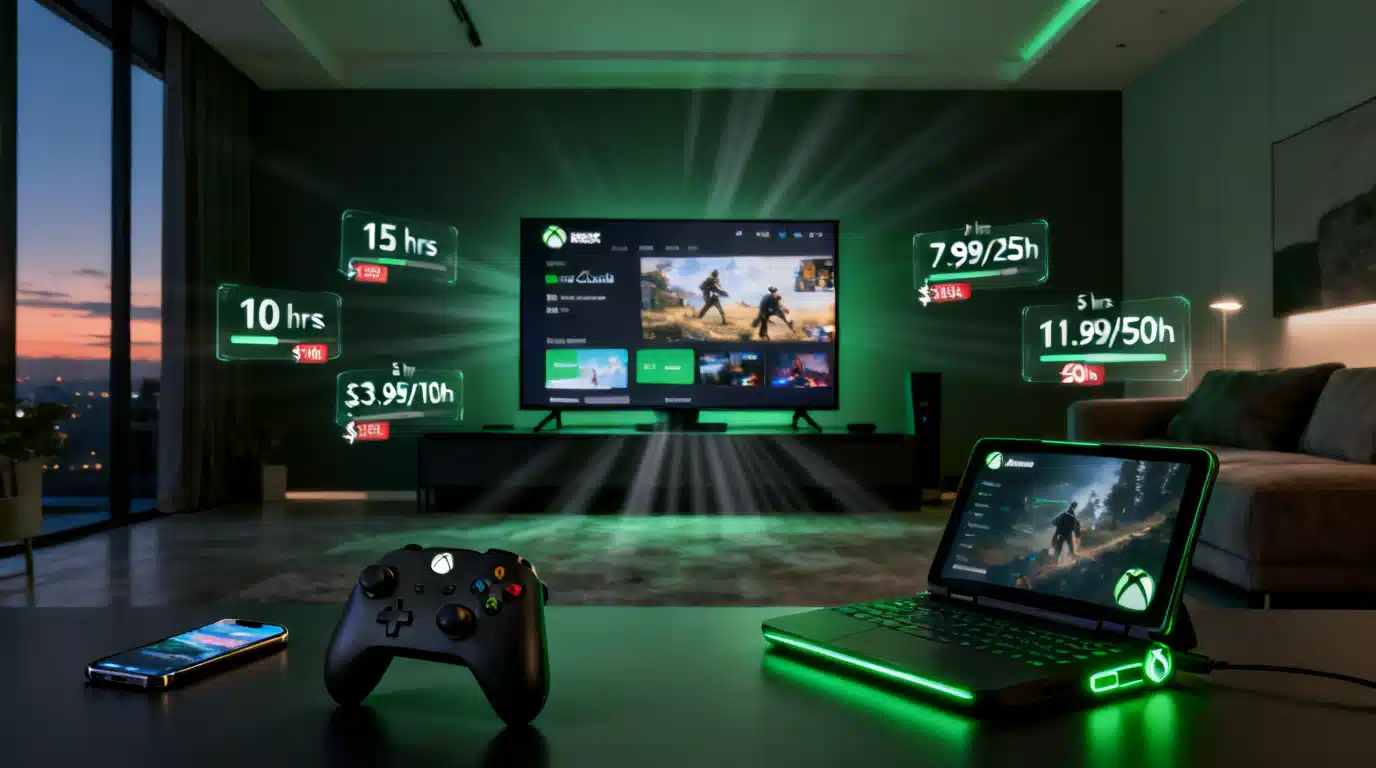
Xbox Cloud Gaming’s new pricing: hour caps, Cloud Playtime packs, and what it costs starting November 2026
Xbox Cloud Gaming shifts to monthly hour caps and adds paid Cloud Playtime packs. Here’s what changes, what it costs in the US, and when it rolls out.

PlayStation Plus June 2026: Dates, What’s Leaving, Price Changes, and What to Expect
PlayStation Plus in June 2026: dates to watch, confirmed removals, fresh price changes, and what to expect from this month’s Essential and Catalog drops.

Sony hikes PlayStation Plus entry prices for new members today: $10.99 monthly, $27.99 quarterly
Sony raises PS Plus Essential’s 1- and 3‑month prices for new members today, May 20, 2026; annual plans unchanged. What’s changing, where, and what to do.