Alibaba debuts Qwen4-Max: 2.4T MoE flagship with 1M context and lower task costs
Alibaba launches Qwen4-Max: a 2.4T MoE flagship with 1M context and aggressive pricing, moving Qwen4 from preview to GA on November 16, 2026.

Image used for representation purposes only.
Alibaba launches Qwen4-Max, the first model in its next-gen Qwen4 family
Hangzhou — On November 16, 2026, Alibaba released Qwen4-Max, a flagship multimodal large language model that marks the commercial debut of the company’s Qwen4 generation. The new model features a 2.4-trillion-parameter Mixture-of-Experts (MoE) backbone with 71 billion parameters activated per token, native vision capabilities, and a one‑million‑token context window. Alibaba positions Qwen4‑Max as an “AI teammate” for complex work, creative production, and scientific discovery. (alibabacloud.com )
Why this release matters
Alibaba says Qwen4‑Max improves performance while cutting cost per task by roughly 60% versus its predecessor, thanks to architectural upgrades that reduce the number of active parameters while maintaining a 2.4T total scale. The model is built for long‑running, tool‑rich “agentic” workflows and includes support for visual reasoning, code generation, and multimodal understanding across text, images, and videos. Early showcase tasks highlighted gains in manufacturing and R&D scenarios, including extended agent runs in molecular design and chip‑coolant discovery. These claims are Alibaba’s and arrive before broad third‑party leaderboard verification. (alibabacloud.com )
The road to Qwen4: from training to preview to GA
Alibaba first confirmed at its Apsara Conference on September 22, 2026, that “Qwen 4” was in training, and outlined a roadmap that targets future Qwen 4.5 and Qwen 5 series at 5–10 trillion parameters. That announcement set expectations for a cadence of rapidly scaling models paired with infrastructure and safety updates. (alibabacloud.com )
A limited “Qwen4‑Max‑Preview” opened on November 11 under Alibaba Cloud’s Token Plan subscription. Five days later, on November 16, Alibaba made Qwen4‑Max generally available as a priced API model. The Model Studio release notes record both milestones. (alibabacloud.com )
Pricing, rate limits, and access
Qwen4‑Max is offered via QwenCloud as a pay‑as‑you‑go API and through Token Plan bundles. International list prices at launch are $1.50 per million input tokens and $4.50 per million output tokens. Implicit cache reads are listed at $0.075 per million tokens, with explicit cache creation options for 5‑minute and 1‑hour lifetimes. The model page also documents a one‑million‑token context window, maximum input of 991K tokens, maximum output of 393K tokens, and a 262K‑token ceiling for “reasoning” mode. (qwencloud.com )
Beyond API access, Alibaba says Qwen4‑Max is accessible in its own apps and enterprise products, including QwenWork and QwenStudio. The company also promises open‑weight, smaller‑scale Qwen4 models “soon,” while keeping Qwen4‑Max itself proprietary. (alibabacloud.com )
What’s new under the hood
Alibaba attributes Qwen4‑Max’s efficiency‑capability trade‑off to an updated sparse MoE design that spans attention, residual connections, and embeddings. While the total parameter count remains 2.4T, the activated parameters per token drop to 71B—about 25% fewer than in Qwen3.8‑Max at a comparable scale—resulting in lower inference costs. The release also emphasizes long‑horizon planning for agents, tighter model governance across the lifecycle, and domain‑specific safety training, including filters and post‑training around cybersecurity and CBRN risks. (alibabacloud.com )
Benchmarks and early signals
Alibaba reports that Qwen4‑Max ranks highly on coding and agentic evaluations, citing a top‑10 Code Arena position and strong showings on internal or less‑widely‑used suites such as Work360, Agents’ Last Exam, Vals Index, JobBench, and Chartography. As of November 16, these are primarily vendor‑reported results; mainstream community leaderboards had not yet widely listed Qwen4‑Max. Readers should treat early numbers as provisional until third‑party evaluations are published. (alibabacloud.com )
How to try Qwen4‑Max right now
Developers can call the model via QwenCloud using OpenAI‑compatible endpoints. The model supports tool/function calling, structured outputs, web search, batch jobs, context caching, and a “Partial Mode” for prefix‑constrained completions. Rate limits and context ceilings are generous enough to process book‑length documents, large codebases, or lengthy video transcripts in a single pass. (qwencloud.com )
Example: calling Qwen4‑Max with an OpenAI‑compatible client
from openai import OpenAI
import os

client = OpenAI(
    api_key=os.getenv("DASHSCOPE_API_KEY"),
    base_url="https://ap-southeast-1.maas.qwencloudapi.com/compatible-mode/v1",
)

messages = [
    {"role": "user", "content": "Summarize this paper and extract key caveats."}
]

resp = client.chat.completions.create(
    model="qwen4-max",
    messages=messages,
    extra_body={"enable_thinking": True},  # optional long-form reasoning
)
print(resp.choices[0].message.content)
For production builds, consider enabling context caching for repeated prefixes and tool/function calls for agent workflows. Current cache pricing and limits are detailed on the model page. (qwencloud.com )
Where Qwen4‑Max fits in the competitive landscape
Qwen4‑Max’s headline prices undercut many “frontier” models on a per‑token basis and, according to Alibaba, translate into much lower cost per completed task when run in agentic or high‑effort modes. That cost positioning—paired with a 1M‑token context, multimodal inputs, and compatibility with common API protocols—aims squarely at enterprise builders who care about throughput and predictable budgeting more than leaderboard supremacy. Independent outlets have begun to note the pricing move, but broader, standardized cross‑benchmarks will determine whether Qwen4‑Max is best‑in‑class or “good‑enough at a better price.” (qwencloud.com )
The bigger picture: Alibaba’s full‑stack AI strategy
The Qwen4‑Max launch sits within a full‑stack roadmap that Alibaba outlined at Apsara: next‑generation models (Qwen 4/4.5/5), an agent‑native cloud stack, and new custom silicon from T‑Head. The company previewed its Zhenwu V900 accelerator with higher‑bandwidth memory and FP8/FP4 support, slated for mass production in Q1 2027—signaling long‑term investment in both training and ultra‑low‑precision inference. If delivered on schedule, that hardware could further reduce serving costs for large MoE systems like Qwen4‑Max. (alibabacloud.com )
What to watch next
- Open‑weight Qwen4 variants: Alibaba says smaller models with released weights are “coming soon,” which could broaden local and on‑prem adoption in the developer community. (alibabacloud.com )
- Third‑party evaluations: Expect updates on community leaderboards and independent harnesses as Qwen4‑Max propagates into popular testbeds. (alibabacloud.com )
- Regional availability and enterprise integrations: The Model Studio release notes indicate international deployment, and Alibaba lists access via QwenWork and QwenStudio; watch for additional regions, partners, and verticalized tools. (alibabacloud.com )
Bottom line
With Qwen4‑Max, Alibaba is staking out a scale‑plus‑efficiency position: a massive sparse MoE that promises strong performance at materially lower serving costs, packaged with the long context and tool wiring that modern agentic applications demand. The launch completes a rapid preview‑to‑GA cycle and sets up a near‑term pipeline of smaller, potentially open‑weight Qwen4 models and longer‑term iterations at much larger scales. For teams building cost‑sensitive, multimodal, and agent‑heavy products, Qwen4‑Max is now a credible option to evaluate. (alibabacloud.com )
Related Posts

Qwen 4 begins: Alibaba opens Qwen4‑Max preview with a 1M‑token context
Alibaba opens a two-week Qwen4-Max preview with a 1M-token context; multimodal inputs and default reasoning arrive, but pricing and benchmarks wait.
Designing a Robust Benchmarking Framework for Evaluating AI Agents
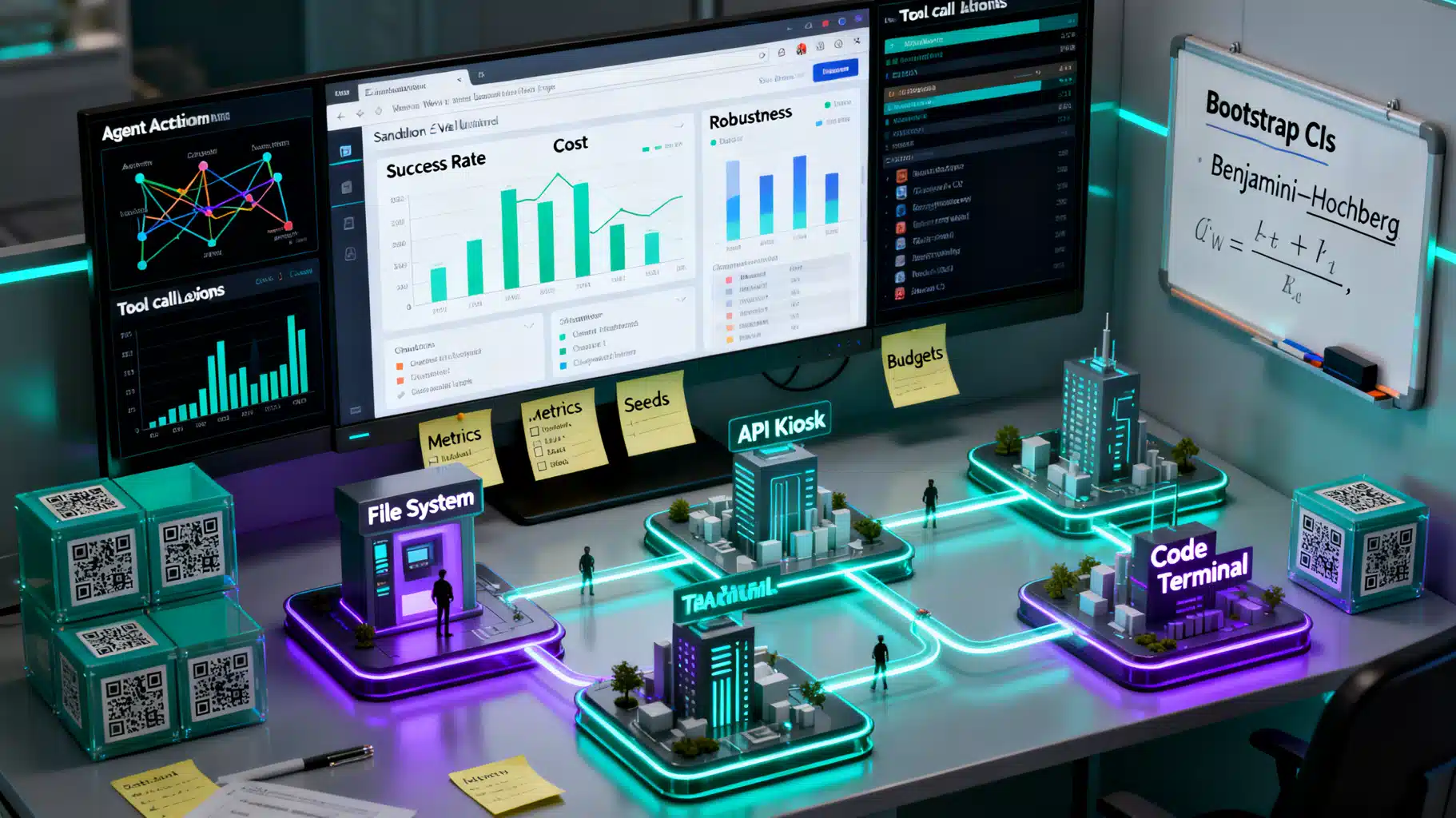
A practical guide to designing a reproducible benchmarking framework for evaluating AI agents across tasks, tools, and environments.
LLM Tokenizer Comparison: BPE vs SentencePiece (Unigram and SP‑BPE)
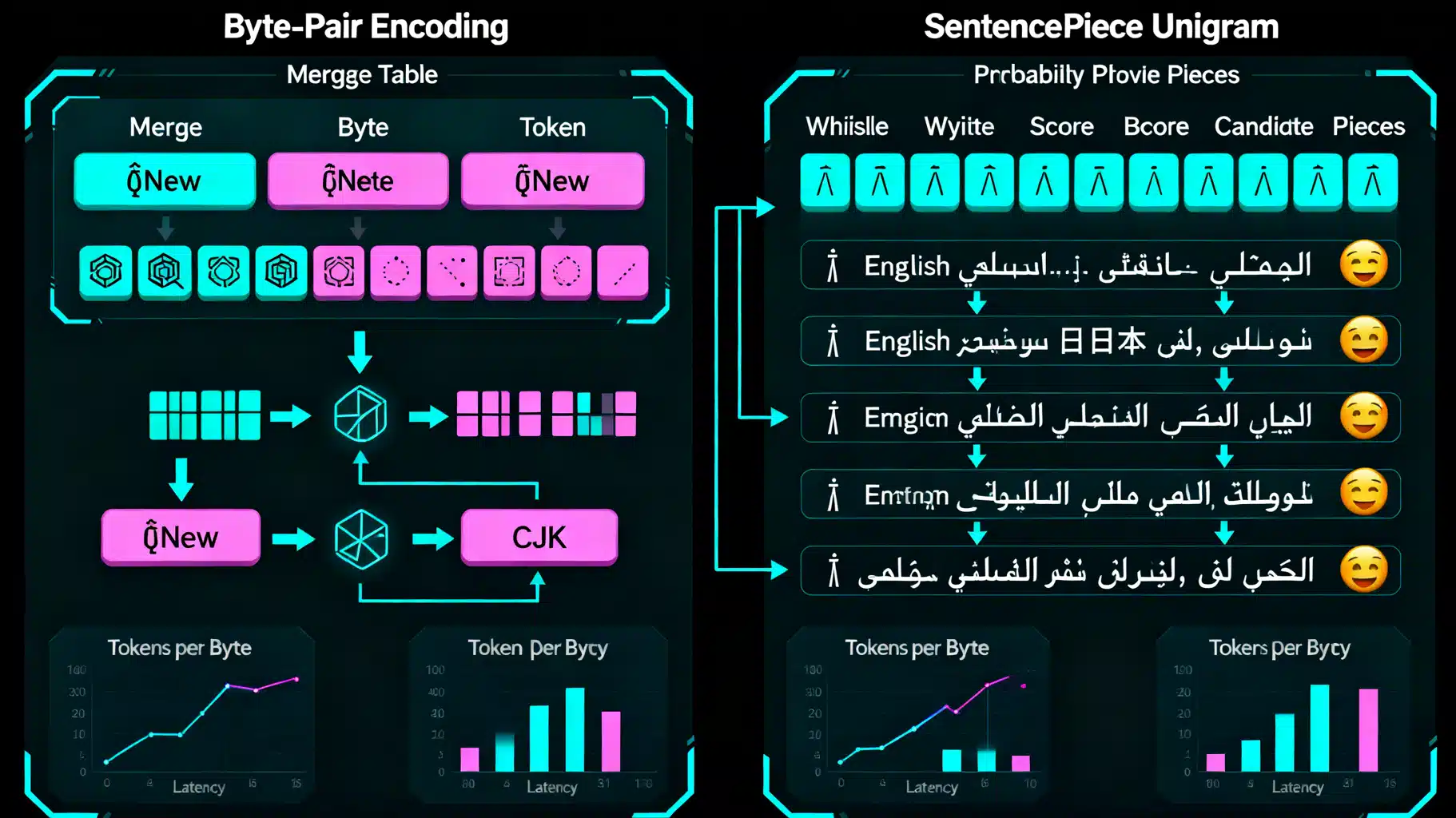
Clear comparison of BPE and SentencePiece tokenizers for LLMs: algorithms, Unicode handling, training, benchmarks, and guidance to choose the right one.