
Webhooks vs Polling APIs: How to Choose, Design, and Operate
Webhooks vs polling APIs: compare latency, cost, scalability, reliability, security, patterns, and code examples—with a practical decision framework.
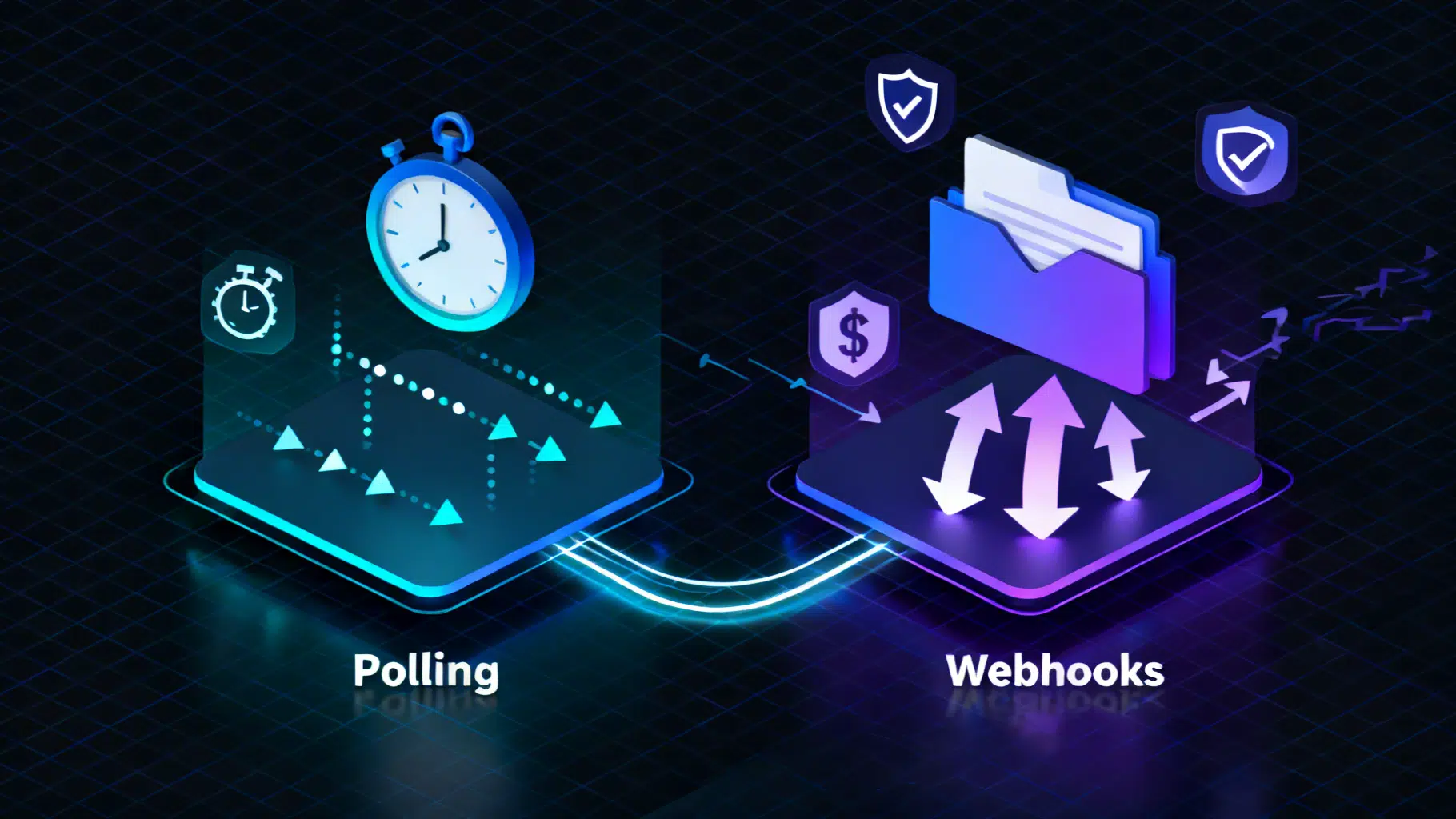
Image used for representation purposes only.
Overview
APIs have two common patterns for delivering new data or events to clients: polling and webhooks. Polling asks the server at intervals whether anything has changed. Webhooks call your endpoint the moment something does. Both can be right—depending on latency needs, scale, reliability guarantees, security posture, and operational maturity. This article compares the two in depth and offers a practical decision framework, code examples, and guidance for hybrid designs.
Quick definitions
- Polling API: The client periodically requests the server for updates (e.g., every 30 seconds). Variants include short polling, long polling, and conditional requests (ETag/If-Modified-Since).
- Webhook: The server sends HTTP requests to a client-managed URL when events occur. Often delivered at-least-once with retries.
Latency and user experience
- Webhooks: Near-real-time. The producer pushes immediately, enabling instant UI updates and faster workflows.
- Polling: Latency equals the polling interval (plus processing time). Shorter intervals decrease latency but increase cost and load.
- Long polling: Reduces unnecessary requests by holding the connection open until an event occurs, approaching push-like latency while staying client-initiated.
Practical takeaway: If users expect immediate updates (payments, chat messages, operational alarms), favor webhooks or long polling. For dashboards that tolerate delays, periodic polling is fine.
Cost and resource model
- Polling cost scales with the number of clients and the inverse of the interval. Approximate request rate:
- Requests/sec ≈ Clients × (60 / IntervalSeconds)
- Example: 50,000 clients polling every 10 seconds → 300,000 requests/min (~5,000 RPS) even when nothing changes.
- Webhooks shift costs to the producer at event time. Idle periods are cheap; bursts cost more due to fan-out and retries.
Hidden costs:
- Polling: Larger infra for read capacity, cache layers, CDN for GET endpoints, and rate-limit enforcement.
- Webhooks: Public ingress, secure validation, queuing/retry infrastructure, dead-letter handling, and consumer scaling.
Delivery guarantees and correctness
- Polling typically provides at-least-once semantics at the application level when clients use watermarks (e.g., since_id) and deduplicate. Without that, it’s at-most-once and may miss transient states.
- Webhooks are commonly at-least-once. Expect duplicates and out-of-order delivery; design idempotent handlers.
- Exactly-once is a system property, not a transport feature. Achieve it with idempotency keys, transactional writes, and deduplication stores.
Design tips:
- Include a stable event ID and creation timestamp.
- Make handlers idempotent (upserts, conditional updates, idempotency keys).
- Consider ordering requirements. If strict ordering is critical, poll in sequence or use queues/streams with partition keys.
Scalability and backpressure
- Polling: Server controls concurrency with standard web scaling patterns and caching. Clients can back off during incidents.
- Webhooks: Producer must fan out to many consumers and handle slow or failing receivers. Use queues, concurrency limits, exponential backoff, and DLQs (dead-letter queues).
Backpressure strategies:
- Polling: Increase interval dynamically, rely on cacheable 304 Not Modified responses with ETags.
- Webhooks: Limit concurrent deliveries per tenant, drop to a queue on spikes, and reschedule with jittered retries.
Security considerations
Webhook-specific:
- Verify signatures (HMAC over the raw body) with timing-safe comparison.
- Require HTTPS, rotate secrets, and validate source IPs or use mTLS.
- Include replay protection (timestamps, nonces, expiring signatures).
- Respond quickly (2xx) and process asynchronously to avoid leaking stack traces during failures.
Polling-specific:
- Inbound firewall remains closed; simpler perimeter.
- Use OAuth scopes, token rotation, ETags/If-None-Match for efficient cache validation.
- Respect server rate limits and backoff on 429/5xx.
Operational complexity and observability
- Polling is simpler to get started (cron or background job). Troubleshooting is localized to the client.
- Webhooks require operating a public endpoint, validating signatures, retry logic, and handling bursts. Troubleshooting spans two systems.
Key metrics to watch:
- Polling: request rate, hit ratio (304 vs 200), median/95th latency, server cache efficiency, client backoff behavior.
- Webhooks: delivery latency, success rate, retry counts, DLQ volume, signature verification failures, consumer processing time.
Alternatives and adjacent patterns
- Long polling: Client opens a request the server fulfills when an event exists—lower chatter, similar to push.
- Server-Sent Events (SSE): Unidirectional push over HTTP; good for live feeds and simpler than WebSockets.
- WebSockets: Full-duplex, minimal latency; best for interactive apps. Requires connection management and scaling stateful gateways.
- Event streams/queues (e.g., Kafka, NATS, SQS): Durable delivery and replay; often paired with webhooks or polling gateways.
Decision framework
Choose webhooks if:
- You need sub-second to a few-second latency.
- Providers support signed events and retries.
- You can expose secure ingress with reliable processing and storage.
Choose polling if:
- You can tolerate latency matching your interval.
- Provider lacks webhooks or you cannot expose inbound endpoints (e.g., strict firewalls, air-gapped environments).
- You want full control over request timing, load, and failure modes.
Prefer long polling/SSE/WebSockets if:
- You need continuous streams or interactive updates and can maintain connections.
Hybrid approach (often best):
- Use webhooks for event triggers; fall back to polling for reconciliation and gap filling.
- Periodic full-sync jobs verify state correctness (e.g., hourly), regardless of webhook health.
Webhook example: Node.js (Express) with HMAC verification
// package.json deps: express
// Ensure you use express.raw so the body is unchanged for signature verification
const express = require('express');
const crypto = require('crypto');

const app = express();
const WEBHOOK_SECRET = process.env.WEBHOOK_SECRET;

app.post('/webhooks/provider', express.raw({ type: 'application/json' }), (req, res) => {
  const signature = req.header('X-Signature'); // e.g., 'sha256=abc123...'
  if (!signature || !verifySignature(req.body, signature, WEBHOOK_SECRET)) {
    return res.status(401).send('invalid signature');
  }

  // Parse after verification
  const event = JSON.parse(req.body.toString('utf8'));

  // Idempotent processing using a stable event.id
  // - check if event.id was processed; if not, apply changes and record it
  // - enqueue for async processing to keep this handler fast

  res.status(200).send('ok');
});

function verifySignature(rawBody, signatureHeader, secret) {
  const hmac = crypto.createHmac('sha256', secret).update(rawBody).digest('hex');
  const expected = `sha256=${hmac}`;
  const a = Buffer.from(signatureHeader, 'utf8');
  const b = Buffer.from(expected, 'utf8');
  return a.length === b.length && crypto.timingSafeEqual(a, b);
}

app.listen(3000, () => console.log('listening on :3000'));
Implementation notes:
- Use a message queue between the webhook endpoint and business logic to absorb bursts.
- Return 2xx quickly; do not perform long-running work inline.
- Store and check event IDs to prevent duplicate effects.
- Validate timestamps/nonces to prevent replay.
Polling example: Python with ETag and adaptive backoff
import time
import requests

API = "https://api.example.com/v1/items"
TOKEN = "<oauth-access-token>"
interval = 10  # seconds; adapt based on results
etag = None

while True:
    headers = {"Authorization": f"Bearer {TOKEN}"}
    if etag:
        headers["If-None-Match"] = etag

    try:
        r = requests.get(API, headers=headers, timeout=15)
        if r.status_code == 304:
            # No change; back off slightly
            interval = min(60, interval + 5)
        elif r.ok:
            # Process new data incrementally using a watermark (e.g., since_id)
            data = r.json()
            # ... handle items, dedupe, persist cursor ...
            etag = r.headers.get('ETag', etag)
            interval = 10  # reset on change
        elif r.status_code in (429, 500, 502, 503, 504):
            # Respect Retry-After if present; otherwise exponential backoff
            ra = int(r.headers.get('Retry-After', '0'))
            interval = max(interval * 2, ra or 30)
        else:
            # Unexpected errors: log and back off
            interval = max(interval * 2, 30)
    except requests.exceptions.RequestException:
        # Network error: exponential backoff with jitter
        interval = min(max(interval * 2, 30), 300)

    time.sleep(interval)
Implementation notes:
- Use cursors or since_id to fetch only changes.
- Respect ETag/If-None-Match to avoid transferring unchanged payloads.
- Honor Retry-After and 429 rate limits; apply jitter to avoid thundering herds.
Testing and local development
- Polling: Easy to test locally—your app calls out to a test API or a local mock.
- Webhooks: Use tunneling tools (e.g., ngrok, cloud tunnels) to expose localhost; replay events from the provider’s portal or saved payloads.
- Record-real, replay-fake: Save raw request bodies and headers to unit-test signature verification and idempotent handlers.
Reliability patterns you should adopt
- Idempotency: Store processed event IDs or idempotency keys with TTLs; design upserts.
- Retries with backoff and jitter: Both client polling and webhook delivery should avoid synchronized retries.
- Dead-letter queues: Persist permanently failing webhook deliveries for manual inspection.
- Periodic reconciliation: Even with webhooks, run a periodic full-state check to heal from missed or late events.
Common pitfalls
- Treating webhooks as exactly-once. Expect duplicates and out-of-order messages.
- Doing heavy work inside the webhook handler, causing timeouts and redeliveries.
- Polling too aggressively without conditional requests, causing avoidable cost.
- Ignoring security: missing signature checks, no TLS, or storing secrets in logs.
- Skipping observability: without event IDs and correlation IDs, debugging becomes guesswork.
Vendor and environment constraints
- Some SaaS APIs only offer polling or only offer webhooks. Let availability guide your choice.
- Locked-down networks may forbid inbound traffic; polling (or outbound streaming) wins.
- Mobile/IoT: Intermittent connectivity may favor polling with resumable cursors, or webhooks to a cloud relay your device pulls from.
Migration and hybrid strategies
- Start with polling for simplicity; add webhooks when latency or cost becomes unacceptable.
- Keep polling as a safety net: low-frequency reconciliation to detect gaps and drift.
- If introducing webhooks into a poll-based system, ensure event payloads contain IDs/cursors that match your existing models, simplifying dedupe.
A short decision checklist
- Latency target? (sub-second, seconds, minutes)
- Can you operate a secure public endpoint? (TLS, firewall, secrets)
- Expected traffic shape? (bursty vs steady)
- Delivery guarantees required? (at-least-once with idempotency okay?)
- Ordering requirements? (per-entity ordering → consider queues/partitions)
- Failure handling? (retries, DLQ, reconciliation plan)
- Provider features? (webhooks with signatures and retries? ETags for polling?)
Conclusion
Webhooks shine for real-time event delivery when you can securely handle inbound traffic and design for at-least-once semantics. Polling excels when environments restrict inbound connectivity, when you need strict control over load, or when provider capabilities are limited. Many robust systems blend both: webhooks for immediacy and polling for reconciliation. Choose intentionally with latency, scale, security, and operational maturity in mind, and implement idempotency, retries, and observability from day one.
Related Posts
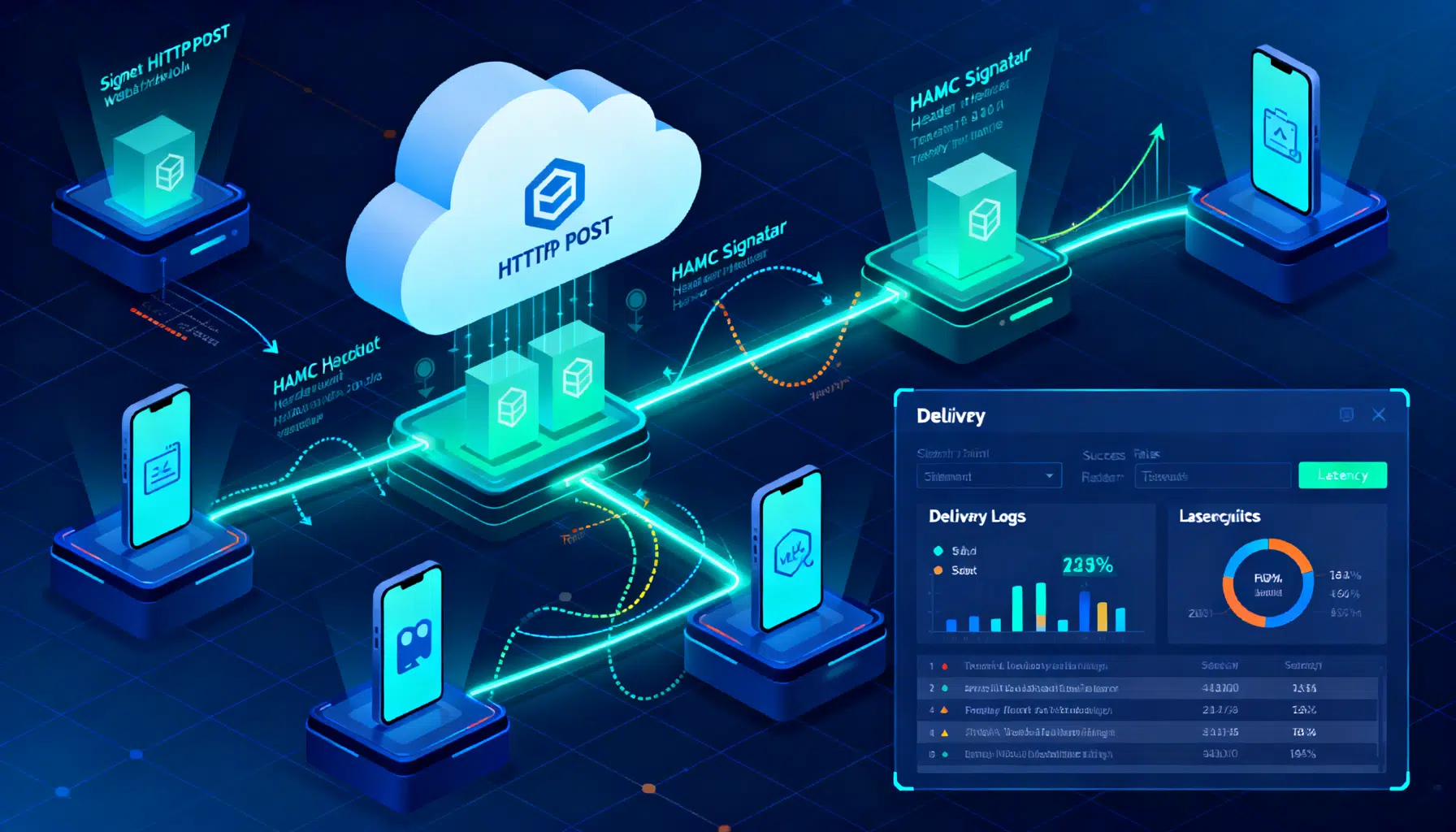
Implementing a Robust Webhook API: A Practical Guide
Design, secure, and operate reliable webhook APIs with signatures, retries, idempotency, observability, and great developer experience.

Designing a Robust AI Text Summarization API: Architecture to Production
How to build and use an AI text summarization API: models, request design, chunking, evaluation, security, and production best practices.
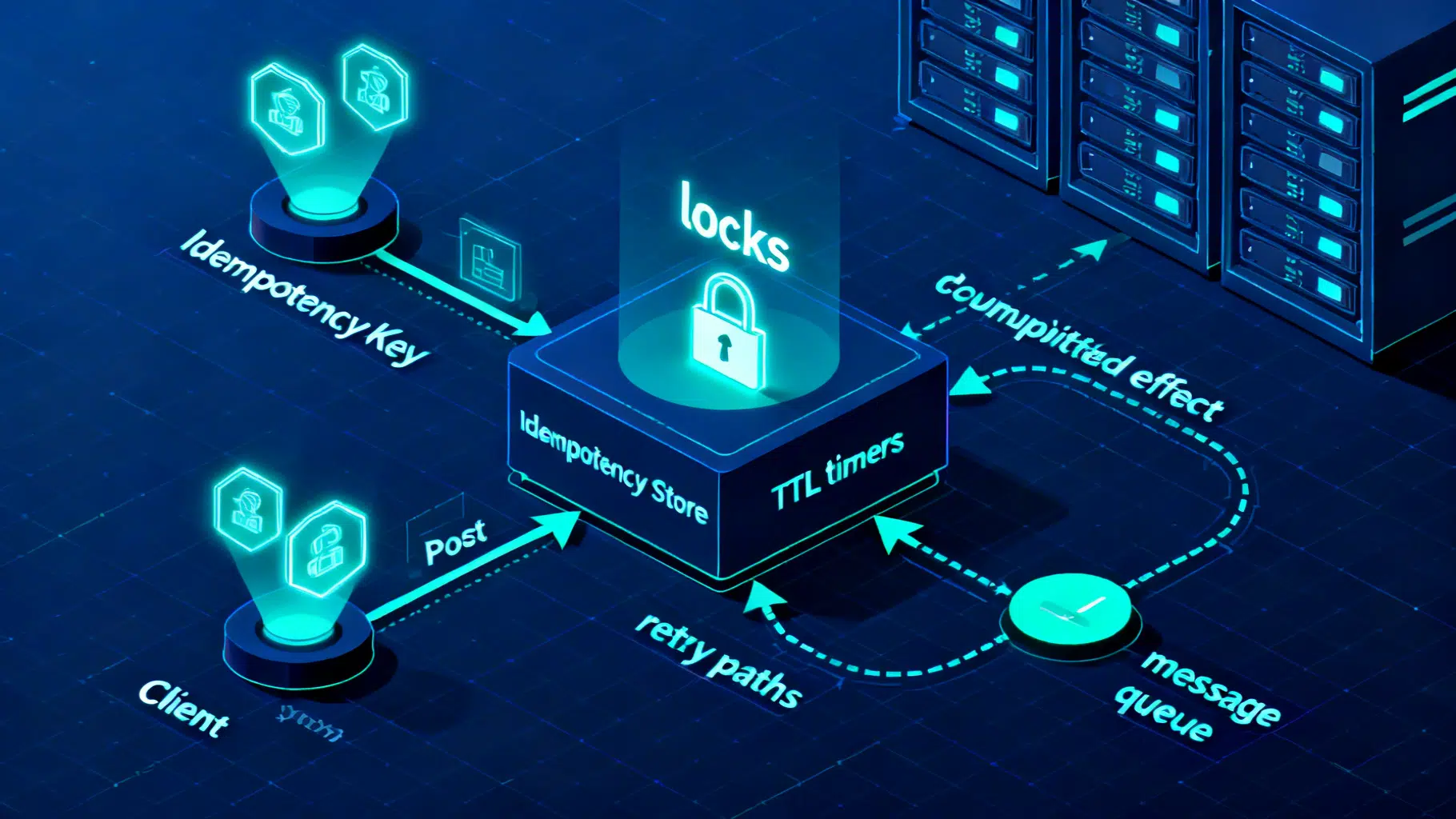
Designing Idempotent APIs: A Practical Guide
A practical guide to API idempotency: keys, retries, storage design, error handling, and patterns for exactly-once effects in distributed systems.