
API Documentation Auto‑Generation Tools: A Practical Guide
Practical guide to auto‑generating API docs: tools, workflows, examples, CI/CD, and best practices for OpenAPI, GraphQL, and gRPC.
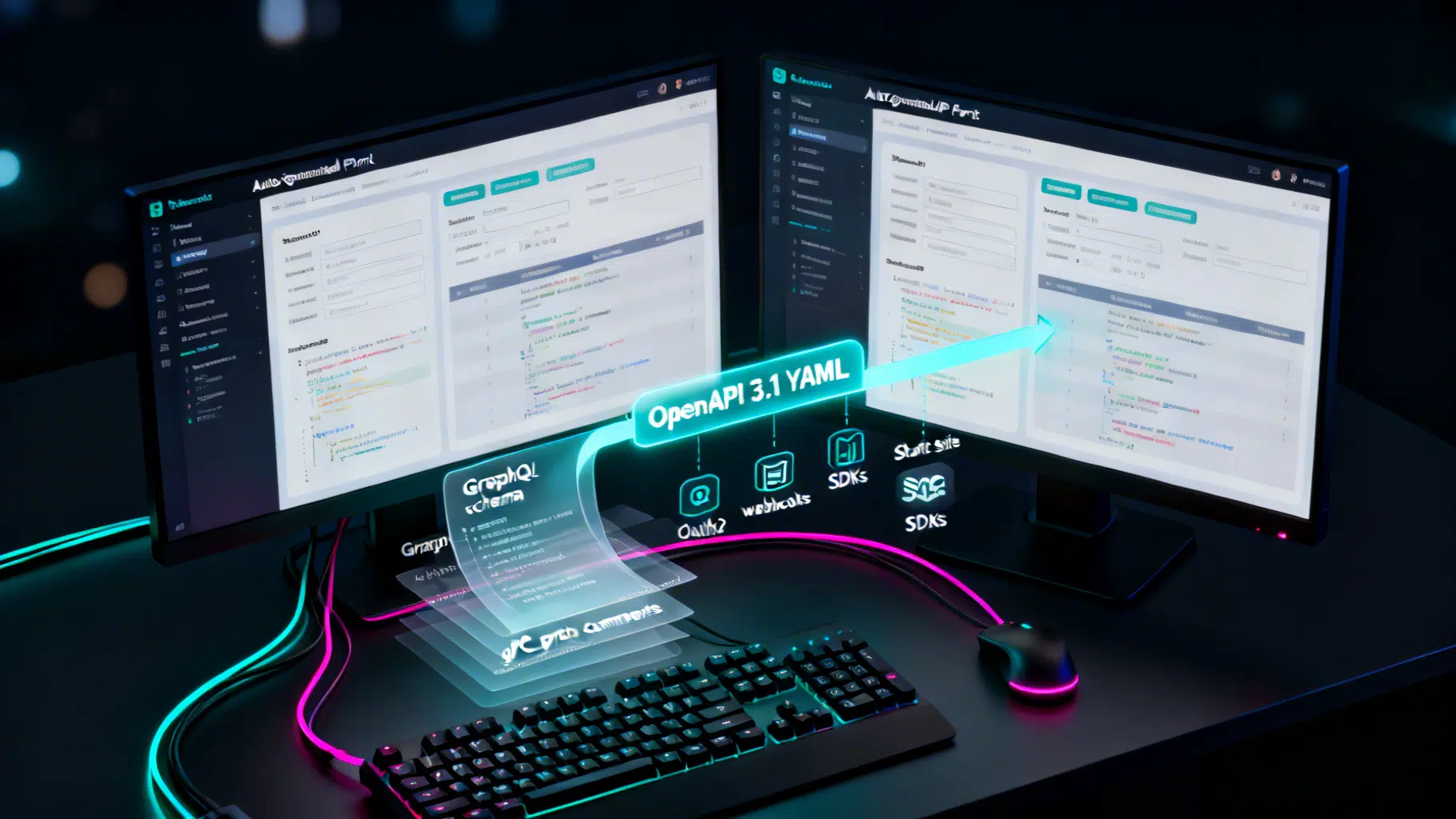
Image used for representation purposes only.
Why auto‑generated API docs matter
Clear, accurate API documentation is the foundation of great developer experience (DX). Yet hand‑crafted docs rarely keep pace with evolving services. Auto‑generation tools change that by building documentation directly from authoritative sources—specifications, code annotations, or collections—so docs update as your API changes. The result is faster onboarding, fewer support tickets, and a healthier feedback loop between product, platform, and consumers.
This guide maps the landscape of API documentation auto‑generation tools, how they work, when to use each, and the practices that keep docs trustworthy at scale.
Three generation models
- Spec‑first (contract‑first): You write or design an API description (e.g., OpenAPI, AsyncAPI) and generate docs from it. Benefits: governance, reviewable contracts, multi‑tool interoperability (mocking, testing, SDKs). Best when teams coordinate across domains.
- Code‑first (annotation‑driven): Frameworks infer a spec from route annotations, types, or decorators, then render docs. Benefits: fast and close to source. Best when teams move quickly and own the service end‑to‑end.
- Examples/traffic‑first: Collections or captured traffic (e.g., Postman, Insomnia) drive docs rich with concrete examples. Benefits: quick wins and realistic payloads. Best for teams modernizing legacy APIs or publishing partner‑centric workflows.
Core specifications you’ll work with
- OpenAPI 3.1 + JSON Schema: The de‑facto standard for describing REST/HTTP APIs. Powers rendering, mocking, validation, and SDK generation.
- AsyncAPI: For event‑driven architectures (Kafka, MQTT, AMQP). Generates channel‑oriented docs and client templates.
- GraphQL SDL: Introspect schemas to generate reference docs and interactive explorers.
- gRPC/Protocol Buffers: Generate docs from .proto comments using protoc plugins; often paired with REST gateways for broader reach.
- Postman/Insomnia Collections: Scenario‑oriented docs and run‑ready examples with variables and environments.
The tool landscape (by need)
Renderers and portals for OpenAPI/REST
- Swagger UI: Interactive “Try It” console from an OpenAPI spec; easy to host.
- ReDoc and Redocly: Clean, scalable reference docs; Redocly adds linting, bundling, portals, and governance.
- Stoplight Elements: Web components that render reference docs from OpenAPI with a polished UI.
- Docusaurus + OpenAPI plugin (or MDX + Elements/ReDoc): Blend guides and reference in one static site.
- Slate + Widdershins: Convert OpenAPI to Markdown and publish beautiful, static three‑pane docs.
- OpenAPI Generator: Not a renderer per se, but generates samples and SDKs that embed into docs.
Code‑first generators (by ecosystem)
- Java/Kotlin: springdoc-openapi (Spring), Micronaut OpenAPI.
- .NET: Swashbuckle (OpenAPI/Swagger), NSwag.
- Python: FastAPI (automatic OpenAPI + Swagger UI/ReDoc), Django REST Framework with drf‑spectacular or drf‑yasg.
- Node.js/TypeScript: NestJS Swagger, express-openapi or swagger‑jsdoc + swagger‑ui‑express, tsoa.
- Go: swaggo/swag (annotations to OpenAPI), goa, go‑openapi.
- PHP: zircote/swagger‑php, NelmioApiDocBundle (Symfony).
- Ruby: rswag.
- Rust: utoipa (OpenAPI from Rust types).
GraphQL documentation
- GraphiQL / GraphQL Playground: Interactive schema exploration and query execution.
- SpectaQL (static): Generate static docs from a GraphQL endpoint or SDL.
- Apollo Studio (hosted): Schema registry, explorer, and docs with changelog and checks.
gRPC/Protobuf documentation
- protoc‑gen‑doc: Generate Markdown/HTML from .proto comments.
- Buf: Lint, breaking‑change detection, and generation workflows; use with doc plugins.
- grpc‑gateway + OpenAPI: Surface REST docs for gRPC services through a generated gateway.
Collections‑driven docs and testing
- Postman: Publish live, example‑rich docs from collections; share environments and code snippets.
- Insomnia: Collections and environments with docs and testing; exportable for static sites.
Linting, governance, and quality
- Spectral: Lint OpenAPI/AsyncAPI with custom rulesets.
- Redocly CLI: Bundle, split, and validate OpenAPI; enforce style and governance.
Site frameworks and search
- MkDocs + mkdocstrings or Material for MkDocs: Great for mixed narrative + reference docs; can embed Elements/ReDoc.
- GitBook, ReadMe.com, Stoplight Platform, SwaggerHub: Hosted portals with versioning, roles, and collaboration.
- Search: Algolia DocSearch or Lunr.js for static sites.
Evaluation checklist
Use this checklist to select tools and design your pipeline:
- Source of truth: Does documentation derive from a single, reviewable artifact (spec, code annotations, schema)?
- Fidelity: Are request/response bodies, examples, auth flows, and error models rendered accurately?
- Interactivity: “Try It” console, OAuth2 flows, API keys, and environment variables for sandboxing.
- Examples: Language‑specific code snippets and realistic payloads; auto‑generated and hand‑picked.
- Versioning and lifecycle: Multiple API versions, deprecation banners, changelog integration.
- Publishing: Static hosting vs. SaaS portal; CI/CD integration; preview environments for pull requests.
- Search and navigation: Full‑text search, deep linking, and copyable anchors.
- Accessibility and performance: Keyboard navigation, color contrast, semantic headings; fast first contentful paint.
- Governance: Linting, style guides, and review gates; contract testing and breaking‑change checks.
- Extensibility: Theming, plugins, MDX/Markdown blending, custom widgets.
Minimal examples you can copy
1) A tiny, valid OpenAPI 3.1 spec
openapi: 3.1.0
info:
  title: Widgets API
  version: 1.0.0
servers:
  - url: https://api.example.com
paths:
  /widgets:
    get:
      summary: List widgets
      operationId: listWidgets
      responses:
        '200':
          description: OK
          content:
            application/json:
              schema:
                type: array
                items:
                  $ref: '#/components/schemas/Widget'
components:
  schemas:
    Widget:
      type: object
      required: [id, name]
      properties:
        id:
          type: string
          format: uuid
        name:
          type: string
Render this with Swagger UI, ReDoc, Stoplight Elements, or a Docusaurus plugin.
2) Code‑first with FastAPI (Python)
from fastapi import FastAPI
from pydantic import BaseModel

class Widget(BaseModel):
    id: str
    name: str

app = FastAPI(title="Widgets API")

@app.get("/widgets", response_model=list[Widget], summary="List widgets")
def list_widgets():
    return [{"id": "2f178d9e-1b43-4a7f-b3e0-26a0", "name": "Alpha"}]

# FastAPI serves interactive docs at /docs (Swagger UI) and /redoc automatically.
3) Node + Express + swagger‑jsdoc + Swagger UI
const express = require('express');
const swaggerUi = require('swagger-ui-express');
const swaggerJsdoc = require('swagger-jsdoc');

const app = express();

const spec = swaggerJsdoc({
  definition: { openapi: '3.0.3', info: { title: 'Widgets API', version: '1.0.0' } },
  apis: ['./routes/*.js'] // JSDoc @swagger comments live here
});

app.use('/docs', swaggerUi.serve, swaggerUi.setup(spec));

app.listen(3000, () => console.log('Docs: http://localhost:3000/docs'));
4) CI/CD: build and publish static docs from OpenAPI with Redocly
name: Build API docs
on:
  push:
    branches: [main]
jobs:
  build:
    runs-on: ubuntu-latest
    steps:
      - uses: actions/checkout@v4
      - uses: actions/setup-node@v4
        with:
          node-version: 20
      - run: npm -g i @redocly/cli
      - run: redocly build-docs openapi.yaml -o site/index.html
      - uses: actions/upload-pages-artifact@v1
        with:
          path: site
  deploy:
    needs: build
    permissions:
      pages: write
      id-token: write
    runs-on: ubuntu-latest
    steps:
      - uses: actions/deploy-pages@v2
Reference workflows that scale
Spec‑first, Git‑native
- Author in OpenAPI 3.1 using VS Code and an OpenAPI extension.
- Lint every PR with Spectral and Redocly CLI; block merges on style rule violations and breaking changes.
- Preview docs per PR (Netlify/Vercel/GitHub Pages preview) to enable UX review.
- On merge to main, bundle the spec, run contract tests, generate SDKs, and publish static docs.
- Announce changes via a changelog and semantic versioning; gate production releases behind consumer approvals where needed.
Code‑first with decorators
- Annotate routes/types (e.g., NestJS Swagger, springdoc‑openapi, Swashbuckle).
- Emit OpenAPI on build; validate with Spectral to ensure consistent naming, examples, and error shapes.
- Render with Swagger UI/ReDoc; publish via CI.
- Periodically reconcile generated spec back to design guidelines to avoid drift.
GraphQL schema‑driven
- Introspect the schema and produce static docs with SpectaQL (or host GraphiQL behind auth).
- Surface field‑level descriptions, deprecations, and example queries/mutations.
- Pair with persisted queries or Explorer‑based tutorials for quick starts.
gRPC with REST surface
- Document protobuf comments and generate Markdown/HTML using protoc‑gen‑doc.
- If exposing HTTP, run grpc‑gateway to emit OpenAPI; render alongside protobuf docs for parity.
Pitfalls to avoid
- Divergent sources: If code annotations, specs, and collections disagree, developers lose trust. Pick one source of truth and generate the others.
- Shallow examples: Auto‑generated schemas without realistic bodies are not helpful. Curate examples, especially error payloads and edge cases.
- Missing auth context: Docs must show how to obtain tokens, scopes, and tenant IDs; wire “Try It” to a sandbox.
- No version strategy: Breaking changes without versioned docs and deprecation timelines erode confidence.
- Poor navigation and search: Long pages with no anchors or inadequate search send readers elsewhere.
- Accessibility debt: Many renderers support a11y; ensure headings, contrasts, and keyboard flows are correct.
Best practices for high‑trust docs
- Treat contracts as code: Keep specs and schema in the repo; review via pull requests with linters and previews.
- Document the unhappy path: Error catalogs, rate limits, retries, idempotency, timeouts, pagination, and webhooks.
- Provide copy‑pasteable snippets: Use generators to emit multi‑language examples; verify they actually run.
- Keep examples real: Derive from test fixtures or golden files; update automatically when fixtures change.
- Automate change visibility: Changelogs, deprecation warnings, and migration guides tied to versions.
- Integrate testing: Contract tests ensure docs match reality; smoke tests validate “Try It” flows.
- Publish fast: Static builds for speed; CD for freshness; cache‑busting to avoid stale assets.
Quick picks by scenario
- Need polished static reference from OpenAPI fast: ReDoc or Stoplight Elements.
- Want an all‑in‑one hosted portal with governance: Redocly, Stoplight Platform, ReadMe.com, SwaggerHub.
- Code‑first in Python: FastAPI (built‑in) or DRF + drf‑spectacular.
- Code‑first in Node/TS: NestJS Swagger or swagger‑jsdoc + swagger‑ui‑express.
- Enterprise Spring: springdoc‑openapi with OAuth2 flows; publish via ReDoc.
- REST + SDKs: OpenAPI Generator for clients plus ReDoc for docs.
- GraphQL: SpectaQL for static docs; Apollo Studio for hosted workflow.
- gRPC: protoc‑gen‑doc for proto reference; grpc‑gateway + ReDoc for HTTP.
- Collections‑driven partner docs: Postman public workspace with examples and monitors.
Closing thoughts
Auto‑generating API documentation is not about removing writers; it’s about moving labor to where truth already lives—contracts, code, and verified examples—so humans can invest time in guides, tutorials, and conceptual clarity. Start with a single source of truth, wire it into CI/CD, and let renderers and portals do the heavy lifting. With the right pipeline, your docs will stay accurate, discoverable, and delightful—even as your APIs evolve.
Related Posts
The API Versioning Playbook: Best Practices, Patterns, and Pitfalls
A practical playbook for API versioning: strategies, SemVer, backward compatibility, deprecation, testing, and rollout patterns for stable, evolving APIs.
API Backward Compatibility Strategies: Designing Change Without Breaking Clients
Practical strategies to keep APIs backward compatible—versioning, additive changes, deprecation, rollout, and testing for REST, GraphQL, and gRPC.

API‑First Development: An End‑to‑End Workflow Guide
A practical, end-to-end API-first workflow: design, mock, test, secure, observe, and release with contracts as the single source of truth.