
Integrating an AI Writing Assistant via API: Architecture, Code, and Best Practices
A practical guide to integrating an AI writing assistant via API—architecture, prompt design, code samples, safety, evaluation, and performance optimization.
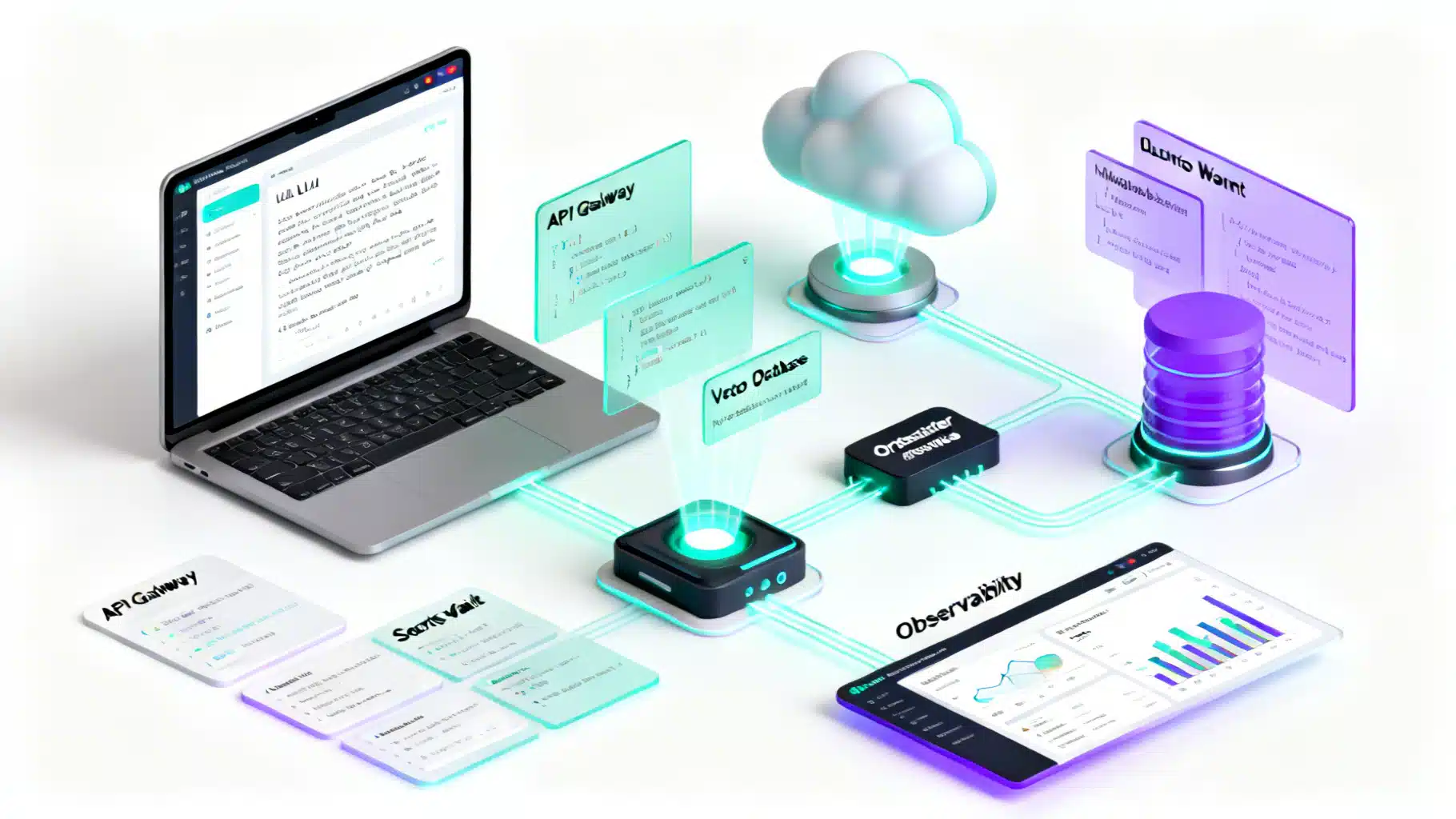
Image used for representation purposes only.
Why integrate an AI writing assistant via API
AI writing assistants can draft, edit, and structure text at scale. By integrating them via API, you bring those capabilities into your product: content ideation in CMSs, auto-replies in support tools, language polishing in document editors, and programmatic copy generation in marketing workflows. This article covers architecture, code, and practices to ship a reliable, safe, and cost-effective integration.
Reference architecture
A pragmatic blueprint:
[Client Apps]
   └─ Web | Mobile | CMS Plugin
        │
        ▼
[API Gateway]
   └─ AuthN/Z, rate limits, request validation
        │
        ▼
[Orchestrator Service]
   └─ Prompt templates, routing, retries, caching
        ├─► [Vector DB / Search]  (RAG context)
        ├─► [Secrets Vault]       (keys, webhooks)
        ├─► [Object Store]        (drafts, assets)
        ├─► [Queue/Worker]        (batch, long tasks)
        ├─► [Observability]       (logs, traces, metrics)
        └─► [LLM Provider API]    (completion/chat/functions)
Key principles:
- Keep provider-facing logic server-side to protect keys and apply guardrails.
- Make prompts versioned, testable, and observable like code.
- Prefer streaming for responsive UX; use workers for long jobs.
Choosing models and providers
Evaluate on:
- Capability: instruction following, long-context, multilingual, structured output.
- Controls: JSON schema output, function/tool calling, system messages, safety filters.
- Operational: latency SLOs, regional availability, uptime, rate limits, pricing.
- Compliance: data retention options, PII handling, enterprise agreements.
- Ecosystem: SDKs, webhooks, batch endpoints, streaming.
Tip: design a routing layer that can swap models (primary, fallback, on-prem) without changing callers.
Authentication and security
- Secrets: store API keys in a vault; inject at runtime via short-lived tokens. Never ship keys to clients.
- Network: restrict egress to provider domains; prefer private interconnect/VPC peering where available.
- Data: minimize payloads; redact PII before logging; encrypt drafts at rest; sign webhooks.
- Access: enforce RBAC/ABAC on endpoints; rate-limit by customer and tenant.
- Compliance: document data flows for GDPR/CCPA; honor data deletion; let users opt out of training.
Prompt and output design
Treat prompts as product surface area.
- Role and constraints: clearly state audience, tone, length, and format.
- Templates: parameterize variables (brand, product, locale). Keep defaults.
- Few-shot: include short, high-quality examples; avoid leaking secrets in examples.
- Safety: ask for citations when facts are requested; forbid claims without sources.
- Structured output: request JSON that matches a schema for reliable parsing.
- Versioning: embed x-prompt-version and x-style-profile in requests.
Example prompt template:
SYSTEM: You are a concise marketing copywriter. Follow brand glossary. Output JSON only.
USER: Create a product description for {{product_name}} targeting {{audience}} in {{locale}}.
CONSTRAINTS:
- Tone: {{tone}}
- Max words: 120
- Include 3 SEO keywords from: {{keywords}}
- Provide a 60-char headline and a 155-char meta description.
JSON schema for structured output:
{
  "$schema": "https://json-schema.org/draft/2020-12/schema",
  "title": "marketing_asset",
  "type": "object",
  "properties": {
    "headline": {"type": "string", "maxLength": 60},
    "body": {"type": "string"},
    "meta_description": {"type": "string", "maxLength": 155},
    "keywords": {"type": "array", "items": {"type": "string"}, "maxItems": 5}
  },
  "required": ["headline", "body", "meta_description", "keywords"]
}
If your provider supports schema-constrained generation, pass this schema; otherwise ask the model to “return valid JSON matching this schema” and validate post-hoc.
Integration patterns
- Request/response: synchronous tasks under ~15s. Good for short edits and suggestions.
- Streaming: token streams to UI for immediacy; show skeleton UIs and word-by-word reveal.
- Batch/async: large-scale generation via queues; notify via webhooks or polling.
- Tool calling: let the model call functions (e.g., fetch product specs) to ground facts.
Minimal API calls
cURL (synchronous):
curl -X POST https://api.your-llm.com/v1/chat/completions \
  -H "Authorization: Bearer $LLM_API_KEY" \
  -H "Content-Type: application/json" \
  -d '{
    "model": "writer-pro-1",
    "messages": [
      {"role":"system","content":"You are a precise copy editor."},
      {"role":"user","content":"Polish this: {{text}}"}
    ],
    "response_format": {
      "type": "json_schema",
      "json_schema": {"name":"edit","schema": {"type":"object","properties":{"revised":{"type":"string"}},"required":["revised"]}}
    }
  }'
Node.js (streaming with fetch):
import {TextDecoder} from 'node:util';

async function streamCompletion(payload) {
  const res = await fetch('https://api.your-llm.com/v1/chat/completions', {
    method: 'POST',
    headers: {
      'Authorization': `Bearer ${process.env.LLM_API_KEY}`,
      'Content-Type': 'application/json'
    },
    body: JSON.stringify({...payload, stream: true})
  });
  const reader = res.body.getReader();
  const decoder = new TextDecoder();
  let buffer = '';
  for (;;) {
    const {value, done} = await reader.read();
    if (done) break;
    buffer += decoder.decode(value, {stream: true});
    // If server-sent events, split on "\n\n" and handle data: lines
  }
  return buffer;
}
Python (httpx with retries and timeouts):
import httpx, json, time, random

def backoff(retry):
  return min(2 ** retry + random.random(), 30)

def call_llm(payload):
  for retry in range(5):
    try:
      with httpx.Client(timeout=20) as client:
        r = client.post(
          'https://api.your-llm.com/v1/chat/completions',
          headers={'Authorization': f'Bearer {API_KEY}'},
          json=payload
        )
        if r.status_code in (429, 503):
          time.sleep(backoff(retry)); continue
        r.raise_for_status()
        return r.json()
    except httpx.RequestError:
      time.sleep(backoff(retry))
  raise RuntimeError('LLM request failed after retries')

schema = {"type":"object","properties":{"revised":{"type":"string"}},"required":["revised"]}
resp = call_llm({
  'model': 'writer-pro-1',
  'messages': [
    {'role':'system','content':'Return JSON only.'},
    {'role':'user','content':'Summarize: ...'}
  ],
  'response_format': {'type':'json_schema','json_schema':{'name':'edit','schema':schema}}
})
Rate limits, caching, and deduplication
- Respect 429s with exponential backoff and jitter. Prefer client-side tokens for user-level limits.
- Cache idempotent results keyed by (prompt_version, input_hash, model). Add TTLs and invalidate on prompt changes.
- Deduplicate concurrent identical requests with single-flight locks.
Grounding with retrieval-augmented generation (RAG)
RAG reduces hallucinations by supplying authoritative context.
Pipeline:
- Ingest: convert PDFs/HTML to clean text; chunk (e.g., 500–1,000 tokens) with overlap.
- Embed: create embeddings per chunk; store in a vector DB with metadata (source, section, updated_at).
- Retrieve: at request time, embed the query, fetch top-k chunks, re-rank if needed.
- Construct: build a prompt with concise context and citation markers.
- Generate: ask the model to answer strictly from the context and include citations.
- Verify: run a fact check pass (heuristics or secondary model) before publishing.
Pseudocode:
def answer(query):
  qv = embed(query)
  ctx = vectordb.search(qv, top_k=6)
  prompt = f"""
  SYSTEM: Answer using only the provided context. Cite sources as [n].
  CONTEXT:\n{format_chunks(ctx)}
  USER: {query}
  """
  return llm_chat(prompt)
Personalization and brand voice
- Profiles: store per-tenant tone, banned phrases, reading level.
- Glossary: enforce terminology with examples and negative examples.
- Memory: keep session summaries server-side; pass a short recap, not entire history.
Quality and safety
- Automated checks: JSON validation, profanity/PII filters, link verification.
- Human-in-the-loop: review queues for high-risk content (legal, medical, financial claims).
- Evaluations: maintain golden prompts and expected properties (tone, structure, factuality). Run regression tests on prompt/model changes.
- A/B tests: measure CTR, dwell time, or edit distance vs. control.
Example rubric snippet:
- Factual grounding: cites provided sources; no unsupported claims.
- Clarity: plain language, active voice, ≤ 120 words when requested.
- Brand adherence: uses glossary; avoids banned phrases.
Cost, latency, and reliability
- Token budgeting: estimate tokens = prompt + context + output. Trim context with relevance thresholds.
- Streaming UI: render partials early; allow user to stop generation.
- Batching: for many small tasks, send batched requests if supported.
- Fallbacks: route on errors/timeouts to a backup model; degrade to extractive summaries if generation fails.
- Kill switch: feature flag to disable generation quickly.
Rough cost estimate formula:
(cost_per_1k_input * input_tokens/1000) + (cost_per_1k_output * output_tokens/1000)
Observability and governance
- Logging: capture prompt_id, model, version, latency, tokens, cost, user/tenant (pseudonymized).
- Tracing: propagate correlation IDs through gateway → orchestrator → provider.
- Metrics: p50/p95 latency, success/error rates, 429s, cache hit rate, cost per request, edit distance vs. human.
- Privacy: redact PII before logs; isolate prod/test data; set retention windows.
- Model registry: track which model version served each response.
Accessibility and localization
- Localization: support locale-specific prompts and date/number formats.
- Accessibility: ensure streamed text is screen-reader friendly; maintain ARIA live regions.
- RTL: verify rendering and punctuation mirroring for right-to-left languages.
Rollout checklist
- Prompts have version numbers and unit tests.
- JSON outputs validate against schemas; failures go to a safe fallback.
- Backoff, retries, timeouts, and circuit breakers are in place.
- Rate limits enforced per key, user, and tenant.
- PII redaction in logs; secrets only in vault; webhooks verified.
- RAG context capped and deduplicated; sources tracked for audit.
- Observability dashboards and alerts (latency, errors, cost anomalies).
- Feature flags, fallbacks, and a kill switch configured.
- Human review queue for sensitive categories.
Conclusion
Integrating an AI writing assistant via API is as much product engineering as it is prompt craft. Build a thin but resilient orchestration layer, standardize prompts and outputs, ground with your data, and instrument everything. With the patterns above—streaming UX, schema-constrained outputs, safe RAG, and rigorous observability—you can ship faster, control risk, and deliver high-quality writing assistance at scale.
Related Posts

Implementing Reliable Tool Calling for AI Agents: Architecture, Schemas, and Best Practices
Hands-on guide to reliable, secure tool calling for AI agents: architecture, schemas, control loops, error handling, observability, and evaluation.

AI Text Summarization API Comparison: A Practical Buyer’s Guide for 2026
A practical, vendor-agnostic guide to evaluating, implementing, and scaling AI text summarization APIs in 2026.

LLM Prompt Engineering Techniques in 2026: A Practical Playbook
A 2026 field guide to modern LLM prompt engineering: patterns, multimodal tips, structured outputs, RAG, agents, security, and evaluation.