
Contract‑First API Design with OpenAPI: A Practical Guide for Teams
A hands-on guide to contract-first API design with OpenAPI: workflow, examples, tooling, testing, security, versioning, and CI/CD governance.

Image used for representation purposes only.
Why contract‑first API design matters
APIs succeed when producers and consumers agree—early—on what the API does and how it behaves. Contract‑first design makes that agreement explicit by defining the API contract before writing application code. The contract becomes a shared, versioned artifact that drives development, documentation, testing, and governance.
What you gain:
- Clarity and alignment: product, backend, frontend, and external partners iterate on one source of truth.
- Faster feedback: mock servers and examples validate usability before implementation.
- Reduced risk: breaking changes are detected at design time instead of in production.
- Consistency at scale: style guides and linters enforce patterns across teams.
Contract‑first vs. code‑first at a glance
- Code‑first: implement endpoints, then generate an OpenAPI document from annotations or code. Quick for prototypes, but specs often trail reality and miss edge cases.
- Contract‑first: design the OpenAPI contract up front, review it, then implement against it. Slightly more front‑loaded effort, but it pays back with higher quality and easier collaboration.
Most mature API programs adopt contract‑first for public or partner APIs, and mix approaches internally when speed trumps polish.
OpenAPI 3.1 in a minute
OpenAPI describes HTTP APIs in a machine‑readable way that tools can lint, mock, test, render docs for, and even generate clients/servers from. Key building blocks:
- info: metadata like title, version, contact.
- servers: base URLs.
- paths: resources and operations (e.g., GET /orders/{id}).
- components: reusable schemas (JSON Schema), parameters, headers, examples, and securitySchemes.
- security: auth requirements globally or per operation.
- tags: organize operations for docs and ownership.
OpenAPI 3.1 aligns with JSON Schema 2020‑12, unlocking richer validation (oneOf/anyOf/allOf, if/then/else, format, pattern, etc.).
A repeatable contract‑first workflow
- Discover requirements
- Identify consumers, use cases, SLAs, and error/reporting needs.
- Draw resource models and relationships.
- Draft the contract
- Start with nouns for resources and standard HTTP verbs.
- Define request/response bodies with schemas and examples.
- Specify pagination, filtering, sorting, and error shape early.
- Review and iterate
- Run automated lint rules (style, security, naming).
- Hold design reviews: clarity, consistency, and breaking‑change analysis.
- Mock and test
- Spin up a mock server from the spec; validate flows with UI/mobile/partner teams.
- Add realistic examples; adjust for ergonomics.
- Implement to the contract
- Generate typed clients and server stubs if useful.
- Add contract tests to gate CI.
- Release and govern
- Version the contract; publish docs; communicate deprecations.
- Track compatibility and consumer adoption.
A minimal, expressive contract (OpenAPI 3.1)
openapi: 3.1.0
info:
  title: Orders API
  version: 1.0.0
servers:
  - url: https://api.example.com/v1
paths:
  /orders:
    post:
      summary: Create an order
      operationId: createOrder
      tags: [Orders]
      requestBody:
        required: true
        content:
          'application/json':
            schema:
              $ref: '#/components/schemas/NewOrder'
            examples:
              default:
                value:
                  customerId: '8c3b1a5a-1f7a-4d85-9a3c-83b2a1a86b11'
                  items:
                    - sku: 'SKU‑12345'
                      quantity: 2
      responses:
        '201':
          description: Created
          headers:
            Location:
              description: URL of the new order
              schema:
                type: string
                format: uri
          content:
            'application/json':
              schema:
                $ref: '#/components/schemas/Order'
        '400':
          description: Validation error
          content:
            'application/json':
              schema:
                $ref: '#/components/schemas/Error'
  /orders/{orderId}:
    get:
      summary: Get an order by ID
      operationId: getOrder
      tags: [Orders]
      parameters:
        - name: orderId
          in: path
          required: true
          description: Order ID (UUID)
          schema:
            type: string
            format: uuid
      responses:
        '200':
          description: OK
          content:
            'application/json':
              schema:
                $ref: '#/components/schemas/Order'
        '404':
          description: Not found
          content:
            'application/json':
              schema:
                $ref: '#/components/schemas/Error'
components:
  schemas:
    Money:
      type: object
      additionalProperties: false
      required: [currency, amount]
      properties:
        currency:
          type: string
          pattern: '^[A-Z]{3}$'
          description: ISO 4217 currency code
        amount:
          type: number
          multipleOf: 0.01
          minimum: 0
    LineItem:
      type: object
      additionalProperties: false
      required: [sku, quantity]
      properties:
        sku:
          type: string
          minLength: 1
        quantity:
          type: integer
          minimum: 1
    NewOrder:
      type: object
      additionalProperties: false
      required: [customerId, items]
      properties:
        customerId:
          type: string
          format: uuid
        items:
          type: array
          minItems: 1
          items:
            $ref: '#/components/schemas/LineItem'
    Order:
      allOf:
        - $ref: '#/components/schemas/NewOrder'
        - type: object
          required: [id, total, createdAt, status]
          properties:
            id:
              type: string
              format: uuid
            total:
              $ref: '#/components/schemas/Money'
            status:
              type: string
              enum: [processing, fulfilled, cancelled]
            createdAt:
              type: string
              format: date-time
    Error:
      type: object
      additionalProperties: false
      required: [code, message]
      properties:
        code:
          type: string
          pattern: '^[A-Z_]+$'
        message:
          type: string
        details:
          type: array
          items:
            type: object
            required: [field, issue]
            properties:
              field: { type: string }
              issue: { type: string }
  securitySchemes:
    apiKeyAuth:
      type: apiKey
      in: header
      name: X-API-Key
security:
  - apiKeyAuth: []
Highlights:
- JSON Schema constraints (pattern, format, multipleOf) tighten validation.
- additionalProperties: false prevents “free‑form” fields from silently leaking into requests.
- Response headers (Location) specify post‑creation navigation.
Examples and constraints drive quality
- Provide examples for both requests and responses. Consumers copy/paste more than they read docs.
- Prefer specific formats: uuid, date‑time, email, uri.
- Use enums carefully; every new value is a breaking change for strict clients. Consider open‑ended strings plus a registry in docs.
- Define a consistent error shape early. Include a machine‑readable code, human message, and optional details for field‑level validation.
Security baked into the contract
Specify auth and scopes where clients can see them. Example with OAuth2 and API keys:
components:
  securitySchemes:
    oauth2:
      type: oauth2
      flows:
        authorizationCode:
          authorizationUrl: https://auth.example.com/authorize
          tokenUrl: https://auth.example.com/token
          scopes:
            orders:read: Read orders
            orders:write: Create or update orders
security:
  - oauth2: [orders:read]
Tips:
- Document required headers like correlation IDs (e.g., X‑Request‑Id) and idempotency keys for POST/PUT.
- Clarify which endpoints require mTLS or special roles.
Mocking, testing, and implementation
- Mock servers: Use tools such as Prism or Postman to stand up a mock from the spec and iterate on UX quickly.
- Contract tests: Validate real services against the contract. Tools like Dredd (HTTP contract testing) or Schemathesis (property‑based testing from OpenAPI) catch drift and edge cases.
- Client/server generation: Generate typed SDKs to speed consumer adoption; treat generated server stubs as scaffolding, not the final design.
Example mock command with Prism:
npx @stoplight/prism-cli mock openapi.yaml --port 4010
Example Schemathesis run against a dev server:
pip install schemathesis
schemathesis run openapi.yaml --base-url http://localhost:8080 --checks all
CI/CD and governance
Automate quality gates so every change to the contract is intentional and reviewable.
- Linting: enforce a style guide (naming, descriptions, operationId uniqueness) using Spectral or Redocly CLI.
- Bundling: combine multi‑file specs for distribution.
- Breaking‑change detection: compare the proposed spec to the main branch using oasdiff/optic.
- Docs preview: publish Swagger UI/Redoc previews for reviewers.
Sample GitHub Actions pipeline:
name: api-contract-ci
on:
  pull_request:
    paths: [ 'openapi.yaml', 'openapi/**/*.yaml' ]
jobs:
  lint-and-diff:
    runs-on: ubuntu-latest
    steps:
      - uses: actions/checkout@v4
      - uses: actions/setup-node@v4
        with:
          node-version: 20
      - name: Install tooling
        run: |
          npm i -g @redocly/cli @stoplight/spectral-cli
          docker pull tufin/oasdiff:latest
      - name: Lint with Redocly
        run: redocly lint openapi.yaml
      - name: Lint with Spectral
        run: spectral lint openapi.yaml
      - name: Compare breaking changes vs main
        run: |
          git fetch origin main --depth=1
          git show origin/main:openapi.yaml > openapi_main.yaml || echo '' > openapi_main.yaml
          docker run --rm -v $PWD:/work -w /work tufin/oasdiff:latest breaking --fail-on-diff openapi_main.yaml openapi.yaml || exit 1
A minimal Spectral ruleset (spectral.yaml):
extends: spectral:oas
rules:
  no-empty-servers: error
  operation-summary: warn
  info-contact: off
  path-kebab-case:
    description: Paths should be kebab-case
    given: $.paths[*]~
    then:
      function: pattern
      functionOptions:
        match: '^\/[a-z0-9\-\{\}\/]*$'
Versioning and change management
Adopt a clear policy and automate enforcement.
- Semantic versioning for the contract: MAJOR.MINOR.PATCH.
- PATCH: non‑breaking docs fixes, clarifications, descriptions, examples.
- MINOR: additive, backward‑compatible changes (new endpoints, optional fields, new enum values if clients are resilient).
- MAJOR: breaking changes.
- What’s breaking?
- Removing or renaming fields, tightening validation (e.g., minLength increase), changing types or formats.
- Changing response codes or error shape, removing endpoints, changing security requirements.
- Deprecation mechanics:
- Mark with deprecated: true and document alternatives.
- Communicate timelines; use Deprecation and Sunset headers and changelogs.
- Keep old versions available for an agreed window; provide a migration guide.
Practical design tips
- Model resources, not RPCs. Prefer nouns (orders, customers) over verbs (processOrder).
- Use standard HTTP semantics:
- 201 with Location for creation; 202 for async; 204 for delete with no body; 409 for conflicts; 429 for rate limits.
- Pagination: document strategy (cursor recommended), max page size, and link headers or response fields.
- Sorting/filtering: define fields and allowed operators; avoid SQL‑like leakage.
- Idempotency: require an Idempotency‑Key header for unsafe, retryable operations.
- Consistent naming: kebab‑case in paths; camelCase in JSON payloads; singular or plural—pick one and stick with it.
Common pitfalls (and how to avoid them)
- Spec as an afterthought: writing it post‑implementation invites drift. Make PRs that change code also update the contract.
- Vague or missing examples: slows onboarding. Include realistic end‑to‑end flows.
- Over‑using enums: every value change can break clients. Prefer documented registries or feature flags.
- Leaking internals: don’t expose database keys, stack traces, or internal field names.
- No error contract: ad‑hoc errors make clients fragile. Standardize early.
- Unversioned base URLs: version in the path (/v1) or via content negotiation; be consistent.
Migrating from code‑first to contract‑first
- Capture today’s reality
- Generate an initial spec from code or traffic captures.
- Normalize schemas and paths; add missing responses and examples.
- Refine and freeze
- Apply style and security rules; fix breaking mismatches between code and spec.
- Publish a v1 contract and communicate a deprecation window for legacy quirks.
- Gate changes with CI
- Require design reviews and passing lint/breaking‑change checks before merges.
- Start consumer contract tests to detect regressions.
- Iterate
- Use additive changes for new features; batch breakage into well‑planned major releases.
Metrics that signal success
- Time‑to‑first successful call for new consumers.
- Number of breaking changes avoided by CI checks.
- Lint rule compliance rate across services.
- Support tickets related to ambiguous or missing docs.
Quick start checklist
- Create openapi.yaml and commit it as the source of truth.
- Add Spectral/Redocly lint and oasdiff breaking‑change checks to CI.
- Stand up a mock server for early consumer testing.
- Define a standard error model and idempotency policy.
- Document versioning and deprecation policy.
- Publish docs (Swagger UI/Redoc) from main on every merge.
Contract‑first design with OpenAPI aligns teams, locks in behaviors before code, and scales governance as your API portfolio grows. Start small, automate relentlessly, and let the contract lead the way.
Related Posts
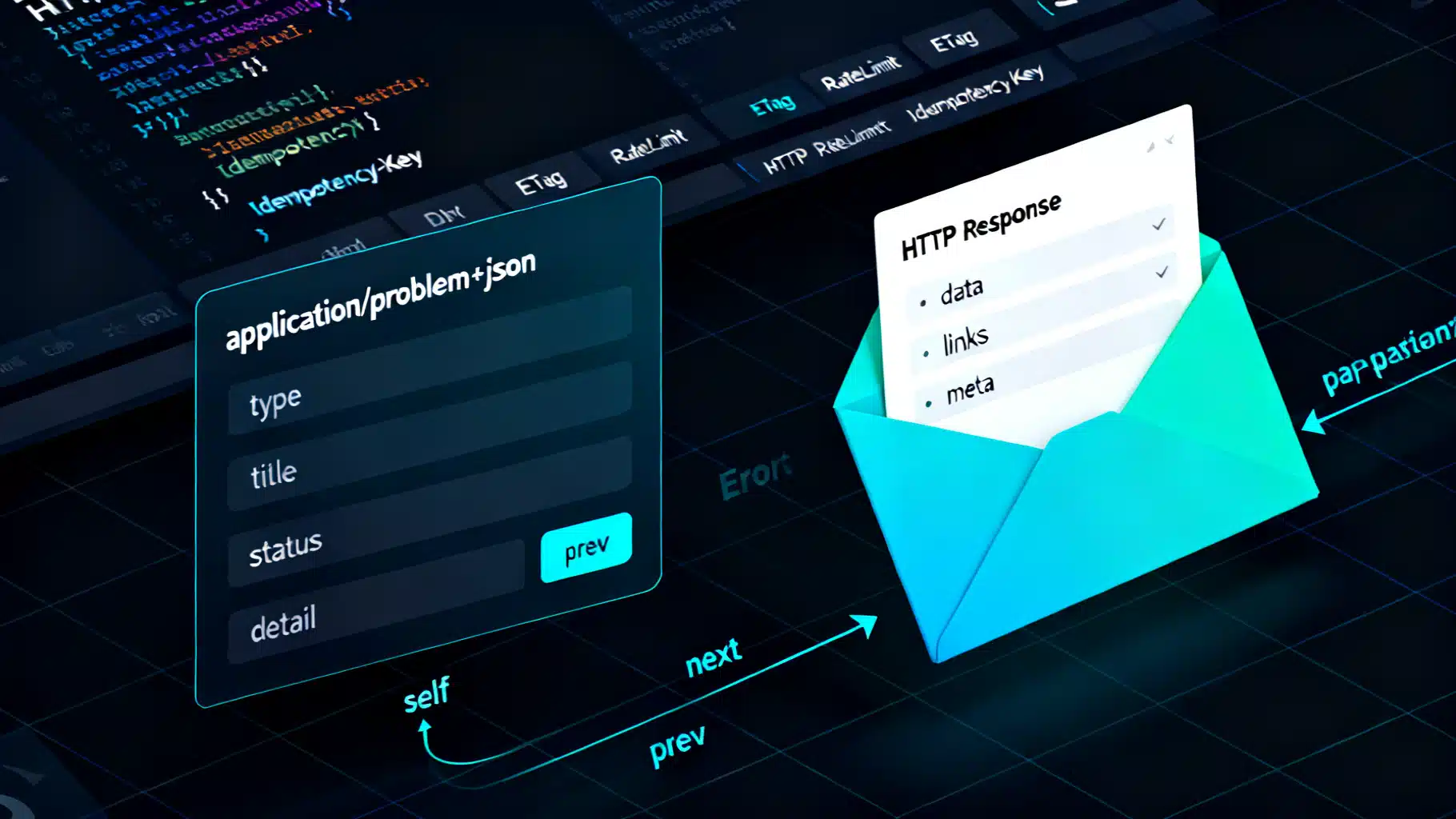
Standardizing REST API Responses: A Practical Guide with Examples
A practical guide to standardizing REST API responses—status codes, envelopes, errors, pagination, headers, and examples to build resilient, consistent APIs.
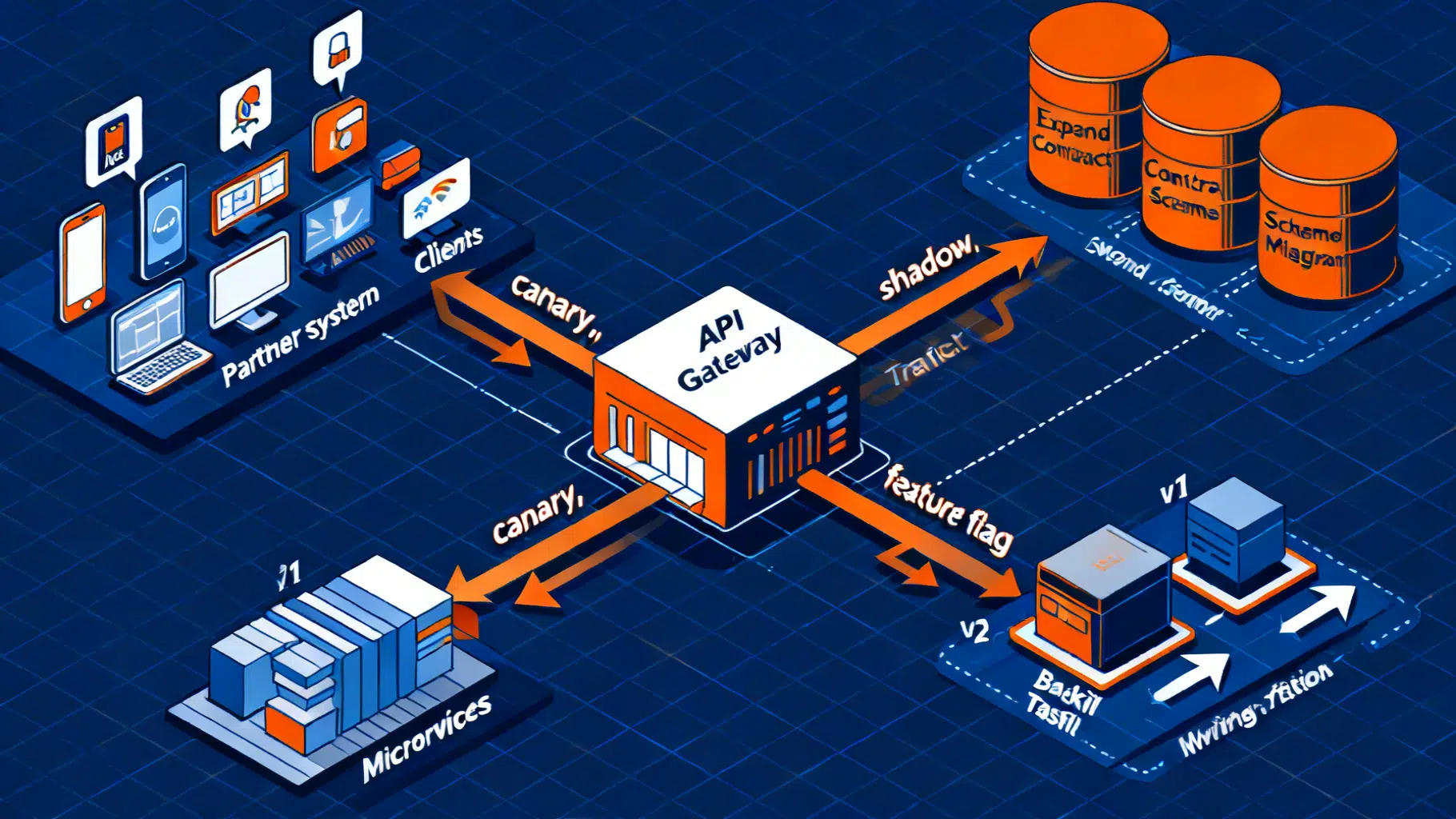
API Backward Compatibility Strategies: Designing Change Without Breaking Clients
Practical strategies to keep APIs backward compatible—versioning, additive changes, deprecation, rollout, and testing for REST, GraphQL, and gRPC.
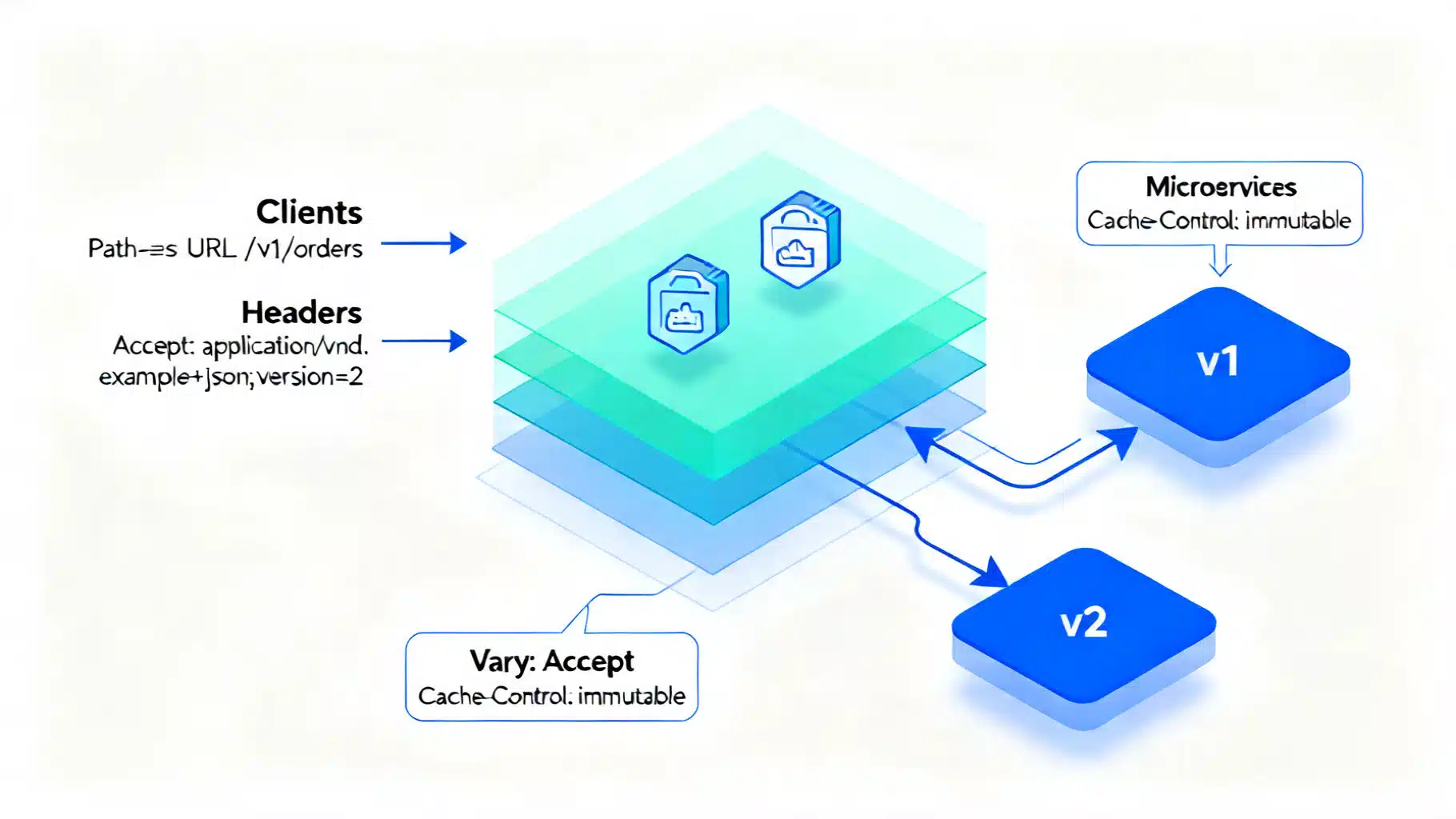
REST API Versioning: URL vs Header—How to Choose and Implement Well
A practical guide comparing REST API versioning via URL paths versus headers, with pros, cons, caching, tooling, and a clear decision framework.