
API Canary Deployment Strategy: A Practical Guide for Safe, Progressive Releases
Design and automate safe API canary deployments with traffic shaping, metrics, rollback, and real-world configs for gateways, meshes, and CI/CD.

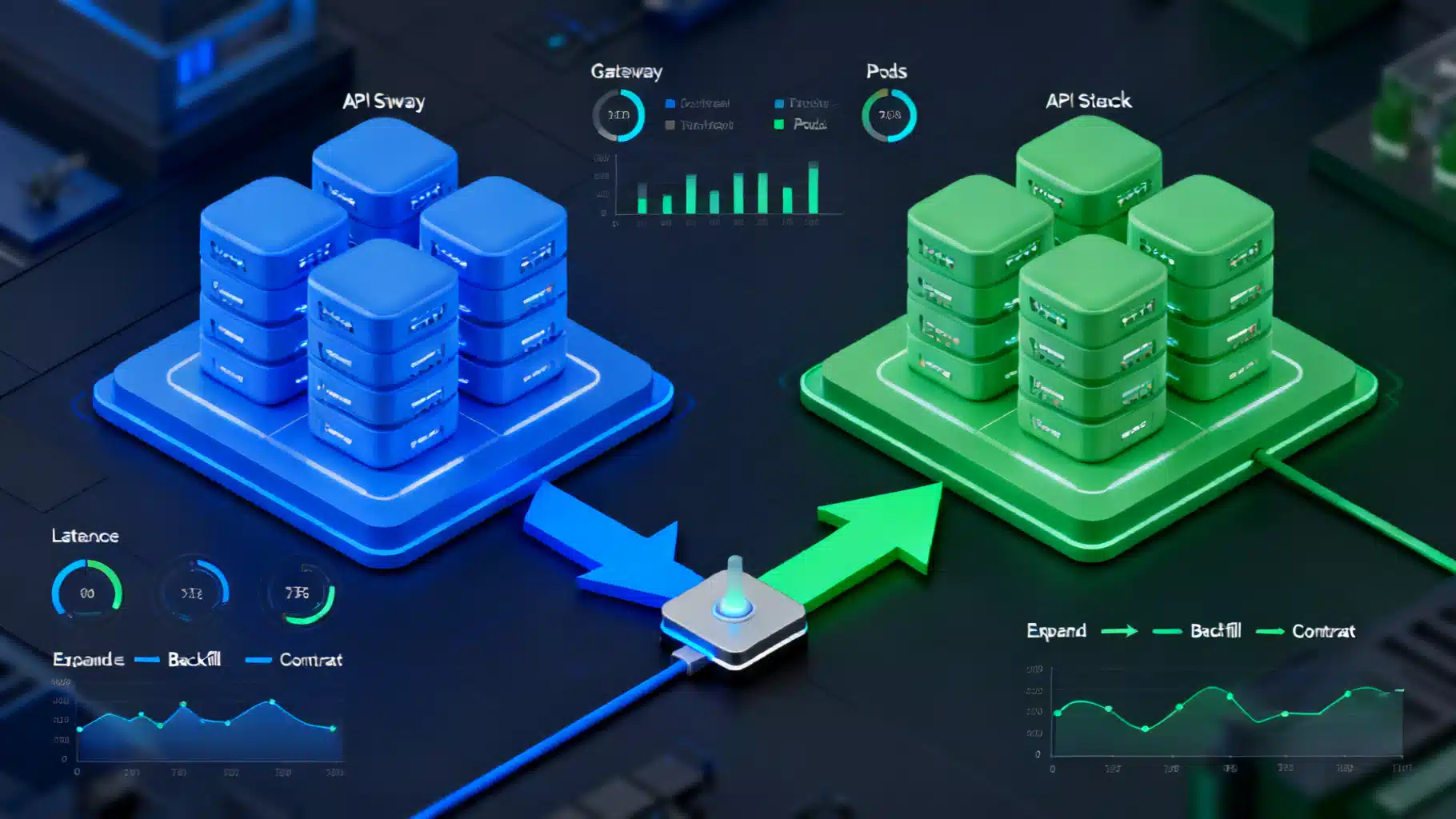
Image used for representation purposes only.
What is a canary deployment for APIs?
A canary deployment is a progressive rollout technique that sends a small, controlled portion of live traffic to a new API version (the canary) while most users continue hitting the current stable version. If the canary meets predefined success criteria, traffic is gradually increased until full adoption. If it degrades key metrics, the system automatically (or quickly) rolls back.
For APIs, canaries are especially powerful because they reduce risk when changing contracts, infrastructure, or performance characteristics that directly impact consuming services, mobile apps, and partner integrations.
Compared to related patterns:
- Blue–green: swaps all traffic at once after warm-up; fast but riskier.
- A/B testing: experiments on behavior or UX; canaries focus on safety and reliability of a new build.
- Shadowing/mirroring: duplicates live requests to the new version without impacting users; great as a pre-canary step.
Why canary your API?
- Minimize blast radius by limiting exposure to a small percentage or cohort.
- Enable data-driven rollouts guarded by SLOs and error budgets.
- Validate real traffic patterns that synthetic tests miss (payload shapes, headers, auth scopes, rate bursts).
- Provide clear rollback paths and repeatable automation within CI/CD.
Prerequisites and guardrails
Before your first canary, have these in place:
- Clear SLOs and health criteria: p95/p99 latency, non-2xx/5xx rate, saturation (CPU/memory), and dependency errors.
- Robust observability: distributed tracing (OpenTelemetry/Jaeger), metrics (Prometheus/CloudWatch/Datadog), structured logs with correlation IDs.
- Fast rollback: immutable images, versioned manifests, and feature-flag kill switches.
- Backward/forward-compatibility plan: API versioning, tolerant readers, schema evolution.
- Automated tests: unit, integration, contract tests (e.g., Pact), and smoke checks in prod.
Traffic-shifting architecture choices
You can implement canary routing in several layers. Pick one primary layer and keep the others consistent.
- API Gateway or L7 Proxy: Kong, Apigee, NGINX, Envoy, AWS API Gateway. Pros: centralized, policy-aware. Cons: may require per-route config.
- Service Mesh: Istio, Linkerd, AWS App Mesh. Pros: fine-grained, per-service policies; mTLS built in. Cons: mesh complexity.
- Load Balancer/DNS: ALB/NLB, GCLB, Route 53 weighted routing. Pros: simple. Cons: coarser control, DNS cache.
- Edge/CDN: Cloudflare/Akamai traffic steering. Pros: global reach. Cons: can complicate stickiness and auth.
Common routing strategies:
- Weighted: 1%→5%→25%→50%→100% over time windows.
- Cohort-based: internal users, beta tokens, specific accounts or regions first.
- Header-based: X-Canary: true, or special auth scopes.
- Sticky sessions where needed: hash on user/account to avoid flip-flopping between versions.
Example configs
Below are concise examples for typical stacks. Adapt to your environment and security policies.
Istio VirtualService weighted routing
apiVersion: networking.istio.io/v1beta1
kind: VirtualService
metadata:
  name: payments-api
spec:
  hosts: ["payments.internal.svc"]
  http:
  - match:
    - uri: { prefix: "/v1/" }
    route:
    - destination: { host: payments-v1, subset: stable }
      weight: 95
    - destination: { host: payments-v1, subset: canary }
      weight: 5
Argo Rollouts with automated analysis
apiVersion: argoproj.io/v1alpha1
kind: Rollout
metadata:
  name: payments-api
spec:
  strategy:
    canary:
      steps:
      - setWeight: 5
      - pause: { duration: 5m }
      - analysis:
          templates:
          - templateName: latency-error-check
      - setWeight: 25
      - pause: { duration: 10m }
      - analysis:
          templates:
          - templateName: latency-error-check
      - setWeight: 50
      - pause: { duration: 15m }
      - analysis:
          templates:
          - templateName: latency-error-check
---
apiVersion: argoproj.io/v1alpha1
kind: AnalysisTemplate
metadata:
  name: latency-error-check
spec:
  metrics:
  - name: p95-latency
    interval: 2m
    successCondition: result < 250
    failureLimit: 1
    provider:
      prometheus:
        address: http://prometheus.monitoring:9090
        query: |
          histogram_quantile(0.95, sum(rate(http_request_duration_seconds_bucket{app="payments-api",version="canary"}[5m])) by (le)) * 1000
  - name: error-rate
    interval: 2m
    successCondition: result < 0.01
    failureLimit: 1
    provider:
      prometheus:
        address: http://prometheus.monitoring:9090
        query: |
          sum(rate(http_requests_total{app="payments-api",version="canary",status=~"5.."}[5m]))
          /
          sum(rate(http_requests_total{app="payments-api",version="canary"}[5m]))
NGINX Ingress canary by header
apiVersion: networking.k8s.io/v1
kind: Ingress
metadata:
  name: payments-stable
  annotations:
    kubernetes.io/ingress.class: nginx
spec:
  rules:
  - host: api.example.com
    http:
      paths:
      - path: /v1/
        pathType: Prefix
        backend: { service: { name: payments-stable, port: { number: 80 } } }
---
apiVersion: networking.k8s.io/v1
kind: Ingress
metadata:
  name: payments-canary
  annotations:
    kubernetes.io/ingress.class: nginx
    nginx.ingress.kubernetes.io/canary: "true"
    nginx.ingress.kubernetes.io/canary-by-header: "X-Canary"
    nginx.ingress.kubernetes.io/canary-by-header-value: "true"
    nginx.ingress.kubernetes.io/canary-weight: "5"
spec:
  rules:
  - host: api.example.com
    http:
      paths:
      - path: /v1/
        pathType: Prefix
        backend: { service: { name: payments-canary, port: { number: 80 } } }
Data, state, and compatibility
APIs are rarely stateless long-term. Address these concerns early:
- Database migrations: use the expand/contract pattern.
- Expand: add nullable columns/endpoints that old and new versions can both use.
- Dual-read/write if necessary; keep writes backward-compatible.
- Contract: remove deprecated fields only after all consumers are migrated.
- Event/versioning: include schema versions in messages; ensure tolerant readers.
- Idempotency: provide idempotency keys for mutation endpoints during retries.
- Caching and CDNs: version cache keys by API version; respect Vary headers for canary headers.
- Long-lived connections and streaming: pin clients to a version via tokens or sticky routing.
Measuring success: metrics and SLOs
Define quantitative gates that promote or fail a canary automatically:
- Availability: 5xx rate, upstream error rate.
- Latency: p95/p99 for key endpoints; tail latency matters more than averages.
- Correctness: contract test pass rate; anomaly detection on payload validation.
- Saturation: CPU/memory, connection pool usage, thread/queue depth.
- Business KPIs: auth success, checkout success, or other domain metrics.
Example health policy (pseudocode):
pass = (
  p95_latency_ms < 250 and
  error_rate < 0.01 and
  saturation_cpu < 80 and
  saturation_mem < 85 and
  upstream_dependency_errors < 0.5_per_min
)
if not pass:
  rollback()
else:
  promote_to_next_weight()
Pipeline design for API canaries
A pragmatic CI/CD flow:
- Commit → build → unit tests → SAST/DAST → image signing.
- Stage deploy → integration + contract tests against consumer stubs.
- Shadow traffic in production to validate correctness with zero user impact.
- Provision canary slice and route small cohort (1–5%).
- Automated analysis gates every step; alert on deviations; pause for human approval where necessary.
- Gradual ramp-up with time windows and cohort expansion.
- Full promotion and clean-up: remove old version after soak time.
Tools that fit well: Argo Rollouts or Flagger for progressive delivery, Spinnaker’s Kayenta for automated canary analysis, LaunchDarkly/Unleash for feature flags, and OpenTelemetry for traces.
Rollback playbook
- Automated rollback on breach of guardrails for two consecutive intervals.
- Manual override button for SRE on-call.
- Kill switch feature flag for high-risk code paths.
- Post-rollback actions: freeze promotions, capture diagnostics (logs/traces/dumps), create an incident with timelines and suspected regressions.
Security and compliance during canaries
- Auth compatibility: ensure JWT claims/scopes are honored by both versions.
- Rate limiting: keep shared limits to avoid starving stable traffic; consider per-version limits.
- PII and logging: mask secrets; ensure new fields comply with retention policies.
- mTLS and policy parity: canary must have the same authN/Z and WAF rules as stable.
Multi-region, cell-based rollouts
Reduce correlated risk by rolling out per region or cell:
- Start in the smallest region or the internal-only cell.
- Promote region-by-region, verifying locality-specific behavior (latency, caches, fraud signals).
- Keep per-region kill switches for fast isolation.
Coordinating with consumers
- Versioning strategy: URI (/v1), header-based, or content negotiation. Avoid breaking changes without a new major version.
- Deprecation policy: announce timelines, changelogs, and migration guides.
- Consumer-driven contracts: validate each consumer’s expectations continuously.
Common pitfalls and how to avoid them
- Canary uses different dependencies or configs than stable. Solution: parity checks and env diff alerts.
- DNS-weighted canaries skewed by caching. Solution: prefer gateway/mesh weights or very short TTLs.
- No stickiness for stateful flows. Solution: consistent-hash routing on user/account.
- Overly tight thresholds causing flapping. Solution: use rolling windows and consecutive breach counters.
- Ignoring business metrics. Solution: include domain KPIs alongside technical SLOs.
End-to-end example timeline
- T0: Deploy canary pods; run smoke tests and warm caches.
- T0+5m: Route 1% traffic (internal cohort). Validate metrics.
- T0+20m: Route 5% (beta customers); verify billing endpoints specifically.
- T0+60m: Route 25%; run synthetic load for peak flows.
- T0+2h: Route 50%; begin region 2 at 1%.
- T0+6h: 100% in region 1; 50% in region 2; collect soak data.
- T0+24h: 100% globally; decommission old version after logs/traces confirm health.
Operational checklist
- Define SLOs and guardrails; document thresholds and windows.
- Ensure observability coverage and dashboards per version.
- Implement routing at one authoritative layer with stickiness if needed.
- Prepare database migrations via expand/contract; test fallback.
- Automate analysis and rollback; test the rollback drill.
- Communicate changes and versioning; keep a deprecation calendar.
Key takeaways
A well-executed API canary deployment aligns engineering velocity with reliability. By combining precise traffic shaping, contract-aware compatibility, rigorous automated analysis, and disciplined rollback plans, you can ship changes continuously with confidence—protecting users and partners while learning from real production signals.
Related Posts
Blue‑Green Deployment for APIs: Strategies, Playbooks, and Pitfalls
A practical guide to blue‑green deployment for APIs: traffic switching, database changes, observability, rollback, and Kubernetes/gateway examples.

API SDK Client Library Generation: A Practical Guide to Fast, Idiomatic, Multi‑Language Clients
How to generate maintainable, idiomatic API SDKs from OpenAPI, gRPC, and GraphQL—patterns, tooling, CI, versioning, and release automation.

API‑First Development: An End‑to‑End Workflow Guide
A practical, end-to-end API-first workflow: design, mock, test, secure, observe, and release with contracts as the single source of truth.