
API Dependency Management in Microservices: Contracts, Resilience, and Governance
A practical guide to API dependency management in microservices: contracts, versioning, resilience, testing, observability, and governance.

Image used for representation purposes only.
Why API Dependency Management Matters in Microservices
Microservices promise independent deployability, but APIs connect those services into a living system. Every call across a network is a dependency that can fail, stall, or change unexpectedly. Without deliberate dependency management, teams slip into slow releases, cascading outages, and brittle integration work. This article distills practical patterns, anti‑patterns, and tooling to keep API dependencies reliable as your architecture scales.
Map Your Dependencies Early and Continuously
Start with an explicit inventory:
- Service catalog: name, owner, runtime, SLA/SLO, data domains, on‑call rotation.
- API catalog: version, protocol (REST, gRPC, GraphQL, events), authentication, rate limits.
- Dependent graph: inbound/outbound edges, critical paths, and fan‑out breadth.
- Data contracts: schemas (OpenAPI, AsyncAPI, Protobuf/Avro), example payloads, and compatibility rules.
Automate the map:
- Generate edges from CI by parsing manifests, OpenAPI/AsyncAPI, and infra code.
- Add runtime edges from distributed tracing (e.g., span parent/child) and API gateway logs.
- Tag edges with reliability metadata: p95 latency, error rate, retry count, and timeouts.
A living dependency graph becomes the backbone for impact analysis, change reviews, and incident response.
Choose Interaction Styles Deliberately
Different coupling levels suit different problems:
- Synchronous request/response (REST, gRPC): simple but couples availability and latency.
- Asynchronous messaging (events, streams, queues): decouples time, improves resilience, trades for complexity and eventual consistency.
- Batch/ETL and data sharing: avoid tight runtime coupling, but be careful with data staleness and privacy.
- GraphQL/federation: flexible aggregation with schema governance; watch for hidden N+1 fan‑out.
Rule of thumb: prefer async for cross‑domain side effects and notifications; keep sync calls for read paths that truly need up‑to‑date results.
Dependency Anti‑Patterns to Avoid
- Hot fan‑out: a request that synchronously calls many downstream services; one slow edge slows all.
- Shared database: two services writing the same table; breaks autonomy and versioning.
- Hidden dependencies: ad‑hoc HTTP calls with no contract or ownership in the catalog.
- Chatty protocols: many small round trips; batch or coarsen APIs instead.
- Unbounded retries: turns small glitches into traffic storms.
Design for Resilience at the Edge
Key runtime controls should be explicit in code and config:
- Timeouts: set per endpoint based on SLOs; never rely on library defaults.
- Retries with jittered backoff: retry only idempotent-safe operations; cap attempts.
- Circuit breakers: open on error/latency thresholds to shed load and fail fast.
- Bulkheads: isolate thread pools and connection pools per dependency.
- Rate limits and quotas: protect both callers and providers.
- Idempotency keys: ensure safe retries for POST/commands.
Example pseudocode for safe retries:
attempts = 0
while attempts < 3:
  try:
    return POST /charge with Idempotency-Key
  except TransientError:
    sleep(random_between(100ms, 300ms) * 2^attempts)
    attempts += 1
raise PermanentFailure
Contracts First: Schemas, Compatibility, and Versioning
Adopt “design‑first” contracts and enforce compatibility in CI.
- REST/HTTP: OpenAPI with lint rules; prefer additive, backward‑compatible changes.
- Events/streams: Avro/Protobuf with a schema registry; maintain evolution rules.
- gRPC: Protobuf with field numbering discipline; avoid reusing removed field numbers.
OpenAPI example of non‑breaking evolution (additive field, with deprecations noted):
paths:
  /orders/{id}:
    get:
      responses:
        '200':
          content:
            application/json:
              schema:
                type: object
                properties:
                  id: { type: string }
                  status: { type: string, enum: [PENDING, CONFIRMED, SHIPPED] }
                  # New additive field; clients can ignore
                  trackingUrl: { type: string, nullable: true }
                required: [id, status]
                deprecated: false
Protobuf evolution basics:
message Order {
  string id = 1;
  string status = 2; // enum recommended
  string tracking_url = 3; // additive
  // If removing a field, reserve its tag and name
  // reserved 4; reserved "old_field_name";
}
Version strategy:
- Prefer “compatible in place” changes; use minor versions for additive changes.
- Introduce major versions only when breaking changes are unavoidable; run side‑by‑side.
- Deprecation policy: announce -> dual‑write/read -> sunset window -> removal.
Consumer‑Driven Contracts (CDC)
CDC ensures providers don’t ship breaking changes by validating against consumer expectations.
- Each consumer publishes a contract (e.g., Pact) describing required fields and behaviors.
- Provider CI fetches all relevant consumer contracts and verifies before merge.
- Use tags to scope by environment: dev, staging, prod.
Minimal Pact‑like contract snippet:
{
  "consumer": {"name": "checkout"},
  "provider": {"name": "orders"},
  "interactions": [
    {
      "request": {"method": "GET", "path": "/orders/123"},
      "response": {"status": 200, "body": {"id": "123", "status": "CONFIRMED"}}
    }
  ]
}
Release Safety Nets: Progressive Delivery and Shadowing
- Canary: route a small percentage of traffic to the new version; watch golden signals.
- Blue/green: instant switch with rapid rollback; align database migrations carefully.
- Shadow traffic: mirror production requests to a new service without affecting users; compare responses and latency.
- Feature flags: decouple deploy from release; target by cohort or region.
Combine progressive delivery with contract checks to reduce blast radius.
Observability Tied to Dependencies
Instrument for visibility along dependency edges:
- Tracing: propagate context (trace/span IDs) through gateways, message brokers, and async workers.
- Metrics: per‑dependency p50/p95/p99 latency, error rate, saturation, and retry counts.
- Logs: structured, correlation‑ID enriched, redaction for PII/PCI.
Dependency health dashboards should answer:
- Which downstream is pacing my SLO breaches?
- What changed recently on that edge (deploys, config, traffic shape)?
- Are retries or circuit breakers masking deeper issues?
SLOs, Budgets, and Backpressure
- Define SLOs per API (availability and latency objectives) and track error budgets.
- Enforce backpressure when budgets burn too quickly: tighten rate limits, open breakers, or switch to cached/partial responses.
- Communicate SLOs in the catalog so consumers plan fallbacks and cache TTLs accordingly.
Data Dependencies and Event‑Driven Consistency
When shifting from synchronous to event‑driven patterns:
- Use outbox/inbox patterns to ensure exactly‑once publication semantics.
- Model idempotent consumers; store deduplication keys.
- For sagas across services, prefer choreography for simple flows or orchestration for complex compensation logic.
- Document staleness bounds and reconciliation processes.
Security as a First‑Class Dependency
Security choices affect coupling and operability:
- Authentication: OAuth2/OIDC with short‑lived tokens; rotate keys frequently (JWKS).
- Authorization: propagate caller identity; enforce least privilege scopes; consider policy‑as‑code at the gateway.
- Transport security: mTLS between services; manage certificates via platform automation.
- Data protection: encrypt sensitive fields and scrub from logs and traces.
Example policy‑as‑code idea (gateway denies breaking changes in prod):
apiChangePolicy:
  requireBackwardCompatible: true
  requireSecuritySchemes: [oauth2]
  blockRemovals: [paths, requiredFields]
Governance Without the Drag
Aim for paved roads, not gates:
- Golden paths: templates for services with prewired tracing, retries, circuit breakers, and health checks.
- Automated quality checks: lint schemas, validate CDC, SAST/DAST, and SLO guardrails in CI.
- API review as code: PR comments from bots for contract diffs; humans review only exceptions.
- Deprecation lifecycle: publish timelines, migration guides, and test fixtures; provide compatibility shims during the sunset window.
Tooling Reference (Build Your Own Stack)
- API specs: OpenAPI/AsyncAPI; schema linters and diff tools.
- Contracts: Pact‑style brokers; schema registries for Avro/Protobuf.
- Gateways/meshes: rate limits, authn/z, mTLS, circuit breakers, and traffic shifting.
- Observability: metrics, logs, tracing with context propagation libraries.
- Catalog/portal: discovery, ownership, SLOs, runbooks, and deprecation notices.
Choose tools that integrate with your CI/CD and catalog; avoid snowflake configurations per team.
Implementation Checklist
- Contracts
- All APIs and events described by versioned schemas.
- Backward‑compatibility checks enforced in CI.
- Runtime safety
- Per‑dependency timeouts, retries (jittered), and circuit breakers.
- Idempotency keys for commands; safe retry policy documented.
- Observability
- Tracing context propagated across sync/async boundaries.
- Per‑edge SLOs and dashboards in the catalog.
- Delivery
- Canary or blue/green rollout with automated rollback.
- Shadow tests for high‑risk changes.
- Governance
- API deprecation policy published; sunset windows honored.
- Security baseline (mTLS, OAuth2 scopes, logging redaction) automated.
Case Study Pattern: Taming a Hot Fan‑Out
Symptoms: checkout service calls pricing, inventory, shipping, and promotions synchronously; p95 spikes during sales.
Remedies:
- Collapse multiple reads behind an aggregator service or GraphQL resolver with data‑loader batching.
- Move noncritical calls (promotions) to async enrichment; return a fast minimal response, then update order summary via event.
- Add per‑dependency timeouts tuned to each downstream SLO; introduce hedged requests for flaky reads.
- Cache immutable data (product metadata) with bounded TTL and circuit‑breaker fallback to cache‑stale.
Outcome: reduced tail latency, fewer thread pool exhaustions, and safer peak handling.
Measuring Success
Track these indicators quarterly:
- Mean time to recover (MTTR) for dependency‑caused incidents.
- Percentage of APIs covered by contracts and compatibility checks.
- Number of breaking‑change rollbacks avoided by CI/CD policy.
- Error budget burn due to downstream issues vs. internal defects.
- Lead time for changes that touch cross‑service interactions.
Conclusion
API dependency management is the difference between a microservices platform that accelerates delivery and one that grinds under its own complexity. Make dependencies visible, design contracts first, build resilience into every edge, and automate checks in the path to production. With the right catalog, compatibility enforcement, and observability, teams can move quickly without surprising their neighbors—or their users.
Related Posts
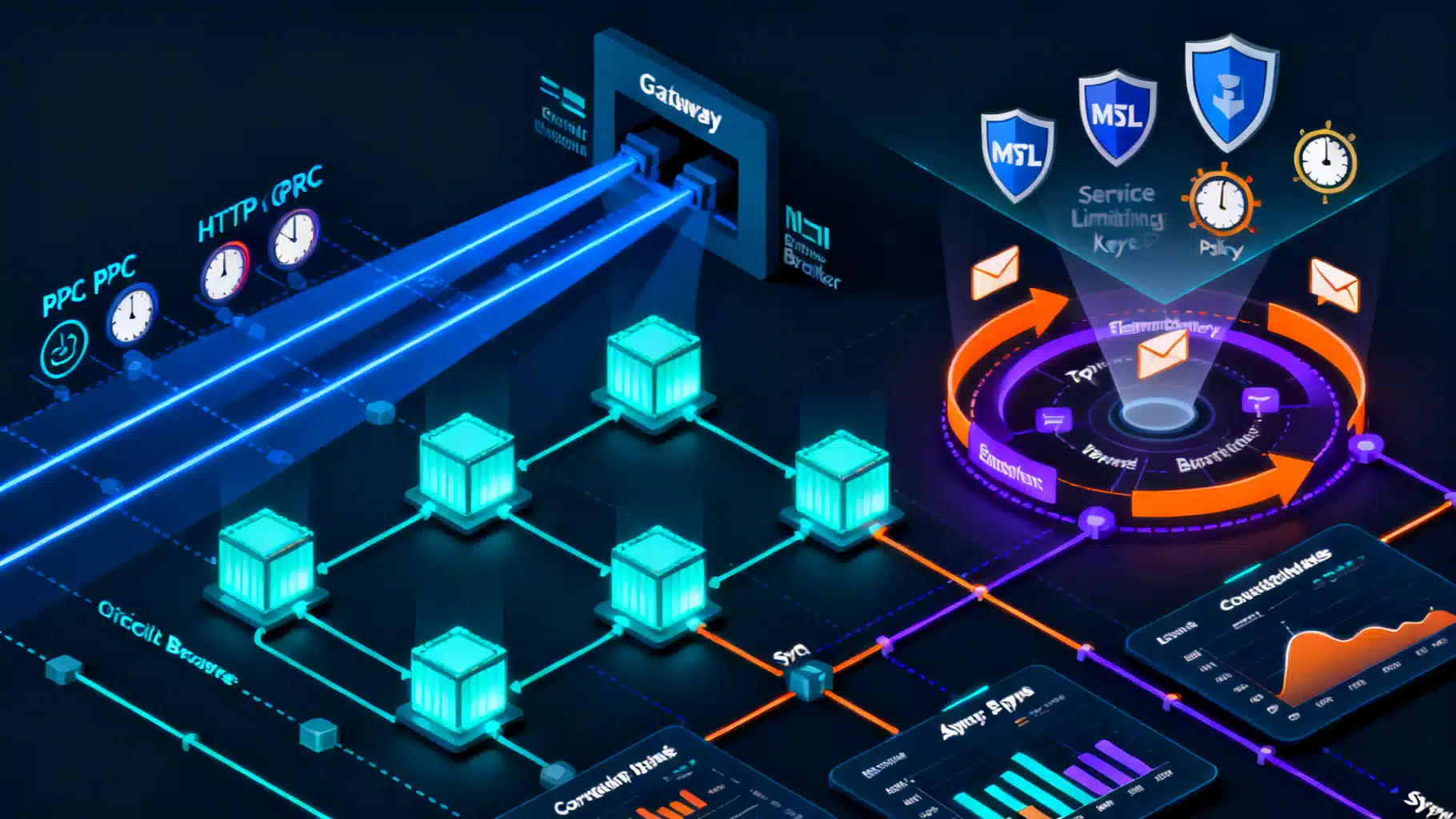
API Microservices Communication Patterns: A Practical Guide for Scale and Resilience
A practical guide to synchronous and asynchronous microservice communication patterns, trade-offs, and implementation tips for resilient APIs.

Designing Resilient APIs with the Circuit Breaker Pattern
Learn how the API circuit breaker pattern prevents cascading failures, with design choices, observability, and code examples in Java, .NET, Node.js, and Python.
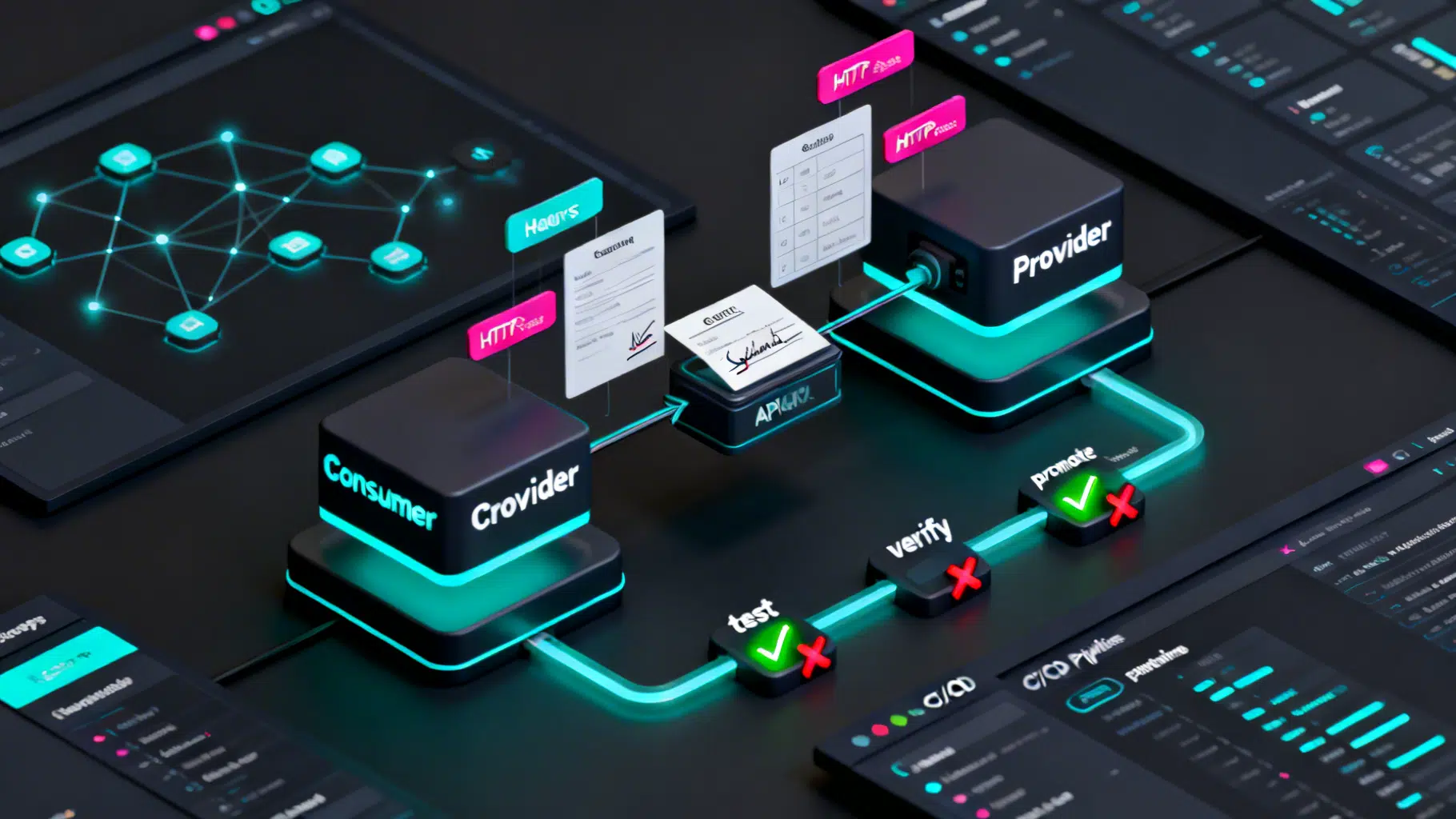
Consumer-Driven Contract Testing: A Practical Guide to Safer, Faster API Delivery
A practical guide to consumer-driven contract testing: how it works, why it matters, and how to implement it with CI/CD to ship APIs faster without breaks.