
Xbox resets: price cuts, Project Helix, and a return to “We Are Xbox”
Xbox retires the “Microsoft Gaming” name, cuts Game Pass prices, details Project Helix, and doubles down on multi‑platform in a sweeping 2026 reset.
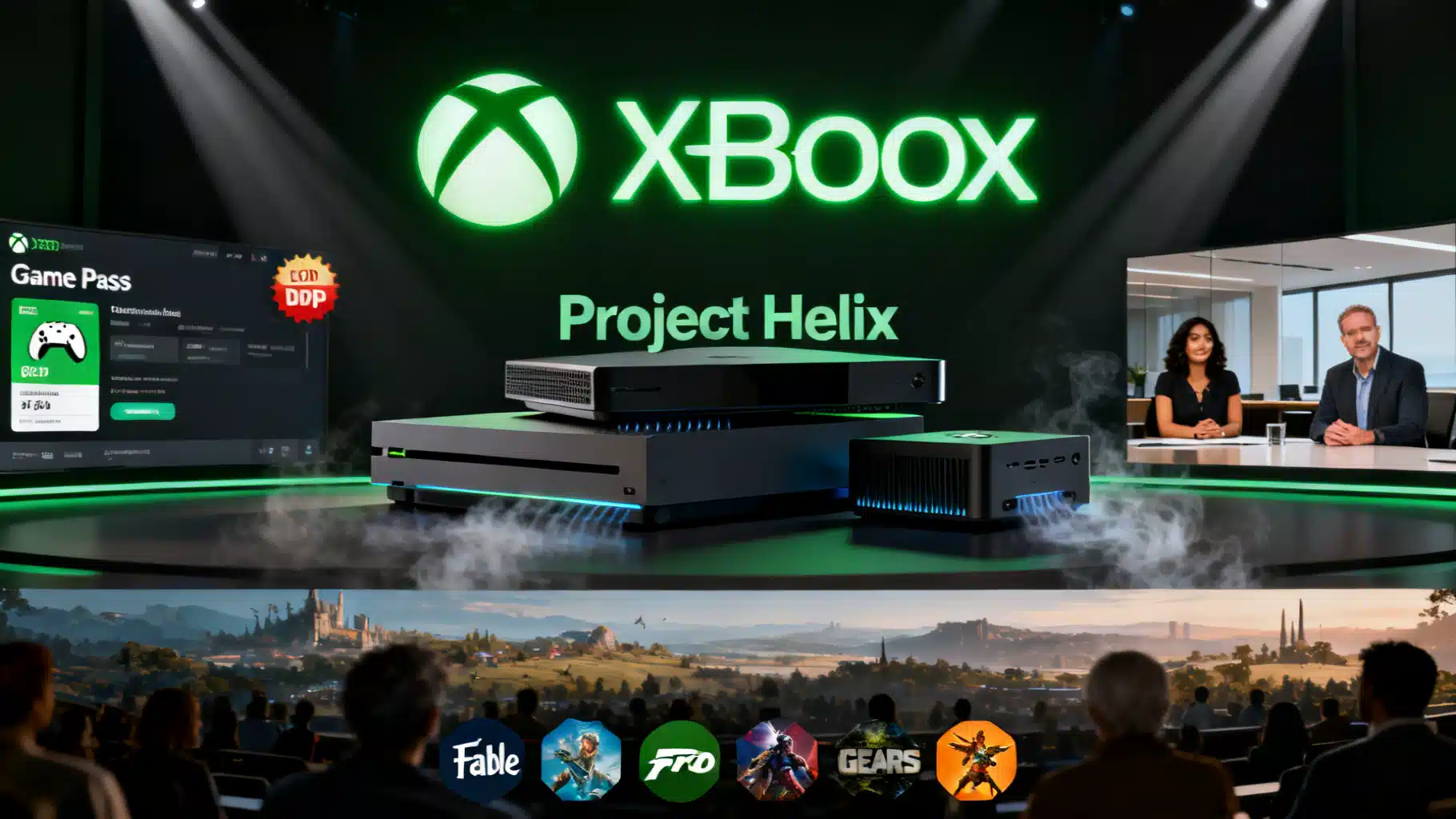
Image used for representation purposes only.
The week Xbox hit reset: new leadership, new name, cheaper Game Pass, and a clearer hardware future
Microsoft’s gaming arm just executed its biggest pivot in years. Two months after Phil Spencer’s retirement and Asha Sharma’s appointment to lead the division, the company has retired the “Microsoft Gaming” moniker, recommitted to the Xbox brand, cut the price of Game Pass Ultimate, and sketched the outline of its next console, Project Helix. Together, these moves amount to a strategic reset aimed at growth after a turbulent 2024–2025. (geekwire.com )
What changed—and when
On February 20, 2026, longtime Xbox boss Phil Spencer announced his retirement. Microsoft named Asha Sharma—previously a senior leader in the company’s AI organization—as CEO of the gaming division, with Matt Booty elevated to executive vice president and chief content officer. The leadership shift set the stage for a broader strategic refresh. (geekwire.com )
That refresh arrived publicly on April 23, 2026, via an Xbox Wire memo titled “We Are Xbox,” co‑signed by Sharma and Booty. The message acknowledged player frustration around pricing, slower console feature updates, and a weaker presence on PC, and confirmed the organization would drop the “Microsoft Gaming” name and operate simply as Xbox. The post also stated Xbox now reaches “over 500 million players” and laid out a plan anchored on four priorities: hardware, content, experience, and services—with daily active players as the new “north star” metric. (news.xbox.com )
Game Pass economics: a price cut with a catch
On April 21, 2026, Xbox cut the monthly price of Game Pass Ultimate from $29.99 to $22.99 and reduced PC Game Pass to $13.99. At the same time, Microsoft said future Call of Duty releases will no longer join Game Pass on day one; instead, new CoD titles will arrive “about a year” after launch, while current entries remain available. The move partially unwinds a steep October 2025 price hike and reflects the new leadership’s emphasis on “sustainable economics.” (news.xbox.com )
Context matters here. In October 2025, Microsoft raised Ultimate by 50% to $29.99 per month, a shift that drew broad criticism. Now, the company is trading back some price pressure for a slower cadence on mega‑franchise day‑one drops—especially Call of Duty. Third‑party coverage and analysis underscore the consumer impact of both the 2025 hike and this week’s reversal. (cnbc.com )
This strategy builds on earlier changes. In July 2024 Microsoft introduced a new console tier (then called “Standard”) that excluded day‑one first‑party releases, setting the stage for today’s more finely segmented approach to value. (gamespot.com )
Hardware: Project Helix and the console‑PC bridge
At GDC 2026, Xbox formally previewed its next‑generation hardware effort, Project Helix—a first‑party Xbox console designed to play both Xbox console and PC games and to lean into cloud integration. While detailed specs aren’t final, Microsoft positioned Helix as the next step in merging the best of console simplicity with PC flexibility. Leadership subsequently clarified that Helix will launch as an in‑house Xbox console, pushing back on speculation that next‑gen Xbox hardware would be OEM‑only. (developer.microsoft.com )
The “We Are Xbox” memo reinforces Helix’s role in a broader hardware plan: stabilize the current generation, lead in accessories, and “deliver Project Helix to lead in performance.” In other words, Xbox isn’t backing away from devices—it’s doubling down with clearer intent. (news.xbox.com )
Content and the multi‑platform shift
Another pillar of the reset is a pragmatic approach to where Xbox‑published games ship. The 2024 decision to bring four former exclusives—Hi‑Fi Rush, Pentiment, Grounded, and Sea of Thieves—to PlayStation and/or Switch signaled a pivot away from blanket exclusivity toward audience reach. That stance is now codified: the memo says Xbox will “reevaluate” exclusivity and timing, with the goal of “growing daily active players.” (arstechnica.com )
The 2026 lineup shows what that looks like in practice. January’s Developer_Direct confirmed a slate that mixes day‑one Game Pass availability with multi‑platform releases later in the year. Forza Horizon 6 arrives May 19 on Xbox and PC with Game Pass Ultimate, then heads to PS5 later in 2026; Fable is slated for autumn on Xbox/PC and PS5, again with day‑one access via Ultimate on Xbox/PC. Double Fine’s multiplayer “Kiln” and Game Freak’s “Beast of Reincarnation” are also due this year with day‑one Ultimate access. (news.xbox.com )
Fixing the fundamentals—especially on PC
In unusually blunt language, Xbox leadership conceded that “our presence on PC isn’t strong enough,” promising renewed investment in discovery, customization, and social systems across the ecosystem. Independent reporting underscores the theme: the reset is as much about fundamentals and player trust as it is about price points or platform lists. (news.xbox.com )
After a bruising 2024–2025
The reset also follows a difficult stretch. In January 2024, Microsoft cut roughly 1,900 roles across Activision Blizzard, Xbox, and ZeniMax. In May 2024 it closed several Bethesda‑managed studios, including Arkane Austin and Tango Gameworks, consolidating resources around “high‑impact” titles. Those moves rattled players and creators alike and sharpened criticism of Xbox’s studio stewardship. (gameinformer.com )
Mobile ambitions: still a question mark
In 2024, then‑president Sarah Bond said Xbox would launch a web‑based mobile game store in July to sidestep Apple and Google restrictions, part of a broader ambition to reach players “on any device.” While Microsoft moved pieces of its mobile commerce forward, the dedicated store itself never meaningfully materialized—and recent reporting suggests the initiative may be shelved under new leadership. Microsoft hasn’t provided a definitive update. (techcrunch.com )
The business read
Sharma and Booty’s memo explicitly revives M&A as a tool—used “deliberately” where organic growth is too slow—while pledging “durable growth with strong cost discipline.” Between a recalibrated Game Pass model, a multi‑platform publishing posture, and an on‑ramp to next‑gen hardware, Xbox is trying to widen its funnel without abandoning console identity. The near‑term scorecard will be simple: subscriber trends after the price cut, player engagement on PC, and the execution quality of 2026’s releases. (news.xbox.com )
What to watch next
- Project Helix specifics: architecture, launch window, and how seamlessly it runs PC catalogs alongside Xbox titles. (developer.microsoft.com )
- Game Pass retention: does a lower Ultimate price offset the loss of day‑one Call of Duty? (news.xbox.com )
- Multi‑platform cadence: whether marquee franchises continue to launch on Xbox/PC first with timed windows elsewhere—and how that affects sales and engagement. (news.xbox.com )
- PC momentum: meaningful UX improvements and storefront changes that validate Xbox’s promise to “fix the fundamentals.” (news.xbox.com )
For now, the message from Redmond is unambiguous: “We are Xbox.” The next year will test whether this sharper strategy can turn mea culpa into momentum. (news.xbox.com )
Related Posts
Xbox’s Next Act: Project Helix, Xbox Mode, and the New Math of Game Pass
Xbox lays out Project Helix, rolls out Xbox Mode on Windows, and doubles down on Game Pass value after 2025’s price hike.
Microsoft Reveals ‘Project Helix’: Next‑Gen Xbox Will Play PC Games Ahead of GDC 2026
Microsoft unveils Project Helix, the next Xbox that will play both Xbox and PC games, with more details expected at GDC 2026.
Satya Nadella’s 2026 Playbook: Unifying Copilot, Recasting Xbox, and Defending AI Spend
Satya Nadella’s 2026 playbook: Copilot reorg, Xbox leadership shift, big AI capex, and global investments as Microsoft leans into agentic AI.