
Sony’s PlayStation Legal Saga: US Settlement Advances as UK £2B Trial Unfolds
Sony faces twin PlayStation legal battles: a US $7.85M settlement near approval and a UK antitrust trial over alleged overcharges worth up to £2B.
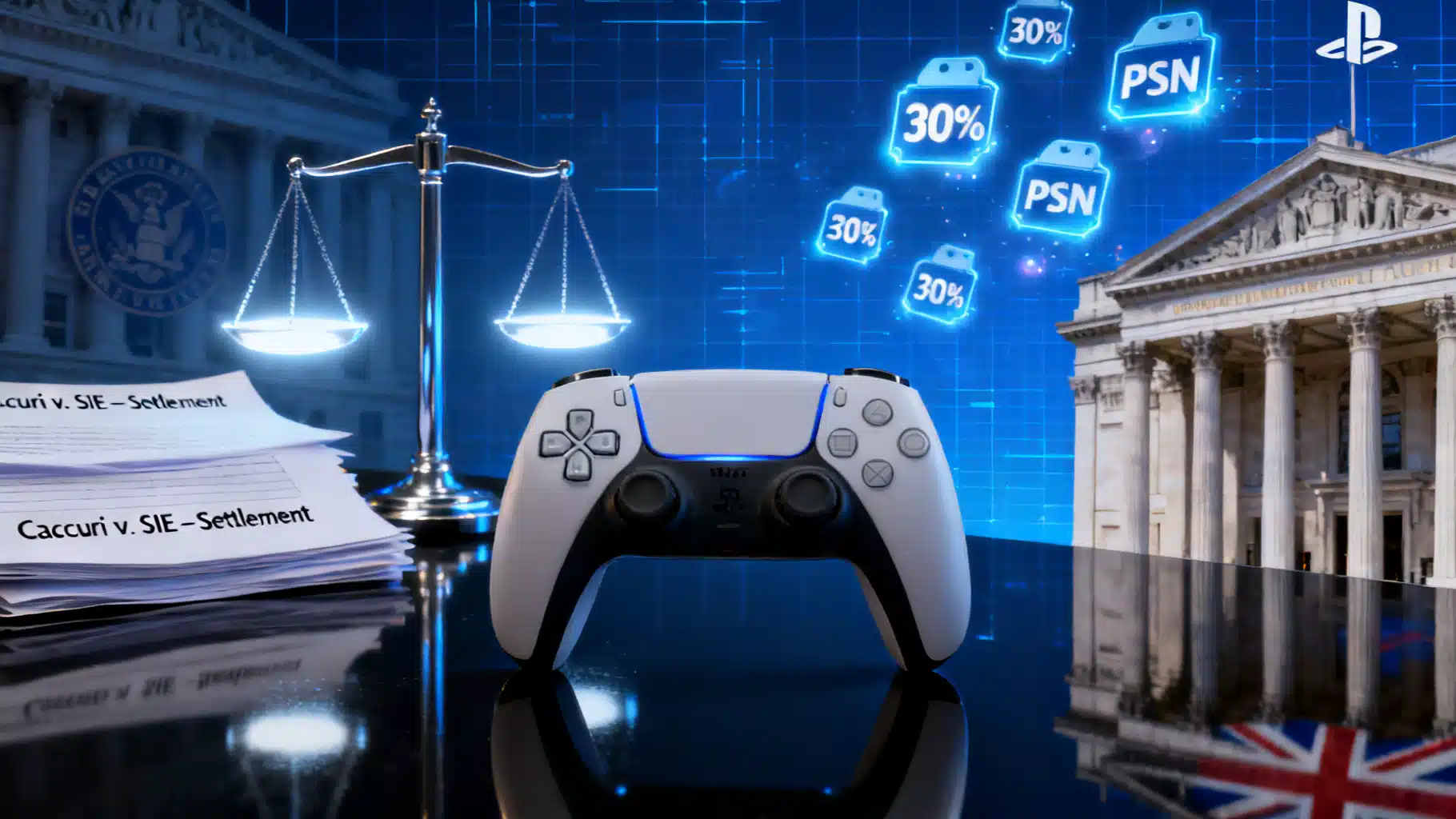
Image used for representation purposes only.
The Sony PlayStation Lawsuit, Explained: What’s Happening in the US and UK Right Now
Sony’s PlayStation business is under simultaneous legal scrutiny on both sides of the Atlantic. In the United States, a federal court has granted preliminary approval to a $7.85 million settlement in an antitrust class action challenging how Sony sells digital games on the PlayStation Store. In the United Kingdom, a separate, far larger collective action alleging overcharging on digital purchases has moved into a full trial and could ultimately be worth around £2 billion to consumers if the claim succeeds. Here’s where each case stands, who could be eligible for compensation, and what key dates to watch next. (classaction.org )
The US case: Caccuri v. Sony Interactive Entertainment
-
What it’s about: Plaintiffs alleged Sony illegally suppressed competition for PlayStation digital games when, beginning April 1, 2019, it stopped allowing third‑party retailers to sell game‑specific download vouchers (often called GSVs), steering players to buy through the PlayStation Store at allegedly higher prices. Sony denies wrongdoing. (classaction.org )
-
Latest development (April 2026): After rejecting earlier versions, the U.S. District Court for the Northern District of California granted preliminary approval to a $7.85 million settlement on April 8, 2026. The settlement would provide payments—primarily as PSN account credits—to a defined group of U.S. customers who bought certain eligible digital games on the PlayStation Store between April 1, 2019 and December 31, 2023. A list of eligible titles and the plan of allocation are posted on the official settlement website. (classaction.org )
-
Who’s covered: Court filings estimate more than 4.4 million people are in the settlement class, defined to include purchases of games that previously had GSVs redeemed at least 200 times before April 1, 2019 and whose post‑discount prices rose by at least $0.50 after that date—criteria designed to capture where removing retailer vouchers plausibly raised prices. (classaction.org )
-
How payouts work: For class members with active PSN accounts, payments are slated to be issued automatically as PSN account credits, redeemable for any PlayStation Network content. Class members whose PSN accounts are deactivated can request a check. The settlement expressly states the court has not decided that Sony violated any laws. (psndigitalgamessettlement.com )
-
Key dates in the US case:
- July 2, 2026: Deadline to opt out or object. (psndigitalgamessettlement.com )
- August 27, 2026: Deadline for deactivated‑account class members to request a check in lieu of PSN credit. (classaction.org )
- October 15, 2026: Fairness hearing for final approval in San Francisco. Payments would follow only after final approval and resolution of any appeals. (psndigitalgamessettlement.com )
The UK case: ‘PlayStation You Owe Us’ on trial at the Competition Appeal Tribunal
-
What it’s about: A consumer representative action alleges Sony abused a dominant position by controlling the PlayStation Store, setting retail prices, and taking an approximately 30% commission on digital game and in‑game content sales—conduct the claim argues led to “excessive and unfair” prices for UK consumers. Sony contests the allegations. (playstationyouoweus.co.uk )
-
Who’s included: Following a February 2026 procedural order, the class now covers qualifying UK‑domiciled PlayStation users who made relevant digital purchases between August 19, 2016 and February 12, 2026 (with a one‑year offset for Scotland). Opt‑out and opt‑in deadlines tied to the expanded period closed on March 9, 2026. (playstationyouoweus.co.uk )
-
Trial status: The Competition Appeal Tribunal certified the collective proceedings on January 19, 2024. The full trial commenced on March 2, 2026, with an estimated 10‑week timetable; a judgment will follow after the tribunal deliberates. The claim website indicates an estimated per‑person recovery of roughly £137 excluding interest, or about £182 including interest, depending on the outcome and the tribunal’s directions on distribution. (playstationyouoweus.co.uk )
-
Scale of potential redress: The class representative estimates total damages at approximately £2 billion (including interest) across millions of affected customers—one of the most consequential consumer competition cases yet to test the UK’s collective proceedings regime for digital platforms. (playstationyouoweus.co.uk )
Why these cases matter
These parallel actions test how far dominant platform holders can go in shaping digital markets for games and add‑on content. The U.S. settlement, if finally approved, would resolve a narrower claim tied to Sony’s 2019 shift away from third‑party game vouchers. The UK case goes further, challenging the entire PlayStation Store model—its pricing control and 30% commission—as an abuse of dominance with alleged overcharges to consumers spanning nearly a decade. Outcomes here could ripple across the games industry, where store commissions, exclusivity, and payment rules are already under intense antitrust scrutiny. (classaction.org )
What PlayStation owners should do now
-
If you’re in the United States:
- You likely do not need to file a claim if you’re covered; payments are designed to be automatic PSN credits for eligible accounts. Keep an eye on your PSN wallet and the official settlement site for updates. If your PSN account is deactivated, note the August 27, 2026 check‑request deadline. Consider the July 2, 2026 opt‑out/object deadlines if you wish to preserve separate claims or comment on the deal. (psndigitalgamessettlement.com )
-
If you’re in the United Kingdom:
- If you fall within the class definition and were UK‑domiciled on February 12, 2026, you are automatically included. With opt‑out/opt‑in windows now closed for the extended class period, there’s nothing to do while the trial runs—other than monitor official updates. The claim website provides FAQs and a livestream link for the tribunal hearings. Any compensation, if ordered, would be distributed per the tribunal’s instructions after judgment. (playstationyouoweus.co.uk )
Key facts at a glance
- US settlement amount: $7.85 million (preliminary approval granted April 8, 2026). Final approval hearing set for October 15, 2026. (classaction.org )
- US class period: Purchases April 1, 2019–December 31, 2023 of specified games meeting the GSV and price‑change criteria. (classaction.org )
- UK class period: August 19, 2016–February 12, 2026 (England & Wales); August 19, 2017–February 12, 2026 (Scotland). (playstationyouoweus.co.uk )
- UK trial: Began March 2, 2026; time estimate 10 weeks. Estimated per‑person redress £137–£182 depending on interest and tribunal directions. (playstationyouoweus.co.uk )
What’s next
- In the US, the parties will brief final approval issues ahead of the October 15, 2026 hearing. If the court grants final approval and appeals (if any) conclude, credits/checks will be distributed pursuant to the plan of allocation. (psndigitalgamessettlement.com )
- In the UK, the Competition Appeal Tribunal will hear evidence and legal argument through the trial window, then issue a written judgment. If the claim succeeds, the tribunal will determine the approach to distributing compensation to class members and address any subsequent issues such as interest, costs, and appeals. (playstationyouoweus.co.uk )
Bottom line
Two very different legal tracks are putting PlayStation’s digital storefront under the microscope. The American case appears headed for a relatively modest, targeted resolution tied to voucher practices. The UK action is a sweeping test of platform power and pricing that could set a major precedent for digital game marketplaces—both for Sony and the wider industry.
Related Posts
Google’s April 2026: Gemini alliances, tougher rules, a search reset, and I/O on deck
Google’s April 2026: Apple’s Gemini deal, U.S. antitrust remedies, EU DMA pressure, a fresh core update, Android 17 betas, Chrome DBSC, and a $20B bond tap.
Sundar Pichai’s AI Bet: Apple’s Siri Tie‑Up, Record 2026 CapEx, and Gemini Everywhere
Sundar Pichai’s AI era: Apple’s Siri deal, record 2026 CapEx, and Gemini’s rapid expansion—plus the regulatory tests that could shape Google’s future.
PlayStation’s recalibration: higher PS5 prices, fan cameos, PS5 Pro upgrades—and a painful studio shutdown
PlayStation hikes PS5 prices, launches a fan-scanning program, rolls out PS5 Pro upgrades, and shutters Bluepoint—here’s what it means in April 2026.