Dario Amodei’s High‑Wire Act: Pentagon Clash, White House Talks, and the Rise of ‘Mythos’
Under siege and in demand: How Anthropic CEO Dario Amodei is reshaping AI policy, product strategy, and geopolitics in 2026.
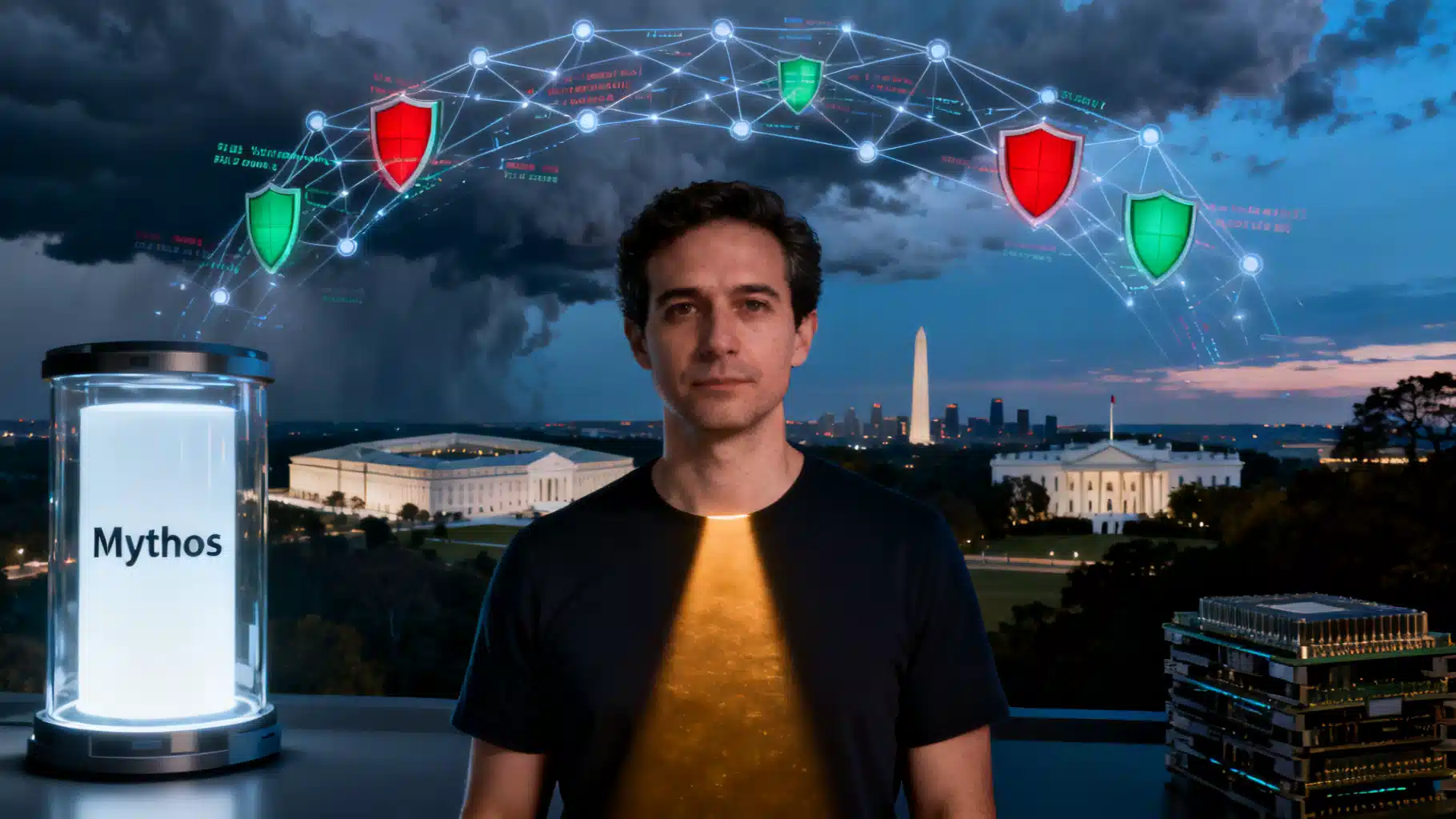
Image used for representation purposes only.
Dario Amodei’s defining year: the Anthropic chief at the center of AI power, policy, and peril
In a span of weeks, Dario Amodei has become one of the most visible and polarizing figures in technology. On February 26, 2026, the Anthropic CEO publicly rejected Pentagon contract language that, he said, would allow “unrestricted” use of his company’s AI, drawing a swift order from President Trump to phase Anthropic out of federal systems. Three weeks later Anthropic sued, and by April 17 Amodei was at the White House for talks as officials explored an off‑ramp. All the while, he unveiled a new, more powerful AI model, warned of civilization‑scale risks, and closed a record‑setting funding round. Few executives now sit closer to the fault line where frontier AI, national security, and markets collide. (apnews.com )
The Pentagon showdown
Amodei’s break with the Department of Defense centers on two “red lines”: no use of Claude for mass domestic surveillance and no fully autonomous weapons that operate without a human in the loop. When Defense Secretary Pete Hegseth set a February 27 deadline to accept broader terms or face consequences, Amodei replied that Anthropic “cannot in good conscience accede” and accused the department of pairing compromise language with legal carve‑outs. The administration responded by cutting off Anthropic and labeling the company a potential supply‑chain risk—moves the startup called “retaliatory and punitive” and is now challenging in court. (techcrunch.com )
The dispute has spilled into the broader industry. After OpenAI struck its own military deal claiming guardrails, Amodei blasted the messaging as “straight up lies,” arguing his rival’s terms still boiled down to “all lawful purposes.” The rift underscores a widening split among top labs over how, and under whose rules, frontier models should be weaponized—or not. (techcrunch.com )
A White House opening—on a tightrope
Despite the rupture, Washington isn’t eager to lose access to Anthropic’s technology. On April 17, Reuters journalists spotted Amodei arriving at the White House for meetings. In late April and early May, Axios reported the administration is weighing guidance—and potentially executive action—to let agencies work around the Pentagon’s blacklisting and re‑onboard advanced models like Anthropic’s, provided new safety testing and cyber controls are in place. It’s a striking shift: from ban to back‑channel in under six weeks, reflecting the government’s simultaneous fear of and dependence on cutting‑edge AI. (investing.com )
‘Mythos’ raises the stakes—and the temperature
On April 7, Anthropic unveiled Claude Mythos Preview, a powerful new frontier model released only to a handful of partners under “Project Glasswing,” a program aimed at using AI to find and fix critical software vulnerabilities before attackers do. Launch partners include major tech and security firms; Anthropic says Mythos has already surfaced large numbers of previously unknown flaws, which will be patched in coordination with vendors. The company is keeping Mythos off public platforms and has pledged up to $100 million in model‑use credits to accelerate defensive work. (bloomberg.com )
The containment strategy hasn’t ended debate. Coverage in science and security outlets has questioned whether a tool that so effectively discovers zero‑days can truly be quarantined—and whether its existence could catalyze an offensive AI arms race. Still, the guarded rollout helps explain why Washington is scrambling for a policy mechanism to test, approve, and—where necessary—constrain such systems in government use. (livescience.com )
Follow the money: a $30 billion bet on Anthropic
Days before the Pentagon clash peaked, Anthropic closed one of the largest private rounds in tech history: $30 billion at a $380 billion post‑money valuation, led by Singapore’s GIC and Coatue. The company says annualized run‑rate revenue has risen at a 10x pace for three straight years, with enterprise products (including Claude Code) leading growth. The scale of the financing cements Anthropic as one of the world’s most valuable startups—and puts extraordinary pressure on Amodei to keep shipping state‑of‑the‑art models while upholding the safety posture that now defines his public brand. (bloomberg.com )
Amodei’s worldview: from ‘country of geniuses’ to ‘adolescence of technology’
Amodei’s January 26 essay, “The Adolescence of Technology,” is the most complete statement of his risk model to date. He argues that “powerful AI”—systems outperforming top human experts across disciplines, operating autonomously over long tasks through standard digital interfaces—could arrive within a couple of years. That would amount to a “country of geniuses in a datacenter,” enabling both stunning advances and catastrophic misuse unless societies rapidly upgrade governance, security, and norms. He urges candor from builders and harder guardrails from states, while rejecting both complacency and pure “doomerism.” (darioamodei.com )
The essay builds on a decade of work. In 2016, Amodei co‑authored “Concrete Problems in AI Safety,” a foundational paper that reframed safety as a set of practical engineering challenges—like reward hacking and safe exploration—rather than purely sci‑fi thought experiments. That framing still underpins Anthropic’s methods today. (arxiv.org )
Safety doctrine as product strategy
Anthropic’s approach—best known as “Constitutional AI”—trains models to follow a written set of normative principles and to critique their own outputs against that “constitution.” The company has also formalized pre‑deployment testing via a Responsible Scaling Policy (RSP) with escalating “AI Safety Level” standards, and it publishes system cards that describe model risks (including deception and sabotage tests) alongside mitigations. Amodei’s refusal to relax the Pentagon guardrails tracks directly with these internal safety documents and with his public posture in 2026. (arxiv.org )
A global and commercial balancing act
In interviews this year, Amodei has predicted LLMs will increasingly handle end‑to‑end software pipelines with humans supervising and accelerating the work, a shift he says could transform enterprise IT. Yet he also acknowledges the commercial pressure to keep up with rivals, even as Anthropic invests in time‑consuming safety evaluations and controlled releases like Mythos. That tension—profit versus prudence—now defines both his critics’ case and his company’s brand promise. (moneycontrol.com )
Geopolitics intrudes
At January’s World Economic Forum in Davos, Amodei warned that loosening restrictions on advanced AI chips to China would be geopolitically dangerous, likening it to “selling nuclear weapons to North Korea and bragging about who made the casings.” The remark—aimed at U.S. exports and implicitly at Nvidia, a major Anthropic backer—spotlighted how compute access, corporate incentives, and national security are converging in 2026. (techradar.com )
Rivalries, realignments, and what to watch next
- Government détente or deeper freeze? The White House is studying ways to restore federal access to Anthropic models while satisfying Pentagon hard‑liners; expect movement as agencies press for vetted cyber tools and Mythos‑class capabilities. (axios.com )
- Model containment and disclosure. Will Project Glasswing’s closed preview hold, and how much vulnerability data will partners share publicly as patches land? (anthropic.com )
- Competitive escalation. After the OpenAI deal with DoD and Amodei’s sharp rebuttal, watch whether other labs embrace explicit red lines—or double down on “all lawful uses.” (techcrunch.com )
- Markets and capacity. The historic raise gives Anthropic runway, but compute supply, export rules, and enterprise adoption will determine whether Amodei can convert 2026 momentum into durable lead. (bloomberg.com )
The bottom line
Dario Amodei has turned Anthropic’s safety thesis into a governance fight, a go‑to‑market filter, and a geopolitical statement. In 2026, that stance cost him a Pentagon pipeline—and won him a hearing at the White House. It led him to quarantine his most potent new model and to raise the largest war chest in AI startup history. Whether his “adolescence of technology” metaphor becomes a blueprint for managing the next wave—or a cautionary tale of good intentions in a no‑limits race—now depends on decisions made in days and weeks, not years. (darioamodei.com )
Related Posts
Anthropic Claude API Batch Processing: A Practical Guide to Message Batches
A practical, code-first guide to Anthropic’s Claude Message Batches API: limits, pricing, prompt caching, 300k-token outputs, and production patterns.
Leak Confirms Anthropic Testing “Claude Mythos,” a New Tier Above Opus—Here’s What We Know
A Fortune-confirmed leak reveals Anthropic testing “Claude Mythos,” a new tier above Opus with major cyber gains—and risks—now under tight early access.
AGI in 2026: Capabilities Are Rising—Consensus Is Not
AGI in 2026: funding surges, compute scales, rules diverge. Where capabilities truly are—and what to watch next.