
Googlebook Unveiled: Gemini Intelligence Laptops Set to Succeed Chromebooks This Fall
Google unveils Googlebook: Gemini-first laptops with Magic Pointer, deep phone continuity, and broad OEM support, shipping in fall 2026.
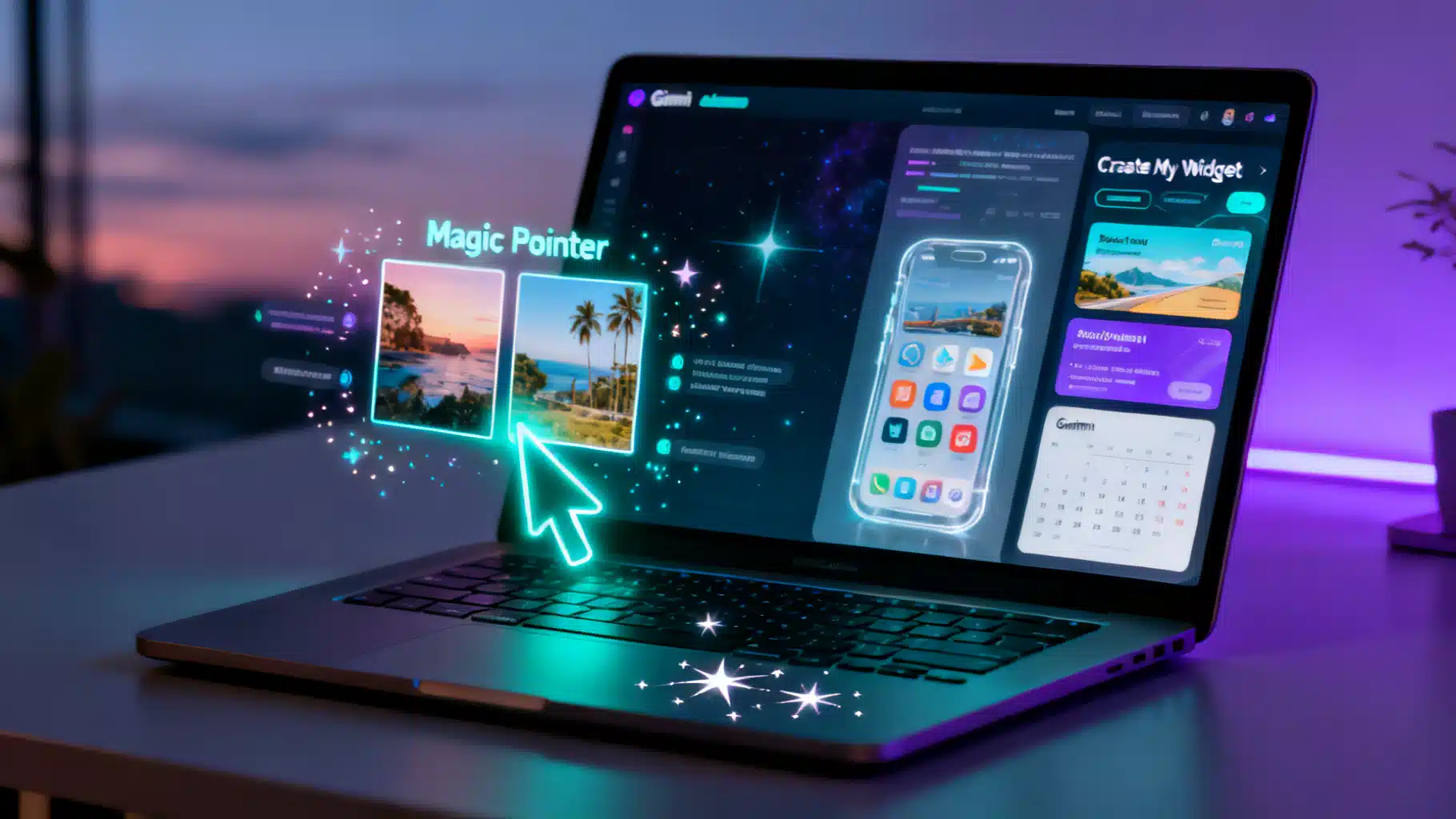
Image used for representation purposes only.
Googlebook is here: Google’s Gemini-first laptops arrive this fall
On May 12, 2026, Google pulled the wraps off “Googlebook,” a new class of AI‑native laptops built around its Gemini models and positioned as the next step beyond Chromebooks. The company is partnering with major PC makers to ship the first wave later this year. (androidcentral.com )
The pitch: an “intelligence system,” not just an OS
Google frames Googlebook as a rethink of the laptop experience, moving computing from an operating system to an “intelligence system” with Gemini woven throughout. Early reporting describes the platform as Android‑based and AI‑first, with Chrome and Google Play apps as core pillars of the experience. Some coverage even argues it may be the first true “AI OS,” underscoring how central Gemini is to the UX. (androidcentral.com )
Headline features
- Magic Pointer: a Gemini‑powered cursor that lets you select anything on screen to ask, compare, or create, surfacing contextual actions when you hover or wiggle the pointer. (googlebook.google )
- Create My Widget: describe the widget you want, and Gemini assembles a personalized dashboard that can pull from the web and Google apps. (googlebook.google )
- Deep phone continuity: Cast My Apps opens your Android apps directly on the laptop; Quick Access browses and inserts files from your phone as if they live on your Googlebook. (Setup and Android 17 are required.) (googlebook.google )
Footnotes on Google’s site indicate that some features need an internet connection and that availability can vary by language at launch. (googlebook.google )
Hardware partners and “premium” positioning
Google’s launch materials highlight a familiar roster of OEMs—Acer, ASUS, Dell, HP, and Lenovo—signaling a broad, multi‑tier ecosystem rather than a single first‑party device. Industry reporting adds that Intel has publicly confirmed it will power Googlebook systems, with additional models expected from Qualcomm and MediaTek, opening both x86 and Arm options. Specific processor SKUs weren’t named. (googlebook.google )
What happens to Chromebooks?
After 15 years of Chromebooks in schools and workplaces, Googlebook is widely viewed as the successor. Google has said existing Chromebooks will continue to receive updates under their current support commitments, while details of any transition path to the new experience remain to be clarified. (techcrunch.com )
Availability and what we still don’t know
Google says to “unbox it this fall,” with regional signup pages live now. Pricing, battery targets, screen sizes, and exact silicon configurations have not been disclosed; OEM announcements should fill in those blanks over the coming months. (googlebook.google )
Why this matters
- A unified Google laptop story: By centering Gemini across the UI, system features, and app model, Googlebook gives Google a clearer answer to the AI‑heavy trajectory of modern PCs. Early hands‑on descriptions and Google’s own promos emphasize proactive, context‑aware assistance as a default behavior, not an add‑on. (androidcentral.com )
- App breadth from day one: With Android apps and Google services at the core, Googlebook starts with a large software library while aiming to lift desktop‑class use cases through AI‑assisted workflows. (arstechnica.com )
- Silicon flexibility: With Intel confirmed and Qualcomm/MediaTek expected, Googlebook appears designed to span performance, efficiency, and connectivity profiles across x86 and Arm—useful for education, enterprise, and creators alike. (tomshardware.com )
A note on on‑device AI momentum
Separate from Googlebook, Chrome’s recent experiments with downloading a small on‑device model (Gemini Nano) show Google’s broader push toward local AI for privacy and responsiveness. Expect Googlebook to inherit this philosophy, though Google has not yet detailed which tasks will run fully on‑device versus in the cloud. (pcgamer.com )
The bottom line
Googlebook marks Google’s most ambitious PC play since ChromeOS—an AI‑native laptop platform with Gemini at the center, tight Android phone continuity, and broad OEM support. With shipments slated for fall 2026, the next few months will be about firming up hardware configs, regional availability, and the exact blend of on‑device and cloud AI that defines how “intelligent” these laptops feel in daily use. (googlebook.google )
Related Posts
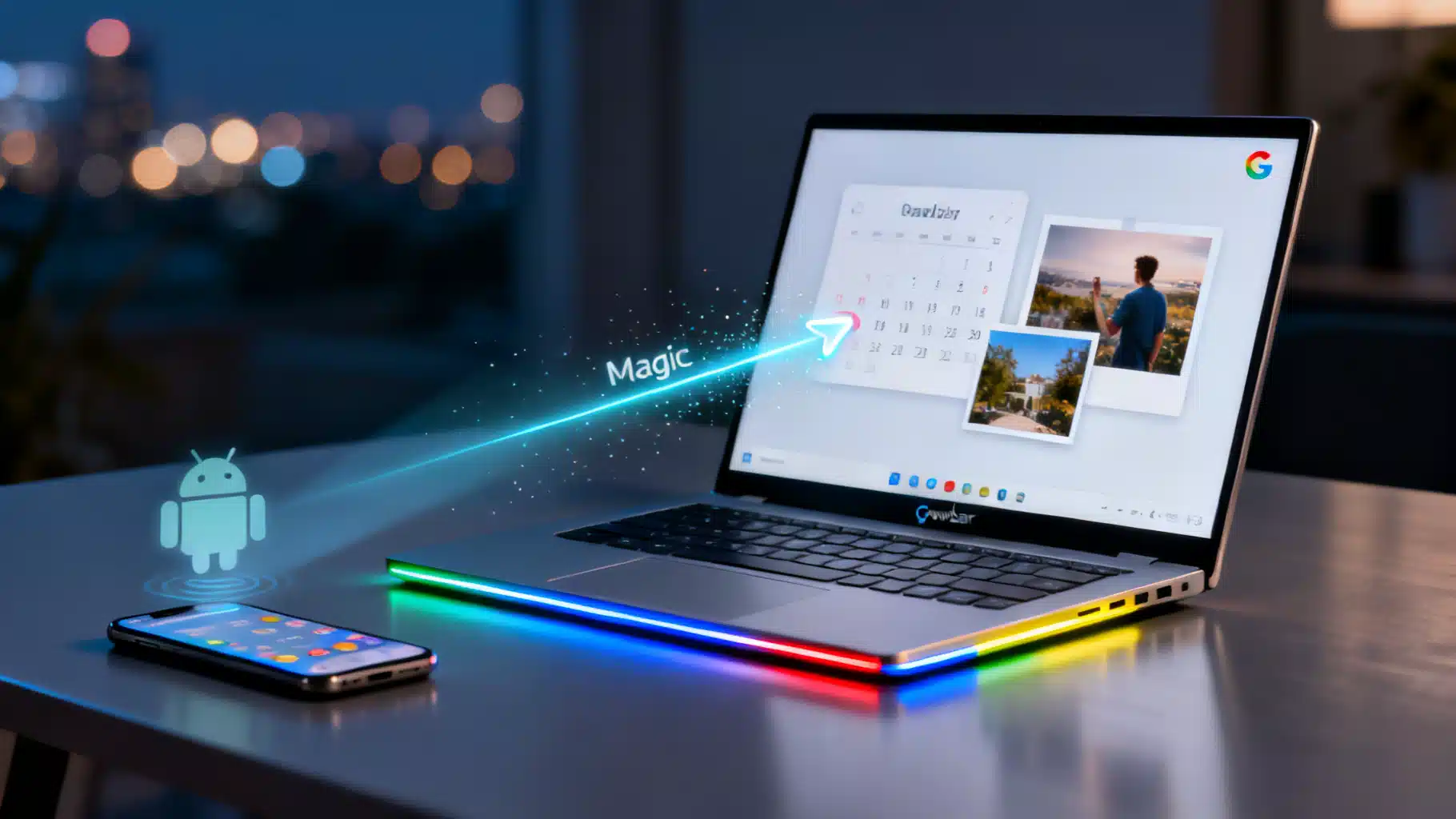
Googlebook debuts: Google’s AI-first laptop platform lands this fall
Google unveils Googlebook, an AI-first laptop platform built around Gemini with Magic Pointer, phone app casting, and a glowbar, launching fall 2026.

Introducing IntimateAI: A Private Space for Couples to Connect Deeper
ASOasis spotlights IntimateAI, a privacy-first iOS and Android app that helps couples nurture their relationship with daily prompts, a shared timeline, mood check-ins, and private spaces.
Introducing Text Repeater PRO: An Ad-Free, Power-User Edition for Text Workflows
ASOasis spotlights Text Repeater PRO, the paid ad-free edition of Text Repeater on Google Play with advanced controls, saved presets, and lifetime updates for creators and power users.