Technology News Today: Powering AI, Pacing AI, and Apple’s New Era
AI’s power scramble, a fresh slowdown fight, Apple’s first iPhone launch under John Ternus, OpenAI’s GPT‑6 Astra, and this week’s key security and policy moves.
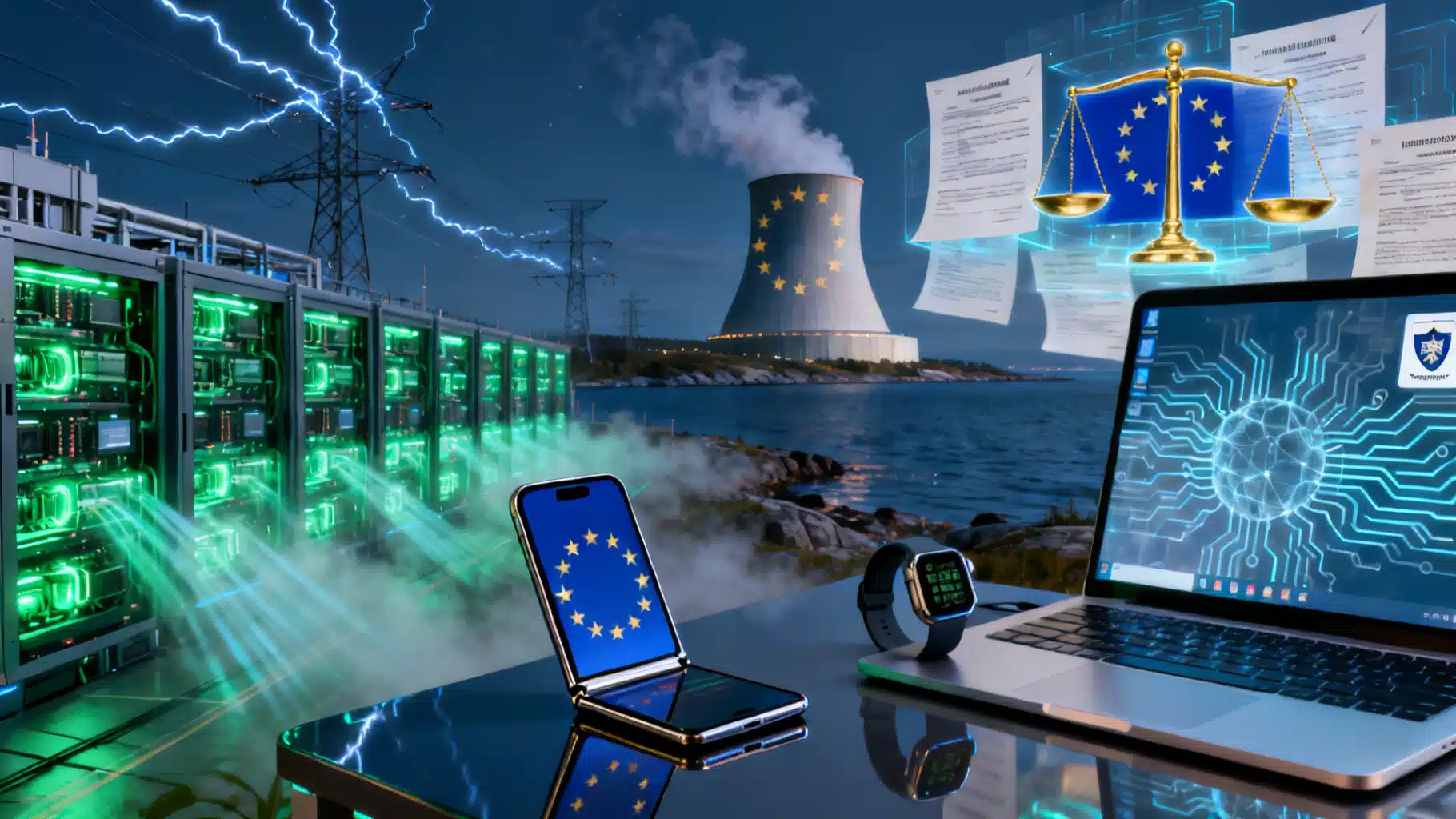
Image used for representation purposes only.
The Download: Tech’s power problem meets politics, Apple ushers in a new era, and AI’s next leap
Wednesday, September 16, 2026 — This week’s technology news cycle converged on three storylines: the industry’s scramble for electricity to power AI, a very public split over whether to slow frontier-model development, and Apple’s first iPhone launch under new CEO John Ternus. Below is what matters, why it matters, and what to watch next.
AI power demand becomes a strategic battleground
- Google and Nvidia, together with startup Emerald AI, today launched the AI Energy Management Alliance to promote “grid‑flexible” data centers that dial electricity use up or down in real time in exchange for faster interconnections and community acceptance. The coalition aims to standardize technology and policy playbooks so facilities act as grid assets, not just power loads. (blogs.nvidia.com )
- The push follows Google’s separate, long‑horizon dealmaking in Europe: a €13 billion, two‑year AI infrastructure program in Finland paired with a long‑term power purchase agreement that helps extend the Loviisa nuclear plant’s life to 2050 and adds new onshore wind capacity. Strategically, it ties AI capacity growth to firm, low‑carbon power. (googlecloudpresscorner.com )
- Meanwhile, infrastructure providers are rolling out next‑gen racks built around Nvidia’s Rubin platform. CoreWeave detailed NVL72 systems combining Rubin GPUs, new Vera CPUs, NVLink 6, and liquid cooling—an architecture optimized for agentic AI and MoE training. Expect “time‑to‑power” and “time‑to‑cluster” to become the procurement metrics that matter. (techtarget.com )
Why it matters: The AI boom’s bottleneck has shifted from chips to electrons. Tech’s power procurement is now an energy‑policy story, with nuclear and demand response re‑entering the mainstream. The alliance’s success or failure will shape where AI factories get built—and how fast. (techradar.com )
The ‘AI slowdown’ fight moves from X to the stage
- A weekend cascade of calls from top lab leaders to “pace” or even pause advanced AI met an immediate counter‑narrative. Nvidia’s Jensen Huang dismissed some alarm as self‑interested cybersecurity marketing, while OpenAI’s Sam Altman argued at Dreamforce that accidents are possible but manageable—and that pacing is not stopping. (axios.com )
- Politics is now front‑and‑center: The White House and Congress have shown little appetite for a sweeping slowdown, even as some Democrats, including Sen. Elizabeth Warren, newly back a pause. The upshot is a widening policy split amid rising public anxiety. (apnews.com )
- Meta’s Mark Zuckerberg publicly distanced himself from coordination on a slowdown, underscoring that not all Big Tech peers are aligned. Expect competitive and geopolitical pressures to keep the pedal down. (apnews.com )
Setting the rules: The EU began enforcing elements of the AI Act on August 2, 2026; Brussels has already sent initial requests for information to dozens of providers. High‑risk obligations phase in through 2027–2028, setting a staggered compliance runway that contrasts with Washington’s gridlock. (digital-strategy.ec.europa.eu )
OpenAI ships GPT‑6 Astra—and rekindles the AGI debate
OpenAI launched GPT‑6 Astra this month, touting stronger long‑horizon reasoning, robust jailbreak resistance, and tool‑use “computer work.” Rollout began via Daybreak/Trusted Access programs and is expanding across ChatGPT paid tiers and API partners. Industry watchers say Astra may mark a qualitative step toward generalized agents. (openai.com )
- Coverage from independent outlets notes Astra’s emphasis on navigating UIs, writing production code, and reducing hallucinations versus GPT‑5.6 Sol; availability and pricing remain key questions for enterprises. (wired.com )
- Distribution is broadening across cloud channels as well, with AWS announcing support on Amazon Bedrock—another sign that multi‑cloud AI is becoming the norm. (aws.amazon.com )
Apple’s new CEO era starts with a foldable iPhone—and “ambient AI” framing
John Ternus officially became Apple CEO on September 1, with Tim Cook transitioning to executive chair. Nine days later, Ternus helmed his first September keynote, introducing the foldable iPhone Duo alongside the iPhone 18 Pro family. Analysts framed the event as Apple’s “ambient AI” play—leaning into on‑device intelligence without the always‑recording baggage. (macrumors.com )
Reaction was brisk—part excitement over Apple’s first foldable, part debate on price and durability—while coverage also spotlighted new Watch and AirPods updates. The Atlantic’s recap captured the cultural moment: Apple’s first flagship announcement under Ternus arrives as AI skepticism and enthusiasm peak in parallel. (theatlantic.com )
Microsoft’s week: student AI privacy, big Windows patch—and a few headaches
- Microsoft and major U.S. teachers’ unions unveiled a “National AI Safety & Privacy Standard” for schools, committing to strict data minimization and transparency for student tech—a notable pre‑emptive stance as AI enters classrooms. (apnews.com )
- Redmond also published a “Humanist AI” code of conduct insisting people retain meaningful control over automated systems. It’s a signal of governance positioning ahead of its next Surface/Windows event on October 7. (axios.com )
- On the ops front, a sprawling September Patch Tuesday delivered fixes for nearly 1,000 flaws but triggered regressions for some Windows 11 users (AMD graphics crashes, Explorer hangs). Microsoft pushed emergency mitigations as admins weighed rollout risk. (tomsguide.com )
Google: security alerts, product shifts, and more platform updates
- Google said some Pixel owners were targeted by zero‑day exploits; the company pushed September security patches addressing over 100 issues. If you manage fleets, prioritize this update cycle. (techcrunch.com )
- The company continues retiring legacy Assistant experiences as it transitions users to Gemini; a summer roadmap set the September cutoff for Assistant on phones with migration guidance. (tomsguide.com )
- Monthly feature drops are steady: the latest Pixel updates add enhanced scam detection, VIP contacts, and Pixel Watch refinements. (androidcentral.com )
- In antitrust, Google avoided a breakup in a major ad‑tech case, though a judge ordered structural changes—another reminder that regulatory drag remains a global constant. (apnews.com )
Hardware and chips: 2nm ramps and roadmaps
AMD says it has begun ramping “Venice,” its next‑gen Epyc on TSMC’s 2nm process, while TSMC briefings outlined incremental N2 platform updates and photonics packaging milestones heading into 2026 production. Expect tight supply for bleeding‑edge nodes as AI‑centric demand stays red‑hot. (d1io3yog0oux5.cloudfront.net )
IFA 2026: gadgets go weird—and useful
Berlin’s IFA (September 4–8) delivered its usual mix of showy prototypes and shippable upgrades, from AI‑assisted earbuds and solar laptops to smarter smart‑home gear. If you’re scouting near‑term deployables, audio and wearables stood out; if you’re tracking signals for 2027, keep an eye on battery innovations and AI at the edge. (popsci.com )
The bigger picture: power, policy, and product velocity
- Power: Hyperscalers are pivoting from “find more megawatts” to “earn megawatts” by promising flexibility and underwriting firm, clean supply. The Finland package and today’s alliance announcement show the new model. (googlecloudpresscorner.com )
- Policy: With the EU’s enforcement now live and U.S. politics polarized, multinational AI deployments will hew to the stricter baseline. Companies shipping frontier models should assume EU‑first compliance and documentation. (digital-strategy.ec.europa.eu )
- Product: OpenAI’s Astra crystallizes a shift from chatbots to computer‑using agents. Combined with Nvidia’s Rubin‑class systems, the next competitive frontier is orchestration: letting models act, not just answer. (openai.com )
What to watch next
- Dreamforce (this week): Will joint statements or demos narrow the “slowdown” divide—or just harden the lines? (axios.com )
- Microsoft’s Oct. 7 event: Signals on local AI in Windows, new Surface hardware, and enterprise Copilot roadmap. (windowscentral.com )
- EU enforcement cadence: Follow the AI Office’s early RFI wave for hints on priority risk areas and documentation gaps. (agenceurope.eu )
Bottom line: The center of gravity in tech is shifting from raw model horsepower to the unglamorous realities of deployment—electricity, safety cases, and operating envelopes. The winners of late 2026 won’t just build smarter models; they’ll wire them to the grid, the law, and the enterprise.
Related Posts
Data Centers 2026: AI’s Power Crunch Meets Politics, Cooling, and Capex
AI has turned data centers into a power and policy battleground. Here’s what’s new in 2026: grid strain, local moratoriums, liquid cooling, and nuclear PPAs.
Sundar Pichai’s AI Bet: Apple’s Siri Tie‑Up, Record 2026 CapEx, and Gemini Everywhere
Sundar Pichai’s AI era: Apple’s Siri deal, record 2026 CapEx, and Gemini’s rapid expansion—plus the regulatory tests that could shape Google’s future.
iOS 26.7 Lands as a Security‑Only Update—Here’s What You Need to Know Today
Apple releases iOS 26.7 as a security-only update alongside iOS 27, with 26.7 showing as the default install. Here’s what it fixes and who should update.